Whitetail Hunting in Ontario
The crisp air of an Ontario fall, the quiet rustle of leaves underfoot, or the hushed crunch of fresh snow – it’s a feeling every whitetail hunter knows and loves. But let's be honest, successfully putting venison in the freezer or a trophy on the wall in this vast province isn't always a walk in the park. From understanding the nuanced regulations to decoding deer behaviour across drastically different landscapes, it can feel like you need a secret decoder ring just to get started. This comprehensive guide is here to cut through the confusion and equip you with the knowledge and strategies you need for a rewarding whitetail hunting experience in Ontario.
Understanding Ontario's Whitetail Landscape
Ontario is a massive province, and expecting whitetails to behave the same way or even exist in the same numbers from one end to the other is simply unrealistic. Their world is shaped by habitat, food availability, and the relentless hand of winter. To be a successful hunter here, you first need to appreciate these fundamental differences.
Diverse Habitats Across the Province
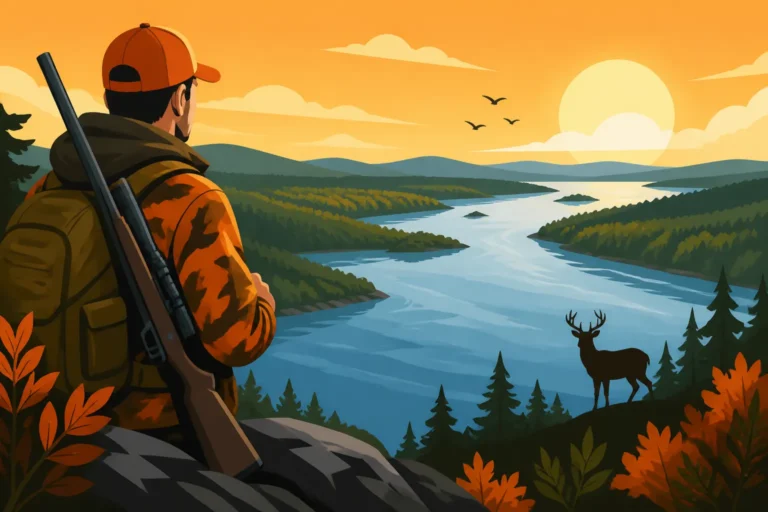
Our province boasts an incredible array of ecosystems, each presenting unique challenges and opportunities for whitetail hunters. From the sprawling agricultural fields of the south to the dense, mixed forests of central Ontario and the rugged, boreal shield country further north, the deer adapt, and so must we.
In Southern Ontario, especially in regions like the Great Lakes lowlands or the St. Lawrence Valley, you're looking at a patchwork quilt of farms. Here, deer thrive on abundant crops like corn, soybeans, and alfalfa, interspersed with smaller woodlots, thick fencerows, and drainages. Hunting in these areas often means focusing on field edges, pinch points between cover and food, and those small, isolated pockets of bush that offer sanctuary. The deer here are often accustomed to human activity, but they’re also smart, using every bit of cover to their advantage. It’s a completely different game than the deep woods. For a more detailed look, check out our guide on Hunting Deer in Southern Ontario Farmland.
Move north into the central and eastern regions, and the landscape transitions to a mixed forest environment. Think about areas around Algonquin Park, the Haliburton Highlands, or the Frontenac Arch. Here, deciduous hardwoods like oak, maple, and beech mix with coniferous stands of pine, spruce, and cedar. This varied habitat offers deer a smorgasbord of food sources, from acorns and beechnuts in the fall to browse during the winter. Hunting here often involves traversing rolling terrain, understanding how deer use ridges and valleys, and keying in on natural funnels or traditional deer runs. It’s a more physical hunt, often requiring more walking and patience. You can find more about this in Hunting Deer in Ontario's Mixed Forest.
Further north, into the vast tracts of the Canadian Shield and the southern edge of the boreal forest, the landscape becomes much wilder and more remote. Whitetails are present but generally in lower densities. They cling to pockets of suitable habitat, often along river valleys, around beaver ponds, or near recent logging cuts that offer new browse. The winters are harsher, with deeper snow, which can significantly impact deer survival and distribution. Hunting up here is an adventure, often requiring more self-sufficiency and a willingness to explore vast, sparsely populated areas. These deer might be less accustomed to human scent, but finding them can be a true test of your scouting skills.
Regional Deer Population Dynamics
The health and density of whitetail populations fluctuate across Ontario, primarily influenced by habitat quality, food availability, and winter severity. This has a direct impact on your hunting expectations and strategies.
Southern Ontario, with its rich agricultural lands and relatively milder winters, typically boasts the highest deer densities and often produces the largest-bodied and biggest-antlered bucks. The consistent food supply allows deer to reach their full genetic potential, which is why many hunters, both resident and non-resident, focus their efforts here. However, this also means more hunting pressure, especially on publicly accessible land. It’s a trade-off: more deer, but more competition. The challenge here isn't necessarily finding deer, but finding mature, unpressured bucks.
As you head into central Ontario, deer densities can be more variable. While good numbers exist, especially in areas with a mix of agriculture and forest, deep snow years can take a toll. Winters are longer and colder, and if the snow gets too deep for too long, deer struggle to find adequate food and escape predators. This can lead to localized population declines. Hunters in these regions often focus on deer yards – thermal cover areas, typically dense cedar swamps – where deer congregate in winter. Understanding these wintering patterns is crucial, even for fall hunting, as these areas often become safe havens or travel corridors leading into them. You might be interested in Where Ontario Whitetails Yard in Deep Snow.
In Northern Ontario, whitetail populations are generally sparse. They exist on the fringes of their range, often competing with moose for browse in some areas and constantly battling harsh winters. A severe winter can decimate local populations, and it takes several mild winters for numbers to rebound. Hunting here is about finding those isolated pockets of deer, often near human settlements, along major river systems, or in cutovers that provide fresh forage. Don't expect to see dozens of deer a day, but the deer you do encounter are often incredibly wild and represent a true wilderness challenge. If you're looking for a giant, the north can produce them due to lower hunting pressure and older age classes, but finding them is the trick.
Key Food Sources and Seasonal Patterns
Understanding what whitetails eat and how those food sources change throughout the year is foundational to successful hunting. Deer are creatures of habit, and those habits are almost always tied to their stomachs.
In the early archery season, typically September and early October, deer are still in their summer patterns, meaning they’re hitting lush green browse, clover, and early mast crops. In agricultural areas, they might still be feeding heavily in alfalfa fields or browsing soybeans. As fall progresses and temperatures cool, especially around Hunting Ontario's Late September Archery Opener, the focus shifts. Hard mast, like acorns and beechnuts, becomes a prime target. If you can locate a good stand of oak or beech that's dropping nuts, you've likely found a major deer magnet. Similarly, apples, wild plums, and other fruit-bearing trees can be hot spots. A little scouting for these natural food sources can pay huge dividends.
As the gun season approaches in November, especially during Hunting the Rut in Early to Mid November, deer in farm country will shift their attention to standing corn or recently harvested fields where waste grain is abundant. In forested areas, they'll continue to forage on available browse, but the primary driver of movement during this time becomes the rut. Bucks are less concerned with food and more with finding does, making them more vulnerable and active during daylight hours. However, does still need to eat, so they'll frequent reliable food sources, and bucks will follow.
Once winter sets in, especially during the December muzzleloader seasons, food sources become scarce. Deer rely on woody browse, such as dogwood, maple saplings, and cedar. In northern regions, they'll congregate in cedar swamps or dense coniferous stands, which offer both thermal cover and crucial winter browse. Understanding How Deer Use a Cedar Swamp in Winter is vital for late-season success. Hunters targeting late-season deer often focus on these traditional wintering areas or any remaining agricultural fields that offer sustenance. The deer are conserving energy, so their movements are more predictable, often a direct line from bedding to food and back.
Essential Regulations and Licences for Ontario Whitetails
Navigating the rules and regulations can sometimes feel like trying to untangle a snarled fishing line, but it's absolutely crucial for a legal and ethical hunt. Ontario has specific requirements, and understanding them is your first step before even thinking about going afield.
Navigating the Outdoors Card and Deer Licences
The cornerstone of hunting in Ontario is your Outdoors Card. This isn't just a piece of plastic; it's your gateway to all hunting and fishing activities in the province. Think of it as your hunting ID card. It proves you've met the hunter education requirements and are eligible to purchase licences.
To hunt whitetail deer, you'll need an Outdoors Card, and then you'll purchase a specific deer licence and tag. This licence allows you to hunt deer, and the tag is what you attach to your harvested animal. For residents, the process is fairly straightforward once you have your Outdoors Card. You can purchase your licence and tags through the Fish and Wildlife Licensing Service online, at a participating ServiceOntario location, or at an authorized licence issuer. Remember, your Outdoors Card has an expiry date, so make sure it's current before you plan your season. You can learn more about Getting an Ontario Outdoors Card and Ontario Hunting Licences and What They Cost for detailed information.
Non-residents face a few additional steps, including potential firearm declarations at the border and requiring an outfitter or host to hunt most big game. It's always best for non-residents to thoroughly review the specific rules well in advance of their trip.
Antlerless and Controlled Hunt Validations
This is where things can get a little more complex, as Ontario manages deer populations through specific tag types and draws.
Antlerless Deer Validations: In many Wildlife Management Units (WMUs), especially in southern and central Ontario where deer populations are robust, hunters can apply for an antlerless deer validation. This validation allows you to harvest a doe or fawn, which is crucial for population management. These are not guaranteed and are typically allocated through a draw system. You apply for a specific WMU, and if successful, your deer tag becomes valid for an antlerless deer in that unit. Without this validation, your standard deer tag is usually only valid for an antlered deer (a buck with at least one antler greater than 7.5 cm or 3 inches). Understanding Which WMUs Offer Antlerless Tags is key if you're aiming to fill your freezer.
Controlled Deer Hunt Validations: Some WMUs, often those with high deer densities or in areas sensitive to overpopulation, implement Controlled Deer Hunts. These hunts are specifically designed to manage deer numbers and are often limited to specific periods and hunter numbers. To participate, you must apply for a Controlled Deer Hunt validation for a particular WMU and hunt period. Again, these are allocated through a draw, and success rates can vary. If you are successful in the draw, you receive a validation that allows you to hunt in that specific controlled hunt area during the designated dates. This can be a great way to access prime hunting ground, but it requires planning and luck in the draw. For more information, read our article on Applying for a Controlled Deer Hunt.
It's vital to check the annual Ontario Hunting Regulations Summary every year, as WMU boundaries, season dates, and draw specifics can change.
Season Dates and Legal Equipment
Ontario offers a diverse range of seasons for whitetail deer, each with its own specific rules regarding equipment and dates. Understanding Ontario Deer Season Dates and Tags is critical for planning.
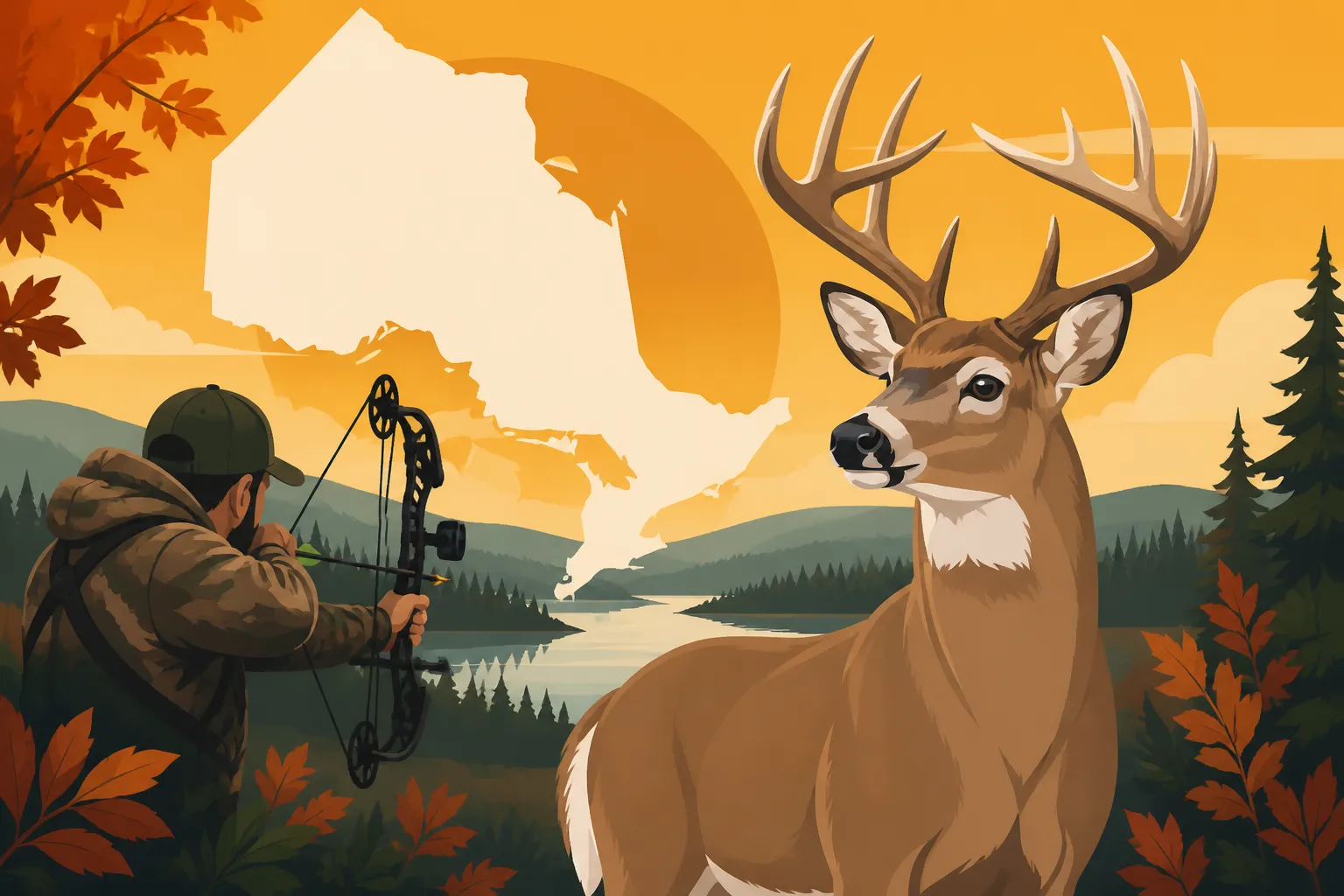
Archery Season: Typically, archery season opens in early October in most southern and central WMUs, often extending through parts of November, and sometimes even into December. Bowhunters enjoy an extended season, often including the early stages of the rut, before gun seasons open. This season demands specific equipment: a bow (recurve, longbow, or compound) or a crossbow with a minimum draw weight and specific arrow/bolt requirements. Modern compound bows can be incredibly effective, and many hunters enjoy the challenge and intimacy of bowhunting. For those interested, Bow Draw Weight Rules in Ontario and When a Crossbow Is Legal to Use provide essential details.
Gun Season: The general gun season, primarily for rifles and shotguns, is often the most popular and sees the most hunters in the field. These dates vary significantly by WMU, but generally run from mid-November for one to two weeks in Southern Ontario, often overlapping with the peak of the whitetail rut. This is a high-impact season, and proper blaze orange clothing is mandatory for safety. Shotgun-only zones exist in some densely populated areas to ensure public safety, so knowing Where Shotguns Only Are Allowed is non-negotiable.
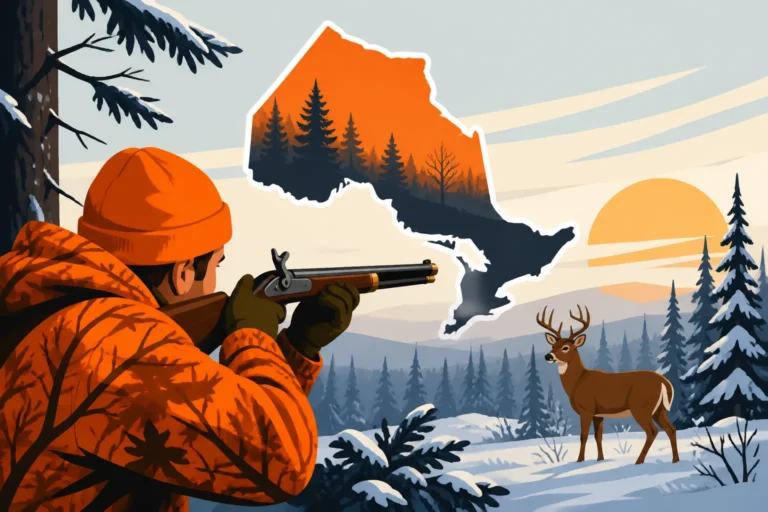
Muzzleloader Season: Many WMUs also offer a muzzleloader season, often either preceding or following the general gun season, or sometimes running concurrently with archery season in specific areas. This provides another opportunity for hunters using traditional black powder firearms. Muzzleloaders have their own set of rules regarding calibre, propellant, and projectile type. Check Ontario Muzzleloader Equipment Rules for specifics.
It's paramount to check the regulations for your specific WMU each year, as opening and closing dates, as well as equipment restrictions, can differ. Always carry your Outdoors Card, valid licence, and tags while hunting.
Scouting and Locating Whitetails in Ontario
You can have the best gear in the world, but without knowing where the deer are and how they use the land, you're just taking a walk in the woods. Effective scouting is the backbone of successful whitetail hunting in Ontario, especially considering our varied terrain.
Pre-Season Reconnaissance and E-Scouting
The hunt often begins long before you set foot in the woods with a bow or rifle. Pre-season reconnaissance, both digital and on-the-ground, is how you build your plan.
E-Scouting: In this modern age, e-scouting has become an indispensable tool. Using online mapping tools like Google Earth, GoHunt, or dedicated hunting apps like onX Hunt (which uses Ontario Crown Land layers), you can analyze terrain features, identify potential food sources, locate bedding areas, and pinpoint travel corridors—all from your couch. Look for changes in vegetation, bottlenecks, natural funnels, water sources, and potential access points. Identify areas that offer thick cover near food, especially those out-of-the-way spots that other hunters might overlook. This saves you countless hours of walking and allows you to prioritize areas for on-the-ground investigation. Our article on Scouting With Satellite Imagery in Ontario dives deeper into this.
On-the-Ground Scouting: Once you've identified promising areas through e-scouting, it's time to put boots on the ground. Ideally, this should happen well before the season opens to avoid disturbing the deer too close to your hunt. Look for fresh sign: tracks, droppings, rubs, and scrapes. Pay attention to how deer move through the landscape—where they cross fences, where they enter and exit fields, and how they navigate dense cover. Setting up trail cameras can be incredibly useful during this phase, giving you an idea of the deer present, their antler size, and their movement patterns without requiring you to be physically present all the time. Remember to be stealthy; scouting is an art form itself.
Reading Deer Sign in Different Terrains
Deer communicate through a variety of signs left on the landscape. Learning to "read" these signs is like deciphering their secret language, telling you where they are, what they're doing, and where they're going.
Tracks and Trails: Fresh tracks are perhaps the most obvious sign. Pay attention to their size, the depth of the impression (indicating weight), and the direction of travel. Look for well-worn deer trails, which are essentially deer highways. These trails often connect bedding areas to feeding grounds, or funnel deer through thickets. In agricultural areas, deer trails might be less obvious, but look for disturbed grass or flattened vegetation along fencerows or woodlot edges. Reading Whitetail Sign in Ontario Hardwoods can give you specific insights for forested areas.
Rubs and Scrapes: These are like billboards and meeting points for deer, especially bucks during the pre-rut and rut.
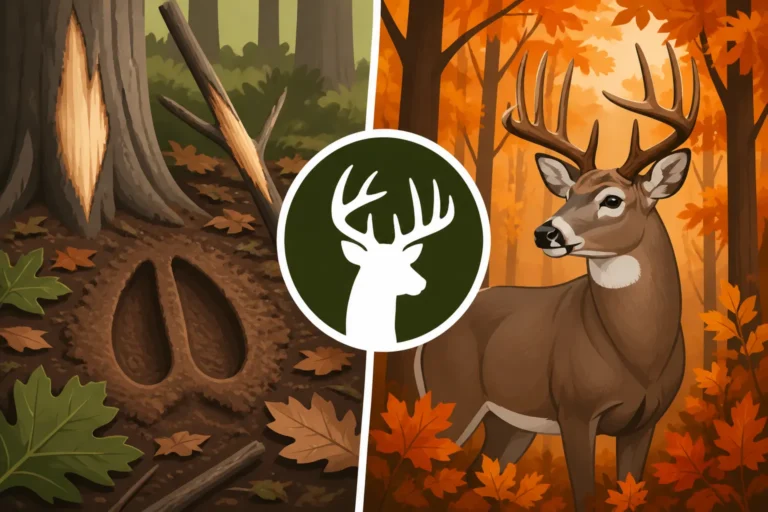
- Rubs: Bucks rub their antlers on saplings and small trees, leaving behind peeled bark and sometimes broken branches. These are scent markers and visual displays. Fresh rubs with exposed, moist wood indicate recent activity. The size of the rub can give you an idea of the size of the buck. Look for lines of rubs leading in a particular direction – these are often travel routes.
- Scrapes: Bucks create scrapes by pawing away leaf litter down to bare earth, then often urinating over their tarsal glands into the scrape. They'll also chew on an overhanging branch (a "licking branch") above the scrape. Scrapes are communication hubs where deer leave scent. Active scrapes will be fresh and sometimes even still moist. Find a series of fresh rubs and scrapes, and you're in a high-activity zone.
Bedding Areas: Deer spend a significant portion of their day bedded down, resting and digesting. These are typically in thick cover that offers security from predators and protection from the elements. In thick bush, this might be a dense pine or cedar stand, a blowdown, or a brushy knoll. In farm country, it could be a tall grass field, a brushy creek bottom, or a small, overlooked woodlot. Look for depressions in the leaves or grass where deer have lain. Knowing where deer bed allows you to predict their travel routes to food and water.
Understanding Deer Movement Patterns
Deer movements aren't random; they're driven by a combination of needs: food, water, security, and reproduction. Understanding these patterns is critical for predicting where and when you'll encounter them.
Daily Routines: Deer typically move most actively during dawn and dusk – the crepuscular periods. This is when they transition between bedding areas and feeding grounds. During daylight hours, they often bed down in cover, only moving sporadically. Weather plays a huge role; on cool, overcast days, deer might be active for longer periods. On hot days, they might stick to thick cover near water. High winds can also reduce deer activity, as it makes it harder for them to hear approaching predators.
Seasonal Migrations: While not true migrations in the sense of caribou or some elk herds, Ontario deer do exhibit seasonal shifts. As mentioned, they'll move to specific food sources as they become available in fall, and then gravitate towards wintering yards when snow gets deep. Understanding these larger-scale movements is essential, especially when scouting. A productive summer area might be a ghost town in late fall if food sources have dried up or winter has forced deer into other areas.
Rut Behaviour: This is arguably the most exciting time for whitetail hunters. The rut, or breeding season, drastically alters deer behaviour. Bucks, typically cautious and nocturnal, become much more active during daylight hours as they search for receptive does. They'll cover vast distances, following scent trails, checking scrapes, and engaging in sparring matches with other bucks. Does, in turn, are pursued relentlessly. This is when you see deer making "mistakes," like crossing open fields in broad daylight or ignoring human presence for a moment. Knowing When Ontario's Whitetail Rut Peaks is key to capitalizing on this window of opportunity. During the rut, focus on travel corridors between doe bedding and feeding areas, or areas where multiple deer trails converge.
Effective Hunting Strategies for Ontario Whitetails
With your scouting done and regulations understood, it's time to talk about how you actually hunt these incredible animals. Ontario's diverse terrain lends itself to various strategies, and a versatile hunter is often the most successful.
Stand Hunting and Ambush Tactics
Stand hunting is a classic and highly effective method, especially in areas with predictable deer movement or during the rut. The basic idea is to position yourself in a location where deer are likely to pass within shooting range, remaining undetected until the shot presents itself.
Treestands: Elevated treestands are popular for a reason. They get you above a deer's primary line of sight and often help in scent dispersal, making you harder to detect. Choosing the right tree and stand type (ladder, hang-on, or climbing stand) depends on the specific location and your comfort level. Placement is crucial: look for pinch points, saddles, creek crossings, field edges, or areas with heavy rub and scrape activity. Always consider the prevailing wind direction; you want your scent to blow away from where you expect deer to approach. For detailed advice, check out Hanging a Stand on an Ontario Bush Edge. Ensure your stand is safe, securely attached, and you use a full-body harness every time.
Ground Blinds: Ground blinds offer excellent concealment and can be a good option for less mobile hunters, youth, or in areas where suitable trees for treestands are scarce. Pop-up blinds are portable and quick to set up, providing a full enclosure. Natural ground blinds, built from brush and natural materials, can be just as effective if constructed thoughtfully and blended seamlessly into the environment. When using a ground blind, position it to maximize concealment and minimize your silhouette against the skyline. Again, wind direction is paramount, as ground blinds offer less advantage for scent dispersal compared to treestands.
Key Placement Considerations: Regardless of whether you're in a treestand or ground blind, think about:
- Wind and Thermals: These are your biggest allies or enemies. Always hunt with the wind in your favour. Early mornings and late evenings often have thermals pulling scent up or down slopes; understand how these affect your setup.
- Cover and Background: Ensure you have enough cover to break up your outline, and a dark background can help you disappear.
- Sun Angle: Avoid having the sun directly in your eyes during peak activity times.
- Entry and Exit Routes: Plan how you'll get to and from your stand without disturbing deer. This often means using natural terrain features or paths that are less likely to be frequented by deer.
Still-Hunting and Spot-and-Stalk Approaches
Sometimes, sitting and waiting isn't the most effective strategy, especially in large, unbroken tracts of forest or when trying to locate deer in unfamiliar territory. Still-hunting and spot-and-stalk offer a more active approach.
Still-Hunting: This is a slow, methodical approach where the hunter moves extremely quietly through the woods, taking a few steps, then pausing for several minutes to scan, listen, and observe. The goal isn't to walk to a destination but to hunt your way through the woods, hoping to spot a deer before it spots you. It requires immense patience and keen observation skills. Focus on areas with varied terrain, good cover, and potential bedding sites. Move into the wind, paying close attention to every rustle and snap. This technique is particularly effective in mixed forests where deer might be spread out. Consider learning more about Hunting Ontario's Mixed Hardwood Bush for this method.
Spot-and-Stalk: This method is more suited to open country, like agricultural fields, clearcuts, or power lines, where you can glass large areas from a distance. The idea is to spot deer from afar, then use terrain and cover to close the distance without being detected. This requires excellent optics (binoculars and spotting scopes), patience, and a good understanding of wind direction. Once you've spotted a deer, formulate a plan to get within shooting range, using depressions, brush lines, or rolls in the terrain to hide your approach. This is a challenging but incredibly rewarding way to hunt. In areas with big open fields, it can be very effective, as detailed in Hunting a Standing Corn Field Edge.
Both still-hunting and spot-and-stalk demand quiet clothing, soft-soled boots, and an ability to melt into your surroundings. Every step must be intentional, and every pause an opportunity to observe.
Driving Deer in Southern Ontario Bush Lots
While perhaps less common in the deep wilderness, deer drives remain a very popular and effective group hunting strategy, particularly in the smaller, fragmented bush lots of Southern Ontario. This method involves a coordinated effort between "drivers" and "standers" to push deer towards waiting hunters.
The Strategy: Drivers slowly and systematically walk through a block of cover, making noise and encouraging deer to move out. Standers are strategically positioned on the opposite side or along escape routes, typically on the downwind side, ready to intercept the deer as they try to slip away. This method can be incredibly efficient for moving deer out of thick cover where they might otherwise be impossible to still-hunt or ambush from a stand. Learn more about Deer Drives With Three or Four Hunters.
Safety and Planning: Safety is paramount with deer drives.
- Communication: Everyone involved needs to be aware of each other's positions, the boundaries of the drive, and safe shooting lanes. Walkie-talkies are often used.
- Blaze Orange: All participants must wear sufficient blaze orange, as required by Ontario regulations. This is not just a rule; it's a lifesaver. How Much Blaze Orange Ontario Requires is a must-read.
- Boundaries: Drivers and standers must clearly understand the boundaries of the property and the drive itself to avoid pushing deer onto unhuntable land or, more critically, shooting towards unsafe areas.
- Stand Placement: Standers should position themselves to have clear shots, preferably into natural openings or along deer escape routes, and always be aware of what lies beyond their target. You can find useful tips in Posting a Drive Around a Bush Lot.
Deer drives require teamwork and discipline, but when done safely and effectively, they can be a highly productive way to harvest deer, especially during the general gun season when group hunting is common. It's a method that often builds camaraderie and creates lasting hunting memories.
Maximizing Your Success During the Rut
The whitetail rut is often considered the holy grail of deer hunting. It’s a period of heightened activity, bucks letting their guard down, and opportunities that don't exist at any other time of the year. If you want to bag a mature buck in Ontario, focusing your efforts during this chaotic period is your best bet.
Timing the Peak of the Whitetail Rut
While the rut feels like a single event, it's actually a progression with distinct phases. In Ontario, the breeding activity typically kicks off in late October, builds through early to mid-November, and can extend into early December. The peak of breeding activity, when most does are receptive and bucks are most actively seeking them, generally falls in the second and third weeks of November across much of the province.
However, it's important to remember that When Ontario's Whitetail Rut Peaks can vary slightly by region and even year-to-year based on environmental factors. In more northern WMUs, the rut might start and finish a little earlier due to colder temperatures and shorter daylight hours. Factors like doe-to-buck ratio and nutrition can also influence the intensity and timing. Your best bet is to plan your hunting vacation around this mid-November window if possible, especially for gun season, as this is when bucks are most vulnerable. Even if the does aren't quite ready to breed, the bucks are in "seeking" phase, covering ground and looking for signs of estrus.
Using Calls and Decoys Effectively
During the rut, deer become much more vocal and visually oriented, making calls and decoys incredibly effective tools to draw in curious or aggressive bucks.
Calling:
- Grunt Calls: A deer grunt call mimics the sounds bucks make during the rut. Short, deep grunts can signal a buck tending a doe or simply moving through. Aggressive grunts can challenge another buck. During the peak rut, combining grunts with rattling can be lethal.
- Estrus Bleats: A doe in heat makes a distinctive bleat that can drive bucks wild. These calls are best used sparingly and strategically, as too much can make a buck suspicious.
- Rattling: Mimicking the sound of two bucks fighting by clashing antlers (real or synthetic) can be a powerful attractant. Younger bucks might come in to investigate, while dominant bucks might charge in to assert their dominance. Rattling Volume in Thick Bush should be adjusted to the cover. In dense Ontario bush, you don't need to clash them as hard as in open country. Be prepared for a buck to appear quickly and quietly.
Decoys: A whitetail decoy, typically a standing doe or a small buck, can be a game-changer during the rut.
- Doe Decoys: A doe decoy can lure in bucks looking for a receptive female. Position it facing away from your stand, mimicking a doe feeding or casually walking, and giving the approaching buck the impression it's heading towards your setup.
- Buck Decoys: A small buck decoy can challenge larger, more aggressive bucks, especially when combined with rattling. A quartering-away pose or a challenging posture can work.
- Placement: Always place decoys downwind of your stand so an approaching buck walks past your shooting lane to scent-check the decoy. Also, consider the sun's position to illuminate the decoy naturally. Avoid setting them up where they might be shot by another hunter. While effective, decoys also require careful setup and can be cumbersome to transport, especially in rough Ontario terrain.
All-Day Stands and High-Traffic Areas
The rut changes everything, including how long you should be in your stand. Gone are the days of just hunting the first and last hour.
All-Day Stands: During the peak of the rut, bucks can be active all day long as they constantly search for does. This is the time to commit to Sitting All Day in an Ontario Blind or treestand. Many mature bucks are harvested in the mid-morning or early afternoon during the rut, when other hunters have left the woods for a break. Pack plenty of snacks, water, and warm clothing, and be prepared to stay put from dawn until dusk. The more hours you put in during this critical window, the higher your chances of encountering that buck on the move.
High-Traffic Areas: Focus your efforts on locations where deer movement is concentrated. This means identifying pinch points, saddles, creek crossings, and areas where different types of cover meet. These are natural funnels that deer, especially bucks cruising for does, will utilize. Look for areas with fresh rub lines and active scrapes; these are clear indicators of recent buck activity. Consider setting up along a hardwood ridge where deer might be feeding on acorns, knowing that bucks will be checking those areas for does. Hunting a Hardwood Ridge for Whitetails offers great advice on this.
Also, don't overlook "doe bedding areas" during the rut. Bucks will frequently scent-check these zones throughout the day. If you can locate a safe, concealed stand near one, you'll be right in the action. Remember, patience and persistence are your greatest assets during the Ontario whitetail rut.
Post-Harvest Considerations and Game Care
Congratulations! You've successfully harvested an Ontario whitetail. But the hunt isn't truly over until the meat is processed, the trophy is cared for, and all legal requirements are met. Proper post-harvest care is crucial for honouring the animal and ensuring you get the most out of your hard-earned venison.
Field Dressing and Meat Care in Varying Temperatures
The immediate steps after harvesting a deer are arguably the most critical for meat quality, especially in Ontario's often unpredictable fall weather.
Field Dressing: This needs to happen as quickly as possible. The goal is to remove the internal organs to allow the carcass to cool down rapidly. This prevents bacterial growth and tainting of the meat. Make a cut from the sternum to the pelvis, carefully avoiding puncturing the intestines. Sever the esophagus and trachea, and roll out the viscera. If you're hunting in warm early season conditions, like during Field Dressing in Warm Ontario Weather, getting the guts out swiftly is even more vital. Some hunters prefer to quarter their deer in the field, especially for large bucks or in remote locations, which further aids cooling and makes extraction easier.
Cooling and Transport: Once field-dressed, the carcass needs to cool down.
- Warm Weather: If temperatures are mild (above 5-7°C or 40-45°F), getting the deer to a cooler or butcher quickly is essential. If you can’t, consider filling the chest cavity with ice bags to accelerate cooling. Air circulation is key; avoid piling the deer in the back of a truck where it can't breathe.
- Cold Weather: In colder conditions (below 5°C), cooling is less of an issue, but you still want to ensure good airflow. Protect the carcass from dirt, rain, and snow during transport. Once cooled, ideally, the deer should hang for a few days (known as aging) in a cool, dry environment. This process tenderizes the meat and improves flavour. Hanging Meat in Fall Temperature Swings provides excellent advice for dealing with Ontario's variable autumn weather. If temperatures are consistently below freezing, aging can happen naturally. If they fluctuate, a controlled environment like a walk-in cooler is best.
Tagging, Reporting, and Transporting Your Deer
Ontario has strict rules for what happens after you pull the trigger. Ignoring these can lead to fines and loss of hunting privileges.
Tagging: Immediately after dispatching the deer, you must securely attach your valid deer tag to the animal. The tag must be notched to indicate the harvest date and sex (if applicable) and remain affixed until the deer is processed for consumption or taxidermy. This is not optional; it's a legal requirement and demonstrates you harvested the animal legally. Ontario Tag Notching and Attachment Rules detail the specifics.
Reporting: Ontario has a mandatory harvest reporting system. You must report your deer harvest within specific timeframes (usually within 7 days) through the Fish and Wildlife Licensing Service online or by phone. This data is critical for wildlife managers to monitor deer populations and set future regulations. Failing to report your harvest is a serious offence. Reporting Your Ontario Harvest will walk you through the process.
Transporting: When transporting your deer, it must be visible and easily identifiable as legally harvested. This means the tag must be attached, and often, evidence of sex (a portion of the head with antlers for bucks, or an attached tag indicating antlerless for does) must remain with the carcass until processed. Transporting game across the province or even across international borders (for non-residents) has specific rules. For non-residents, an Export Permit is often required to take meat or a trophy home. Our article on Transporting Game Meat in Ontario covers these important details. Always keep your hunting licence and Outdoors Card with you.
Dealing with a Trophy and Taxidermy Options
If you've been lucky enough to harvest a buck worthy of the wall, there are specific steps to ensure your trophy is preserved properly.
Caping for Taxidermy: For a shoulder mount, the deer needs to be caped properly. This involves skinning the deer in a way that preserves the cape (skin from the head, neck, and shoulders). If you're not experienced, it's often best to get instructions from your taxidermist beforehand or have them do it. If you're field caping, be extremely careful around the eyes, ears, and mouth. The cape needs to be cooled and frozen quickly or professionally salted to prevent hair slippage. Do not let it sit in warm conditions.
Antler Care: Antlers should be kept clean and dry. Avoid putting them directly on wet ground where they can absorb moisture or get stained. If you're not doing a full shoulder mount, a skull plate mount or European mount are popular options. For a European mount, the skull needs to be cleaned of all flesh and then whitened. Many taxidermists or specialized services offer this.
Taxidermists: Ontario has many talented taxidermists. Research and choose one whose work you admire and who has a good reputation for timely completion. Discuss pricing, lead times, and any specific requests you have for your mount. A good taxidermist is an investment, ensuring your trophy lasts a lifetime. For non-residents, consider Taking a Trophy Across the Border and understand any CITES (Convention on International Trade in Endangered Species of Wild Fauna and Flora) requirements, especially for species like bear or wolf, though whitetail are generally straightforward.
| Aspect | Southern Ontario (Farmland/Mixed) | Central Ontario (Mixed Forest/Shield Fringe) | Northern Ontario (Boreal/Shield) |
|---|---|---|---|
| Deer Density | Highest | Moderate to High (variable) | Low to Moderate (variable, lower than South) |
| Antler Potential | Excellent (due to nutrition) | Good (but often older age class required for large antlers) | Excellent (due to older age class, but difficult to find) |
| Primary Habitat | Agriculture, small woodlots, fencerows, river bottoms | Mixed hardwoods/conifers, rolling terrain, rock outcrops, swamps | Vast boreal forest, river systems, beaver ponds, recent cutovers |
| Typical Challenge | Hunting pressure, private land access, wary deer | Remote access, finding concentrations, deep snow impacts | Finding deer, harsh winters, vastness of terrain |
| Key Food Sources | Crops (corn, soy), alfalfa, acorns, apples, browse | Acorns, beechnuts, maple, cedar, various browse | Willow, poplar, balsam fir, cedar, various browse |
| Hunting Style | Stand hunting, deer drives, field edges, thick cover ambushes | Still-hunting, stand hunting funnels/ridges, tracking in snow | Spot & stalk, still-hunting, targeting specific pockets of habitat |
| Winter Impact | Moderate, localized yarding in deep snow | Significant, critical importance of winter yards | Extreme, major factor in population size and distribution |
Challenges and Solutions for Ontario Whitetail Hunters
Hunting whitetails in Ontario is incredibly rewarding, but it’s rarely easy. We all face challenges, from finding unpressured deer to battling unpredictable weather. Being realistic about these hurdles and having strategies to overcome them is what separates consistently successful hunters from those who just get lucky once in a while.
Overcoming Hunting Pressure on Public Lands
Let’s face it, Ontario is a popular place to hunt, and public lands, especially in more accessible areas, can see a lot of pressure. This can make deer incredibly wary, often pushing them nocturnal or into the densest cover. It’s a common frustration, but it doesn't mean public land hunting is impossible.
Go Deeper: The simplest solution is often the hardest: walk further. Most hunters won't venture more than a kilometre or two from a road or parking area. If you're willing to put in the effort and hike three, four, or even five kilometres into Hunting Ontario's Crown Land, you'll often find less pressured deer. Use mapping apps like GoHunt to identify remote pockets of Crown Land that are difficult to access, and plan your routes accordingly. These areas often require more robust navigation skills and a more self-sufficient approach.
Hunt Mid-Week: If your schedule allows, hunting on weekdays rather than weekends can drastically reduce the number of other hunters you encounter. Deer are more likely to be on their normal patterns and less on high alert.
Find Overlooked Cover: Deer that are pressured become masters of hiding in plain sight. Look for small, isolated swamps, thickets, or overgrown areas that other hunters walk past. These "islands" of cover, even if small, can hold mature bucks seeking refuge. Hunting a Cedar Swamp Edge can be a prime example of where pressured deer might retreat.
Hunt Hard-to-Access Areas: This goes beyond just walking. Consider accessing areas via canoe, ATV (where legal), or even a boat on a larger lake. If it takes extra effort to get there, chances are fewer other hunters will bother. Our article on Canoe-In Hunting on Ontario Crown Land might inspire you.
Adapting to Ontario's Weather Extremes
Ontario's weather during hunting season can be a wild card. From warm, Indian Summer days in early October to blizzards and deep freezes in November and December, you need to be prepared for anything.
Early Season Warmth: Warm temperatures (common during the early archery season) present challenges for both comfort and meat preservation.
- Hunter Comfort: Dress in layers you can shed. Consider lightweight, breathable clothing. Hydration is key.
- Deer Activity: Deer might be more nocturnal, moving primarily during the cooler hours of dawn and dusk. Focus your efforts during these windows and near water sources.
- Meat Care: As discussed, field dress immediately and prioritize rapid cooling. Have a plan for getting the carcass to a cool place quickly.
Cold and Snow: As the season progresses, cold weather and snow become major factors.
- Hunter Comfort: Layering is paramount. Invest in good quality, warm, and waterproof outer layers. Insulated boots, gloves, and a warm hat are non-negotiable. Chemical hand warmers and foot warmers can be lifesavers.
- Deer Activity: Cold weather often increases deer activity as they need to feed more to maintain body temperature. Fresh snow is a hunter's best friend; it quietens your approach and reveals fresh tracks, allowing you to Reading Sign After a Fresh Snow.
- Winter Yard Hunting: In deep snow, deer will congregate in specific winter yards, usually dense coniferous stands offering thermal cover and browse. Hunting these areas requires sensitivity to not overly stress the deer, but they can be productive late-season spots.
Rain and Wind:
- Rain: Can make hunting miserable but also washes away human scent and makes deer quieter to approach. Waterproof clothing is essential.
- Wind: High winds can significantly reduce deer movement, as they struggle to hear predators. Hunt on the leeward side of ridges or in sheltered valleys. Wind can also help carry your scent away from deer if used strategically.
Always check the forecast and pack accordingly. Being comfortable in the elements allows you to stay out longer and be more effective.
Securing Private Land Access
In many parts of Southern Ontario, securing access to private land is almost a necessity, as Crown Land can be scarce and heavily pressured. This often feels like a daunting task, but building relationships with landowners is key.
Be Respectful and Courteous: When approaching a landowner, always be polite, respectful, and prepared. Dress neatly, introduce yourself, and clearly state your intentions. Don't show up with your hunting gear. Remember, you are asking for a privilege, not a right.
Offer Assistance: Landowners often have chores or need a helping hand. Offer to help with tasks like fence mending, firewood splitting, or even checking on their property while you're out. This builds goodwill and trust. Many landowners appreciate a hunter who is willing to put in some sweat equity.
Provide Assurance: Explain that you are a responsible hunter, you'll respect their property, close gates, and be mindful of livestock and property boundaries. Offer to provide references if they like. Show them your licence and Outdoors Card. Consider Knocking on Doors in Southern Ontario with confidence and humility.
Be Flexible: If a landowner says no, ask if there's a better time to talk or if they know of anyone else who might be open to it. Don't argue or push. If they say yes, discuss specific areas you can hunt, when you'll be there, and what species you're after. Establish clear communication channels.
Follow Through: If you get permission, be impeccable in your behaviour. Clean up any trash, report anything unusual you see on their property, and maybe even offer some venison after a successful hunt. A small gesture of appreciation, like a gift card or a thank-you note, can go a long way in securing future access. Remember that Getting Private Land Permission in Ontario is about building a long-term relationship, not just a one-time favour. A good relationship with a landowner can provide you with years of fantastic hunting opportunities.
Disclaimer
Hunting is a demanding activity and requires adherence to strict safety protocols and legal regulations. This guide is for informational purposes only and should not replace reading and understanding the current Ontario Hunting Regulations Summary, which is updated annually. Always confirm season dates, bag limits, and specific rules for your chosen Wildlife Management Unit (WMU) directly from official sources. Safety is paramount; always handle firearms responsibly, wear appropriate blaze orange, and hunt ethically. Consider taking an Ontario Hunter Education Course if you are new to hunting or need a refresher.