Knocking on Doors in Southern Ontario
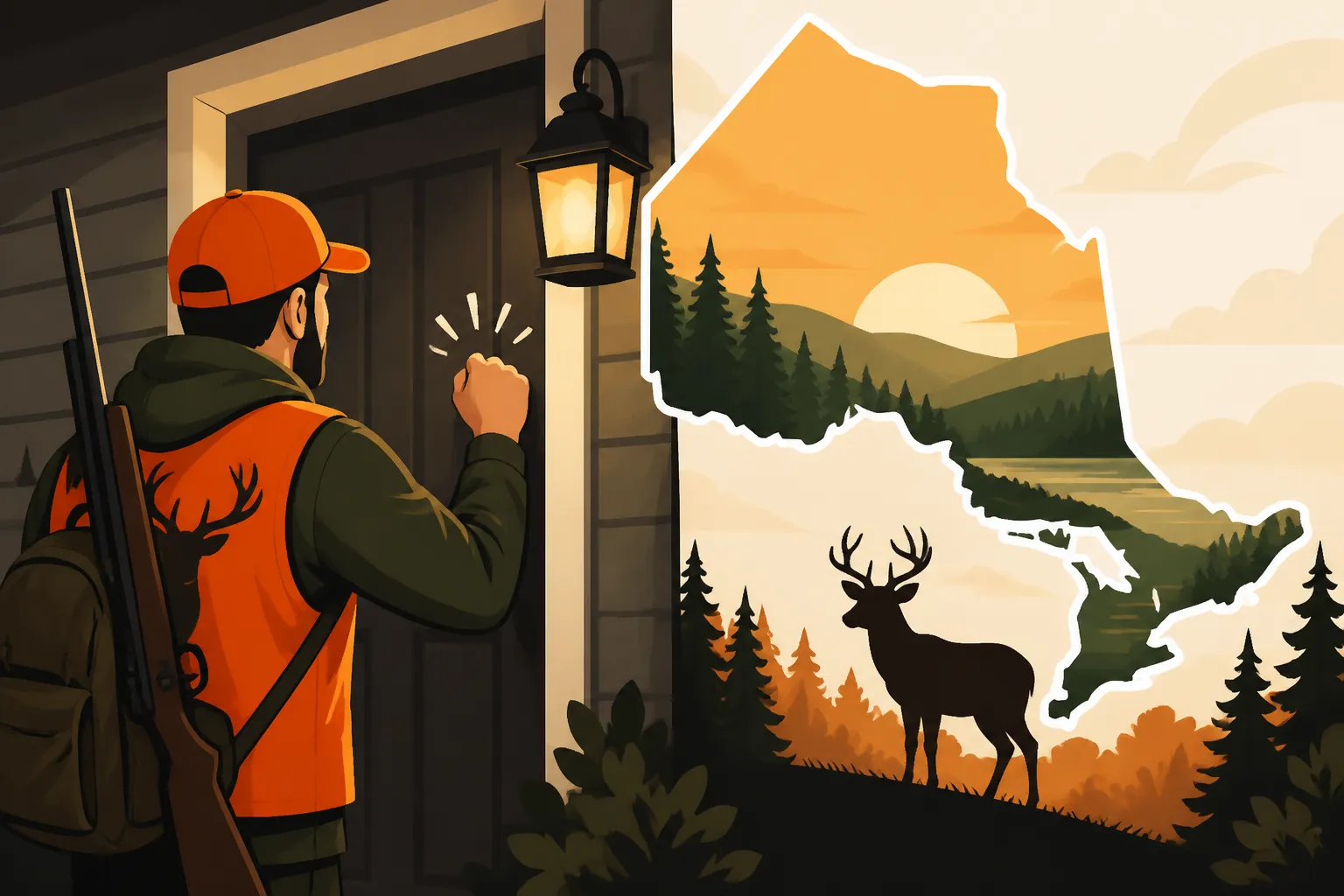
Let's be real: trying to find a place to hunt in Southern Ontario can feel like you're searching for a needle in a haystack, especially when you're looking beyond overcrowded Crown Land. The frustrating truth is that much of our prime hunting habitat down south is on private property, often tucked away within bustling agricultural landscapes or bordered by expanding subdivisions. This guide is here to walk you through the nitty-gritty of getting hunting access on those elusive private lands by doing what's often considered old-school, but still highly effective: knocking on doors and building genuine relationships with landowners.
Understanding the Southern Ontario Landscape for Hunters
Southern Ontario is a unique beast when it comes to hunting. It's a patchwork of productive farmland, dense woodlots, and rapidly growing urban centres. This creates both immense opportunity and significant challenges for the hunter looking for a place to pursue game.
The Reality of Limited Public Land
If you've spent any time looking at maps of Southern Ontario, you've probably noticed that vast tracts of the beautiful, sprawling Crown Land we have up north just don't exist here. This means hunters are often squeezed into smaller, more fragmented public areas that see a tremendous amount of pressure. Think about trying to find a quiet spot to yourself in a popular conservation area during deer season – it's often a crowded affair, with trucks lining the roads and orange vests seemingly everywhere. This isn't ideal for a quality hunting experience, nor for consistently finding mature animals.
The relentless march of urban sprawl and agricultural expansion has gobbled up countless acres that might once have been open for hunting. Fallow fields become subdivisions, and remote woodlots suddenly have houses bordering them. This landscape transformation makes securing dependable access a real challenge, forcing hunters to get creative and proactive in their search for suitable spots. It’s why simply "showing up" often doesn’t cut it anymore; you need a strategy.
Identifying Promising Areas
Despite the challenges, Southern Ontario still holds incredible potential for hunting, particularly for species like white-tailed deer, wild turkey, and various small game. The key is knowing where to look and understanding how animals utilize these fragmented habitats. Don't be fooled by the lack of vast, unbroken wilderness; deer, for instance, are experts at living close to human activity, often right under our noses.
Focus your scouting efforts on areas that offer a mix of cover and food sources. Look for those often-overlooked woodlots, even small ones, especially if they are surrounded by corn, soybean, or winter wheat fields. A Hunting a Fencerow Between Two Fields can be a fantastic travel corridor and a hidden gem for deer moving between bedding and feeding areas. Similarly, old fence lines, overgrown ditches, and unmanaged corners of fields can provide crucial cover. Using tools like satellite imagery, which we'll discuss later, is indispensable for identifying these spots from afar before you even set foot on the ground.
Preparing for the Knock – Your Approach and Tools
Before you even think about driving up a laneway, you need to be prepared. Think of it like a job interview; you want to make the best possible first impression and demonstrate your responsibility and respect. Landowners are entrusting you with their property, and they want to know you're not going to be a liability.
Getting Your Hunter "Resume" in Order
First things first: ensure all your hunting paperwork is impeccable. This means having your valid Ontario Hunting Licences and What They Cost and your Outdoors Card readily accessible. Some hunters even create a small, professional folder with copies of these documents, along with proof of hunting insurance. Yes, hunting insurance is a thing, and it's a very smart investment. Organizations like the Ontario Federation of Anglers and Hunters (OFAH) offer liability insurance to their members, which can be a huge selling point to a hesitant landowner concerned about potential accidents.
Beyond the formal documents, your personal presentation and attitude are paramount. Dress neatly, but practically – no need for a suit, but don't show up looking like you just crawled out of a swamp. A clean pair of jeans and a collared shirt or a respectable hunting vest are usually appropriate. Most importantly, carry yourself with politeness, respect, and humility. Remember, you are asking for a privilege, not a right. Being able to clearly articulate your commitment to safety and adherence to all regulations (including those related to Ontario Trespass and Landowner Law) will go a long way in building trust.
Essential Mapping and Scouting Tools
In today's world, technology gives us a huge advantage in scouting and identifying potential hunting properties. Gone are the days of relying solely on paper maps, though they still have their place. Modern mapping applications are absolutely invaluable for this kind of hunting.
Applications like onX Hunt (popular in the US, but with increasing utility in Canada) or other local mapping solutions are crucial. These apps overlay property lines, landowner names, and satellite imagery, allowing you to identify potential parcels and even see who owns them. This means you can often put a name to a face before you even knock, showing you've done your homework. GoHunt, while primarily focused on Western big game draws, also champions the use of such digital scouting tools, understanding that pre-hunt preparation is key to success. You can virtually scout an entire Ontario Wildlife Management Unit System from your couch, identifying woodlots adjacent to fields, river bottoms, or other prime habitat. This dramatically increases your efficiency when you finally hit the road.
Remember to complement your digital scouting with physical reconnaissance. Drive or walk the roads around the properties you've identified (without trespassing, of course!). Look for fresh deer sign along road edges, observe feeding patterns, and mentally note potential access points. This on-the-ground validation helps you refine your target list and gives you specific details to discuss with the landowner. Understanding things like Hunting an Ontario Bush Edge or Hunting a Standing Corn Field Edge from a distance can inform your pitch.
Timing and Etiquette for Approaching Landowners
Timing is everything when you're knocking on doors. Showing up unannounced at 7 AM on a Sunday or during dinner is a definite no-no. Aim for late mornings or early afternoons on weekdays or Saturdays, when people are more likely to be home and have a moment to chat. Avoid busy times like planting or harvest season, when farmers are often working long hours and have little patience for interruptions.
When the door opens, introduce yourself clearly and state your purpose upfront. "Hi, my name is [Your Name], and I'm a hunter from [Your Town]. I was driving by and noticed your beautiful woodlot/field, and I was wondering if you ever allow respectful hunters to access your property for deer/turkey hunting?" Keep it concise, polite, and confident. Be prepared for either a quick "no, sorry" or a longer conversation. If they're busy, offer to come back at a more convenient time. Always respect their decision, whether it's a yes, a no, or a "not right now." Leaving a small, professional card with your name and number, even if they decline, can sometimes lead to a call down the road if their circumstances change.
| Action Point | Do This | Avoid This |
|---|---|---|
| Preparation | Have valid licences, insurance, and a clean appearance. | Show up unkempt or without proper documentation. |
| Scouting | Use satellite imagery (GoHunt, onX) to identify potential areas. | Drive onto private property without permission. |
| Timing | Approach during late morning/early afternoon on weekdays/Saturdays. | Knock during meal times, early mornings, or harvest season. |
| Approach | Be polite, respectful, and clearly state your intentions. | Be demanding, aggressive, or vague about your purpose. |
| Follow-Up | Offer to help with chores, share a harvest, send a thank you. | Disappear after hunting; take the access for granted. |
The Art of the Ask – What to Say and Expect
This is where the rubber meets the road. You've done your homework, you're prepared, and now it's time to have that conversation. Remember, it's not just about getting "yes" or "no"; it's about building a relationship.
Crafting Your Pitch
When you finally get to chat with a landowner, your pitch needs to be tailored and genuine. Explain why you're interested in their specific property. "I noticed you have a great cedar swamp edge bordering your field, and I've seen deer moving through there – it looks like ideal bedding cover." This shows you've paid attention and aren't just randomly asking. Be specific about what you want to hunt (e.g., "I'm primarily interested in Whitetail Hunting in Ontario" or "I'm hoping to get a turkey this spring").
Emphasize safety and responsibility. Mention that you only hunt with specific weapons, during legal hours, and will always be aware of any buildings, livestock, or sensitive areas. Offer to share your contact information and that you'd always let them know when you plan to be on the property. Sometimes, offering an extra pair of hands can be a game-changer. "I'm happy to help with any chores around the property, like fixing fences or stacking wood, if you ever need a hand." This shows you're not just there to take, but to contribute.
Handling Different Responses
It's important to prepare yourself for various responses. A "no" isn't a personal rejection; it could be due to insurance issues, previous bad experiences with other hunters, or simply that they hunt the property themselves or have family members who do. Politely thank them for their time and move on. Don't push or argue. Sometimes, leaving that contact card can still pay off months or even years later.
If you get a hesitant "maybe," that's your cue to keep the conversation going. Ask what their concerns are. Is it about safety? Is it about specific times of year? Are they worried about damage to crops or livestock? Address their fears directly and offer solutions. For example, if they're worried about livestock, explain how you'd avoid those areas or only hunt when animals aren't present. If they have a concern about noise, emphasize that you're a quiet, methodical hunter. Building this rapport, even without immediate permission, is invaluable. You're showing them you're a trustworthy individual, and that's often more important than just being a hunter.
Solidifying the Agreement
If a landowner agrees to let you hunt, even for a single day, solidify the terms clearly. This is where a written permission slip is crucial. It doesn't have to be a legal document, but a simple note stating your name, their name, the property address, the dates you're allowed to hunt, and what species you can pursue, signed by both parties, is ideal. This protects both you and the landowner. You can find templates online for these types of "Hunting Permission Letters."
Discuss the specific boundaries. Walk the property lines with them if possible, or use your mapping app to mark exact boundaries. Clarify access points, parking, and any off-limit areas. Ask about any specific rules they might have: no ATVs, specific times of day, certain fields that are always off-limits. Make sure you get their contact information and provide yours, reiterating that you'll call or text before each visit. This level of clarity prevents misunderstandings and demonstrates your respect for their property. Remember, this is the start of a relationship, not just a one-off transaction.
Maintaining the Relationship and Long-Term Access
Getting permission is just the first step. The real success lies in nurturing that relationship, turning a one-time favour into a long-term hunting opportunity. Many of my best hunting spots over the years have come from consistent, respectful engagement with landowners.
Being a Good Steward of Their Land
Once you have permission, treat their property as if it were your own, or even better. This means being meticulous about respecting boundaries; never creep over into an adjacent property without separate permission. Pack out everything you pack in – not just your garbage, but spent shell casings, empty water bottles, and any other litter you might find. If you see garbage that isn't yours, pick it up anyway. Little gestures like this make a huge impact.
Report anything unusual you notice, whether it's a damaged fence, a suspicious vehicle, or even something positive like an unexpected game trail or a new food source. You're their extra set of eyes and ears, and that's a valuable service. Think of it as Hunting an Ontario Bush Lot You Just Got, where you're actively looking for ways to improve the land or protect it, not just harvest from it. Always follow the agreed-upon rules, even if you think a minor infraction "won't hurt." One broken rule can ruin access for you and for other hunters in the future.
Giving Back to the Landowner
Showing gratitude goes a long way. This doesn't necessarily mean expensive gifts; often, practical help is far more appreciated. If they're a farmer, offering to help with a small chore, like moving some hay bales or fixing a section of fence, can be a huge favour. If you have a successful hunt, offering to share some of your harvest, whether it's a package of venison steaks or a wild turkey breast, is a fantastic gesture. Even a simple thank-you card or a small gift basket during the holidays can reinforce the relationship and show your appreciation.
Maintaining regular communication is also key. Don't just show up to hunt; check in periodically, even when it's not hunting season. A quick text asking how the crops are doing or if they need any help goes a long way. Building this trust and friendship means you're not just "the hunter"; you're a responsible individual who genuinely cares about their land. This ongoing effort is how you secure long-term access, sometimes for decades, and pass those invaluable opportunities on.
Disclaimer
This guide is for informational purposes only and does not constitute legal advice. Always consult the official Ontario Hunting Regulations Summary, the Fish and Wildlife Conservation Act, and other relevant provincial and federal laws. Ensure you obtain all necessary licences, tags, and permissions before hunting. Respect private property and always prioritize safety.