What Climate Shift Means for Ontario Game
Changing winters in Ontario impact big game populations, affecting deer survival, moose health, and bear denning patterns.
Know what you’re after.
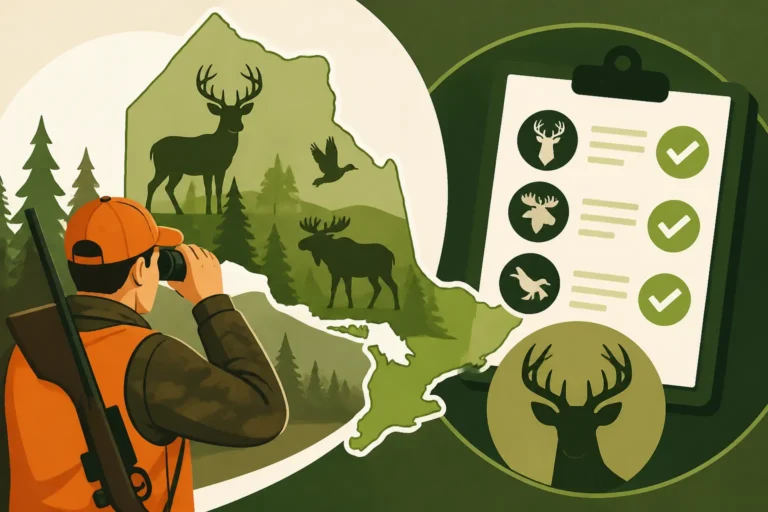
Big game, small game, upland birds, and waterfowl — identification, behavior, rut and migration timing, and how each species moves through the season.
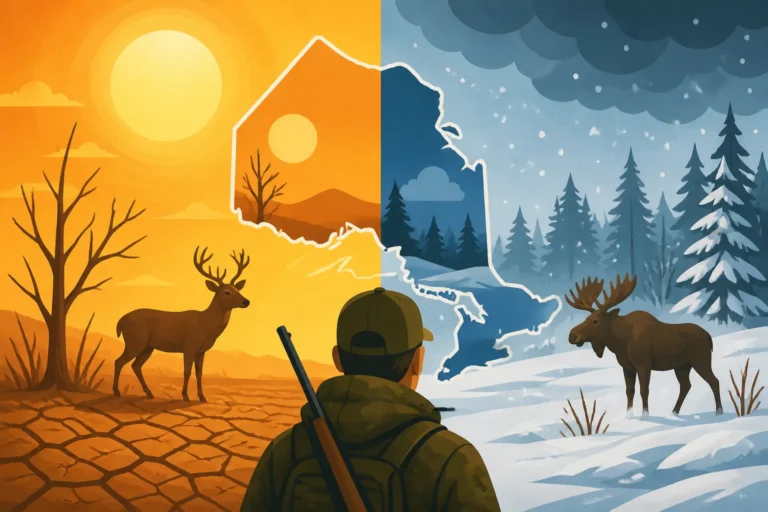
Changing winters in Ontario impact big game populations, affecting deer survival, moose health, and bear denning patterns.
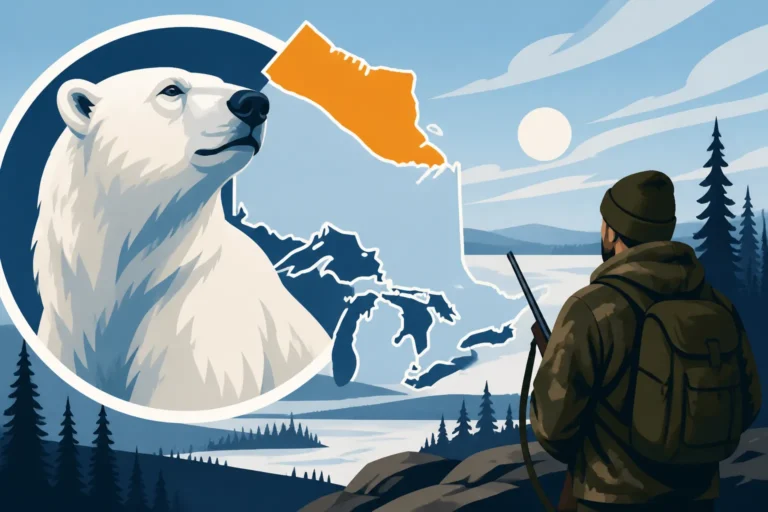
Ontario polar bear range details the Hudson Bay coast habitat, seasonal sea ice movements, and northern safety considerations.
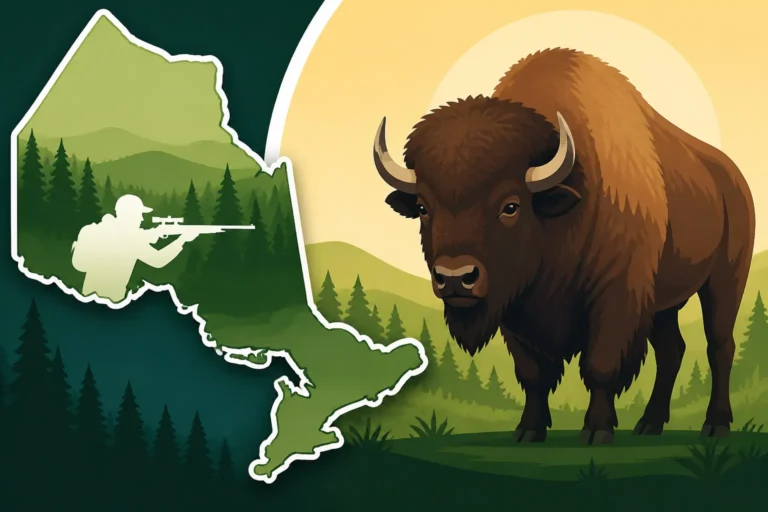
Wild bison populations in Ontario, their historical footprint, and reasons why no wild herds currently roam the province.
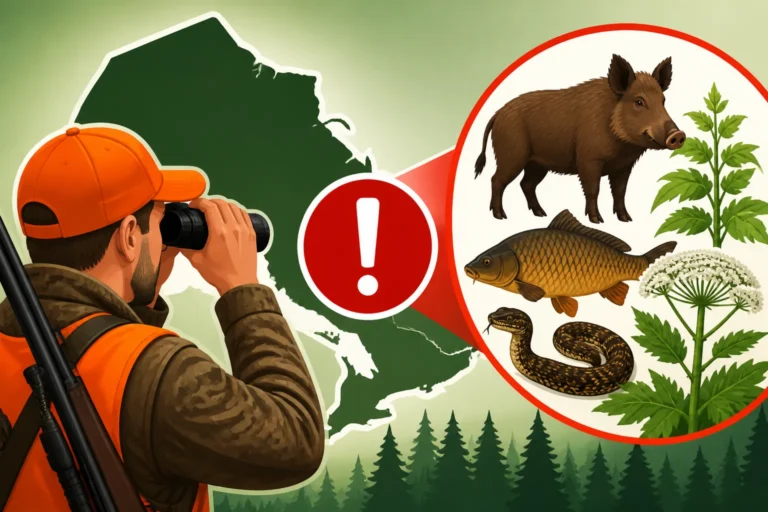
Invasive species in Ontario disrupt wildlife habitats and reduce game populations, threatening hunting traditions across the region.
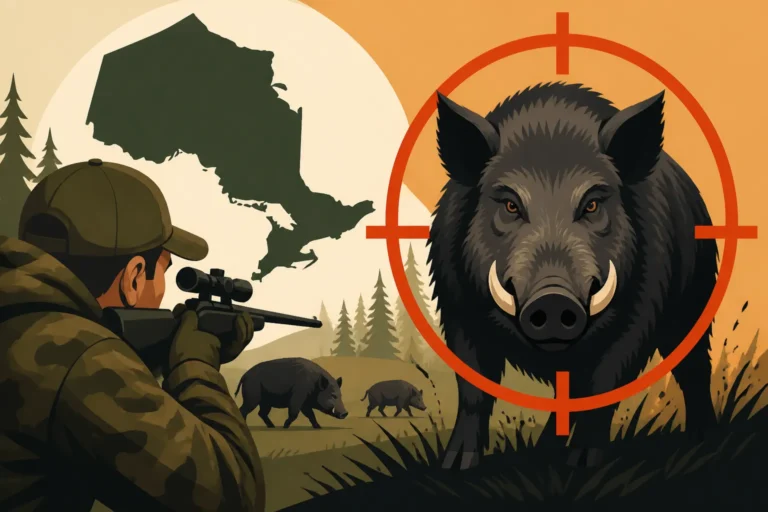
Ontario wild pig eradication efforts protect local ecosystems, native wildlife, and agriculture from destructive invasive species threats.
Wild pig populations in Ontario, including escaped domestic pigs and hybrids, damage ecosystems and threaten agriculture.
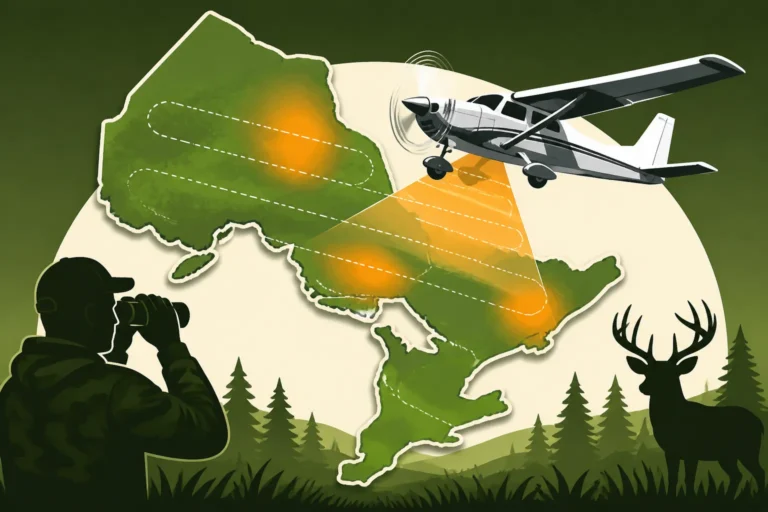
Ontario aerial wildlife surveys track moose and deer populations across the province to inform sustainable hunting management.
Ontario wildlife management uses aerial surveys from helicopters and hunter cooperation to count deer, moose, and bear populations.
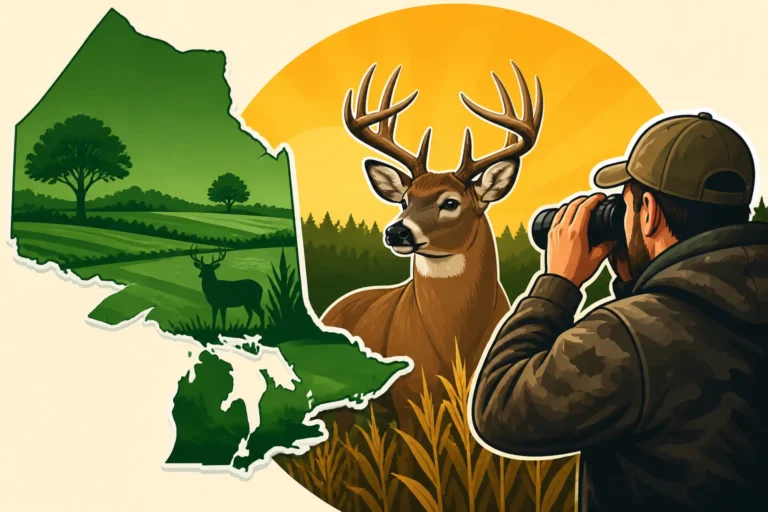
Southern Ontario wildlife productivity stems from rich agricultural farmland, corn fields, and diverse habitat transition zones.
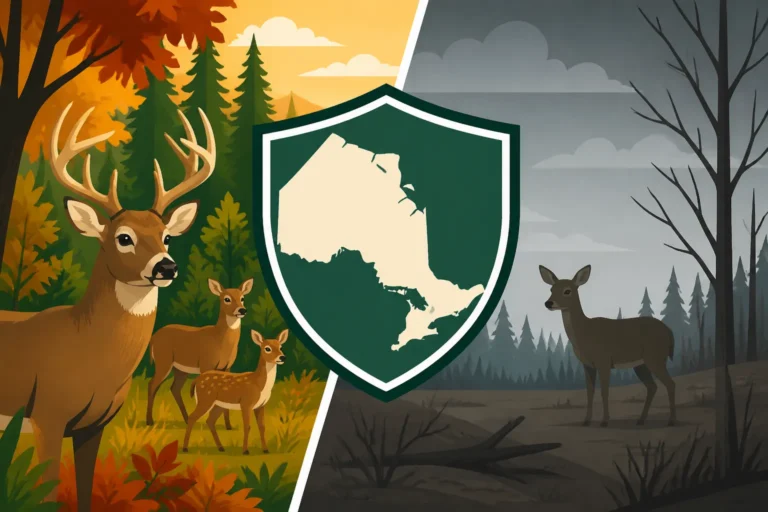
Granite bedrock and acidic soils across Ontario Canadian Shield limit whitetail deer populations because poor vegetation offers low nutrition.