Invasive Species Ontario Hunters Should Report
The landscape of Ontario, much like our hunting traditions, is constantly evolving. And one of the most insidious threats to our cherished wild spaces, and the game we pursue, comes from invasive species. These aren't just a minor annoyance; they're ecosystem disruptors that can dramatically alter habitats, reduce food sources, and even introduce diseases, making hunting tougher and less productive for all of us. This guide will walk you through what these unwelcome guests are, which ones to keep an eye out for as an Ontario hunter, and most importantly, how you can play a critical role in identifying and reporting them to protect our shared natural heritage.
What Are Invasive Species and Why Do They Matter to Hunters?
When we talk about "invasive species," we're not just talking about any plant or animal that’s moved into a new area. The key here is "invasive" – it means a species that is non-native to the ecosystem and whose introduction causes, or is likely to cause, harm to the environment, economy, or human health. For us hunters, the harm is often acutely felt in the very places we love to explore and the health of the game we pursue. It's a problem that can feel overwhelming, but understanding it is the first step towards being part of the solution.
Defining "Invasive" in an Ontario Context
Imagine a new kid moving into a school. If they integrate well, make friends, and don't cause trouble, that's fine. But if they come in, start pushing everyone around, hogging all the resources, and making things worse for the original students, that's an invasive problem. In nature, it's much the same. An invasive species might have been accidentally introduced through human travel, or sometimes intentionally, only for unforeseen consequences to emerge. They typically thrive in their new environment because they lack natural predators, diseases, or other controls that kept their populations in check in their native range. This allows them to reproduce rapidly and spread aggressively, often at the expense of native species.
Think about it: an invasive plant might grow so densely that it shades out native food sources that deer or grouse rely on. An invasive insect might decimate a tree species critical for forest health and squirrel habitat. It's a domino effect, and hunters are often on the front lines, witnessing these changes firsthand in the bush, fields, and wetlands.
The Ecological and Hunting Impact
The impacts of invasive species are far-reaching, directly affecting the quality of our hunting experiences and the health of our game populations. They are silent destroyers, often unnoticed until the damage is significant.
For instance, wetlands vital for waterfowl can become choked with European Common Reed, commonly known as Phragmites. These tall, dense monocultures create impenetrable walls that eliminate open water, reduce native plant diversity, and make it impossible for ducks to feed and nest. When you're Marsh Hunting Ducks on the Great Lakes or trying to jump-shoot a beaver pond, you'll quickly notice how these dense stands have replaced diverse cover. This isn't just an aesthetic issue; it's a loss of critical habitat and food for ducks, geese, and a myriad of other wetland creatures.
In our forests, plants like Garlic Mustard and Buckthorn can aggressively take over the understory. These plants outcompete native shrubs and forbs that provide essential browse and cover for white-tailed deer, ruffed grouse, and wild turkeys. If you're out Reading Whitetail Sign in Ontario Hardwoods, you might find vast areas where the diverse forest floor has been replaced by a single, less nutritious, or even unpalatable invasive species. This reduces the carrying capacity of the land, meaning fewer healthy game animals.
It's not just plants either. Invasive animals like wild pigs pose a direct and alarming threat. These incredibly destructive animals root up agricultural fields and forest floors, destroying crops and native vegetation. They compete with native wildlife for food, prey on fawns and ground-nesting birds, and, most critically, can carry diseases like African Swine Fever that could devastate our livestock industry and potentially impact wild deer herds. Imagine planning your Whitetail Hunting in Ontario trip only to find widespread disease or degraded habitat because of these feral hogs. The consequences are dire, which is why early detection and reporting are so critical.
Key Invasive Species Ontario Hunters Should Watch For
As hunters, we spend countless hours immersed in Ontario's diverse ecosystems, from the thick bush of the north to the farmlands of the south. This unique perspective makes us invaluable eyes and ears on the ground for identifying invasive species. Knowing what to look for is half the battle.
Invasive Plants Altering Game Habitat
These plant invaders change the very fabric of the habitat our game relies on.
- Phragmites australis (European Common Reed): You'll recognize this tall, aggressive grass by its towering height (up to 15 feet!), dense stands, and feathery, purple-brown seed heads that appear in late summer. It loves wet areas like ditches, shorelines, and wetlands, and it spreads rapidly both by seeds and underground rhizomes. When it takes over, it forms dense, monoculture "walls" that block sightlines, impede movement for deer and other animals, and completely displace native wetland vegetation that waterfowl and muskrats depend on for food and shelter. It’s devastating for Hunting Ducks in an Ontario Cattail Marsh as it wipes out diverse plant life.
- Garlic Mustard: This one is a widespread problem in woodlands, particularly in southern Ontario. It's a biennial plant, meaning it takes two years to complete its life cycle. In its first year, it forms a low rosette of kidney-shaped leaves close to the ground. In the second year, it shoots up a stalk, reaching 1 to 4 feet tall, with small white flowers at the top that turn into long, slender seed pods. Crush a leaf, and you'll get a distinct garlic-like smell. It outcompetes native wildflowers and tree seedlings, disrupting the delicate balance of the forest understory. Deer generally avoid eating it, further reducing available forage in affected areas. This can impact the health of deer populations, especially in areas where native browse is already limited, influencing factors like Why Southern Ontario Grows Heavy Bucks.
- Buckthorn (Common and Glossy): Buckthorn are small trees or large shrubs that can form dense thickets, especially at forest edges, fencerows, and neglected areas. Common Buckthorn has dull, dark green leaves with finely toothed edges and small thorns at the tip of twigs, while Glossy Buckthorn has untoothed, glossy leaves. Both produce abundant black berries that birds eat, spreading the seeds far and wide. They leaf out early and retain their leaves late into the fall, shading out native plants for longer periods. These dense thickets provide poor habitat for many native species and can significantly reduce the quality of a Hunting an Ontario Bush Edge or woodlot.
Invasive Animals Threatening Native Wildlife and Ecosystems
While invasive plants might seem more common, invasive animals can have even more dramatic and destructive impacts.
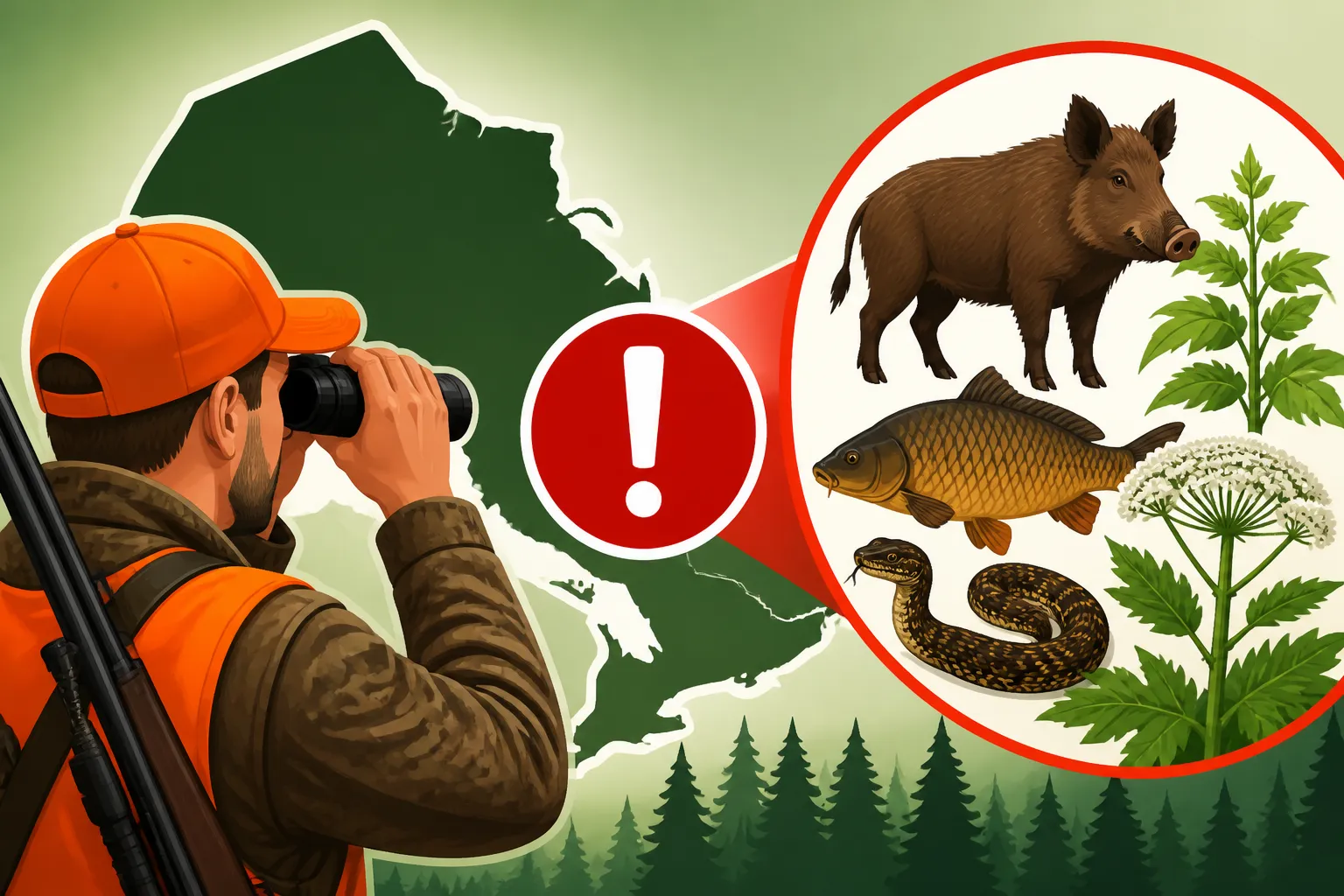
- Wild Pigs (Feral Swine): This is arguably the most concerning invasive animal for Ontario hunters. These aren't just farm escapees; they are a rapidly reproducing, highly destructive species. They come in various colours and sizes, but generally resemble a lean, muscular pig with coarse hair, a straight tail, and often tusks. Their destructive rooting behaviour, where they dig up the ground to find food, leaves fields and forests looking like they've been rototilled. This destroys crops, native vegetation, and prime feeding areas for other wildlife. They also compete directly with native animals like deer, bears, and turkeys for food. But perhaps their greatest threat is their potential to spread serious diseases, including African Swine Fever, to domestic livestock and wild ungulates. If you're Hunting a Standing Corn Field Edge or Hunting a Soybean Field at Dusk, a wild pig sighting should be immediately reported. We don't want them establishing a foothold here.
- Asian Carp (specifically Grass Carp): While not a direct game animal for most hunters, the presence of Asian Carp, particularly Grass Carp, in our waterways is a significant concern for those who pursue waterfowl. These large, fast-growing fish consume vast quantities of aquatic vegetation. Imagine the impact on the submerged plants that ducks and geese rely on for food. If you're Diver Hunting Ontario's Big Water or scouting shallow bays, a proliferation of these fish could lead to a dramatic reduction in the plant life that sustains healthy waterfowl populations. They compete with native fish species and fundamentally alter the aquatic food web.
- Emerald Ash Borer: This tiny, metallic-green beetle is devastating ash trees across Ontario. While ash isn't a primary food source for many game animals, the widespread death of ash trees fundamentally changes forest composition. A forest devoid of ash trees means less canopy, altered light levels reaching the forest floor, and a cascade of effects on other plant and animal species that depend on that specific forest structure. Hunters frequently walk through these forests, and the sight of dying ash trees with D-shaped exit holes is a clear sign of its presence.
- Rusty Crayfish: An aggressive freshwater crayfish, easily identified by large, smooth, reddish-brown claws with a distinct dark band near the tip, and often rust-coloured spots on its carapace. They outcompete native crayfish species, consume large amounts of aquatic vegetation, and reduce fish populations by eating fish eggs and young fish. For anyone who enjoys Hunting Moose Around an Ontario Beaver Pond or other wetland areas, a healthy aquatic ecosystem is crucial, and the rusty crayfish throws that balance way off, affecting everything up the food chain.
How to Identify and Report Invasive Species
As hunters, we're out there, boots on the ground, observing the subtle (and sometimes not-so-subtle) changes in our environment. This makes us frontline defenders against invasive species. Your keen eyes and understanding of the land are incredibly valuable.
Visual Identification Tips for Common Invaders
Being able to confidently identify an invasive species is the first step. Here's a quick cheat sheet for some of the common ones you might encounter:
- Phragmites: Look for towering height, often forming dense, impenetrable stands, especially in ditches, wet fields, and along shorelines. The feathery, purplish-brown seed heads are prominent in late summer and fall. Stems are typically tough, hollow, and may have red spots.
- Garlic Mustard: In spring, look for rosettes of kidney-shaped leaves near the ground. Second-year plants have tall stems (1-4 feet) with triangular, toothed leaves and small white flowers in clusters. The key is the garlic smell when you crush a leaf!
- Buckthorn: Shrub or small tree, often with small thorns on the branch tips. Leaves stay green late into fall. Common Buckthorn has alternate leaves with fine teeth and prominent veins. Glossy Buckthorn has untoothed, glossy leaves. Both have dark berries in clusters.
- Wild Pigs: These are tougher to identify definitively from a distance, but look for a dark, lean, coarse-haired pig-like animal, possibly with tusks. More often, you'll see their sign: extensive rooting or "plowing" of the ground, wallows (muddy depressions), and distinct tracks that are generally wider and rounder than deer tracks.
If you're unsure, snap a picture! Modern smartphones make this incredibly easy, and a clear photo can be invaluable for experts to confirm identification.
What Information to Gather When You Spot Something
When you come across a suspected invasive species, especially a high-priority one like wild pigs, the more information you can collect, the better. Think of yourself as a detective for nature.
- Exact Location: This is paramount. Use a GPS app on your phone (many hunters use mapping apps like GoHunt for their scouting, which are perfect for this!) or note specific landmarks. Coordinates (latitude/longitude) are ideal, but a precise description, like "200 yards east of the old logging road, just past the beaver pond on Crown Land in WMU 10," is also very helpful. Knowing the Ontario's Wildlife Management Units can help you pinpoint your location.
- Date and Time: When did you see it? This helps track spread and seasonality.
- Photos or Video: Clear, close-up photos of the species itself, as well as broader shots of the infestation or the animal in its environment. For plants, include leaves, flowers, seeds, and the overall plant structure. For animals, try to get clear shots if it's safe to do so.
- Estimated Numbers: How many plants? How many individuals or a group of animals? If it's a large patch, estimate the size.
- Distinguishing Features: Note any unique colours, sizes, behaviours (for animals), or growth patterns that stand out.
Don't approach wild pigs, especially sows with piglets, as they can be dangerous. Maintain a safe distance and prioritize your safety.
Official Reporting Channels for Hunters
Reporting your sightings is crucial for management efforts. Early detection can mean the difference between containing an invasion and facing a widespread problem.
In Ontario, there are a few primary ways to report invasive species:
- EDDMapS Ontario: This is a web-based mapping system for documenting invasive species sightings. You can use their website or the companion mobile app (available for both Apple and Android devices). It allows you to submit photos and location data directly.
- Invading Species Awareness Program (ISAP) Hotline: Operated by the Ontario Federation of Anglers and Hunters (OFAH) in partnership with the Ministry of Natural Resources and Forestry (MNRF), this hotline is a direct line for reporting. They have trained staff who can help confirm identification and ensure the report gets to the right people.
- iNaturalist: A popular platform for citizen scientists, iNaturalist allows you to upload observations of plants and animals, and a community of experts can help with identification. It's not specifically for invasives, but reports can be flagged and contribute to data used by invasive species programs.
- Local Conservation Authorities or Park Staff: If you are hunting on specific Ontario's Conservation Authority Lands or in a provincial park that allows hunting, reporting directly to their staff can be effective.
Remember that mapping tools like GoHunt, which many hunters use for Scouting a Wildlife Management Unit and marking potential stand sites, can also be used to accurately mark the location of an invasive species before you transfer that information to an official reporting channel. It's about leveraging the tools you already use for hunting to become a more effective conservationist.
The Hunter's Role in Preventing Further Spread
Our connection to the land gives us a unique responsibility and opportunity to be proactive stewards. Preventing the spread of invasive species is just as important as reporting them. It's about adopting a mindset of vigilance and responsible practices every time we step into the field or forest.
"Clean, Drain, Dry" and "Stop the Spread"
These are not just slogans; they are critical actions.
- Clean Your Gear: Before and after every hunt, especially when moving between different areas or Hunting Ontario's Crown Land, take the time to inspect and clean your boots, clothing, backpacks, and any equipment you used. Plant seeds, plant fragments, and even tiny insect larvae can hitchhike on muddy boots, Velcro straps, or vehicle undercarriages. Use a stiff brush, vacuum, or compressed air to remove all soil, seeds, and plant material. This is particularly important if you've been in an area known to have invasives like Phragmites or Garlic Mustard.
- Drain Water, Dry Equipment: If your hunt involves boats, canoes, or even waders and decoys (think Waterfowl Hunting Across Ontario), adhere to the "Clean, Drain, Dry" principle. This means draining all water from your boat, livewell, and equipment, and thoroughly drying everything before transporting it to a new water body. Many aquatic invasive species, like Zebra Mussels or Rusty Crayfish, can survive in small amounts of water or cling to damp surfaces.
- Inspect Vehicles and ATVs: When you’re hunting an Ontario logging road or driving into a remote bush camp, your vehicle and ATV can become vectors for invasive seeds and plant fragments. Before leaving a site, particularly if it was wet or muddy, take a few minutes to inspect tire treads, mud flaps, and the undercarriage, removing any caked-on mud or plant material.
These simple steps can prevent inadvertently introducing an invasive species to a new, vulnerable ecosystem.
Responsible Baiting and Feeding Practices
While regulations regarding baiting vary by species and location, it's crucial to be aware of how feed and attractants can contribute to the spread of invasives, or worse, introduce new ones. Always source your feed from reputable local suppliers and be vigilant about what you are bringing into the environment. Imported feed can sometimes contain seeds of invasive plants or even introduce diseases if not properly handled. When planning a Baiting Black Bear in Ontario operation, for example, ensure your bait sources are clean and free of anything that could harm the local environment. Always check current regulations for Ontario Rules on Baiting Big Game to ensure compliance and avoid unintended consequences.
Educating Yourself and Others
Being a knowledgeable hunter means being an educated conservationist. Take the time to learn about the invasive species that pose a threat in your specific hunting areas. Many conservation groups and government agencies offer free resources, identification guides, and workshops. Share this knowledge with your hunting buddies, your family, and your community. The more eyes and ears we have on the ground, the better equipped we are to combat this growing threat.
Think about the legacy we want to leave for future generations of hunters. A healthy, vibrant ecosystem, teeming with native game, is part of that legacy. By being vigilant, adopting best practices, and actively participating in reporting, we can all contribute to protecting Ontario's natural hunting heritage.
Disclaimer
This article is for general informational purposes only and does not constitute professional advice. Laws, prices and regulations vary by location and change over time. Consult a qualified professional for guidance on your specific situation.