What Whitetails Eat Through a Hard Winter
The harsh reality of an Ontario winter can be incredibly tough on our whitetail deer. As hunters, we often focus on their diet during the lush months of fall, but understanding what sustains them when snow blankets the landscape and temperatures plummet is just as crucial. This guide will take a deep dive into the winter diet of whitetails, exploring how they adapt, what they seek out, and the challenges they face when nature truly tests their resilience.
The Brutal Reality of an Ontario Winter for Whitetails
Imagine being out in the bush when the mercury dips to -20°C, and the snow is hip-deep. That's a typical Tuesday for an Ontario whitetail in January. Their very survival depends on a delicate balance of stored energy, the ability to find what little food is available, and suitable cover to escape the worst of the elements. It’s a constant battle, and not every deer makes it through.
Surviving on Stored Energy
Before the deep freeze truly sets in, usually by late November, Ontario whitetails are in a frantic race to build up their fat reserves. This period, often around the tail end of the rut, sees them gorging on acorns, beechnuts, apples, and agricultural crops, packing on as much weight as possible. This stored energy, primarily as fat, is their lifeline when food becomes scarce. It's the fuel that keeps their internal furnace burning when the external temperatures are brutal.
As winter progresses, deer enter a state of metabolic slowdown. They become less active, moving only when necessary, to conserve those precious fat reserves. Every step through deep snow costs them energy, and every calorie burned without replacement chips away at their chances of survival. A deer that goes into winter lean, perhaps a fawn born late, an older doe worn out from raising fawns, or a buck that ran himself ragged during the rut, faces a significantly tougher road ahead. Their ability to find and process even minimal browse must be incredibly efficient.
The Critical Role of Winter Cover
Food isn't the only challenge; finding thermal cover is paramount. Dense conifer stands—cedar, spruce, balsam fir, and even thick white pine—act like natural insulated shelters. These "deer yards" are crucial. The thick canopy traps heat, reducing wind chill and snow accumulation on the forest floor, which in turn makes it easier for deer to move and access what little browse might be available. You'll often find deer congregated in these areas, stomping out a network of trails to reach palatable vegetation.
These areas, often found in low-lying cedar swamps or dense pine plantations, are not just about shelter; they're also often where preferred winter foods grow. Deer don't just pick a spot for cover and hope for the best; they select areas that offer a combination of both. The denser the cover, the less energy they expend trying to stay warm, allowing their stored fat to last longer. Understanding these core survival needs helps us grasp the gravity of Where Ontario Whitetails Yard in Deep Snow.
Preferred Winter Forage: The Deer's Winter Menu
When the forest floor is locked under ice and snow, and broadleaf plants have shed their bounty, whitetails shift their diet dramatically. They become browsers, nibbling on twigs, buds, and evergreen needles, carefully selecting what offers the most nutritional value and is easiest to digest from a sparse menu.
Browsing the Bush
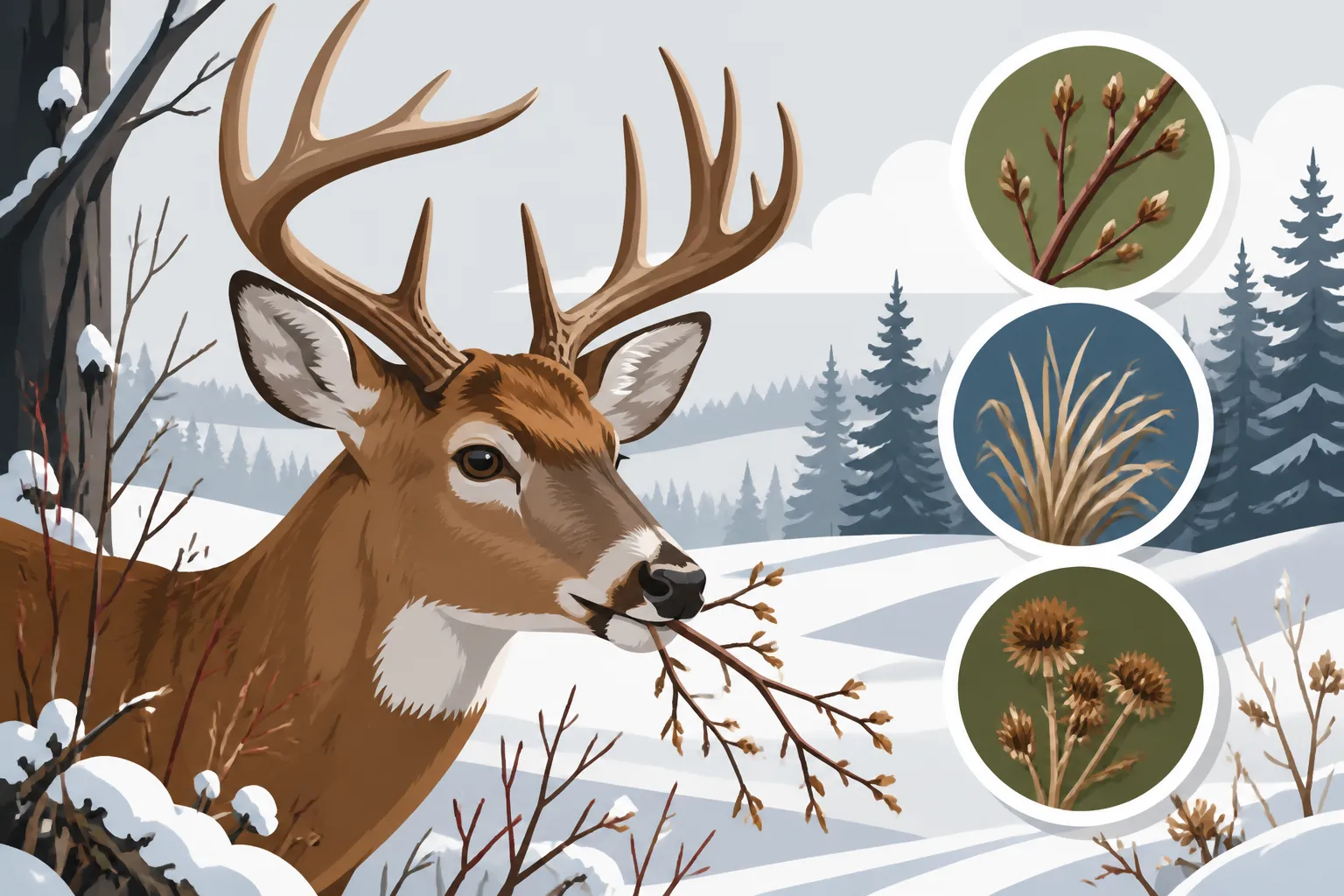
The primary winter food source for whitetails is woody browse. This includes the dormant twigs and buds of various deciduous trees and shrubs that are still accessible above the snow line. Think about species like red-osier dogwood, maple saplings (especially red and striped maple), trembling aspen, beaked hazelnut, and willow. Deer will systematically clip these small branches, extracting what meager nutrients they can. The younger, more tender shoots are always preferred, as they are easier to digest and generally more nutritious than older, tougher growth.
The palatability of these plants varies, and deer will often show clear preferences. In areas where winter pressure is high, or preferred browse is scarce, you’ll see obvious browse lines where deer have literally eaten everything they can reach. This can be a strong indicator of deer density and winter habitat quality. When you're Reading Whitetail Sign in Ontario Hardwoods, keep an eye out for these tell-tale clipped branches; they speak volumes about where deer are concentrated.
The Evergreen Lifeline
Without a doubt, eastern white cedar (Thuja occidentalis) is the undisputed champion of winter forage for Ontario whitetails, especially in the central and eastern parts of the province. It's incredibly valuable due to its high nutritional content and its abundance in the very cedar swamps that also provide critical thermal cover. Deer will literally dig through snow to get at fallen cedar branches or reach up as high as they can to clip off twigs. It’s an essential part of How Deer Use a Cedar Swamp in Winter.
While cedar is king, other evergreens like balsam fir and white pine can also provide emergency sustenance. These are generally less palatable and nutritious than cedar, but in a severe winter, or in areas where cedar is scarce, deer will turn to them. However, relying too heavily on these secondary options can lead to digestive issues and further stress an already struggling animal. A deer’s digestive system is finely tuned for specific forage, and abrupt, forced changes can sometimes do more harm than good.
Scavenging and Opportunity
Beyond woody browse, whitetails are opportunists. If a mild spell or wind exposes a patch of ground, they might nose around for any leftover acorns or beechnuts from the previous fall, though this is rare in deep winter. Similarly, unharvested agricultural crops like standing corn or soybean stubble can become a magnet for deer if they're accessible. Hunting a Standing Corn Field Edge in late season often finds deer there not just for cover, but for the kernels left behind.
However, these opportunities are often short-lived or come with their own risks. Moving into open fields makes them vulnerable to predators, and corn, while high in energy, can cause acidosis if consumed in large quantities by deer unaccustomed to it, especially when their digestive systems are already adapted to fibrous woody browse. This just underscores how critical their natural, preferred browse is.
The Impact of Severe Winters and Human Interaction
A truly brutal Ontario winter isn't just an inconvenience for whitetails; it's a profound stressor that can have long-lasting consequences for individual deer and the entire herd.
When Food Runs Out: Consequences of a Hard Winter
When the snow is deep for extended periods, and temperatures remain critically low, even the toughest deer can struggle. The most immediate impact is significant weight loss. Deer can lose a substantial percentage of their body weight, relying entirely on those dwindling fat reserves. This weakened state makes them far more susceptible to disease, such as Ticks and Parasites in Big Game or other infections, and increases their vulnerability to predation from wolves, coyotes, and even domestic dogs.
Fawns are particularly vulnerable. With smaller body masses and less fat to draw upon, they are often the first to succumb to starvation or exposure. This can lead to a noticeable dip in fawn recruitment rates for the following spring, impacting the herd's overall population for years to come. In extreme conditions, even adult deer can perish, leading to a phenomenon known as "winter kill." Understanding What a Hard Ontario Winter Culls helps hunters appreciate the cyclical nature of deer populations and the sheer resilience of these animals.
The Debate Around Winter Feeding
It's natural to feel a pang of empathy when you see deer struggling in deep snow, and many well-meaning individuals consider putting out feed for them. However, wildlife biologists and experienced hunters generally discourage supplementary feeding. While it seems like a kind gesture, it can actually do more harm than good.
Here's why:
- Concentration and Disease: Feeding stations unnaturally concentrate deer in one area, making them more prone to spreading diseases like Chronic Wasting Disease (CWD) if it were ever to appear in Ontario, or even common parasites.
- Digestive Issues: A deer's digestive system adapts to winter browse. Suddenly introducing high-carbohydrate foods like corn can disrupt their gut flora, leading to acidosis, which can be fatal. They may starve with a belly full of corn they can't properly digest.
- Predation: Concentrating deer also makes them an easy target for predators, both natural and domestic.
- Dependency: Deer can become habituated to artificial feeding, losing their natural foraging instincts and becoming dependent on humans, which isn't sustainable or healthy in the long run.
Instead of direct feeding, a more effective long-term approach for those interested in helping deer is habitat improvement. Planting native browse species, hinge-cutting trees to provide low-lying food and cover, or managing woodlots to encourage diverse growth can offer sustainable benefits without the negative side effects of direct feeding.
Scouting for Winter Browse and Deer Signs
Understanding what whitetails eat in winter isn't just academic; it’s vital for becoming a better hunter and conservationist. It informs our scouting efforts, helps us appreciate the challenges deer face, and can even predict herd health for future seasons.
Reading the Winter Landscape
Even after the hunting season closes, the winter landscape holds clues for those willing to brave the cold. By observing heavily browsed areas, especially in or around cedar swamps, you can identify critical wintering grounds. Look for the distinct, clean cuts that deer make on twigs, contrasting them with the ragged tears of rabbits or moose. These areas show you where deer are spending their most challenging months.
Pay attention to deer trails leading into and out of these dense cover areas. These aren't just random paths; they're essential travel corridors to and from bedding areas and the best available forage. Fresh snow can be your best friend for identifying these patterns, revealing deer movement and preferred feeding zones. Using modern mapping tools like GoHunt can help you scout these areas digitally, identifying concentrations of conifer cover or prime browse before you even step foot in the bush. Look for those dark green splotches on the satellite imagery that indicate dense evergreen stands.
Planning for Future Hunts
The knowledge gained from observing winter feeding patterns is invaluable for planning your spring scouting and subsequent fall hunts. If you find a heavily used winter yard, it's highly probable that some of those deer will establish their core home ranges nearby once spring arrives. They might disperse to summer feeding areas but will often return to the familiar safety and resources of that wintering ground as the cold weather approaches again. This intel can help you pinpoint areas for hanging stands in the shoulder seasons or identifying key travel routes.
Observing how deer survive the winter can teach you a lot about their resilience and preferences. A tough winter might mean fewer fawns the next year, or that older, weaker animals didn't make it. This knowledge helps you appreciate the dynamics of the herd you're hunting. Tools like GoHunt, combined with your boots-on-the-ground scouting, can help you map out these critical zones, giving you an edge when it comes time to apply for Ontario Deer Season Dates and Tags or figure out the best approach to Whitetail Hunting in Ontario.
Remember, the winter woods are a harsh but honest teacher. By understanding what whitetails eat through a hard winter, we gain a deeper respect for their survival instincts and become more informed stewards of the land.
| Forage Type | Examples | Nutritional Value (Winter) | Deer Preference | Notes |
|---|---|---|---|---|
| Preferred Browse | Eastern White Cedar, Red-Osier Dogwood, Maple | High | Very High | Crucial for survival; often found in thermal cover |
| Secondary Browse | Balsam Fir, White Pine, Willow, Aspen | Moderate | Moderate to High | Used when preferred browse is scarce; less palatable |
| Opportunistic | Acorns, Beechnuts, Standing Corn/Soybeans | High (if accessible) | High (if found) | Relies on exposed ground or unharvested crops |
| Emergency | Birch, Alder, Some Shrubs | Low | Low | Last resort; provides minimal nutrition |
Disclaimer
This article is for general informational purposes only and does not constitute professional advice. Laws, prices and regulations vary by location and change over time. Consult a qualified professional for guidance on your specific situation.