Black Bear Numbers and Where They Peak
Trying to understand where Ontario's black bears are thriving and how their numbers are holding up can feel like a bit of a mystery, especially when you're planning a hunt or just keen to know more about these incredible animals. It’s not always obvious where their populations are densest or what factors truly influence their movements and overall health. This guide is here to unravel that mystery, offering you a deep dive into black bear populations across Ontario, highlighting where they peak, what drives those numbers, and how we, as outdoor enthusiasts, can best understand and coexist with them.
Understanding Ontario's Black Bear Population
Ontario is vast, and its black bear population is equally impressive, making it a truly iconic species of our northern wilderness. For anyone who spends time in the bush, whether you're hunting, camping, or just exploring, knowing a bit about these intelligent creatures and their numbers is essential. It's more than just raw data; it's about appreciating the intricate balance of our ecosystems.
Estimating the Current Population
Pinpointing an exact number for any wild animal population is notoriously difficult, and black bears are no exception. They're elusive, they cover vast territories, and much of their range is dense, remote wilderness. However, through a combination of aerial surveys, hunter harvest data, scientific studies involving tagging and tracking, and observational reports, wildlife biologists in Ontario do their best to provide reliable estimates. Current data suggests that Ontario is home to a robust and healthy black bear population, often estimated to be around 85,000 to 100,000 individuals, and sometimes even more, depending on the year and regional factors. This is a significant number, underscoring their prevalence across much of the province.
It's important to remember that these are estimates, not precise counts. The numbers can fluctuate based on a variety of ecological factors, like cub survival rates, food availability, and even winter severity. A mild winter followed by a bountiful berry crop, for instance, often leads to higher cub survival and better health for sows, which in turn can boost the overall population in subsequent years. Conversely, a harsh winter coupled with a poor food year can see a dip. Understanding these dynamics is crucial for sustainable management.
Historical Trends and Management
Ontario's black bear population has a fascinating history, reflecting shifts in land use, human settlement patterns, and evolving wildlife management strategies. For a long time, black bears were often viewed as pests, and there were periods of unregulated hunting and even bounties. However, as our understanding of ecology grew, so did the appreciation for the black bear's role in the ecosystem. The modern era of wildlife management in Ontario recognizes black bears as a valuable game species and an integral part of our natural heritage.
The return of the spring bear hunt in 2016 (following a pilot program in 2014) across the entire province was a significant development, reflecting a more balanced approach to managing populations and addressing human-bear conflicts. Prior to this, for many years, only a fall hunt was permitted. The Ministry of Natural Resources and Forestry (MNRF) now uses a combination of harvest quotas, reporting requirements, and regional management strategies to ensure bear populations remain healthy and sustainable. This involves closely monitoring harvest rates, analyzing biological data from harvested bears, and adapting regulations as needed. For hunters and conservationists alike, staying informed about Ontario's Black Bear Rules is key to participating responsibly in this management framework. The goal is to maintain a healthy, viable bear population while also mitigating conflicts with humans, especially in areas where urban and wild spaces meet.
Factors Influencing Bear Numbers
Black bear populations are not static; they ebb and flow with the rhythm of the natural world, influenced by a complex interplay of environmental factors. Understanding these dynamics is crucial for appreciating why bear numbers might be thriving in one area and less so in another. It’s not just random; there’s a science to it.
Food Availability and Natural Cycles
If there's one thing that dictates a black bear's life, it's food. Bears are opportunistic omnivores, and their diet changes with the seasons. In spring, as they emerge from their dens, they're looking for protein-rich new growth, carrion, and insects. As summer progresses, they shift to berries—blueberries, raspberries, saskatoons—which are critical for building fat reserves. Come fall, acorns, beechnuts, and other mast crops become incredibly important. A good mast year can lead to fatter, healthier bears, higher cub survival rates, and more productive sows. Conversely, a poor berry or mast crop can mean bears have to travel further, leading to more human-bear encounters and potentially lower cub survival. This is why you might hear local outfitters or seasoned hunters talking about "berry years" or "mast years." It directly impacts where the bears will be and how many there are.
These food cycles are often regional. For example, a severe drought in one part of the province might devastate the berry crop there, forcing bears to seek food elsewhere, while another region experiences a bumper crop. This natural variability means bear populations can fluctuate locally year to year, even if the overall provincial numbers remain stable. Outfitters like GoHunt often track these localized food trends to predict bear movements and concentrations for their clients, helping them improve their chances of success. Understanding Why Berry Crops Move Ontario Bears is a vital piece of the puzzle for any hunter.
Habitat Loss and Human Encroachment
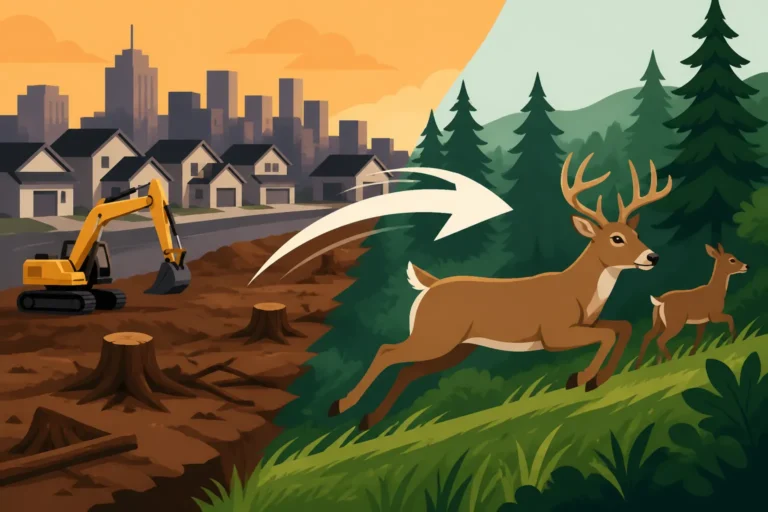
While Ontario is vast, human expansion inevitably impacts wildlife habitat. Road construction, logging, mining operations, and the expansion of cottage country all fragment and reduce prime bear habitat. Bears need large, continuous tracts of forest with a good mix of cover, food sources, and denning sites. When these areas are broken up, bears are forced into smaller pockets or closer proximity to human settlements. This doesn't necessarily mean fewer bears overall, but it can lead to higher densities in remaining wilderness areas and, unfortunately, an increase in human-bear conflicts.
A bear that learns to associate humans with food, whether from garbage, bird feeders, or unsecured campsites, often becomes a "nuisance bear." While efforts are made to relocate these bears, sometimes more drastic measures are required for public safety. This interplay highlights the delicate balance between human activity and wildlife conservation. Responsible land use planning and public education on living in bear country are paramount to minimizing these negative interactions and ensuring bears have the space they need to thrive.
Impact of Hunting Regulations
Hunting plays a critical role in black bear management in Ontario, not just as a recreational activity but as a tool for population control and conservation. The MNRF sets hunting seasons, bag limits, and specific regulations (like the requirement for a Black Bear Validation Certificate) designed to maintain a healthy and sustainable bear population. The reintroduction of the province-wide spring bear hunt was, in part, a response to rising bear populations and an increase in human-bear encounters, particularly in more populated areas.
Harvest data provides valuable insights into population health. Biologists analyze the number of bears harvested, their age and sex ratios, and their overall condition to assess the effectiveness of current regulations and make adjustments as needed. For instance, regulations prohibit shooting a sow with cubs (a rule that is vital for population sustainability, as discussed in Why You Cannot Shoot a Sow With Cubs), and hunters are encouraged to Judging a Boar From a Sow With Cubs before taking a shot. This careful management ensures that hunting contributes to the health of the bear population by keeping it within the carrying capacity of the land, while also helping to reduce conflicts with humans.
Regions Where Bear Densities Peak
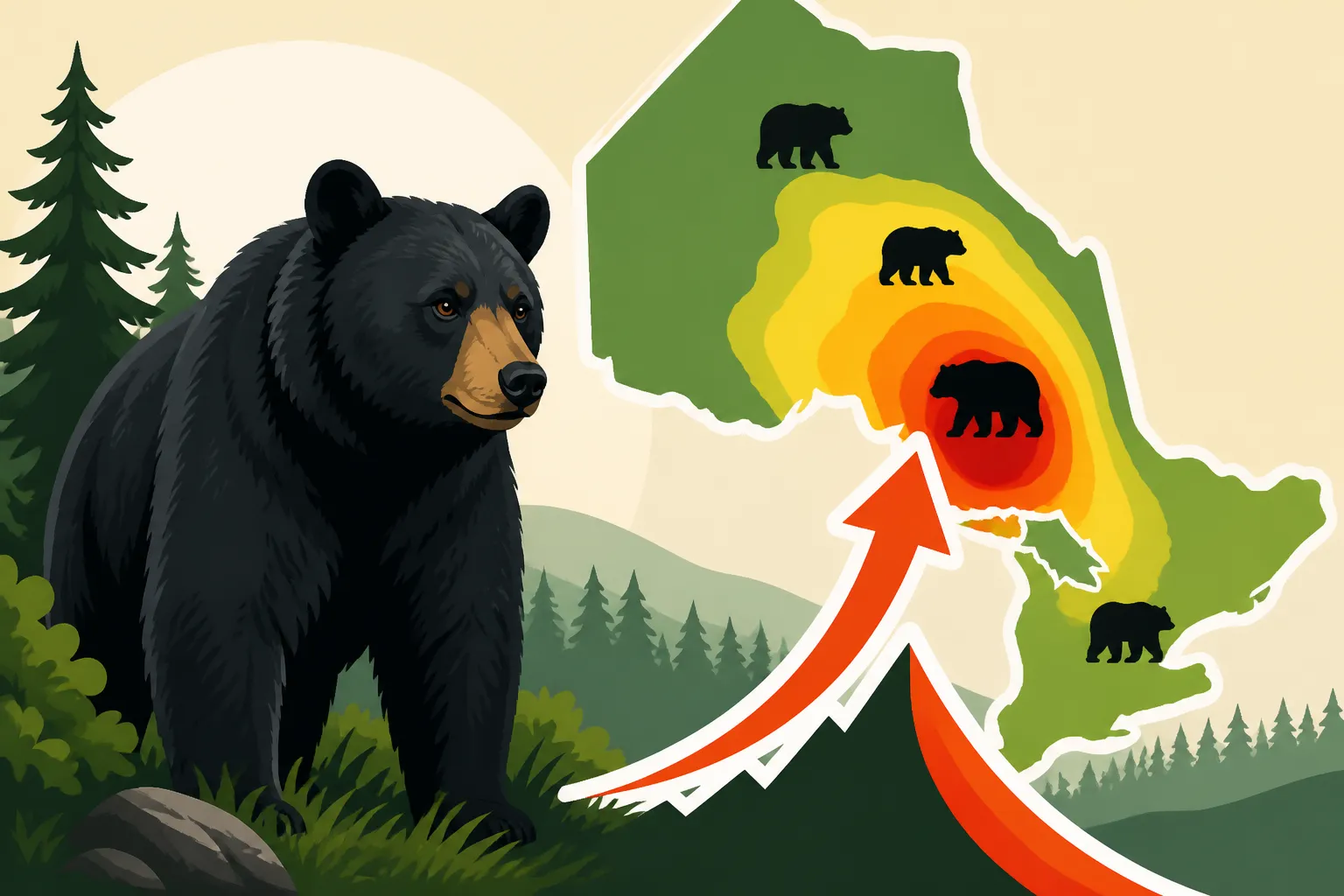
When we talk about black bear populations peaking, we're really talking about specific regions of Ontario where the habitat, food sources, and general remoteness combine to create ideal conditions for these animals. While bears can be found across much of the province, some areas are just more "bear-y" than others, if you catch my drift. These are the places where the chances of encountering a bear are highest, making them prime destinations for hunters and wildlife viewers alike.
Northwestern Ontario's Bear Hotbeds
If you're looking for high bear densities, Northwestern Ontario is often the first place that comes to mind for many experienced hunters and guides. This vast region, stretching from Thunder Bay west to the Manitoba border and north towards Hudson Bay, is characterized by immense tracts of boreal forest, countless lakes, rivers, and remote wilderness. Areas around Kenora, Dryden, Sioux Lookout, and Rainy River are particularly renowned. The sheer scale of untouched habitat means bears have abundant space, diverse food sources, and plenty of secure areas for denning and raising cubs.
The mixed forest of spruce, pine, poplar, and birch provides a rich mosaic of food. Early spring vegetation, blueberries and raspberries in summer, and hazelnut and various mast crops in the fall all contribute to a robust food chain for bears. The limited human population in many of these areas also means less habitat fragmentation and fewer human-bear conflicts, allowing populations to thrive largely undisturbed. This is the kind of country where bears can truly be wild, and a guided hunt or even a DIY trip into Hunting Northwestern Ontario's Big Bush can be an unforgettable experience. Outfitters in this region frequently report high success rates, largely due to these consistently high bear numbers.
Northeastern Ontario's Prime Bear Country
Northeastern Ontario, from Sudbury and North Bay up through Timmins, Cochrane, and Kapuskasing, is another stronghold for black bears. This region, often referred to as the Clay Belt in its northern reaches, also boasts extensive boreal forests, intertwined with wetlands and clear-cuts from logging operations. These regenerating clear-cuts, especially a few years post-harvest, can become prime bear habitat, offering dense cover and a proliferation of berry bushes like raspberries and saskatoons, which bears absolutely love.
The abundance of moose and deer in these areas also provides a potential food source in the form of carrion, particularly after a harsh winter. Areas like the Chapleau Crown Game Preserve, though largely protected from hunting, exemplify the kind of habitat that supports thriving bear populations, with spillover into surrounding hunting zones. Hunters looking to head into Hunting Northeastern Ontario's Clay Belt often find excellent opportunities, especially around productive logging roads and regenerating forest patches. The remote nature of much of this territory, coupled with accessible logging roads, makes it a popular choice for both resident and non-resident hunters alike.
Central Ontario's Emerging Opportunities
While the North is often seen as the traditional heartland for Ontario's bears, Central Ontario has its own significant populations, particularly in the mixed forests and rugged terrain of the Canadian Shield. Areas like the Haliburton Highlands, Muskoka, and the Algonquin Park fringe offer excellent bear habitat. While not as vast and remote as the far north, these regions still provide extensive forested landscapes, rock ridges, and wetlands that are perfect for bears. The presence of significant hardwood stands means a reliable source of acorns and beechnuts in mast years, which can draw bears in.
The challenge here is often finding accessible, unpressured areas, as these regions are closer to major population centers. However, for those willing to Hunting Central Ontario's Mixed Forest and put in the legwork, excellent opportunities exist. Often, private land permission or careful scouting of Crown Land in less accessible areas can yield fantastic results. It's a different kind of bear hunt than the deep boreal, but no less rewarding. The proximity to southern populations also means that human-bear conflicts can be more pronounced, making careful management even more important.
Here's a simple table to illustrate general bear density by region:
| Region | Typical Bear Density (Estimated per 100 sq km) | Key Habitat Features | Primary Food Sources (Seasonal) |
|---|---|---|---|
| Northwestern Ontario | 40-70+ | Vast boreal forest, numerous lakes/rivers, remote wilderness | Berries, nuts, carrion, grasses, insects |
| Northeastern Ontario | 30-60 | Boreal forest, Clay Belt, regenerating clear-cuts, wetlands | Berries (especially raspberry), nuts, insects |
| Central Ontario | 20-40 | Mixed forest, Canadian Shield, hardwood ridges, wetlands | Mast crops (acorns, beech), berries, grasses |
| Southern Ontario | <10 (localized) | Fragmented forest, agricultural land, urban interface | Opportunistic (garbage, crops), limited natural |
Note: These figures are generalized estimates and can vary significantly year to year and within specific areas of each region.
Interpreting Bear Sign and Habitat
Finding bears, regardless of population density, often boils down to knowing how to read the landscape and understand their habits. Bears leave behind a wealth of clues if you know what to look for, and recognizing prime habitat is half the battle. This isn't just about luck; it's about being observant and thinking like a bear.
Identifying Key Bear Sign
When you're out in bear country, whether you're actively hunting or just scouting, keeping an eye out for bear sign is crucial. It tells you if bears are in the area, how recently they've been there, and what they might be doing. One of the most common and obvious signs is scat. Bear droppings vary widely depending on their diet. In spring, it might be dark and fibrous from grasses and roots, or chunky with animal hair if they've eaten carrion. In summer, it's often full of berry seeds, looking almost like purple jam. In fall, it can be dense and dark from nuts. The freshness of the scat can tell you how recently a bear has passed through.
Another unmistakable sign is tracks. Black bear tracks are distinctive, with five toes and a prominent heel pad. The front paw print is typically shorter and wider than the hind paw, which resembles a human foot. Look for tracks along muddy trails, stream banks, or in soft ground. Rub trees are also significant. Bears rub their backs and heads against trees, often evergreens, leaving behind hair and scent marks. They might also chew or claw at the bark, especially on prominent trees marking their territory. Scratches and claw marks on trees can also indicate bears have been climbing for food or security, especially on berry-laden trees or those near den sites. And don't forget foraging signs – torn-apart logs for insects, dug-up ground for roots or grubs, or broken branches on berry bushes. These signs provide a narrative of a bear's daily life and movements.
Understanding Preferred Habitats
Black bears are creatures of the forest, but they thrive in specific types of habitat that offer a combination of food, cover, and denning sites. Generally, they prefer large, continuous blocks of mixed forest, particularly those with a dense understory. This mix provides varied food sources throughout the seasons and ample concealment. Old growth forests offer large denning trees and a stable environment, while regenerating clear-cuts (2-10 years post-harvest) are often bursting with berries and thick cover, making them excellent feeding grounds. These younger stands provide incredible food diversity, which is critical for bears to pack on the pounds for winter.
Water sources are also vital. Bears often travel along creek bottoms, river corridors, and lake shores, not just for water but because these areas often concentrate food, provide dense cover, and serve as natural travel routes. Swamps and wetlands are also important, providing unique vegetation and insect life that bears feed on, especially in spring. When you're Scouting With Satellite Imagery in Ontario or boots on the ground, look for these habitat transitions – the edges where different forest types meet, where clear-cuts border mature timber, or where dense bush meets a water source. These transition zones are often high-traffic areas for bears seeking both food and security. GoHunt's mapping features can be incredibly useful for identifying these key habitat elements and planning your approach.
Responsible Hunting and Conservation
Hunting black bears in Ontario isn't just a pursuit; it's a privilege that comes with significant responsibility. As hunters, we play a crucial role in the conservation and management of this magnificent species. It's about more than just filling a tag; it's about ethical practice, respect for the animal, and contributing to the health of the entire ecosystem.
The Role of Hunters in Management
Hunters are often the first line of defense for wildlife conservation. Through licence fees and tag purchases, we directly contribute funds that go towards wildlife research, habitat protection, and management programs carried out by the MNRF. Furthermore, the mandatory reporting of harvested bears (including information on sex, age, and location) provides invaluable data to wildlife biologists. This data is critical for assessing population health, understanding regional trends, and making informed decisions about future hunting regulations. Without this information from hunters, the province would have a much harder time accurately monitoring populations and setting sustainable harvest quotas.
Beyond direct financial contributions and data collection, ethical hunting practices are paramount. This includes proper shot placement for a quick, humane harvest, diligent tracking, and respectful handling of the animal after the kill. Understanding and adhering to regulations, such as those governing Baiting Black Bear in Ontario or specific season dates, ensures that hunting is conducted sustainably. By being responsible and ethical participants, hunters demonstrate their commitment to the long-term health of Ontario's black bear population.
Minimizing Conflicts and Promoting Coexistence
Living in or visiting bear country means accepting that encounters are possible. For the general public, and especially for hunters who spend extensive time in the bush, minimizing human-bear conflicts is a shared responsibility. This means securing food and garbage, cleaning up camp sites thoroughly, and understanding bear behaviour. For hunters, particularly those utilizing bait sites, proper management is key. This includes maintaining clean bait sites, removing bait after the season, and being aware of non-target animals. Education about "bear-wise" practices helps prevent bears from becoming habituated to human food sources, which often leads to unfortunate outcomes for the bears themselves.
Ultimately, the goal is coexistence. We want healthy, wild bear populations that can thrive in their natural habitat without undue conflict with humans. Through responsible hunting practices, active participation in data collection, and promoting bear-wise habits, hunters are integral partners in ensuring that black bears continue to be a vital part of Ontario's rich natural heritage for generations to come. Whether you're planning a Spring Bear Hunting in Ontario trip or heading out for Hunting a Fall Bear Bait in September, remember that your actions contribute to the bigger picture of conservation.
Disclaimer
The information provided in this guide is for general informational purposes only and is not intended as legal advice. Hunting regulations and wildlife management practices in Ontario can change. Always consult the most current official regulations published by the Ontario Ministry of Natural Resources and Forestry (MNRF) and any relevant federal agencies before planning or engaging in any hunting activities. It is your responsibility to know and understand all applicable laws and regulations.