Where Ontario Turkeys Have Spread
For many hunters across Ontario, the thought of chasing a wary wild turkey gobbler in the spring or calling in a flock in the fall is a relatively new and incredibly exciting prospect. It wasn't always this way, and knowing where these incredible birds have established strong populations—and where they're still making inroads—can be a real challenge if you're not familiar with their remarkable comeback story. This guide is here to shed light on the incredible journey of wild turkeys in Ontario and pinpoint their current distribution, helping you better plan your next turkey hunting adventure.
The Remarkable Resurgence: From Absence to Abundance
It’s hard to imagine, but for many decades, wild turkeys were completely absent from Ontario’s landscapes. The sight and sound of a strutting gobbler or a flock scratching through the leaves simply didn't exist here. Their story is one of the most successful wildlife restoration efforts in North America, bringing a vibrant game bird back from local extinction.
A Brief History of Ontario's Wild Turkey Restoration Story
Historically, wild turkeys were native to what is now southern Ontario, but by the early 1900s, habitat destruction and unregulated hunting had driven them to extirpation. They were completely gone. For generations, the only turkeys anyone saw were the domestic kind on a farm. The idea of wild turkeys roaming our bush lots and farmlands again seemed like a pipe dream for many years.
However, thanks to the tireless efforts of conservation groups like the National Wild Turkey Federation (NWTF) and the Ontario Federation of Anglers and Hunters (OFAH), working closely with the Ontario Ministry of Natural Resources and Forestry (MNRF), a plan was put into motion. The journey of bringing wild turkeys back to Ontario is truly a testament to dedicated conservation work. Beginning in the late 1980s and continuing through the 1990s and early 2000s, wild turkeys were trapped in other areas where they were abundant, primarily the United States, and carefully relocated to suitable habitats in Ontario. These initial releases were painstakingly planned, choosing sites with the right mix of food, water, and cover, and then monitoring the birds to see if they would establish themselves. It was a slow, methodical process, but one that ultimately yielded incredible results, as you can read more about in our detailed post, Ontario's Wild Turkey Restoration Story.
Key Restoration Zones and Early Successes
The first reintroductions weren't just scattered releases; they were strategic. Conservationists focused on areas that closely mimicked the ideal turkey habitat: a mosaic of mature hardwood forests for acorns and roosting, coupled with agricultural fields to provide abundant waste grain after harvest. Some of the earliest and most successful restoration zones were found in parts of eastern Ontario, particularly around the Frontenac Arch and adjacent areas, and in southwestern Ontario, where a similar mix of woodlots and agriculture existed.
These "founding populations" became the nuclei from which turkeys began to naturally spread. Once a small flock established itself and started reproducing, their numbers would gradually increase, and birds would begin to disperse into adjacent suitable habitats. Early successes quickly demonstrated that Ontario had the capacity to support healthy turkey populations once again, fueling further reintroduction efforts and a growing sense of excitement among hunters and wildlife enthusiasts alike. The adaptability of these birds, coupled with milder winters and a decrease in pressure on certain land types, allowed them to not only survive but truly thrive and expand their range far beyond initial expectations.
Current Strongholds: Where Turkeys Thrive Today
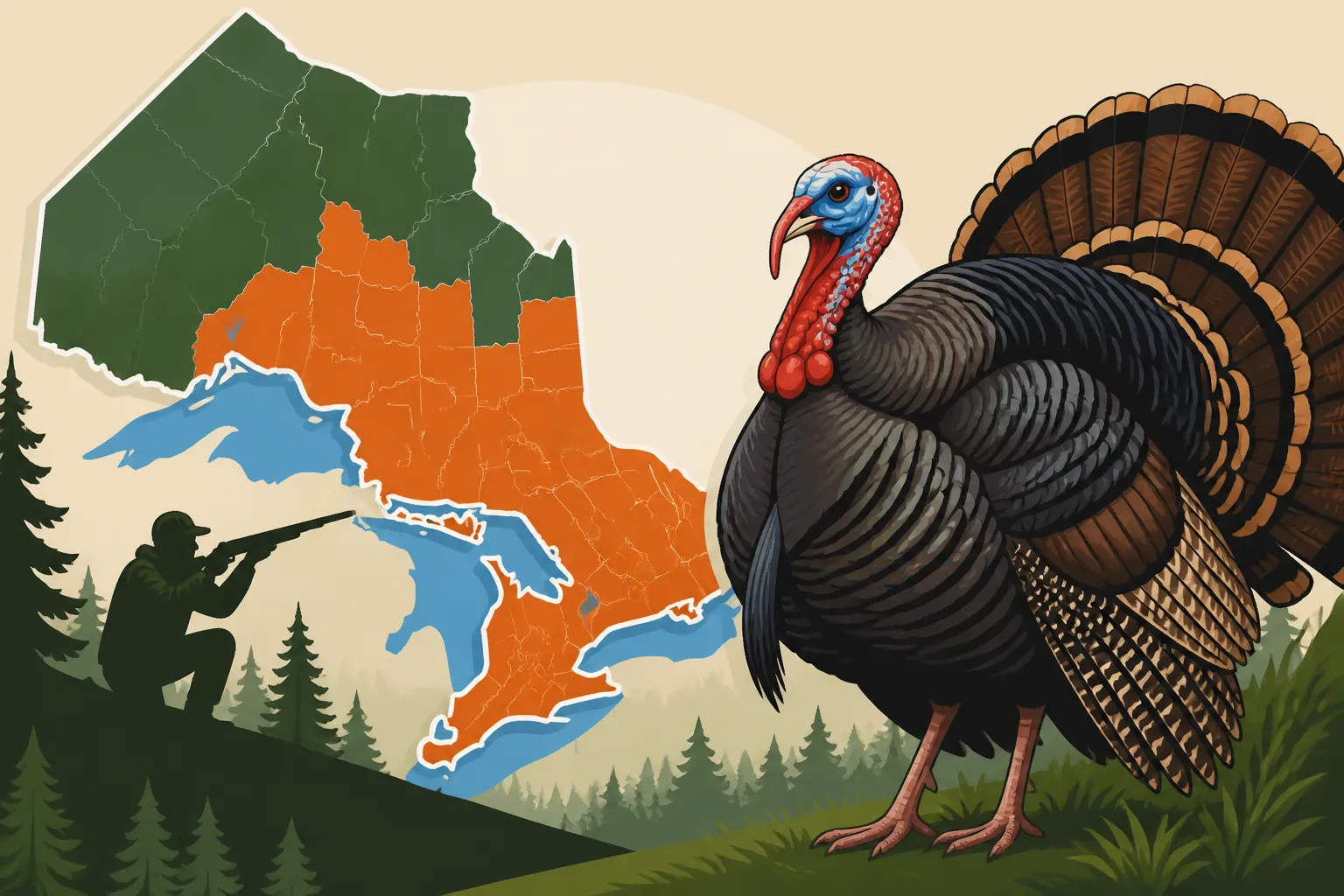
Today, wild turkeys are well-established across much of southern and central Ontario, with populations pushing further north than many ever anticipated. When you’re looking to hunt turkeys, knowing these core strongholds is key to finding consistent action and healthy bird numbers.
Southern Ontario's Agricultural Belt and Woodlots
If you're after high turkey densities and a fantastic chance at success, southern Ontario's agricultural belt is arguably the province's undisputed turkey capital. This region, characterized by extensive farmlands interspersed with critical woodlots, provides the perfect combination of food and cover. Turkeys absolutely thrive on the waste grain—corn, soybeans, wheat—left in agricultural fields after harvest, giving them an incredibly rich and reliable food source, especially through the leaner winter months. The mature hardwood stands and mixed forests nestled between these fields offer crucial roosting sites, nesting cover, and protection from predators.
Regions like Southwestern Ontario, encompassing counties such as Essex, Kent, Lambton, and Elgin, boast some of the highest turkey populations. The Niagara region and the periphery of the Greater Golden Horseshoe also offer excellent hunting, despite the higher human population density. These birds have learned to coexist with people, often utilizing smaller woodlots and creek bottoms that might be overlooked. When you're scouting here, don't just focus on the massive timber; look for those smaller, overlooked pockets of woods, fencerows, and brushy creek beds that connect larger blocks of cover. It's not uncommon to see birds scratching around the edges of a soybean field at dusk, or crossing a small hay field to get back to their roost. Many of the same principles apply here as when Hunting Deer in Southern Ontario Farmland, as both species benefit from the diverse food sources.
Eastern Ontario's Mixed Forests and Farm Edges
Moving eastward, the landscape shifts somewhat, but the turkey populations remain robust. Eastern Ontario presents a more varied terrain compared to the intensively farmed southwestern regions. Here, you'll find a beautiful mosaic of rolling hills, mixed forests of hardwoods and conifers, and smaller, more diversified agricultural operations. Counties such as Frontenac, Lanark, Leeds and Grenville, and parts of Hastings County are prime examples of excellent eastern Ontario turkey country.
The turkeys in eastern Ontario have adapted beautifully to this landscape. They still rely heavily on agricultural edges for foraging, but they also make extensive use of the vast tracts of mixed forest. Hardwood ridges provide vital acorn crops, while dense conifer stands offer thermal cover during colder weather and secure roosting sites. The birds here often range over larger areas, utilizing the intricate network of forest and field edges. Scouting for them involves identifying those transition zones—where the forest meets a field, where a dense cedar swamp abuts a hardwood hill, or along creek bottoms that offer both water and cover. It’s similar to how one might approach Hunting Deer in Ontario's Mixed Forest, focusing on those areas of diverse habitat where game animals feel secure yet have access to abundant food.
Central Ontario's Expanding Populations
Central Ontario is an exciting region for turkey enthusiasts because it represents a dynamic zone of expansion. While not as densely populated with turkeys as the deep south or parts of eastern Ontario, these populations are steadily growing and spreading, offering fantastic opportunities for hunters willing to put in the scouting time. Areas like the Kawarthas, stretching into parts of Haliburton Highlands and Muskoka fringe, are seeing increased turkey numbers.
The success in Central Ontario is largely due to the gradual northward spread from established southern populations, coupled with active management and suitable, albeit sometimes more fragmented, habitat. Turkeys here often follow river valleys, hydro corridors, and pockets of agricultural land that dot the Canadian Shield landscape. They utilize the abundant mixed forests for roosting and cover, finding food where it's available, whether it's acorns, wild berries, or waste grain from smaller farming operations. Hunting here might require a bit more legwork, as the birds can be more dispersed, but it can also lead to encounters with less pressured, more natural-acting turkeys. If you're familiar with Hunting the Kawartha Highlands for other game, you'll find that much of the same approach to understanding the land translates well to turkey hunting. These birds are adaptable, and as long as they find reliable food sources and safe roosts, they'll continue to colonize new territory.
The Northern Front: Pushing the Boundaries of Their Range
While turkeys thrive in southern and central Ontario, their spread northward isn't without its challenges. The further north you go, the more the natural landscape and climate begin to push the limits of what wild turkeys can tolerate.
Factors Limiting Northern Spread
The primary factor limiting the widespread establishment of wild turkeys in northern Ontario is, without a doubt, snow depth and duration. Wild turkeys are not well-equipped to handle deep, prolonged snow cover. When snow blankets the ground for extended periods, it buries their primary food sources—acorns, seeds, waste grains, and insects. While turkeys can forage on buds and other browse, these aren't typically sufficient to sustain large populations through a harsh northern winter. As we discussed in Why Deep Snow Limits Turkey Range, prolonged periods of deep snow can lead to starvation and increased vulnerability to predators.
Beyond snow, other factors play a role. Northern Ontario generally has less agricultural land, meaning fewer readily available, high-energy food sources. The dominant forest types shift towards more conifer-heavy boreal forests, which, while providing cover, offer fewer of the mast-producing hardwoods that turkeys rely on. Predator pressure from wolves, coyotes, and other northern carnivores can also be significant, especially on vulnerable, smaller flocks struggling to establish themselves in new territory.
Pockets of Success and Gradual Expansion Northward
Despite these significant challenges, wild turkeys are proving to be incredibly resilient and adaptable. We are seeing localized pockets of success and a gradual, albeit slower, expansion into regions that might have been considered impossible just a couple of decades ago. Milder winters, even if sporadic, play a huge role in helping pioneering flocks survive and reproduce.
Examples of these burgeoning northern populations include areas around North Bay, where turkeys have found a good mix of agricultural influence and mixed forest. Hunters and wildlife observers are also reporting increasing turkey sightings and establishing populations near Sault Ste. Marie, and even into parts of the Thunder Bay district. These birds are often found in areas that offer some unique microclimates or specific habitat features, such as river valleys or areas with slightly more human settlement providing supplementary feed, like bird feeders (though relying on these is not a sustainable, wild population strategy). For those looking to hunt in these more northern zones, understanding the specific local geography and concentrating scouting efforts around these sheltered, resource-rich pockets is crucial. If you're considering hunting around North Bay for other species, keep an eye out for turkey sign; you might be surprised by what you find. This gradual push northward is a testament to the turkey's incredible survival instincts and the changing environmental conditions.
Understanding Turkey Habitat Preferences for Better Hunting
Knowing where turkeys are generally found is one thing, but understanding why they are there and what specific habitat features they prefer will make you a much more effective turkey hunter. It’s all about finding the right address for these particular birds.
The Ideal Mix: Food, Water, and Cover
Wild turkeys are quite particular about their living arrangements, and the most successful populations exist where their fundamental needs for food, water, and cover are met in close proximity.
- Food: This is paramount. Turkeys are opportunistic omnivores. Their diet heavily consists of acorns, beechnuts, and other mast crops from hardwood trees, especially in forested areas. In agricultural regions, they absolutely gorge on waste grain like corn, soybeans, and wheat. They'll also eat a variety of seeds, berries, insects (especially grasshoppers and crickets in summer), and even small amphibians or reptiles. Understanding the local food sources is critical; a bumper crop of acorns on a hardwood ridge will draw birds like a magnet, just as a harvested cornfield will. Knowing that a Hunting a Hardwood Ridge for Whitetails is often also a prime spot for turkeys because of the mast crop can save you scouting time.
- Water: Like all living creatures, turkeys need water daily. They'll frequent streams, ponds, puddles, and even dew-laden vegetation. While they don't necessarily need a large, open water body, knowing where water sources are located can help you predict travel routes, especially in drier periods.
- Cover: Turkeys need diverse cover for different purposes.
- Roosting: They prefer tall, mature trees, often hardwoods or large pines, with strong horizontal limbs where they can fly up at dusk and spend the night safely off the ground, away from terrestrial predators. They'll often return to the same roosting areas night after night unless disturbed.
- Nesting: Hens seek out dense, concealing cover, often thickets, brush piles, or tall grasses, to build their nests and raise their poults.
- Daytime Foraging & Escape: A mix of open areas (like fields) for feeding and denser cover (like brushy draws, fencerows, or thicker woodlots) for protection and escape is ideal. This varied landscape allows them to feed comfortably but quickly duck into safety if a predator appears.
Reading the Landscape for Turkey Sign
Becoming proficient at reading turkey sign is like learning their secret language. It tells you where they’ve been, what they’ve been doing, and often, where they might be going.
- Tracks: Turkeys leave distinctive three-toed tracks. The size will tell you if it's a mature gobbler, a hen, or a jake. Look for patterns that indicate feeding or travel.
- Droppings: Turkey droppings are also quite unique. Gobbler droppings are typically J-shaped or elongated, while hens' are more coiled or amorphous. Fresh droppings indicate recent activity.
- Dusting Bowls: Turkeys love to take dust baths to clean their feathers and rid themselves of parasites. Look for shallow depressions in dry soil or sand, often in sunny spots, with feathers and droppings nearby.
- Feathers: Finding turkey feathers, especially large primary wing feathers, can point to roosting sites or areas where birds have been preening. A single, distinctively barred feather can be a powerful clue.
- Strut Marks: In spring, gobblers will often drag their wingtips on the ground while strutting to impress hens, leaving distinctive parallel lines in soft soil or dust. Finding these is a clear indicator of a gobbler's presence.
- Feeding Evidence: Scratched-up leaves in the woods, especially under oak or beech trees, indicate turkeys have been foraging for mast. In fields, look for signs of them picking at waste grain.
Utilizing modern scouting tools can dramatically enhance your ability to read the landscape. Satellite imagery, available through platforms like GoHunt, allows you to identify potential roosting areas (tall timber), feeding grounds (agricultural fields, open hardwood ridges), and travel corridors (fencerows, creek beds) all from the comfort of your home. Before you even set foot in the woods, GoHunt can give you a bird's-eye view to start piecing together a turkey's daily routine. It's an invaluable asset for Scouting With Satellite Imagery in Ontario, helping you pinpoint those elusive birds.
Hunting Opportunities and Season Strategies
Ontario offers fantastic opportunities for turkey hunters, with both spring and fall seasons catering to different hunting styles and objectives. Understanding the nuances of each season and how to adapt your tactics to the local turkey population is key to success.
Spring and Fall Season Opportunities
Ontario's turkey seasons are designed to provide diverse hunting experiences:
- Spring Turkey Season: This is arguably the most popular time to hunt turkeys, focusing exclusively on gobblers. The season typically runs from late April through May, when gobblers are actively strutting and breeding, making them responsive to calls. The thrill of calling in a lovesick tom, hearing his thunderous gobble, and watching him approach in full strut is an experience unlike any other. The focus is on males (gobblers and jakes), with specific bag limits and regulations designed to protect the breeding hens. For exact dates and further details, consult our guide on Ontario Spring Turkey Season Dates. The spring hunt is a chess match against a sharp-eyed, keen-eared bird, and it demands patience, stealth, and effective calling.
- Fall Turkey Season: The fall season, often running through October, offers a different kind of challenge and opportunity. In the fall, hunters are generally allowed to harvest either a gobbler or a hen, depending on local regulations and specific tags. This season is less about calling in a strutting tom and more about locating flocks, breaking them up, and then calling scattered birds back together. It’s a social hunt, focusing on the flock dynamics rather than individual breeding behaviour. You'll often find birds in larger groups, feeding in fields or through the woods. Understanding flock behaviour and how to effectively scatter and then regroup birds is paramount here. Our article on Ontario Fall Turkey Season Dates provides a comprehensive overview of when and where these opportunities exist. Whether spring or fall, understanding the regulations and bag limits, which you can find in Ontario Turkey Bag Limits, is critical before heading afield.
Tactics for Different Spreading Zones
The tactics you employ for turkey hunting in Ontario might need to be adjusted based on the region you're hunting, reflecting the density of birds and the level of hunting pressure.
- Heavily Pressured Southern Birds: In popular WMUs across southern Ontario, turkeys often experience significant hunting pressure. These birds are savvy; they've heard it all before. Your calling needs to be subtle, realistic, and often sparse. Aggressive calling can sometimes spook birds that have been pressured. Decoy placement becomes critical, as does choosing your setup location carefully to minimize exposure and maximize concealment. You might find success by "running and gunning" – moving frequently, making a few calls, and listening for a response, rather than sitting in one spot for hours. Using natural breaks in the terrain to approach silently is vital. Our advice on Decoy Placement for Pressured Ontario Gobblers can be particularly useful in these situations, helping you avoid common mistakes that send wary birds running. GoHunt's detailed maps can also help identify less accessible pockets of private or Crown land where pressure might be slightly lower.
- Less-Pressured Birds in Emerging Northern Zones: As you move into central and northern Ontario, where turkey populations are newer or less dense, the birds might be less accustomed to human interaction and calling. Here, a more aggressive calling approach might actually work well. Birds might respond more readily to loud, excited calls, as they haven't been "educated" by previous hunting encounters. Covering more ground and actively seeking out fresh sign in diverse habitats becomes more important than in areas with high bird density. When you're trying to locate a bird that might be isolated or part of a small, pioneering flock, knowing how to make yourself heard across vast tracts of bush, as detailed in Calling a Gobbler Off an Ontario Roost, can be the difference between success and silence. Don't be afraid to experiment with your calling, as these birds might just be curious enough to come investigate.
Regardless of the zone, stealth, patience, and a deep understanding of turkey behaviour are your best assets. Remember, a turkey's eyesight is legendary, and their hearing is incredibly acute. Always prioritize concealment and choose your moment wisely.
Conservation Efforts and the Future of Ontario Turkeys
The story of wild turkeys in Ontario is a conservation success that continues to evolve. Their presence is a testament to dedicated efforts, and ongoing management is crucial for their long-term health and expansion.
Ongoing Management and Monitoring
The Ontario Ministry of Natural Resources and Forestry (MNRF), in partnership with organizations like the OFAH and NWTF, continues to actively manage and monitor wild turkey populations. This involves a variety of strategies:
- Population Surveys: Regular surveys help estimate turkey numbers, track population trends, and assess distribution. These can involve everything from roadside counts to hunter harvest data analysis.
- Habitat Management: Efforts are made to protect and enhance critical turkey habitat, particularly focusing on areas that provide diverse food sources and secure roosting sites. This might include promoting mast-producing hardwoods or discouraging habitat fragmentation.
- Research: Ongoing research helps understand turkey ecology, disease prevalence, and the impacts of environmental factors like severe winters or climate change. This data informs management decisions and helps adapt strategies to current conditions.
- Hunter Contributions: Hunters play a vital role in turkey conservation. The sale of hunting licenses and tags generates revenue that directly supports wildlife management programs. Additionally, mandatory harvest reporting provides crucial data to wildlife biologists, helping them assess population health and adjust seasons or bag limits as needed. This collaborative approach ensures that the wild turkey resource is sustainably managed for future generations.
Challenges and Long-Term Outlook
While the story of Ontario's wild turkeys is largely positive, there are always challenges on the horizon that conservationists and hunters need to be aware of.
- Climate Change: While milder winters can aid northern expansion, unpredictable weather patterns, including severe ice storms or unseasonable cold snaps, can still negatively impact turkey survival and reproduction.
- Habitat Fragmentation: As human populations grow and development expands, turkey habitat can become fragmented, isolating populations and limiting their natural spread. Maintaining corridors between suitable habitats is crucial.
- Disease: Wild turkeys can be susceptible to various diseases, and monitoring their health is an ongoing concern to prevent widespread outbreaks that could impact populations.
- Predation: While a natural part of the ecosystem, intense localized predation pressure can impact turkey numbers, especially in areas with establishing or struggling populations.
Despite these challenges, the long-term outlook for wild turkeys in Ontario remains optimistic. Their adaptability, combined with continued active management and the dedication of conservation groups and hunters, suggests that these magnificent birds will continue to thrive and expand their range within the province. As their numbers stabilize and push into new territories, tools like GoHunt will become even more valuable for hunters looking to keep up with the changing distribution and identify new hunting hot spots. The future of turkey hunting in Ontario is bright, offering exciting opportunities for those willing to learn and adapt with these remarkable birds.
| Region of Ontario | Estimated Turkey Population Trend | Typical Habitat | Hunting Pressure | Notable WMUs (Examples) |
|---|---|---|---|---|
| Southwestern Ontario | Stable to Increasing | Farmland/Woodlots | High | 90, 89, 87 |
| Eastern Ontario | Stable/Increasing | Mixed Forest/Farm | Medium to High | 60, 64, 65 |
| Central Ontario | Increasing | Mixed Forest/Lake | Medium | 57, 58, 59 |
| Northeastern Ontario | Localized, Slowly Increasing | Forest/Pockets | Low to Medium | 41, 42, 43 |
| Northwestern Ontario | Very Sparse/Emerging | Forest/River Val. | Very Low | 13, 15, 1A |
Disclaimer
Hunting is a regulated activity. Always consult the most current Ontario Hunting Regulations Summary available from the Ontario Ministry of Natural Resources and Forestry (MNRF) before planning any hunt. Seasons, bag limits, and rules can change. Ensure you have all required licenses and tags. Safety should always be your top priority in the field.