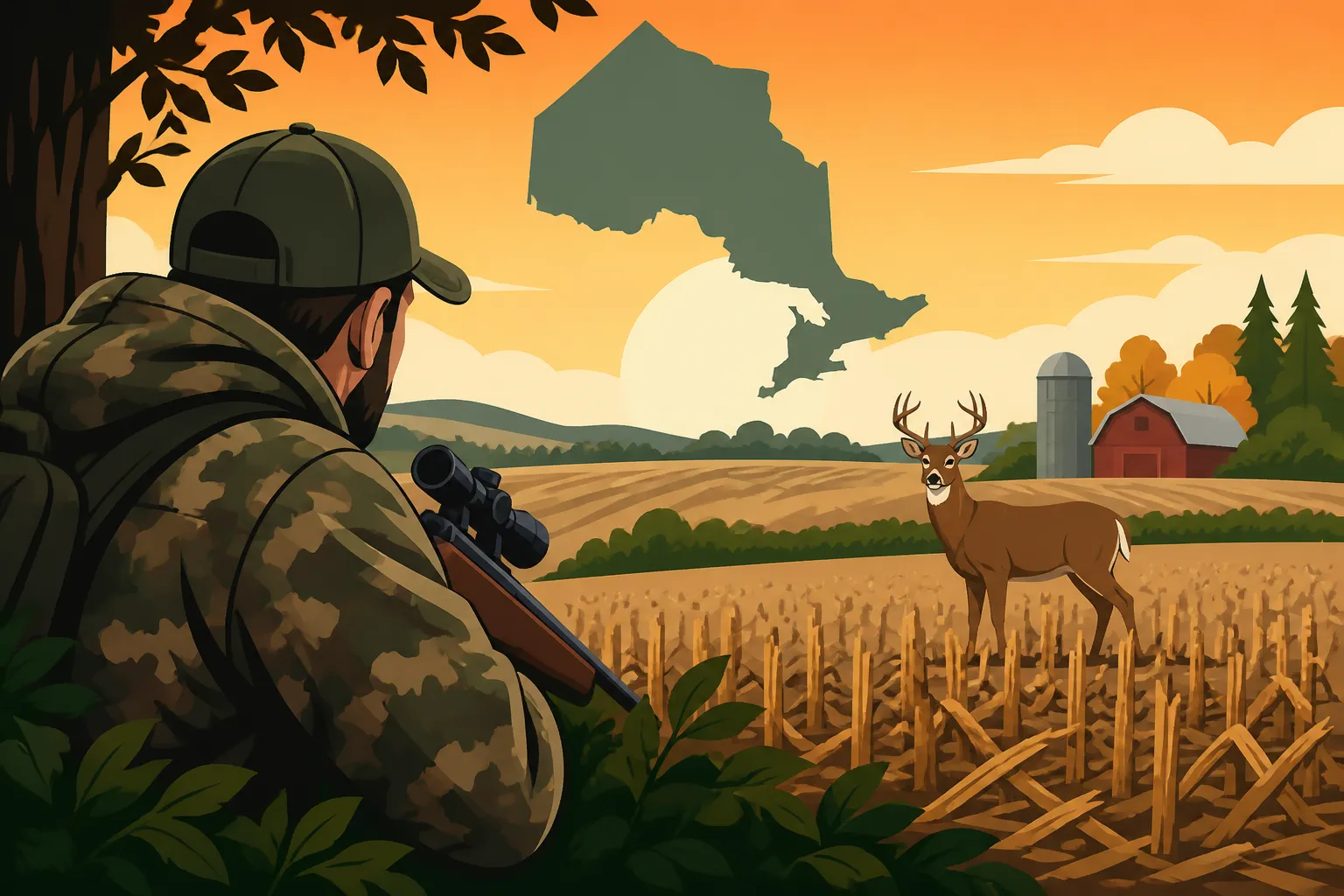
Hunting Deer in Southern Ontario Farmland
Hunting for deer in southern Ontario farmland can be incredibly rewarding, but let's be honest, it comes with its own unique set of headaches. Unlike the vastness of the northern bush, here you're often dealing with smaller properties, super wary deer that have seen it all, and the constant challenge of securing access. This guide is here to walk you through the specific strategies, smart scouting tactics, and ethical considerations you'll need to navigate these cultivated landscapes and finally punch that tag.
Understanding the Southern Ontario Farmland Deer Landscape
Southern Ontario's agricultural belt is a world away from the deep woods, and it means the whitetails here behave differently. If you're used to sprawling Crown Land hunts, prepare for a shift in strategy. This environment presents both unique challenges and incredible opportunities for hunters willing to adapt.
The Unique Challenges of Farm Country
One of the first things you'll notice in southern Ontario farmland is the sheer lack of continuous cover. Deer here live in a fragmented world of small woodlots, narrow fencerows, and creek bottoms, interspersed with massive fields of crops. This means deer are often more visible, but also far warier. They see people and vehicles regularly, and their survival instincts are honed to a razor's edge. Hunting pressure can also be significant, as desirable parcels of land are few and far between, leading to intelligent, nocturnal bucks that rarely make a mistake during daylight hours. You're not just hunting deer; you're hunting smart, pressured deer.
Another hurdle is land access. A huge chunk of prime deer habitat is privately owned, meaning you absolutely need permission to hunt. This isn't like the limitless tracts of public land you might find further north. Successfully hunting farm country often starts long before opening day, with countless hours spent building relationships with landowners.
Primary Deer Food Sources in Farmland
If there's one thing southern Ontario farmland offers in abundance, it's food. This rich agricultural environment is a whitetail buffet, and understanding the seasonal availability of these food sources is paramount to success. During the growing season, deer have access to tender shoots of corn, lush fields of soybeans, and protein-rich alfalfa. As the season progresses, these change.
Once crops mature, corn fields become prime bedding and feeding areas, offering both calories and incredibly dense cover. Deer will spend entire days bedded deep within standing corn. After harvest, the waste grain left behind becomes a critical energy source, especially as temperatures drop. Winter wheat fields, planted in the fall, offer another green browse option when other natural foods are scarce. Natural browse in woodlots and along fencerows is still important, but often takes a backseat to the abundant, high-energy crops when they're available. Observing what the deer are currently feeding on is your best indicator of where they'll be.
Navigating Access and Landowner Relations
This is probably the biggest piece of the puzzle for any hunter in southern Ontario farmland: getting permission. Without it, you simply can't hunt. It’s not just about knocking on one door and hoping for the best; it's about building genuine relationships. Start early, long before hunting season opens. A good time to approach landowners is in the late winter or early spring when they're not swamped with planting or harvest. Offer to help with chores, fix fences, or even just be a friendly face.
When you do approach someone, be polite, respectful, and clearly state your intentions. Dress presentably. Offer your contact information and explain that you'll be careful, responsible, and keep them updated on your activities. Many farmers have issues with nuisance animals, so offering to help manage deer populations can sometimes be a persuasive point. Remember, a landowner giving you permission is doing you a favour, so always respect their property as if it were your own. If you’re unsure how to begin this crucial process, our guide on Knocking on Doors in Southern Ontario offers some fantastic tips to get you started on the right foot.
Essential Scouting Techniques for Farmland Deer
Scouting in southern Ontario farmland isn't just about finding deer; it's about dissecting their daily patterns within a mosaic landscape. These deer are creatures of habit, but those habits can shift with crop rotations, harvest schedules, and hunting pressure. You need to be a detective, using every tool at your disposal.
Utilizing Satellite Imagery and Digital Tools
Before you ever step foot in the field, fire up your digital mapping tools. Platforms like GoHunt, along with other mapping apps, are absolutely invaluable for scouting farmland. You can identify crucial features from the comfort of your home, saving countless hours of aimless wandering. Look for subtle changes in topography, narrow strips of timber or brush that act as funnels between larger woodlots, and isolated pockets of cover within or adjacent to open fields. These are often overlooked bedding areas or staging points.
Pay close attention to property lines, especially when you're dealing with smaller parcels. GoHunt excels at showing these boundaries clearly, which is critical for staying legal and respectful. Identify potential entry and exit routes that minimize disturbance to deer and avoid walking through open areas that might alert them to your presence. Pin potential stand locations, mark known food sources, and identify areas that look like natural pinch points or travel corridors. This digital groundwork, which we delve into deeper in Scouting With Satellite Imagery in Ontario, will give you a significant advantage.
Boots-on-the-Ground Reconnaissance
As helpful as satellite imagery is, there's no substitute for getting your boots dirty. Once you've identified promising areas using your digital tools, it's time for some old-fashioned legwork. During the off-season or early spring, walk the fencerows, creek bottoms, and woodlots. Look for rubs and scrapes, which are clear indicators of buck activity. Tracks will tell you where deer are moving and how often. Pay attention to worn-down trails, particularly those leading from bedding cover to known food sources.
Bedding areas in farmland are often surprisingly small and dense. Look for thickets of multiflora rose, patches of sumac, cedars, or even tangles of old grapevines in creek bottoms. These areas provide visual security and protection from the elements. When you’re walking these areas, try to do so when deer aren’t typically there – mid-day during the week is usually best. Don't be afraid to put some miles on, even if it feels unproductive at first. Every piece of sign tells a story about the deer using that specific parcel. By cross-referencing your GoHunt observations with what you find on the ground, you start to paint a complete picture of deer movement.
Timing Your Scouting Efforts
When you scout is almost as important as how you scout, especially in farmland where deer are particularly sensitive to disturbance. Post-season is an excellent time to scout for structural elements like bedding areas, travel corridors, and old sign, as there's usually less foliage and the hunting pressure has subsided. This is when you can really map out the unchanging features of the landscape.
Closer to the season, focus your efforts on identifying current crop rotations and fresh sign. This means observing which fields are corn, which are soybeans, and which have been cut. Deer patterns will shift dramatically based on these agricultural changes. Try to do your pre-season scouting quickly and efficiently, perhaps after a rain when fresh tracks are easily visible, or by glassing fields from a distance during low light. The goal is to gather vital, up-to-date information without alerting the deer to your presence in their core areas. Minimizing intrusion ensures that the deer you're trying to hunt remain undisturbed and predictable once the season opens.
Effective Hunting Strategies for Southern Farmland Whitetails
Hunting southern Ontario farmland requires a nuanced approach. The deer here are masters of avoiding detection, so your strategies need to be precise, patient, and highly adaptable to the ever-changing agricultural landscape.
Stand Placement and Concealment
When it comes to stand placement in farmland, precision is paramount. You’re often working with smaller, more defined pockets of cover, so your setup needs to be flawless. Focus on pinch points where deer are naturally funneled, such as narrow strips of woods between two fields, creek crossings, or the ends of woodlots. These are high-traffic areas where deer movement is concentrated. Field edges are classic spots, but be mindful of Hunting a Standing Corn Field Edge versus a soybean field. Deer will move differently depending on the crop and its height.
Consider wind direction above all else. In open farmland, your scent can carry for long distances, easily busting your hunt. Always have multiple stand locations for varying wind conditions. Also, think about the sun's position – you don't want to be silhouetted or have the sun directly in your eyes during prime hunting hours. Concealment is vital; whether using a treestand or a ground blind, ensure it blends seamlessly with the surroundings. For detailed tips on setting up, check out our guide on Hanging a Stand on an Ontario Bush Edge. The goal is to be invisible to deer that are constantly on high alert.
Hunting Over Food Sources
Hunting over food sources is a cornerstone tactic in farmland, but it needs to be executed smartly. Deer in these areas will often bed in a nearby woodlot or standing crop and then move to feed during low light. For morning hunts, position yourself along the travel corridor leading to a bedding area from a feeding field. The deer will be making their way back to cover as daylight breaks.
Evening hunts are generally more productive over primary food sources. Set up to intercept deer as they emerge from cover to feed. This might be a cut cornfield, a clover patch, or a winter wheat field. Understanding the specific appeal of different crops, such as described in our articles on Hunting a Standing Corn Field Edge or Hunting a Soybean Field at Dusk, is key. Be prepared for deer to emerge late, often just before dark. Patience is crucial. As harvest progresses, deer patterns can shift overnight, so adapt your strategy quickly as combines roll through.
Utilizing Small Woodlots and Cover
Small woodlots and isolated pockets of cover might seem insignificant, but they are often sanctuaries for mature bucks in farmland. These areas, though small, provide crucial security cover and can act as staging points before deer enter larger feeding areas. Hunting the funnels or bottlenecks between these woodlots can be incredibly effective. Look for areas where two woodlots come close together, or where a fencerow connects two larger blocks of timber.
In these smaller, often dense parcels, deer drives can sometimes be an option, but only with careful planning and a minimal number of hunters. A small, quiet push with two or three hunters can sometimes nudge deer out of thick cover towards a waiting stander. Our guide on Deer Drives With Three or Four Hunters offers insights into how to execute this safely and effectively in limited spaces. The key is to understand that even a small patch of cover is enough for a wary buck to hide in plain sight, especially when surrounded by open fields. Don't underestimate these seemingly minor pieces of habitat.
Advanced Tactics and Gear for Wary Farm Deer
Hunting southern Ontario farmland whitetails isn't just about showing up; it's about outsmarting deer that are constantly pressured and have an uncanny ability to detect threats. To consistently succeed, you need to employ advanced tactics and rely on top-tier gear.
Scent Control and Stealth
If there's one golden rule for hunting wary farm deer, it's scent control. These deer are practically engineered to detect human odor. Every single time you go into the woods, your scent control regimen needs to be meticulous. This means scent-free detergents for your hunting clothes, showering with scent-eliminating soap, storing your gear in airtight containers, and using scent-eliminating sprays on everything – from your boots to your bow. Even then, the wind is your ultimate scent control. Always hunt with the wind in your favor, even if it means sacrificing a prime location.
Stealth goes hand-in-hand with scent control. Farm deer are accustomed to some noise from farming operations, but sudden, unnatural sounds will put them on high alert. Walk quietly, minimize rustling, and choose your approach routes carefully to avoid crunchy leaves or snapping twigs. Consider using natural screening like hedgerows or tall grass to break up your silhouette as you approach and leave your stand. Your entry and exit routes should be planned to avoid disturbing any deer, especially during prime movement times. If you bump deer on your way in, your hunt is already compromised.
Calling and Decoying Strategies
Calling can be highly effective in farmland, but it's often more about subtlety than aggression. These pressured deer have heard it all. Gentle grunts, soft bleats, and an occasional rattling sequence can pique a buck's curiosity without making him bolt. During the pre-rut and rut, bucks are actively seeking does, and these soft vocalizations can draw them in. Our detailed advice on Grunt Calls Late in Ontario's Rut can help fine-tune your approach for these wary animals. Avoid overcalling, especially in high-pressure areas; a less-is-more approach often yields better results.
Decoys can also play a role, particularly during the rut. A single doe or a small buck decoy can be enough to draw a dominant buck into range, especially if he's cruising for receptive does. Position your decoy to present a quartering-away shot to the approaching buck, and always ensure it's visible but not overly exposed. Combine decoying with subtle calling for maximum effect. However, be mindful of hunting pressure; highly pressured bucks may be wary of decoys if they've had negative encounters in the past. Always consider the specific deer you're hunting and the local conditions.
Understanding Rut Behavior in Farmland Bucks
The rut is a game-changer in southern Ontario farmland, just like anywhere else, but with its own unique flavor. During this frantic period, bucks drop their guard somewhat and are far more active during daylight hours as they relentlessly search for does. This is the time when you might finally catch a glimpse of that elusive, mature buck you've been chasing all season. They'll cover vast amounts of ground, checking every woodlot, fencerow, and field edge for receptive does.
Focus your efforts on transition areas and doe bedding zones during the rut. Bucks will be scent-checking these areas constantly. Stand-hunting all day, especially near known doe concentrations, can be incredibly productive. Bucks will make mistakes they wouldn't consider at other times of the year. Our guide to Hunting the Rut in Early to Mid November provides a deep dive into leveraging this critical period. While specific dates vary slightly, the intense action usually peaks in early to mid-November. This is when your careful scouting and patience can really pay off in the southern Ontario agricultural landscape.
Overcoming Common Challenges and Ethical Considerations
Hunting in southern Ontario's farmland brings a unique blend of challenges that demand adaptability and a strong commitment to ethical practices. It's not just about filling a tag; it's about being a responsible steward of the land and the hunting tradition.
Dealing with Hunting Pressure
Hunting pressure is a perennial issue in southern Ontario's more populated areas. Deer become incredibly wary after the first few days of the season, often going nocturnal or seeking out the thickest, nastiest cover they can find. To counteract this, think outside the box. While opening day sees many hunters in the woods, consider hunting mid-week when pressure often drops significantly. These days can sometimes yield surprising results as deer settle back into more natural patterns.
Look for overlooked pockets of cover – small, brushy creek bottoms, an isolated clump of cedars, or a forgotten corner of a property that other hunters might deem too small or insignificant. Often, a mature buck will use these "refuge" areas to escape the crowds. Be prepared to sit all day, especially during the rut, as deer might move at unusual times to avoid pressure. Patience is your most powerful weapon against hunting pressure; the longer you can remain still and undetected, the higher your chances of encountering a deer making a mistake.
Ethical Shot Placement and Game Recovery
Given the close proximity to residential areas and other properties in southern Ontario farmland, ethical shot placement and meticulous game recovery are not just good practice – they are absolutely critical. You cannot afford to take risky shots that might wound a deer and send it across a property line where you don't have permission to retrieve it, or worse, into a populated area. Always wait for a clean, broadside shot within your effective range. If the shot isn't perfect, don't take it.
After the shot, give the deer ample time, especially if it's a marginal hit or if you heard a questionable sound. Farmland deer can cover ground quickly. If you do track a wounded animal onto an adjacent property where you don't have permission, you must contact the landowner immediately to request permission for retrieval. This is a non-negotiable step to avoid trespassing charges and maintain a positive image for hunters. In warmer early seasons, quick and efficient Field Dressing in Warm Ontario Weather is also vital for meat preservation. Having a robust tracking plan and being prepared to make those difficult calls to neighbours is part of responsible hunting in this environment.
Respecting Landowners and Local Communities
Maintaining positive relationships with landowners and the broader community is paramount for the future of hunting in southern Ontario. We're guests on private property, and our actions reflect on all hunters. Always leave the property cleaner than you found it. Close gates, don't block access roads, and avoid driving on wet fields that can be damaged. Pack out all your garbage, including spent shell casings or snack wrappers.
Communicate clearly and regularly with the landowner. Let them know when you plan to hunt and when you've left. If you harvest a deer, offer to share some of the meat or a photo. Simple gestures of gratitude, like a thank you card or a small gift, can go a long way in solidifying that relationship for future seasons. Remember, a single negative incident can ruin hunting access for many others, while consistent, respectful behavior builds trust and ensures that southern Ontario remains a viable and enjoyable place to hunt deer for years to come.
Farmland Deer Hunting Comparison
To help you visualize some of the differences in approach, here's a quick comparison of common farmland hunting scenarios.
| Scenario | Primary Challenge | Ideal Strategy | GoHunt/Digital Map Use |
|---|---|---|---|
| Standing Corn Field | Dense cover, deer hide deep | Drive small groups, hunt travel corridors on edges | Identify field boundaries, pinch points where deer enter/exit. |
| Cut Soybean Field | Exposed, wary deer | Hunt field edges at dusk, focus on staging cover | Mark known bedding areas, travel routes leading to field. |
| Small Woodlot/Bush | High pressure, small area | Stand hunt funnels, quiet still-hunting, small drives | Pin existing trails, thickets, and bottlenecks within the woodlot. |
| Fencerow/Creek Line | Linear travel, narrow cover | Ambush points, cross-overs between fields | Highlight natural funnels, determine prevailing wind to set up downwind. |
| Winter Wheat/Alfalfa | Active feeding, exposed | Long-range glassing, evening hunts from concealed blinds | Identify proximity to secure cover, plan low-impact entry/exit routes. |
Disclaimer
Hunting regulations in Ontario are subject to change. Always consult the most current official Ontario Hunting Regulations Summary available from the Ministry of Natural Resources and Forestry (MNRF) before heading afield. This guide provides general information and should not be considered a substitute for the official regulations.