Hunting a Field of Standing Corn
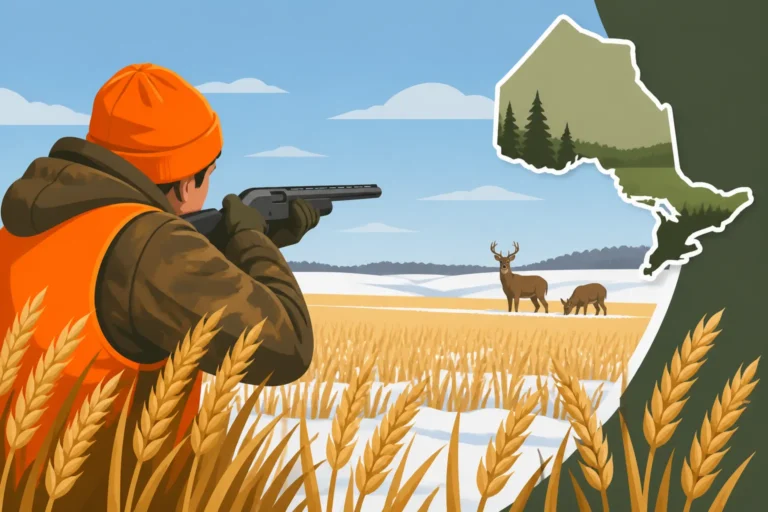
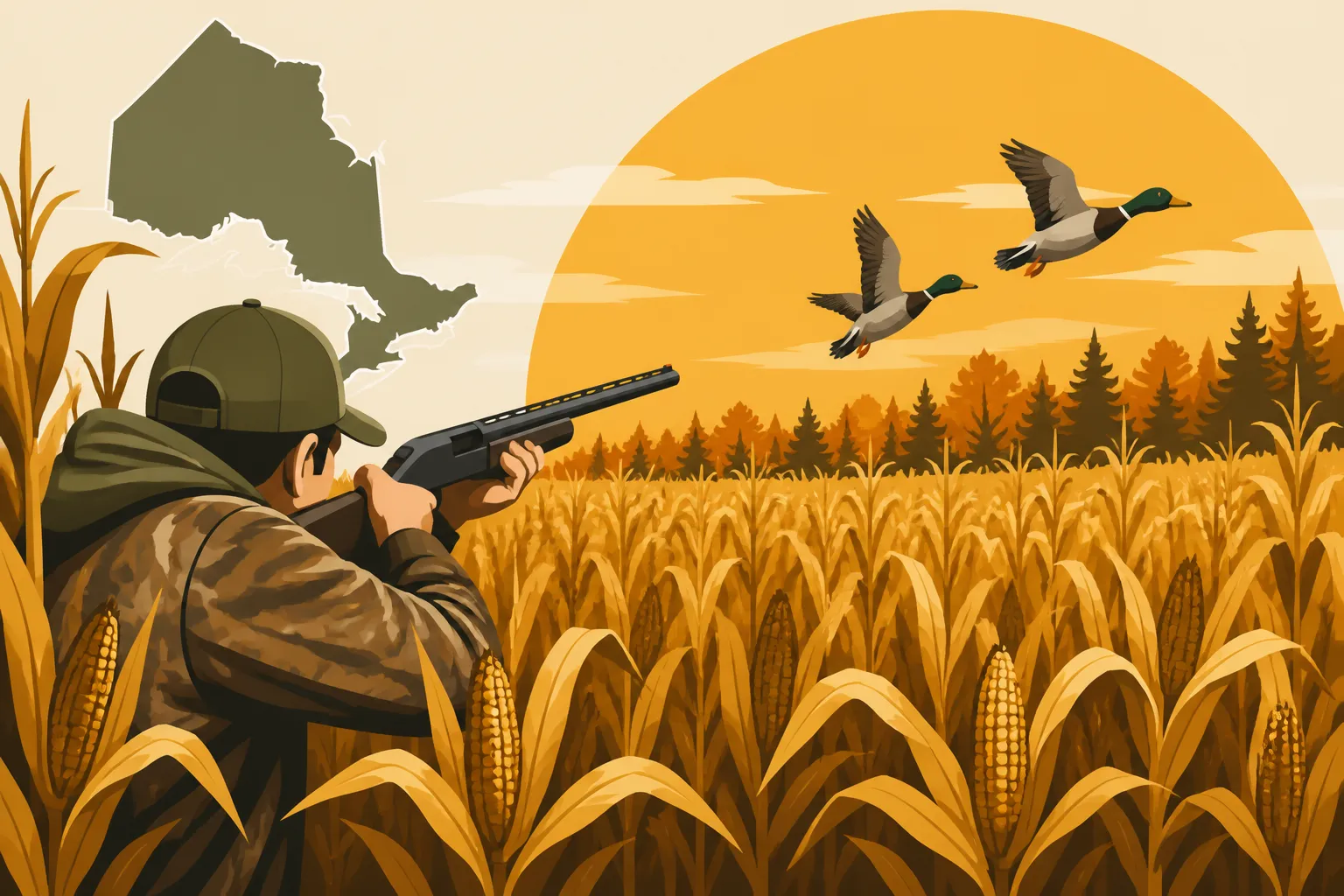
That familiar golden wall of standing corn in the fall is both a beacon of hope and a source of immense frustration for many Ontario deer hunters. You know the deer are in there, safe, hidden, and often unreachable, making a mockery of your carefully planned morning hunts. This guide will dive deep into understanding why whitetails love standing corn and, more importantly, equip you with practical strategies, scouting tips, and safety considerations to turn those impenetrable fields into productive hunting grounds.
Why Standing Corn is a Deer Magnet and a Hunter's Nightmare
There's something almost magical about a mature cornfield in autumn. For us hunters, it represents a challenge, but for whitetail deer, it's a five-star resort, offering everything they could ever want. Understanding why they love it so much is the first step to figuring out how to hunt it effectively. Without this fundamental understanding, you're just wandering around the edges, hoping for a miracle.
Food, Cover, and Thermal Regulation: The Triple Threat
First and foremost, standing corn is a buffet. Deer, especially as the season progresses and temperatures drop, are absolutely driven by the need to pack on calories. Those mature corn kernels are carbohydrate bombs, providing essential energy and fat reserves crucial for surviving Ontario's often brutal winters. They'll spend hours, even days, just munching away, slowly working their way through a field, rarely needing to expose themselves to danger. It's truly a prime feeding ground, often more attractive than a distant oak stand or a small clover plot.
Beyond the food, cornfields offer unparalleled security. Imagine trying to spot a deer, even a big buck, within a dense field of stalks stretching 8-10 feet high. It's nearly impossible. From a deer's perspective, this means they can essentially disappear the moment they step off the field edge. It's a visually impenetrable fortress, offering incredible protection from predators—be they coyotes, wolves, or us hunters. This sense of security allows deer to relax, moving and feeding with far less caution than they would in more open terrain.
And let's not forget about thermal regulation. On a cold, blustery late-fall day in Ontario, those tall, dense cornstalks create a surprisingly sheltered microclimate. The stalks break the wind, trapping what little warmth there is. Conversely, on those unseasonably warm days we sometimes get, the shade provided by the canopy offers a cool respite from the sun. It's a refuge from the elements, ensuring deer can conserve energy and stay comfortable, whether the weather turns bitter cold or surprisingly mild. It’s hard to beat that kind of all-season comfort.
Deer Movement Patterns Within the Corn
Deer don't just randomly wander through a cornfield; they establish intricate, almost invisible highways within it. These aren't just random paths; they are carefully constructed tunnels and trails that connect bedding areas, preferred feeding spots, and strategic exit points to other cover. Think of it as a separate, secret world, where deer can move about completely unobserved by anything outside. They'll often use the same trails repeatedly, creating well-worn paths that are only visible once you're deep inside the rows.
The challenge, and the core of the "hunter's nightmare," is that these internal trails are rarely, if ever, visible from the outside. You can glass a field edge for hours, knowing deer are in there, but see absolutely nothing. They might be just a few feet beyond the last row of stalks, but as far as you're concerned, they're on another planet. This makes predicting their precise movements incredibly frustrating and almost impossible without physically entering the corn, which, as we’ll discuss, comes with its own set of problems.
These predictable internal movements also mean deer might spend almost the entire day bedded down or feeding within the corn, only venturing out at the absolute last gasp of daylight. Or, they might only exit when heavily pressured from within the field itself. This behaviour makes traditional stand hunting on adjacent bush edges tricky, as you're often waiting for deer that simply aren't leaving their golden sanctuary during legal shooting hours. It’s enough to make you pull your hair out, but with the right approach, it’s not an insurmountable obstacle.
Scouting the Edges: Unlocking the Cornfield's Secrets
Since diving headfirst into a sprawling cornfield blindly is generally a recipe for frustration and spooked deer, the most effective approach starts with meticulous scouting of the field's periphery. You need to think like a deer and anticipate their movements in and out of their fortress. This external reconnaissance is where you truly unlock the cornfield's potential.
Identifying Key Entry and Exit Points
The fundamental truth of hunting standing corn is that you can't hunt in the corn effectively, so you must hunt around it. This means your focus shifts immediately to identifying every possible entry and exit point deer might use. Look for natural funnels, like where a narrow strip of timber or a fencerow runs right up to the cornfield. Even a small ditch or creek bottom that parallels the field can be a major travel corridor, creating a pinch point where deer are forced into a more predictable path.
Pay close attention to where the cornfield meets other types of cover. Perhaps there's a woodlot, a thick hedgerow, or even an overgrown creek bed. These transitions are prime locations for deer to stage before entering the corn or to filter out of it. Think about the path of least resistance for a deer. They're not going to cross an open pasture if they can follow the security of a brushy fencerow right to the corn. Observe these intersections.
Crucial intelligence comes from simply observing deer entering and exiting the field at dawn and dusk. If you can spend some time with binoculars from a distant, concealed vantage point, you can learn an incredible amount. Which corner do they consistently use? Do they emerge from a specific section of the field? Where do they go once they leave the corn, and from where do they approach it? This real-time observation is invaluable and often reveals patterns no map can show.
Reading Sign: Rubs, Scrapes, and Trails Along the Perimeter
While the interior of a cornfield hides its secrets well, the edges often tell a very clear story. Deer sign around the perimeter of an active cornfield can be even more pronounced and concentrated than in open woods, precisely because the deer are funnelled into narrower corridors when they enter or leave. Your job is to find and interpret this sign. Start by walking the entire perimeter, looking for heavy, well-worn trails, especially at corners, bottlenecks, or where the corn meets denser cover. These are highways.
Bucks, particularly during the pre-rut and rut, love to mark their territory, and a cornfield edge provides the perfect canvas. Look for fresh rubs on small trees or saplings along the edge, indicating a buck has been moving through. Scrapes, too, will often pop up right on these transitional lines. A primary scrape can be a huge indicator of a buck's travel route as he moves in and out of the corn, checking for does. This detailed analysis of sign is much like Reading Whitetail Sign in Ontario Hardwoods, just applied to a different habitat.
Don't overlook the simple things like fresh droppings and tracks. These provide irrefutable evidence of recent activity. The size and number of tracks can give you a rough idea of the deer population using that specific entry/exit point. Are there small doe and fawn tracks, or bigger, heavier tracks indicating a mature buck? Fresh, soft droppings tell you deer have been there very recently. Every piece of sign adds to the puzzle, helping you paint a picture of deer movement.
Using Technology: Satellite Imagery and Mapping Apps
In this day and age, modern technology is no longer a luxury but an invaluable tool for breaking down a seemingly impenetrable cornfield. Satellite imagery, available through various online platforms and hunting apps, can reveal subtle features that are completely invisible from ground level. You can often spot hidden ditches, slight elevation changes, or even small, isolated pockets of woods or brush that are entirely surrounded by corn. These features can act as internal bedding areas or travel corridors within the field itself.
Specific hunting apps, like GoHunt, become incredibly powerful in this scenario. You can use GoHunt's mapping features to mark every potential entry/exit point you've identified, every rub, every scrape, and even pinpoint precise stand locations. This helps you visualize the bigger picture of the landscape, including how the cornfield connects to larger woodlots, swamps, or other food sources. Using GoHunt can save countless hours of aimless walking and guesswork, allowing you to focus your efforts where deer activity is highest.
Furthermore, GPS capabilities within these apps allow you to precisely mark your trails, rubs, and scrapes, building a comprehensive, digital map of deer activity. This allows for far more effective planning of your approach and stand placement. You can also use these tools to map out staging areas or even potential ambush points where deer might be feeding on Hunting a Soybean Field at Dusk that borders the corn. This strategic mapping is a game-changer and takes the guesswork out of Scouting With Satellite Imagery in Ontario.
Strategies for Hunting Standing Corn: Patience and Precision
Once you've done your homework scouting the perimeter, it's time to put a strategy into action. Hunting standing corn isn't about blind luck; it's about making calculated moves, often requiring immense patience and precise execution. Here are a few proven tactics that can help you turn those golden stalks into successful hunting grounds.
Still-Hunting the Rows: Slow and Stealthy
While challenging, still-hunting through standing corn can sometimes be the only way to get a shot, especially in very large fields or when deer are simply refusing to leave. It demands extreme stealth, patience, and a keen sense of awareness. You are essentially entering their private world, and any misstep will immediately alert them.
The technique itself is deceptively simple but incredibly difficult to master: move into the wind, take one or two slow, deliberate steps, then stop for a long time – sometimes minutes – to scan for movement and listen intently. The rustle of cornstalks is your constant companion, and it’s both your enemy (masking your sound) and your friend (masking deer movement). Train your ears to pick out subtle sounds that aren't the wind – a soft crunch, a branch snap, or the distinct rustle of an animal moving through the dry stalks.
Success in still-hunting corn often boils down to being prepared for a quick, close-range shot. Your rifle or bow should be ready at all times. Because visibility is so limited, you'll need to quickly identify if it's a legal deer and whether you have a clear, ethical shot. This isn't a scenario for long-range optics; instead, a low-power scope or open sights are often preferred. It's a high-tension, low-percentage gamble, but one that can pay off big if executed perfectly.
Ambushing the Edges: Stand Placement
For many hunters, ambushing deer along the cornfield edges is the most productive and consistent method. This strategy relies heavily on your diligent scouting to identify those key entry and exit points. You’re not trying to find the deer in the corn; you’re waiting for them to make a move out of it (or into it).
Optimal stand height and placement are paramount here. You want to position yourself downwind of the anticipated deer travel route, with excellent visibility into both the corn edge and any connecting cover, like a woodlot or a fencerow. Think about where the deer will likely step out, and ensure you have clear shooting lanes to that spot. Just as you would when Hanging a Stand on an Ontario Bush Edge, consider how your access and egress routes affect the wind and minimize disturbance.
Also, consider the prevailing winds for your chosen spot and the position of the sun. You never want to be silhouetted against the sky at prime hunting time, nor do you want the sun directly in your eyes when deer are most active. You should also prepare to sit for extended periods. During the peak of Hunting the Rut in Early to Mid November, bucks might be cruising relentlessly, scent-checking the perimeter for receptive does, and a patient wait can yield incredible results. Sometimes, if you have a comfortable setup, it can be worth Sitting All Day in an Ontario Blind.
Small-Scale Drives: A Tactical Approach
When you’re dealing with truly massive cornfields, or if the deer are simply hunkered down and won't budge, a carefully planned small-scale drive can be highly effective. This tactic is best done with a few hunting partners, ideally three or four people. It's about systematically pushing deer out of their sanctuary towards waiting blockers, and it requires precise coordination.
The setup is critical: two or three blockers (standers) should be positioned at the anticipated exit points, which you've identified through scouting. These should be safe, elevated positions with good visibility. Then, one or two drivers will move slowly and deliberately through the corn, pushing deer towards the blockers. Communication is absolutely key here – walkie-talkies or radios are almost a necessity to ensure everyone knows where others are located and what's happening. This is a classic tactic, often refined for scenarios like Deer Drives With Three or Four Hunters.
Above all, safety must be the absolute priority. Drivers must move in a disciplined line, maintaining their position relative to each other, and never shoot unless they have a completely clear, identified target with a safe backdrop. Blocker positions are equally critical; they need to be placed where they can safely shoot into known travel lanes without any risk to drivers. A good mapping app like GoHunt can be invaluable for coordinating driver and blocker positions precisely, ensuring everyone understands their role and location.
Hunting Overlooking the Corn
Sometimes, the best strategy isn't to be in or right at the corn, but to be above it. If the terrain offers a natural ridge, a slight knoll, or even an exceptionally tall tree stand that overlooks a significant section of the cornfield, it can provide a unique and advantageous vantage point. This approach allows you to see movements that would be completely hidden from ground level.
This strategy is particularly effective during the staging phases of deer movement – when they are just inside the protective cover of the corn, preparing to move into an open field, or pausing before entering the corn from a woodlot. From an elevated position, you can often observe patterns of movement, identify internal trails, or even spot bedded deer if there are any subtle breaks or openings in the canopy. It gives you a perspective that ground-level hunters simply don't have.
Because you’ll likely be at a greater distance from the deer, long-range shooting skills become more important here, as do quality optics. Binoculars and a rangefinder are essential. You'll typically be dealing with longer shots than you would when still-hunting within the rows, so practice your shooting at those extended ranges. This method can also be effectively applied to Hunting a Standing Corn Field Edge that offers elevation, or even looking over fields of other crops like Hunting a Winter Wheat Field.
| Strategy | Pros | Cons | Ideal Conditions |
|---|---|---|---|
| Still-Hunting Rows | Deep penetration, close shots possible | Extremely difficult, low visibility | Small, linear fields; light wind; very stealthy hunter |
| Ambushing Edges | High success rate, good visibility | Requires excellent scouting & stand placement | Consistent deer travel; predictable entry/exit points |
| Small-Scale Drives | Flushes deer, good for dense cover | Requires multiple hunters, safety critical | Larger fields; reluctant deer; good communication |
| Overlooking the Corn | Wide visibility, pattern recognition | Requires elevated vantage, longer shots | Hilly terrain; clear shooting lanes; longer sightlines |
Gear and Safety Considerations for Cornfield Hunting
Hunting standing corn isn't just about tactics; it's also about having the right gear and, most importantly, prioritizing safety. The unique environment of a cornfield presents specific challenges that require careful attention to detail for a successful and safe hunt.
Visibility and Sound: The Hunter's Challenge
The dry cornstalks themselves are incredibly loud. Any movement you make, any rustle of your clothing, is amplified in the quiet confines of the rows. This is why choosing quiet fabrics for your hunting clothing is paramount. Fleece, soft wool, or brushed cotton are far better choices than noisy nylons or stiff canvas. The goal is to blend in aurally as much as visually.
Poor visibility works both ways. Not only is it hard for you to see deer, but it’s also hard for you to be seen. This means target identification is critical. Never, ever shoot at a sound or a "flash" of movement. You must positively identify your target as a legal deer, and just as crucially, know what is beyond it. A bullet can travel a long way through cornstalks, potentially hitting something or someone unintended.
While calls like a grunt tube or rattling antlers can sometimes work on the edges, inside the corn, good hearing is your best tool. Listen intently for the subtle sounds of deer moving – a rustle, a stomp, a snort. These might be the only clues you get that a deer is close by. It’s a very intimate hunting experience where your senses are heightened.
Blaze Orange and Communication
When hunting in or around standing corn, blaze orange isn't merely a suggestion; it's a legal requirement in many Ontario hunting seasons and an absolute non-negotiable common-sense safety measure. Ensuring you meet all Ontario Blaze Orange Requirements is critical, especially when visibility is naturally compromised by tall stalks. Whether you're hunting alone or with a group, make yourself as visible as possible to other hunters who might also be in the area.
If you're undertaking any kind of drive, even a small-scale one with just a few partners, effective communication is vital. Two-way radios are almost a necessity for coordinating drivers and blockers, ensuring everyone knows precisely where others are located. Never rely on shouting or hand signals in this environment; clear, consistent radio communication prevents misunderstandings and greatly enhances safety. A good mapping app like GoHunt can further enhance this by showing everyone's GPS location in real-time.
Even when you're hunting solo from a stand on the edge, wearing blaze orange is important. Other hunters might be moving through adjacent properties or still-hunting their way along a different section of the field. Being seen dramatically reduces the risk of an accident. When you're dealing with cover this thick, you simply cannot be too careful.
Shot Selection and Ethical Considerations
Given the limited visibility inherent in cornfield hunting, your shot angles might be less than ideal. This demands a high level of discipline. You must commit to only taking clear, ethical shots where you can precisely place your projectile. Firing at a mere glimpse of a deer or a rustle in the stalks is irresponsible and greatly increases the chance of wounding an animal without recovering it.
Consider your shot placement carefully. While a broadside shot is always preferred, in the fast-paced, close-quarters environment of a cornfield, you might only get a quartering-away shot as a deer attempts to escape. Know your limitations, and know your firearm or bow's capabilities. Ensure you are using Legal Rifle Calibres for Big Game that provide enough knockdown power for quick, humane kills. If you have any doubt about the shot, don't take it.
Tracking wounded game in a dense cornfield is incredibly difficult, arguably one of the hardest tracking jobs in hunting. A well-placed shot is therefore even more critical. If you do wound a deer, mark the last spot you saw it or heard it go down with extreme precision. Then, give the deer time to expire, and conduct a methodical, grid-based search. GoHunt's mapping features can be a real asset here, allowing you to mark the last known location and meticulously map out your search pattern. Remember, ensuring ethical retrieval is not just a moral obligation; it's a cornerstone of responsible hunting. It also helps preserve the deer population, preventing unnecessary culling from What a Hard Ontario Winter Culls.
Disclaimer
Hunting is an activity with inherent risks. Always prioritize safety, understand and follow all local, provincial, and federal hunting regulations, and obtain appropriate licenses and tags. This guide is for informational purposes only and does not replace professional instruction or official government resources. Conditions can change rapidly in the field, and individual judgment is always required.