When Ontario’s Archery Season Opens
The crisp mornings of late September and early October bring a special kind of excitement for Ontario hunters, but trying to pin down the exact start date for archery season can feel like a game of hide-and-seek with the regulations. This guide will cut through the confusion, offering a clear breakdown of when you can legally nock an arrow for whitetails across Ontario, ensuring you're ready when the moment arrives.
Understanding Ontario's Archery Season Structure
Ontario’s vast landscape means hunting regulations, especially season dates, aren't a one-size-fits-all deal. For archers, this means understanding the provincial framework and then diving into the specifics of your chosen hunting zone. It’s all designed to manage deer populations effectively, account for regional differences in herd health, and spread out hunting pressure.
Why Dates Vary By Wildlife Management Unit (WMU)
Ontario is divided into numerous Wildlife Management Units (WMUs), each with its own specific regulations, including hunting season dates. This isn't just bureaucratic red tape; it's a practical approach to managing diverse ecosystems and deer populations. What works for the dense agricultural lands of Southwestern Ontario simply won't apply to the rugged, sparse boreal forests of the north. For instance, Southern Ontario often sees earlier and longer archery seasons because deer populations are generally robust and can sustain more hunting pressure. These WMUs might include areas covered in Hunting Deer in Southern Ontario Farmland or Hunting Deer in Ontario's Mixed Forest, offering different challenges and opportunities.
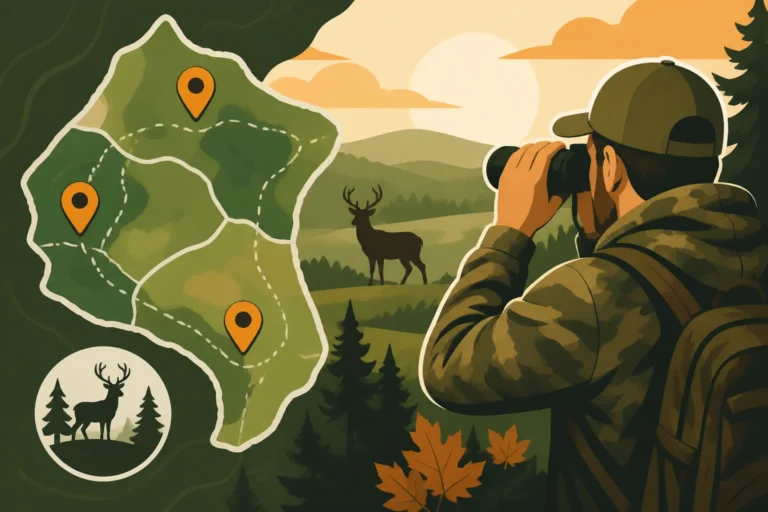
Conversely, northern WMUs, where deer densities are typically lower and winters are much harsher, might have shorter or later archery seasons, sometimes overlapping more directly with early gun seasons. This precise management helps to maintain healthy deer numbers and provide sustainable hunting opportunities across the province. Tools like GoHunt can be incredibly helpful here, allowing you to quickly visualize these WMU boundaries and their associated rules right on your phone, making the planning process much smoother than sifting through endless paper maps. Taking the time to do some Scouting a Wildlife Management Unit before the season opens is key to understanding the local landscape and deer patterns, especially when season dates shift from one WMU to another.
The Early Archery Opener for Deer
For many bowhunters, the early archery opener, typically starting in late September, is the most anticipated time of the year. It's a chance to get out into the woods before the hustle and bustle of the rifle seasons begin and often offers more solitude. This early period catches deer in their late summer to early fall patterns, before the full swing of the rut. They’re often still focused heavily on food sources like standing crops, acorns, and lush green growth in clearings.
The weather during the early opener can be a mixed bag. You might have beautiful, crisp autumn days, or it could still be surprisingly warm, even hot. This influences deer movement significantly. Warm days often mean deer are more active in the cooler hours of dawn and dusk, bedding down tightly during midday. This necessitates careful planning and scent control, as deer are less likely to tolerate human presence. Being prepared for these variable conditions is part of the charm and challenge of Hunting Ontario's Late September Archery Opener. The tranquility of the woods in late September, before the leaves fully turn and fall, offers a unique and intimate hunting experience that many archers cherish.
Overlap with Other Seasons and Special Hunts
It's important for archers to be aware that their season doesn't always exist in a vacuum. In many WMUs, the archery deer season can overlap with other hunting opportunities. For example, in some areas, the archery season might run concurrently with a general small game season, or even with early gun seasons for other species. There are also specific controlled deer hunts and antlerless deer draws that might take place within or adjacent to the archery dates.
Always consult the official Ontario Hunting Regulations Summary to see if your chosen WMU has any special conditions, overlaps, or restrictions. This is where cross-referencing information is crucial. You might find that while you're focused on Bowhunting Ontario's Long Archery Season for whitetails, there's also an open season for coyotes or small game in the same area. This isn't necessarily a bad thing; it just means you need to be extra vigilant, understand all applicable rules for whatever game you might encounter, and ensure you're correctly tagged for your target species. Knowing the specific Legal Firearms and Bows for Big Game allowed in your WMU is also paramount, even if you are strictly bowhunting. This layered approach to season management is a hallmark of Ontario's diverse hunting opportunities.
Pinpointing the Archery Season Start Dates
Getting the jump on the archery season means knowing exactly when and where you can legally hunt. While the general sentiment is "late September," Ontario's size means those specific dates vary considerably depending on which part of the province you're planning to hunt in. This regional variation is a key aspect of Ontario Deer Season Dates and Tags.
Key Dates for Southern and Central Ontario
For most of Southern and Central Ontario, the archery deer season typically kicks off on the last Saturday in September. This timing aims to capitalize on deer still being somewhat predictable in their summer feeding patterns before the pre-rut madness begins. These regions, often characterized by a mix of agricultural fields, woodlots, and mixed forests, generally boast higher deer populations. Consequently, they tend to have the longest and earliest archery seasons, offering bowhunters ample opportunity to pursue deer.
Consider WMUs in the Lake Huron, Niagara, or Eastern Ontario regions – you'll often find a consistent late-September start. For example, WMUs like 65, 71, or 79 are prime examples where archers can expect to be in the stand by the last weekend of September. This extended season allows hunters to experience various phases of early fall deer behavior, from summer feeding patterns to the very early rumblings of the rut. If you're hunting in areas near population centers, you'll want to review Hunting Ontario's Mixed Hardwood Bush strategies, as deer in these areas can be particularly wary. Keep in mind that pressure can build quickly, so early scouting and understanding local deer movements are vital. A digital mapping app like GoHunt can display specific Archery Season Dates by WMU directly on the map, eliminating guesswork when you’re out in the field.
Archery Season in Northern Ontario
Moving into Northern Ontario, the story changes a bit. WMUs in the northwest and northeast parts of the province often have archery seasons that open slightly later or are considerably shorter than their southern counterparts. In many northern units, the archery season might open in early or mid-October, sometimes coinciding with or running only a week or two ahead of the general gun season. This is primarily due to lower deer densities, influenced by harsher, longer winters and vast wilderness areas. Deer in these regions face tougher challenges, and hunting pressure is managed to reflect that.
For example, in WMUs near Thunder Bay or Timmins, you might see an archery opener closer to October 1st, or even later, depending on the specific unit. Hunting in areas like Hunting Northwestern Ontario's Big Bush or Hunting Northeastern Ontario's Clay Belt presents different challenges and opportunities for archers, requiring strategies adapted to rugged terrain and often lower deer numbers. The focus here shifts more towards spotting and stalking, or understanding specific pinch points in vast forests, rather than sitting over agricultural fields. Always remember that the provincial rules for acquiring an Ontario's Outdoors Card Explained and your deer licence remain consistent, regardless of which WMU you choose to hunt.
Checking the Official Ontario Hunting Regulations
No matter how many blogs you read or how much advice you get from fellow hunters, nothing, and I mean nothing, beats checking the official source. The Ontario Hunting Regulations Summary is published annually by the Ministry of Natural Resources and Forestry (MNRF). This document is your bible for all hunting regulations, including precise archery season opening and closing dates for every single WMU.
It's absolutely critical to consult the most current summary each year, as dates, zones, and specific rules can change. You can usually find this document online on the Ontario government website or pick up a physical copy wherever hunting licenses are sold. Many hunters find it useful to keep a digital copy on their phone for quick reference while scouting or in the field.
To make it easier, here's a simplified table illustrating typical archery opening dates for general guidance. Always verify these against the current official regulations for your specific WMU.
| Ontario Region (Typical WMU Groups) | General Archery Deer Opener |
|---|---|
| Southern Ontario (e.g., WMU 65-79) | Last Saturday in September |
| Central Ontario (e.g., WMU 48-60) | Last Saturday in September |
| Northeastern Ontario (e.g., WMU 29-47) | Early to Mid-October |
| Northwestern Ontario (e.g., WMU 1-28) | Early to Mid-October |
When you're poring over the regulations, paying attention to the specific WMU number for your chosen hunting grounds is key. Resources like the GoHunt app can overlay WMU boundaries on maps and often pull in the relevant regulations directly, saving you a ton of time and reducing the risk of misinterpretation. Remember, ignorance of the law is no excuse, and staying informed is part of being a responsible hunter. Before you head out, make sure you understand the nuances of Reading an Ontario WMU Map Before You Go.
Strategies for the Archery Opener
So, you’ve checked your regulations, marked your calendar, and your arrows are fletched. Now comes the exciting part: actually hunting! The early archery season presents unique opportunities and challenges that call for specific strategies to improve your chances of success.
Pre-Season Scouting and Stand Placement
Success during the archery opener often hinges on the homework you do before the season even begins. Pre-season scouting is paramount. This means getting out into your hunting area weeks, or even months, beforehand to understand deer movement patterns. In late summer, deer are predictable, heavily focused on food, and establishing their fall patterns. Look for primary food sources like acorn flats, apple orchards, standing corn, or alfalfa fields. Scout the trails leading to and from these areas, paying close attention to fresh tracks, rubs, and droppings.
Identify pinch points, funnels, and natural travel corridors that deer use to move between bedding and feeding areas. This is where your stand placement becomes critical. You want to be positioned for a shot at the primary food source or along a well-used trail, always considering wind direction. Deer in early season are still relatively relaxed compared to the rut, but they are also less distracted, making scent control and stealth vital. Consider setting up a few different stand locations to account for changing wind conditions. A common strategy is Hanging a Stand on an Ontario Bush Edge where deer might filter out of dense cover into a feeding area. Also, don't overlook natural features like Hunting a Hardwood Ridge for Whitetails where deer will often travel to find acorns or navigate terrain. Using trail cameras during your scouting can be a game-changer, revealing exactly when and where deer are moving.
Dealing with Early Season Weather and Bugs
One of the defining characteristics of Ontario's early archery season is the unpredictable weather. Late September and early October can still bring warm, even hot, temperatures. This has a direct impact on deer activity. During warm spells, deer tend to move more at night and during the cooler hours of dawn and dusk, bedding down tightly in thick cover during the day. This means your best chances will often be those first and last hours of daylight.
Beyond the heat, you absolutely cannot forget about the bugs. Mosquitos and black flies can still be relentless in early fall, especially in wooded or swampy areas. Being comfortable and bite-free is crucial for sitting still and staying focused for extended periods. Pack effective insect repellent, and consider wearing bug-proof clothing or a head net. Layering your clothing is also a smart move; start with a lightweight, breathable base layer to wick away sweat, and have a quiet outer layer you can put on or take off as temperatures fluctuate. Staying hydrated is also key. Don't let discomfort cut your hunt short.
Understanding Deer Behaviour in Early Fall
During the early archery opener, deer behavior is quite different from what you'll encounter during the peak rut. Bucks are typically still in their bachelor groups, or at least associating with other bucks, and are primarily focused on building up fat reserves for the colder months and the impending rut. Does will often still be in family groups with their fawns. Their focus is almost entirely on feeding and security.
This means that while rattling and grunting might not be highly effective yet, understanding food sources is paramount. Deer will be hitting the best available food and seeking out secure bedding close by. Look for transition areas between bedding cover and feeding areas. As the season progresses into early October, you might start to see some minor buck activity – a few scrapes appearing, and bachelor groups beginning to break up. This subtle shift is your cue that the pre-rut is slowly approaching. Paying close attention to these early signs can give you an edge, allowing you to adapt your strategy from purely food-focused to incorporating early rub and scrape lines as they appear.
Disclaimer
Hunting is an inherently risky activity. This guide provides general information and recommendations based on common practices and regulations in Ontario. It is your sole responsibility to thoroughly review and comply with all current federal, provincial, and local hunting laws and regulations. Always prioritize safety, respect wildlife, and obtain proper licenses and permissions before engaging in any hunting activities. The author and publisher are not liable for any accidents, injuries, or legal issues that may arise from the use of this information.