Hunting a Bruce Peninsula Cedar Bush
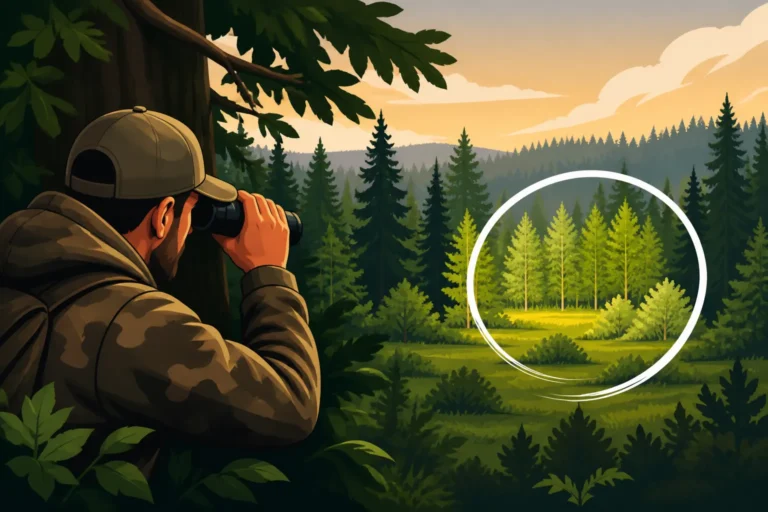
Staring into a seemingly impenetrable wall of cedar on Ontario’s Bruce Peninsula can be incredibly daunting for any hunter. The dense cover, rocky terrain, and sometimes unpredictable weather can make it feel like the deer have an unfair advantage, melting away into the shadows as soon as you step foot in their territory. This guide is here to break down those challenges, offering practical, on-the-ground advice for successfully hunting the elusive whitetails that call the Bruce Peninsula’s cedar bush home.
Understanding the Unique Bruce Peninsula Environment
The Bruce Peninsula is a truly special place in Ontario, offering a hunting experience unlike many other parts of the province. It's a land shaped by ancient geological forces, where the Niagara Escarpment meets the sparkling waters of Georgian Bay and Lake Huron. This unique landscape, particularly its vast cedar bush, creates a haven for whitetail deer, but it also presents a formidable challenge for those of us hoping to fill a tag.
The Allure of Cedar Bush Habitat for Whitetails
For whitetail deer, a dense cedar bush isn't just a place to hide; it's a four-season survival sanctuary. When those cold Ontario winds start to howl and the snow begins to pile up, cedar stands offer incredible thermal cover. The thick, interlocking branches act like a natural insulated roof, trapping heat and blocking wind, providing critical refuge from bitter temperatures. Deer can bed down in relative comfort here, expending less energy to stay warm. This is especially true during the late fall and early winter seasons, making these areas absolute magnets for deer activity.
Beyond warmth, cedar offers invaluable security. The dense canopy and low-lying branches provide unparalleled visual cover from predators, including us hunters. A deer can often be mere yards away, completely concealed by the thick green needles. This makes spotting them incredibly difficult and often means your first indication of a deer might be the crash of it bolting through the undergrowth. Furthermore, cedar itself provides a browse option, especially in lean winter months. Deer will nibble on cedar twigs and other small evergreen growth, supplementing their diet when deciduous browse is scarce or buried under snow. It's a complete package for them: food, shelter, and safety, all rolled into one. For us, this means that if you're hunting in the Bruce Peninsula, you have to understand and respect the cedar.
Navigating the Topography and Terrain Challenges
Hunting the Bruce Peninsula isn't just about the cedars; it's about the ground they grow on. This area is characterized by its shallow, rocky soil, often with exposed limestone bedrock, a direct result of its escarpment geology. This means your footing can be treacherous. You might be stepping on moss-covered rocks, loose scree, or finding yourself trying to navigate around deep fissures and crevices in the ground. It's not uncommon to encounter sudden drops or steep, rocky inclines, making silent movement incredibly difficult. Even the seemingly flat areas can hide ankle-twisting obstacles.
Adding to this complexity is the proximity to the Great Lakes. The air currents coming off Georgian Bay and Lake Huron can create swirling winds, especially within the confines of the bush. What might feel like a steady breeze at the edge of the woods can become a chaotic vortex just a few steps in, playing havoc with your scent control efforts. Understanding how wind behaves in this unique environment is crucial. It’s not just about knowing the general wind direction, but observing how it interacts with the landscape – the ridges, gullies, and even the density of the trees themselves – to predict where your scent might be carried. This demands a much higher level of awareness than hunting in, say, Hunting Deer in Southern Ontario Farmland where terrain is often flatter and winds more predictable.
Effective Scouting Strategies for Bruce Peninsula Cedars
You wouldn't head into a major exam without studying, and you certainly shouldn't go hunting a Bruce Peninsula cedar bush without some serious scouting. The density of the cover means you can't just wander in and expect to bump into a deer; you need to understand their movements and preferred hideouts before you even carry a weapon.
Pre-Season Reconnaissance: Maps, Satellite, and Boots on the Ground
Pre-season scouting is absolutely non-negotiable when hunting dense cedar. Start with a good map – topographic maps are your best friend here, as they reveal elevation changes, water features, and potential travel corridors that might not be obvious from the ground. Then, layer in satellite imagery. Tools like GoHunt are invaluable for this, allowing you to zoom in and identify variations in vegetation density, open pockets, and the exact contours of the cedar stands. Look for "fingers" of cedar extending into more open areas, or isolated patches that might serve as bedding sanctuaries. Identify natural funnels created by the terrain, bodies of water, or even changes in timber type. While these tools offer a fantastic aerial view, they're only half the battle.
The real work happens with boots on the ground. Walking through these areas before the season starts, when you're not trying to be quiet and stealthy, allows you to cover ground, understand the topography, and verify what you saw on the maps. Look for existing deer trails – not just faint paths, but well-used runways. In cedar, these trails can be subtle, sometimes just worn-down vegetation where deer have repeatedly passed. Pay close attention to where these trails lead: from bedding areas deep in the cedar to potential feeding grounds or water sources. Look for signs of past rut activity like rubs on small trees or scrapes in more open pockets. Getting a feel for the lay of the land, identifying potential stand locations, and understanding the challenges of movement will save you countless headaches and increase your odds exponentially once the season opens. This level of detail in scouting is far more critical here than if you were Hunting Ontario's Mixed Hardwood Bush, where visibility is often much greater.
Interpreting Deer Sign in Dense Cedar
Reading deer sign in dense cedar is a specialized skill. Unlike open hardwoods where tracks and droppings can be obvious, the thick needle cover often obscures fresh activity. You need to become a detective, looking for subtle clues. Fresh tracks might only be visible in small, softer patches of ground, near water sources, or along less-vegetated trails. Pay attention to the edges of the cedar bush, where deer often enter and exit the dense cover. Look for disturbed vegetation where a deer has pushed through, or small, broken branches.
Rubs in cedar are also distinctive. Deer will often rub small cedar trees, leaving behind scraped bark and the unmistakable scent of their forehead glands. These are strong indicators of buck activity. Scrapes, too, can be found, though often in slightly more open pockets or along the edges where some sunlight can reach the forest floor. The key is to distinguish fresh sign from old. Fresh rubs will have moist, exposed wood, and fresh scrapes will have disturbed leaves and moist earth, often with a distinct smell. In these perpetually shaded and moist environments, sign can last longer, so look for very recent disturbance.
Understanding how deer use cedar for bedding is paramount. They’ll often bed down on slight rises within the cedar, offering a small advantage in terms of vision and airflow. You might find flattened areas in the undergrowth, often with a scatter of deer droppings nearby. These bedding areas will almost always be positioned to give the deer a wind advantage, allowing them to smell danger approaching from downwind. By observing these patterns, you can begin to piece together their daily movements and identify key ambush points. This methodical approach to sign reading helps inform where you'll be Hanging a Stand on an Ontario Bush Edge or planning your still-hunting route.
Hunting Tactics Tailored for Cedar Bush
Hunting the Bruce Peninsula's cedar bush demands a different approach than typical open-woodland hunting. You can't just walk and look; you need to embrace stealth, patience, and a deep understanding of deer behaviour in dense cover.
Stand Placement and Still-Hunting Techniques
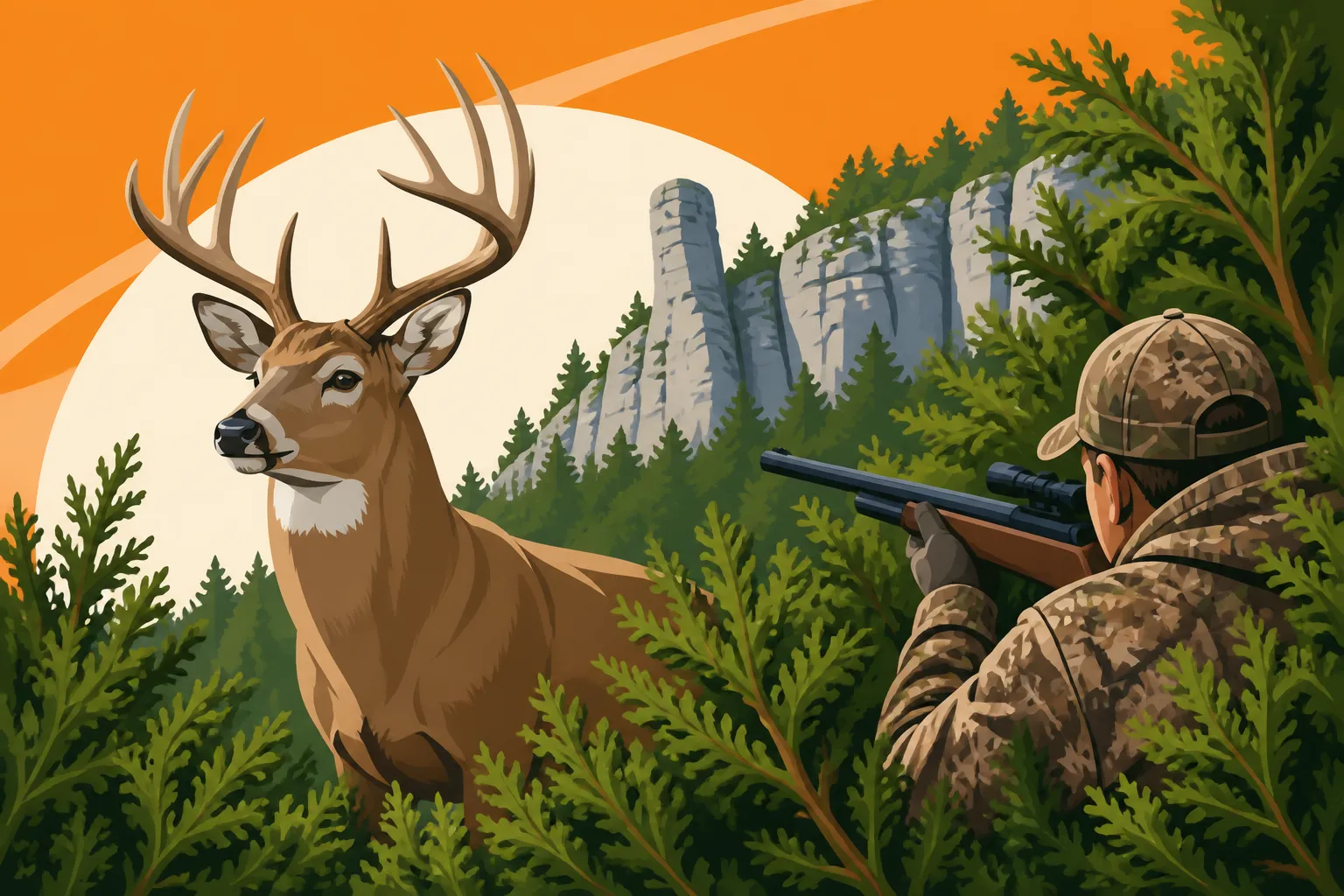
Given the limited visibility in cedar, stand placement becomes an art form. You're not looking for wide-open shooting lanes, but rather strategic pinch points and travel corridors within the dense cover. The ideal spot might be on a slight elevation where you can see over a low-lying section of cedar, or along the edge of a particularly thick bedding area where deer funnel into more open ground. Look for natural funnels created by rock formations, water features, or even transitions between cedar and a patch of mixed hardwoods. Your goal is to intercept deer as they move, not necessarily to spot them from afar. Often, a shooting lane of 20-30 yards is all you'll get, so practicing quick, accurate shots at close range is essential. For more general advice on deer season, check out Ontario Deer Season Dates and Tags.
Still-hunting is another incredibly effective technique in cedar, perhaps even more so than stand hunting for some. This involves moving exceptionally slowly, taking one or two steps, then pausing for several minutes to scan, listen, and let the woods settle. You're moving at a deer's pace, trying to mimic their natural movements. Every single step must be deliberate, focusing on placing your feet where they won't snap twigs or scuff leaves. Use the wind to your advantage, always trying to move into or crosswind. Your eyes should be constantly searching for horizontal lines (a deer's back or belly) in a vertical world of trees, or for the flicker of an ear. Remember, deer are designed to blend in, so look for anomalies. Patience is key; it's not about covering ground, but about slowly dissecting the ground you're on, hoping to catch a deer unawares before it catches you. If you're using a bow, remember to prepare for Bowhunting Ontario's Long Archery Season by practicing shots through brush.
The Role of Scent Control and Wind Awareness
In the close quarters of a cedar bush, scent control isn't just a suggestion; it's a critical component of success. Deer can smell you from incredible distances, and in dense cover, they often detect your presence before you ever see them, especially if the wind isn't in your favour. Every hunter knows the basics: shower with scent-free soap, wash hunting clothes in scent-free detergent, and store them properly. But in a cedar environment, you need to go further. Consider using ozone generators in your clothing locker, or even packing a small one for your stand location. Scent-eliminating sprays are a must, applied liberally to your boots, clothes, and even your pack before heading in.
However, no amount of scent control can completely negate a bad wind. As mentioned earlier, the Bruce Peninsula's coastal proximity and rugged terrain can create unpredictable, swirling winds. Before you even head out, check multiple wind forecasts and observe the actual wind conditions on site. Once in the bush, carry a wind checker (a small squeeze bottle of powder) and use it constantly. Fan it out every few minutes to see how your scent is truly moving. If the wind shifts unexpectedly, you need to be prepared to adjust your position, even if it means moving quietly to a different stand or changing your still-hunting direction. Hunting a Cedar Swamp Edge makes wind awareness even more important. Ignoring the wind is a surefire way to educate every deer in the vicinity to your presence.
Driving Deer in Dense Cover
While still-hunting and stand hunting are often preferred for solitary hunters or small groups, driving deer can be an incredibly effective tactic in the Bruce Peninsula's cedar bush, especially in specific scenarios. This method works best in smaller, more manageable blocks of cedar where you can reasonably predict escape routes. The objective isn't to blast through the bush indiscriminately, but to subtly push deer out of dense bedding areas towards waiting standers. For a successful drive, communication is paramount. Everyone involved needs to know the plan, the boundaries, and safety protocols inside and out.
Typically, a deer drive involves a few "pushers" who slowly and methodically walk through the dense cover, making just enough noise to encourage deer to move. On the other side of the cedar block, "standers" are strategically positioned on known escape routes or pinch points, ready to intercept the deer as they try to slip out. It's crucial for standers to be absolutely still and quiet, as deer will be highly alert. Safety cannot be stressed enough; clear shooting lanes, knowledge of where every hunter is, and strict adherence to blaze orange requirements are non-negotiable. For a deeper dive into the mechanics and safety, you might want to review Deer Drives With Three or Four Hunters. This isn't a tactic for every situation, but when executed correctly in suitable cedar blocks, it can be extremely productive in areas where deer hold tight.
Essential Gear and Safety Considerations
Heading into the dense, often remote cedar bush of the Bruce Peninsula requires more than just your weapon and a hunting licence. The right gear can make or break your hunt, and prioritizing safety is paramount in an environment where getting turned around or facing unexpected challenges is a real possibility.
Recommended Gear for Navigating and Hunting Cedars
Your gear list for a cedar bush hunt needs to be robust. First and foremost, footwear: sturdy, waterproof boots with excellent ankle support are non-negotiable. You'll be traversing rocky, uneven, often wet ground, and keeping your feet dry and supported is key to comfort and preventing injury. Secondly, navigation. While a physical map and compass are always smart backups, a reliable GPS unit or a smartphone with an app like GoHunt that includes offline mapping capabilities is a godsend. Mark your vehicle, your stand, and any key features or trails as you go. Even a brief moment of disorientation in thick cedars can quickly become a serious problem.
Clothing should be quiet, durable, and appropriate for the fluctuating Ontario weather. Layers are always the answer. Given the legal requirements, make sure you're wearing enough Ontario Blaze Orange Requirements during gun seasons to be highly visible to other hunters, even if visibility within the bush is limited. A good headlamp, spare batteries, a sharp knife, and a small, easily accessible first-aid kit are also critical. Consider packing some rope or strong cord for dragging out game, especially if you're fortunate enough to tag out in a remote spot. For those hunting with a rifle, understanding Legal Rifle Calibres for Big Game is also a must. You'll often be taking shots at close range, so a dependable, accurate firearm that handles well in tight quarters is ideal.
Prioritizing Safety in Remote and Dense Conditions
The dense, often remote nature of the Bruce Peninsula cedar bush means safety should always be your top priority. Before you even leave home, tell someone exactly where you're going, your planned route, and when you expect to return. Stick to that plan. Carry multiple forms of communication, such as a fully charged cell phone (though service can be spotty), a satellite messenger (like an inReach or Spot device), or a two-way radio if hunting with a partner. These tools can be life-savers if you need to call for help.
When you're actually in the bush, maintain constant awareness of your surroundings. The cedars can quickly disorient you, making it easy to lose your sense of direction, especially if you're focused on still-hunting or tracking. Use natural landmarks, flag your trail discreetly if necessary, and regularly check your GPS or compass. Familiarize yourself with how to properly use your navigation tools beforehand – don't wait until you're lost to figure them out! Be mindful of footing; moss-covered rocks and hidden crevasses are common. If you do find yourself turned around, don't panic. The best advice for What to Do If You Get Turned Around is to stop, take a breath, consult your map and compass or GPS, and try to retrace your steps. If all else fails, stay put and signal for help. Remember, a successful hunt isn't just about bagging a deer; it's about making it home safely. And when you do successfully harvest an animal, don't forget the importance of proper Meat Care in Ontario's Warm Early Seasons, depending on when you’re hunting.
| Hunting Tactic | Best for Cedar Bush (Pros) | Challenges in Cedar Bush (Cons) | Key Considerations |
|---|---|---|---|
| Stand Hunting | Ideal for intercepting deer on established trails/pinch points. | Limited visibility, short shooting lanes, scent swirls. | Place stands on natural funnels, elevated positions, or travel corridors. |
| Still-Hunting | Effective for covering ground slowly, finding bedded deer. | Extremely slow pace required, noisy footing, easy to get lost. | Move silently, use wind, pause frequently, look for horizontal lines. |
| Deer Drives | Can move reluctant deer out of thick bedding areas. | Requires multiple hunters, strict safety protocols, clear communication. | Best for smaller cedar blocks, clear roles for pushers and standers, blaze orange. |
Disclaimer
Hunting is an activity with inherent risks. This guide provides general information and recommendations. It is crucial to always consult and adhere to the most current Ontario hunting regulations, obtain all necessary licenses and permits, and prioritize safety above all else. Always respect private property and practice ethical hunting principles.