Hanging a Stand on an Ontario Bush Edge
The frustration of setting up a treestand only to spook deer or have the wind betray you is all too real for Ontario hunters. A well-placed stand on a bush edge can be a game-changer, offering consistent encounters if done right. This guide delves into the detailed art and science of properly hanging a stand on an Ontario bush edge, ensuring you maximize your chances.
Understanding the Ontario Bush Edge Dynamic
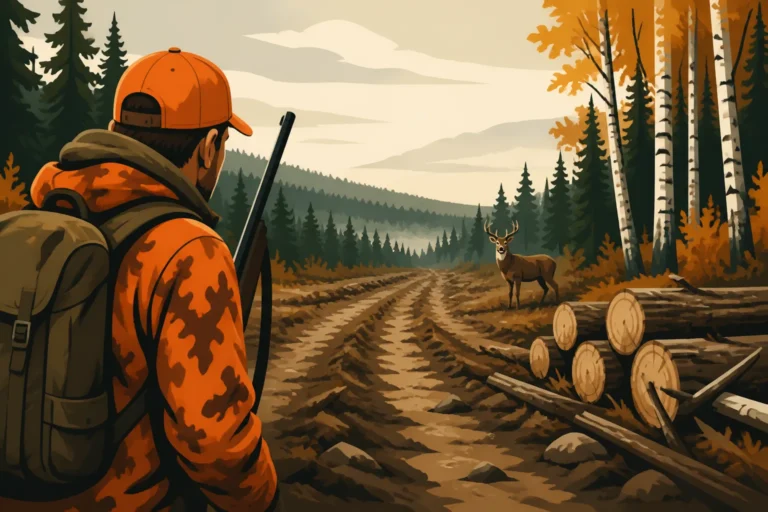
Ontario's diverse landscapes, from dense northern forests to mixed agricultural zones, present countless opportunities for hunters. Yet, one habitat feature consistently stands out as a prime location for deer activity: the bush edge. This isn't just a random line in the forest; it's a dynamic transition zone where deer often feel safe moving between different food sources, bedding areas, and travel corridors. Learning to read and utilize these edges is foundational to successful stand placement.
Why the Edge is King for Whitetails
The bush edge is a natural highway and sanctuary for whitetails. Think about it: deer need food, water, and cover. Often, a bush edge provides access to all three, acting as a transition point. For example, a thick cedar swamp might offer dense thermal cover in winter, but the deer need to emerge into a more open area to browse on preferred vegetation or feed in an agricultural field. That edge is where they feel secure enough to step out, but close enough to bolt back into safety if danger arises. During the rut, bucks will cruise these edges, scent-checking for does and leaving their own calling cards, making them high-traffic areas. This concentration of activity, driven by security and resources, is precisely why we spend so much time focusing on these linear features.
Consider a mature woodlot bordering a freshly cut hayfield in Southern Ontario. Deer will stage up in the cover of the woodlot, waiting for dusk to venture into the field to feed. The edge becomes the precise point of their ingress and egress. Or imagine a thick pine plantation meeting an open hardwood ridge. Deer will often bed in the thick pines, moving up to the hardwoods to feed on acorns in the fall. The invisible line where these two habitat types meet becomes a crucial funnel. This is a common scenario when Hunting Deer in Southern Ontario Farmland.
Reading the Specifics of an Ontario Edge
Not all edges are created equal. A "good" edge is one that shows clear signs of deer activity and offers a strategic advantage for a hunter. Before you even think about hoisting a stand, you need to become a master detective. Look for trails, rubs, and scrapes. Are the trails heavily worn, indicating regular use? Are there fresh rubs on saplings, indicating a buck has been marking his territory? Fresh scrapes with an overhanging licking branch are another huge indicator of buck activity, especially during the pre-rut and rut.
Beyond obvious sign, consider the topography. Does the edge follow a creek, a change in elevation, or a natural pinch point? A subtle ditch or a rise in the terrain might act as a natural travel corridor that deer prefer. Pay attention to how wind might swirl or funnel along this edge. You can use mapping applications like GoHunt to analyze contour lines, identify thickets, and even visualize historical aerial imagery to understand how the landscape has changed. Look for funnels created by narrow strips of woods between open areas, or where a dense thicket necks down to a single travel lane. These are gold mines. An edge bordering a Hunting a Cedar Swamp Edge might reveal different signs than one next to a Hunting a Standing Corn Field Edge, so understanding the specific habitat is key.
Strategic Stand Placement Considerations
Once you've identified a promising bush edge, the real work begins: strategizing the perfect stand placement. This goes beyond just finding a tree; it involves a meticulous evaluation of factors that can make or break your hunt. Getting it right means minimizing your impact and maximizing your shot opportunity, without alerting the incredibly sensitive nose or eyes of an Ontario whitetail.
Wind Direction and Scent Control
This is, without a doubt, the single most critical factor in stand placement. Deer live and die by their noses. If a deer catches your scent, your hunt is over before it even begins. You must position your stand so that the prevailing wind carries your scent away from where the deer are expected to approach or travel. This often means placing your stand downwind or crosswind of the main travel corridor.
Before selecting a specific tree, spend time observing wind currents. Carry a small bottle of powder or a milkweed puff to test micro-currents. Remember that wind can swirl, especially in rolling terrain or near dense cover. Many hunters will only hunt a particular stand if the wind is absolutely perfect for that specific location. If the wind is wrong, it's better to stay home or hunt an alternative stand, because pushing your luck will only educate the deer. Planning for different wind directions is crucial, which is why having multiple stand locations for varying conditions is a hallmark of an experienced hunter. Utilizing mapping tools, potentially like GoHunt's wind prediction features, can help you plan several spots that cover different wind scenarios. When Hunting the Rut in Early to Mid November, a bad wind can ruin a whole morning of cruising bucks.
Entry and Exit Routes Without Spooking Game
You've picked the perfect spot, the wind is right, but how do you get there without blowing your cover? Your entry and exit routes are just as important as the stand itself. You need to be able to approach and leave your stand quietly, stealthily, and without crossing or contaminating the deer's anticipated travel paths. This means using natural terrain features, dense cover, or even waterways to conceal your movement.
Always try to approach your stand from a direction that keeps you out of sight and downwind of where you expect deer to be. This might mean taking a longer, more circuitous route. Avoid walking directly through known bedding areas or feeding zones. After your hunt, exiting stealthily is just as critical. Many hunters have ruined future hunts by clumsily walking out, spooking deer that were just starting to move. Think about when you're Hunting an Ontario Bush Lot You Just Got – the first impression you make on the deer herd can set the tone for the season. Plan your routes in advance, marking them on your GPS or a mapping app. Consider how light levels will affect your entry and exit; moving in the dark requires even more caution.
Shot Opportunities and Lane Clearing
Once you're in the stand, you need to be able to make a clean, ethical shot. This means positioning your stand for optimal shooting lanes. Before hanging, identify potential shooting windows along the edge where deer are likely to pass. Take note of any obstructions like branches, saplings, or thick brush that could deflect an arrow or bullet.
Carefully and selectively trim these obstructions before the season begins. Do not over-trim; leave enough cover around your stand to break up your silhouette. Your goal is to create clear lanes to the vitals of a deer at various distances and angles, typically out to your effective range. Use a rangefinder to mark distances to key landmarks (trees, rocks, trail intersections) around your stand. This helps with shot confidence when that moment of truth arrives. When you're Reading Whitetail Sign in Ontario Hardwoods, you're not just looking for deer, but also for ideal shooting lanes around those signs. Ensure your stand offers multiple shot angles, accommodating deer moving in either direction along the edge.
Gear and Techniques for Hanging Your Stand Safely
Hanging a treestand, especially on a gnarly Ontario bush edge, isn't just about efficiency; it's fundamentally about safety. Falling from a treestand is one of the leading causes of hunting accidents. Investing in the right gear and strictly adhering to safety protocols is non-negotiable. Don't let the excitement of finding a prime spot override your common sense or your commitment to safety.
Essential Equipment for Stand Hanging
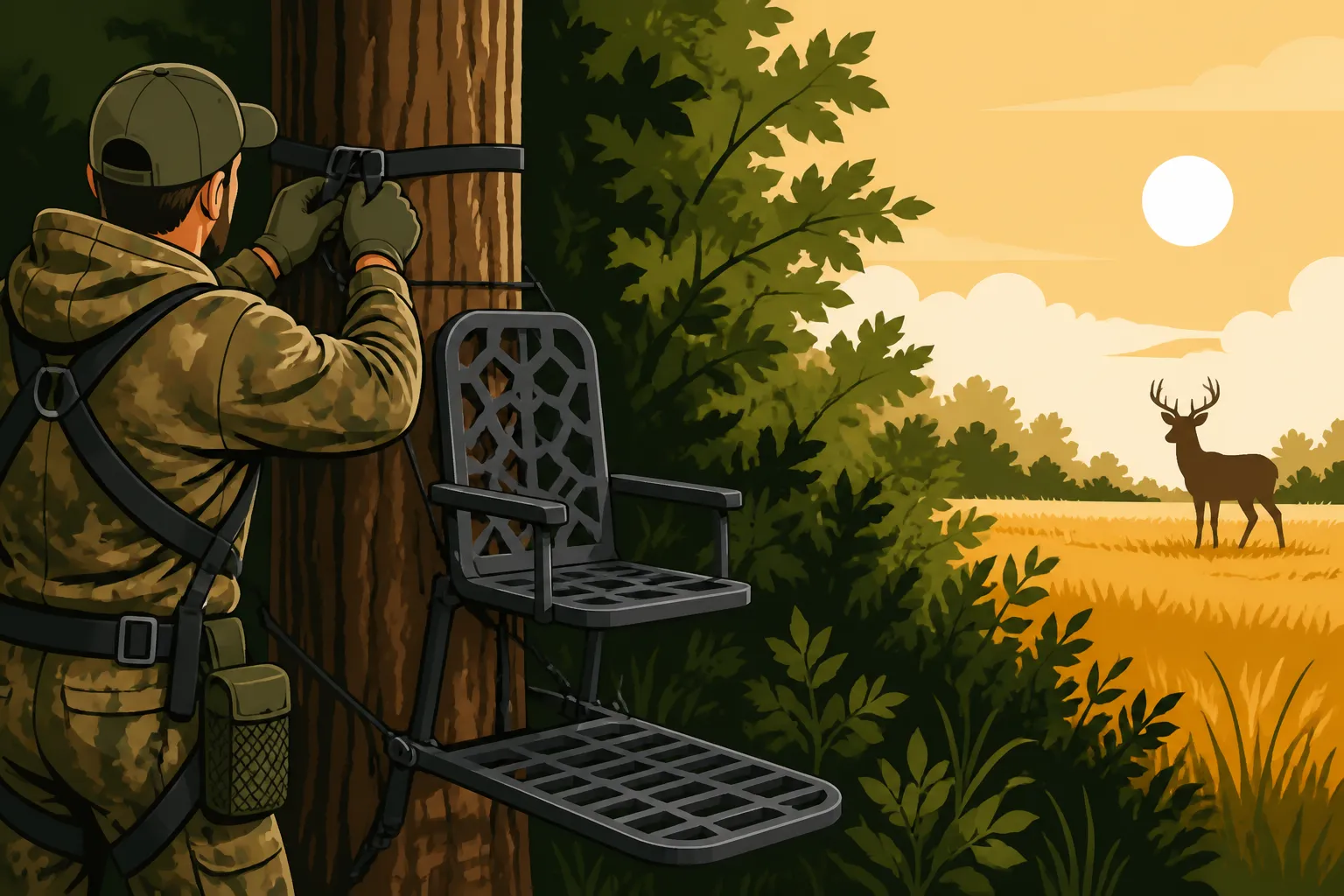
Before you even leave the truck, ensure you have all the necessary gear. A solid, well-maintained treestand, whether it's a climbing stand, hang-on, or ladder stand, is paramount. For bush edges, hang-on stands with climbing sticks or sections are often preferred for their versatility and ability to be set in irregular trees.
Crucially, you need a full-body harness and a lineman's climbing belt. The harness should be worn from the moment your feet leave the ground until they return. A lineman's belt allows you to secure yourself to the tree while ascending or descending, keeping your hands free to manipulate the stand and climbing sticks. A pull rope is also indispensable; never climb with your weapon or heavy gear. Instead, use the rope to hoist them up once you're safely secured in your stand. Additionally, bring a handsaw or small pruners for clearing shooting lanes, a measuring tape, and a small level to ensure your stand platform is stable. Good quality work gloves are a must to protect your hands, and sturdy, non-slip boots are critical for tree climbing. Mapping tools, like GoHunt's detailed satellite imagery, can help you scout the ideal trees from home, reducing time spent on the ground near your chosen edge.
Best Practices for Safety and Efficiency
Safety begins on the ground. Always inspect your stand and all safety equipment before each use. Look for any signs of wear, cracks, or damage. When selecting a tree, choose a healthy, straight tree that's free of dead branches or rot. Ensure the tree is large enough to safely support your stand and your weight.
When ascending, always maintain three points of contact (two hands, one foot, or one hand, two feet) with the climbing sticks or tree steps. Use your lineman's belt to stay tethered to the tree while you install each climbing stick and the stand itself. As you attach your stand, double-check all straps, bolts, and connections. Once the stand is secure, deploy your full-body harness's tree strap or tether, ensuring there's no slack. Your tether should allow you to sit comfortably but prevent a significant fall. Practice these steps in a safe environment, close to the ground, before attempting a high climb in a prime hunting area. Remember, you can always go slower, but you can't undo a fall.
| Safety Checklist for Stand Hanging | Description | Importance |
|---|---|---|
| Inspect All Gear | Check stand, straps, harness, ropes for wear, damage, or degradation. | Critical: Prevents equipment failure. |
| Select Healthy Tree | Choose a live, sturdy tree free of dead branches, rot, or insect damage. Ensure sufficient diameter. | Critical: Tree integrity is paramount for stability. |
| Wear Full-Body Harness | Don harness before leaving the ground and keep it on until you're back on solid ground. | Critical: Prevents serious injury or death from falls. |
| Use Lineman's Belt | Keep yourself tethered to the tree while climbing and installing components. | Critical: Keeps hands free for work while maintaining safety. |
| Three Points of Contact | Maintain constant three points of contact (hands/feet) with climbing aids during ascent/descent. | High: Enhances stability and prevents slips. |
| Use Pull Rope | Hoist your weapon and heavy gear after you are safely secured in the stand. Never climb with them. | Critical: Prevents accidental discharge or loss of balance during climb. |
| Clear Lanes Thoughtfully | Trim only what's necessary for shooting lanes and leave natural cover around your stand. Do it before the season. | High: Ensures clear shot opportunities and maintains concealment. |
| Inform Someone | Always tell someone where you're going and when you expect to return. | Critical: Enables rescue efforts in case of emergency. |
| Practice | Practice hanging your stand at ground level or low heights before attempting a full deployment. | High: Builds confidence and muscle memory for safe, efficient execution. |
Long-Term Stand Management and Maintenance
Hanging a stand isn't a "set it and forget it" task. For your stand to remain effective, safe, and legal throughout the season and for years to come, ongoing management and maintenance are crucial. Neglecting these steps can lead to decreased effectiveness, potential safety hazards, or even legal trouble.
Seasonal Adjustments and Refreshers
Ontario's seasons bring dramatic changes to the bush edge. What was a perfect setup in early archery season might be completely exposed by the late gun season. As leaves fall, your once-hidden perch might become obvious to deer. Plan to revisit your stands periodically to reassess concealment. You might need to add a bit of natural cover around your stand, or trim newly grown branches that are now obstructing a shooting lane.
Additionally, deer patterns can shift throughout the season due to pressure, food source availability, or changes in weather. A stand that was hot during early season might be cold during the peak of the rut, or when deep snow forces deer into specific yarding areas. Always be willing to adapt. Sometimes, it means moving a stand a short distance, or even pulling it entirely to relocate to a more productive area. Don't be afraid to adjust your strategy if the deer aren't using the edge as you anticipated. It’s important to think about these shifts, especially when considering Hunting a Hardwood Ridge for Whitetails where food sources can dictate movement.
Legalities and Landowner Relations
When hunting on private land, you absolutely must have explicit permission from the landowner. This isn't just common courtesy; it's the law in Ontario. Before you ever hang a stand, discuss your plans with the landowner. Get permission for stand placement, tree trimming, and whether the stand can remain up year-round or needs to be removed after the season. Leaving a stand up without permission could be considered trespassing and damage. Always check Ontario Trespass and Landowner Law to be sure you're compliant.
If you're hunting Crown Land, while you generally don't need "permission" for stand placement, you still need to be mindful of regulations. Stands generally cannot be left unattended for extended periods, and you cannot damage the property. Check the Ontario Hunting Regulations Summary for specific rules regarding unattended stands or permanent structures on Crown Land. It's also good practice to make sure your stand is clearly marked with your name and contact information, should it be found by other hunters or conservation officers. Being a responsible hunter, respectful of both the land and its owner, ensures future opportunities. Consider how you're using tools like GoHunt to mark boundaries and ensure you're on legal ground.
Disclaimer
The information provided in this guide is for general educational purposes only and is not a substitute for professional advice, official regulations, or hands-on safety training. Always consult the current Ontario Hunting Regulations Summary, local laws, and certified hunter education courses for specific rules and safety protocols. Hunting carries inherent risks, and personal safety is the responsibility of each individual hunter.