Hunting a Hardwood Ridge for Whitetails
Hunting a vast, sprawling hardwood ridge can feel like searching for a needle in a haystack, especially when those leaves are still on the trees or it's been a dry fall. Many hunters feel overwhelmed by the sheer size and seemingly uniform terrain, struggling to pinpoint where deer might be. This guide will walk you through understanding why whitetails utilize these areas, how to effectively scout them, and the best strategies to employ for a successful hunt in Ontario's hardwood forests.
Understanding Why Whitetails Love Hardwood Ridges
Ontario's landscape is incredibly diverse, but those rolling hardwood ridges, particularly in areas like the Haliburton Highlands or parts of Southern Ontario, are absolute magnets for whitetails. It’s not just about the trees; it’s a whole ecosystem that provides everything a deer needs throughout the year.
The Acorn Connection and Food Availability
Hardwood ridges, especially those dominated by various oak species, are goldmines for whitetails when the acorns start to drop. I've spent countless hours in the bush watching deer literally gorge themselves on acorns, almost to the exclusion of other foods, when the mast crop is heavy. This isn't just about a quick snack; acorns are incredibly high in fat and protein, providing crucial energy for deer to put on weight before the harsh Ontario winter and fuel bucks during the demanding rut. When you find a ridge dotted with mature red or white oak trees, especially if they're producing well, you've found a primary food source. Deer will travel significant distances to hit these consistent food plots, often leaving behind a tell-tale carpet of disturbed leaves where they've been rooting around for nuts. Even if the acorn crop isn't stellar, these ridges often hold other browse like maple, beech, or cherry, ensuring a diverse buffet.
Cover, Topography, and Escape Routes
Beyond food, hardwood ridges offer fantastic cover and strategic advantages. The broken topography of a ridge, with its dips, rises, and draws, provides excellent thermal cover, shielding deer from biting winds and driving snow in colder months. It's also prime bedding territory. Deer will often bed on the leeward side of a ridge crest, giving them a commanding view downhill while the wind blows any approaching scent up and over them. These natural contours also create ideal escape routes. A deer startled on a ridge can quickly drop into a draw, circle around, or use the dense understory that often grows along the edges to disappear. Knowing these escape routes can actually help you anticipate their movements and position yourself accordingly. I've seen deer drop off a ridge face like a stone, only to reappear minutes later on an entirely different part of the slope, using the terrain to their advantage.
Natural Travel Corridors
Hardwood ridges aren't just for eating and sleeping; they're superhighways for deer movement. Whitetails, being creatures of efficiency, will naturally choose the path of least resistance. A long, undulating ridge line often connects different food sources, water, and bedding areas, making it a natural corridor. Bucks will cruise these ridges during the rut, scent-checking for does, while does will use them for daily foraging loops. Look for saddles or bottlenecks along the ridge—these are often pinch points where deer traffic funnels, regardless of the time of day. These subtle changes in elevation act like natural gates, guiding deer through specific spots. Understanding these travel patterns is key to successful Whitetail Hunting in Ontario and setting up effectively.
Scouting and Interpreting Sign on Hardwood Ridges
Successfully hunting a hardwood ridge is less about luck and more about diligent scouting. You need to become a detective, piecing together the subtle clues deer leave behind to understand their routines and preferred spots.
Reading Topographical Maps and Satellite Imagery
Before you even set foot in the woods, the best tool you have is often right at your fingertips: topographical maps and satellite imagery. Services like GoHunt are invaluable for understanding the lay of the land without burning boot leather. Look for features like distinct ridge lines, saddles, benches (flat spots along a slope), and points that jut out. These are often high-traffic areas. Pay close attention to how these ridges connect to other types of cover, such as dense cedar swamps or thick young clearcuts, or agricultural fields if you're in productive farmland areas like the Grey-Bruce region. These transition zones are often hotspots. Identify areas where two or more ridges converge, or where a ridge narrows significantly, creating a natural funnel. These are the places to mark on your map for closer inspection.
When using satellite imagery, try to differentiate between mature hardwoods, denser coniferous stands, and open areas. Mature hardwoods might indicate acorn potential, while thick conifer patches offer thermal cover. Tools like GoHunt can layer different maps, helping you visualize the terrain and vegetation in detail, letting you mentally map out potential deer paths and bedding locations. You'll be surprised how much you can learn about where Ontario whitetails yard in deep snow or where they might be feeding based on overhead views.
Identifying Fresh Rubs, Scrapes, and Trails
Once you're on the ground, your focus shifts to finding fresh sign. This is where your map reconnaissance pays off. Start by investigating those suspected pinch points and saddles identified on your map. Look for well-worn deer trails—these are highways. Pay attention to how many deer use them and in what direction. Are they heading to a specific food source or bedding area? Fresh rubs, where bucks have scraped velvet or polished their antlers, are critical. The size of the rub can give you an idea of the buck's size, but more importantly, a line of rubs indicates a travel corridor or a buck's preferred rub line. A hot scrape, especially during the pre-rut and rut, is a buck's calling card, often accompanied by an overhead licking branch. These are communication hubs, indicating recent activity. Don't just find one and move on; look for clusters of sign. A concentrated area of fresh rubs, scrapes, and heavy trails indicates a core area for a buck. This detailed detective work is essential for Reading Whitetail Sign in Ontario Hardwoods.
Locating Bedding Areas and Rut Sign
Finding bedding areas on a hardwood ridge can be challenging because deer bed wherever they feel safe. However, common patterns emerge. Look for thickets of young saplings, blowdowns, or dense underbrush, typically on the leeward side of the ridge crest, allowing the deer to scent-check behind them while surveying the downhill approach. In deeper snow, they might seek out small pockets of conifers on the ridge for thermal cover. You’ll often find several beds clustered together, indicating a doe group, or a single, larger bed, possibly a buck. The presence of fresh droppings nearby, especially a large pile, is a strong indicator of a recent bedding site.
During the rut, you'll want to focus on areas with heavier buck sign. This includes larger rubs, bigger scrapes, and often more distinct, muddy trails where bucks have been actively pursuing does. Bucks will cruise the tops of ridges, scent checking for does below, and travel parallel to the ridge lines just off the crest. If you're looking to hunt during Hunting the Rut in Early to Mid November, these ridge features are absolutely critical for intercepting cruising bucks. Understanding these patterns will greatly increase your chances of success.
Effective Hunting Strategies for Ontario's Hardwood Ridges
Once you've done your scouting homework and understand the deer movement on a particular hardwood ridge, it's time to put a hunting plan into action. The openness of hardwood forests means you need to be extra meticulous with your approach and setup.
Stand Placement and Wind Considerations
This is arguably the most critical factor when hunting hardwood ridges. Given the relatively open canopy, your silhouette can be easily picked out if your stand isn't placed correctly. Look for trees that offer natural back cover, such as a thicker cluster of saplings or a larger tree with dense branches, even in late fall. Position your stand to take advantage of the prevailing wind, remembering that winds often swirl unpredictably on ridge tops and slopes. On a ridge, deer frequently approach from downwind, circling to catch your scent. So, you want your wind to be blowing away from their expected travel routes and bedding areas. A common strategy is to hang your stand slightly below the crest of the ridge on the leeward side, allowing your scent to be carried over the deer that might be moving along the face or up from below. Think about where the deer will likely be moving at dawn and dusk. For instance, if they’re moving from a cedar swamp edge up to feed on acorns, set up between those two points. Always consider how to enter and exit your stand without alerting deer. A good strategy for Hanging a Stand on an Ontario Bush Edge is to find a thick transition zone where the hardwoods meet more dense cover.
Still-Hunting and Tracking Techniques
Still-hunting a hardwood ridge can be incredibly productive, especially if there's a light dusting of snow or a damp, quiet forest floor. This method requires extreme patience and slow, deliberate movement. Take a few steps, then stop for several minutes, scanning the woods in every direction. Use binoculars to pick apart distant cover. The key is to blend in and mimic natural forest sounds. Move against the wind or with a crosswind, always checking for deer movement ahead. Focus on transition zones, creek bottoms, and the edges of thickets within the hardwoods. If you find fresh tracks in the snow, especially a large, solitary set, tracking can be an effective tactic. Follow the track slowly and deliberately, always anticipating where the deer might be going next—perhaps to a bedding area or a funnel. Use the terrain to your advantage, keeping cover between you and the track whenever possible. This takes practice, but it's a deeply rewarding way to hunt.
Calling and Decoying Strategies
On a hardwood ridge, calling can be very effective, particularly during the rut. Grunt calls can pique the curiosity of cruising bucks, especially if you're set up on a travel corridor. A doe bleat can pull in a buck looking for companionship. Rattling, mimicking two bucks fighting, can also draw in dominant bucks. However, be mindful of the openness of the hardwoods. If you call too aggressively, a wise buck might hang up out of range, trying to pinpoint the source of the sound. Start subtle and escalate if needed. A good strategy is to use a grunt call followed by light rattling, especially during Grunt Calls Late in Ontario's Rut when bucks are still active but perhaps less vocal.
Decoying can also work, but requires careful consideration. A single buck or doe decoy can be placed strategically to draw attention away from your stand, or to bring a buck into shooting range. Place the decoy where it's visible but not too exposed, usually facing away from your likely shot angle to mimic a deer walking away or grazing. Remember, on an open hardwood ridge, deer have excellent visibility, so realism and scent control are paramount when using decoys.
Overcoming Common Challenges on Hardwood Ridge Hunts
Hunting hardwood ridges, while rewarding, definitely comes with its own set of hurdles. From the sheer scale of the landscape to competing with other hunters, being prepared for these challenges will make you a more adaptable and successful hunter.
Dealing with Vastness and Open Woods
One of the biggest frustrations hunters face on hardwood ridges is their immense size and often open nature. It's easy to feel lost, and deer can seem to appear and disappear like ghosts. This is where your detailed map study with platforms like GoHunt really shines. Break down the ridge into smaller, manageable sections. Focus your efforts on those identified pinch points, saddles, and benches rather than trying to cover everything. Utilize natural features as landmarks, and don't be afraid to leave small, non-invasive markers (like flagging tape you retrieve later) on well-used trails to help you navigate and understand deer flow. For the open woods, camouflage choice is important; patterns that mimic tree bark and shadows are better than solid blocks of colour. Most importantly, practice extreme patience. Deer see movement first, so stay still, move slowly, and let your eyes do the work. Remember, the same openness that challenges you also means deer are more exposed, making them potentially more visible if you’re patient enough.
Adapting to Changing Deer Movement
Deer movement on hardwood ridges isn't static; it shifts with weather, food availability, and hunting pressure. A heavy acorn crop, for instance, can temporarily draw deer away from other food sources, concentrating them on specific oak stands within the ridge, as discussed in What Acorn Crops Do to Ontario Deer. A sudden cold snap might push them into thicker thermal cover on the leeward side of the ridge. You have to be prepared to adapt. Check trail cameras regularly if permissible, and pay attention to fresh sign. If you scouted a particular trail two weeks ago and it's now cold, look for newer sign in different areas. Be flexible with your stand locations, having a few backup spots ready for different wind directions or deer patterns. A mobile approach, utilizing climbing stands or ground blinds you can quickly set up, offers more adaptability than fixed ladder stands.
Managing Pressure from Other Hunters
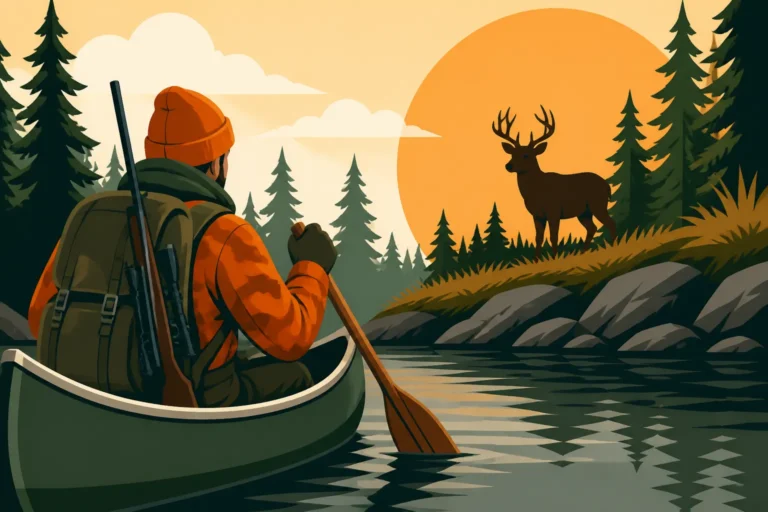
Ontario's public hunting lands, including many hardwood ridges, can see significant pressure, especially during peak seasons. This pressure can dramatically alter deer behaviour, making them more nocturnal or pushing them into thicker, harder-to-reach cover. To counter this, try to identify areas that other hunters overlook. Often, this means walking further or accessing parts of the ridge that are less convenient. Use your GoHunt maps to find deep draws, thick pockets of cover, or challenging terrain that most people won't bother with. These often become sanctuaries for mature bucks. Hunting during mid-week or in inclement weather can also reduce competition. Think about setting up a few hundred yards off the main trails or access points, as many hunters won't venture far from their vehicles. If you're on Crown Land, consider a canoe-in approach for truly untouched areas, as outlined in Canoe-In Hunting on Ontario Crown Land. Being smarter about where and when you hunt, rather than just harder, will give you an edge.
| Feature / Strategy | Ideal Conditions | Key Considerations | Pros | Cons |
|---|---|---|---|---|
| Stand Hunting | Consistent trails, good mast crop, wind | Wind direction, entry/exit, back cover, sun angle | High chance of intercepting deer if pattern known | Less adaptable if deer patterns change |
| Still-Hunting | Damp ground, light snow, light wind | Slow movement, keen observation, patience | Highly adaptable, covers more ground, exciting | Requires extreme stealth, easy to spook deer |
| Tracking | Fresh snow, distinct tracks, light wind | Patience, knowing deer habits, maintaining distance | Direct pursuit of a specific animal | Time-consuming, easily lost if snow melts or ground changes |
| Calling | Pre-rut to late rut, active bucks | Volume control, realism, proximity to travel routes | Can draw in wary bucks, creates opportunities | Can spook deer if overdone, requires good timing |
| Decoying | Open areas, rut, less pressured deer | Realism, scent control, setup angle, visibility | Distracts deer, can bring them closer | Heavy gear, can spook deer if unrealistic or smelly |
Disclaimer
Hunting is an inherently dangerous activity. Always prioritize safety, adhere to all local hunting regulations, and ensure you have the necessary licenses and permits. The advice provided here is for informational purposes only, and individual hunting experiences may vary. Always inform someone of your hunting plans and location.