Grunt Calls Late in Ontario’s Rut
There’s nothing quite like the rush of the peak rut, when bucks are practically losing their minds chasing does, often seemingly oblivious to anything else. But then, it happens. The calendar flips, the leaves fall, and suddenly, the woods feel… quieter. Those aggressive snort-wheezes and full-throttle challenge grunts that worked so well just weeks ago seem to fall on deaf ears. Many hunters get frustrated, thinking the rut is over and the deer are uncallable. This guide is here to tell you that’s not entirely true. We’ll dive deep into how to effectively use grunt calls in Ontario’s late rut, tapping into the subtle changes in deer behavior to still draw in a weary but perhaps still searching buck.
Understanding the Shifting Dynamics of the Late Rut
The late rut in Ontario isn't a flip of a switch, but a gradual transition from the chaotic peak. Deer behavior changes, often subtly, and understanding these shifts is absolutely crucial for any hunter hoping to extend their calling success. Those aggressive, high-energy calls that might have brought a raging buck charging during the peak rut can actually spook a more cautious, worn-out deer in the late season.
Why the Late Rut is Different for Whitetails
By the time late November rolls around and we push into December, a significant portion of the does in Ontario have already been bred. The frantic, all-consuming drive for bucks to find every receptive doe has started to wane. Think of it from a buck's perspective: he's likely lost a good chunk of his body weight, he's exhausted from weeks of chasing, fighting, and breeding, and he's now much more cautious. He’s been exposed to hunting pressure for weeks, too, making him even warier.
The few does that might still be coming into estrus later in the season are fewer and further between. Bucks aren't covering vast tracts of land with the same frantic energy. Instead, they're often focusing on recovery, hitting accessible food sources hard, and quietly seeking out those last few unbred does or checking on younger does that might be coming into their first estrus cycle. The weather has also likely changed dramatically. Colder temperatures, possibly snow on the ground, and sparser cover all impact how deer move and interact. This means the urgency and desperation of their vocalizations will also naturally shift. Hunters often struggle during this period, wondering if they should even bother trying to call. Many will switch to more passive strategies like Hunting the Rut in Early to Mid November from a stand over a food source, but calling can still play a role.
The Evolving Role of Deer Vocalizations
Just as a buck’s behavior shifts, so does the nature of their vocalizations. During the peak rut, you might hear aggressive snort-wheezes, loud tending grunts, and even challenging roars. These are all about dominance and asserting breeding rights. However, in the late rut, the "fight club" mentality is largely over. Bucks are less inclined to get into a physical altercation unless absolutely necessary.
The vocalizations you might hear, or want to mimic, are more about subtle communication and curiosity. Think about a quiet tending grunt from a buck gently pushing a doe, or a contact grunt as deer move through the woods, letting others know where they are. These are less about aggression and more about social cohesion or the low-key pursuit of the last few does. The key is to understand that you're no longer trying to challenge a buck into a fight; you're trying to pique his curiosity or make him think a receptive doe (or a buck tending one) is just out of sight. Remember that every deer in the late season has likely encountered countless hunters, so your calls need to be convincing and subtle. It’s a delicate balance, and often, less is truly more.
Mastering Grunt Calls for Late-Season Success
Successfully using grunt calls in the late rut isn't about calling louder or more often; it's about calling smarter. It requires a nuanced approach, understanding the specific sounds that will still resonate with a weary buck, and executing those calls with precision. Forget the loud, aggressive calls of weeks past; it's time to fine-tune your technique.
The Nuances of Late-Rut Grunting Sounds
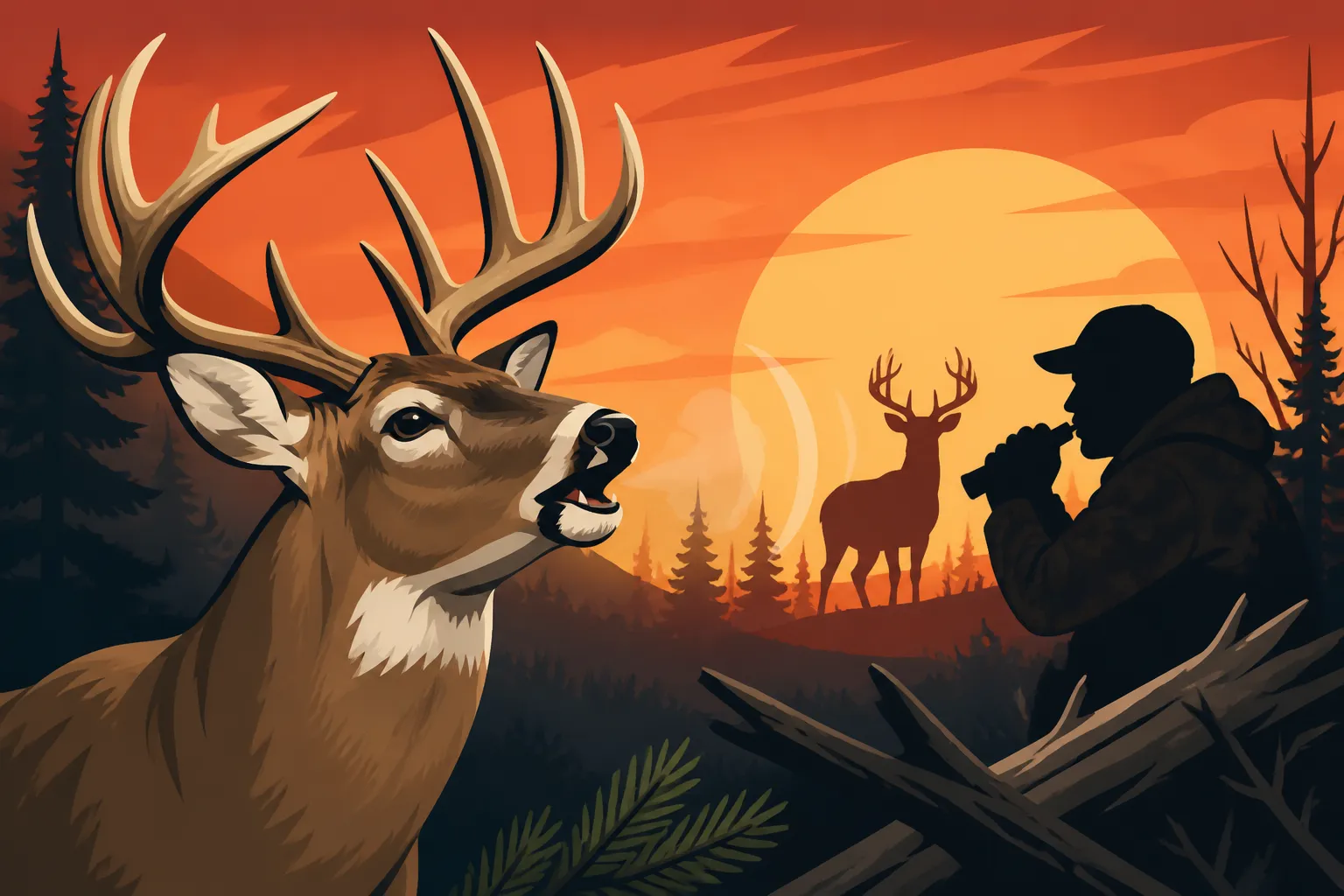
In the late rut, the types of grunts you employ should be gentler, softer, and less frequent. Forget the deep, guttural challenge grunts or the explosive snort-wheezes. Those sounds might have worked when bucks were full of testosterone and itching for a fight, but now, they're more likely to send a cautious buck bolting.
Instead, focus on:
- Tender Grunts: These are soft, almost pleading grunts that a buck makes while slowly pursuing a doe. They convey a sense of gentle persuasion rather than aggressive dominance. They hint at a doe nearby, which might draw in a buck still searching for those last breeding opportunities.
- Contact Grunts: Imagine a deer moving through thick cover, letting other deer know its presence. These are short, soft grunts, almost like a "here I am." They can be particularly effective if you're trying to suggest a lone deer (either a doe or a quiet buck) moving through the area.
- Tending Grunts (Quietly): A buck tending a doe will make a series of short, soft grunts. The key here is quietly. You're not trying to create a full-blown rut scenario, but rather hint that a buck has found a doe and is subtly keeping her close. This can sometimes appeal to a buck's lingering desire to breed.
The overall goal is to sound natural, like a deer that's just going about its business, perhaps with a doe, but not causing a ruckus. Avoiding aggressive calls is paramount. A snort-wheeze in late November or December is likely to alarm a buck, signaling a dominant, aggressive deer (or even a hunter) that he wants no part of. You want to appeal to his curiosity and his remaining breeding instinct, not challenge his already dwindling energy reserves.
Strategic Setup and Delivery for Wary Bucks
Calling is only as effective as your setup. In the late rut, deer are incredibly wary, having survived weeks of hunting pressure. Your approach needs to be calculated and patient.
Where to Set Up:
Focus on areas where deer are likely to be moving in the late season:
- Food Sources: Bucks are primarily looking to replenish energy. Standing corn fields, late-season brassicas, oak ridges with leftover acorns, or even agricultural stubble fields can be magnets. A key insight is Hunting a Standing Corn Field Edge or Hunting a Soybean Field at Dusk.
- Bedding Areas: Thick thermal cover, cedar swamps, or dense pine plantations offer shelter from the cold and predators. Bucks will often cruise the edges of these areas. Consider Hunting a Cedar Swamp Edge for late-season deer.
- Travel Corridors: Connectors between bedding and feeding areas, especially those offering good cover like fencerows, creek bottoms, or brushy draws. Using an app like GoHunt to scout these corridors from home can give you a massive advantage, helping you identify pinch points or crossings that might not be obvious on the ground.
- Doe Concentration Areas: If you can pinpoint areas where does are still gathering, even casually, a buck won't be far off.
Volume and Frequency: Less is More:
This cannot be stressed enough. In the late rut, overcalling or calling too loudly is a surefire way to educate (and spook) deer.
- Soft and Subtle: Blow your grunt tube with less air, aiming for a quieter, more subdued sound. You want the call to carry, but not blast.
- Short Sequences: A simple sequence of 1-3 soft grunts, followed by a long pause (5-10 minutes, sometimes even longer), is usually sufficient. You're trying to suggest a presence, not host a party.
- Directional Calling: If you’re sitting in a ground blind or a treestand, vary the direction of your calls slightly to make it sound like a deer moving.
- Patience: This is perhaps the hardest part. You might only make a few calls over a couple of hours. The goal isn't to get an immediate response, but to plant a seed of curiosity. A buck might circle downwind, or only appear 20 minutes after your last call.
Combining with Other Attractants:
While calling is the focus, don't forget other tools in your late-season arsenal:
- Scents: A subtle doe in estrus scent (used sparingly and legally) might add to the illusion. A simple deer lure or curiosity scent can also work. Always check local regulations on scent use.
- Decoys: If conditions allow (open visibility, no risk of other hunters mistaking it), a doe decoy can be incredibly effective, especially if combined with soft grunts. The visual cue of a lone doe can be irresistible to a searching buck. Always prioritize safety if using a decoy.
Real-World Scenarios and Troubleshooting Late Rut Grunt Calling
The late rut can be a test of patience and adaptability. Hunters often face frustrating moments when deer seem to ignore their best efforts. Understanding when to call, what to avoid, and how to integrate your calls with other tactics will dramatically increase your odds of success.
When to Call and When to Stay Silent
Knowing when to deploy your grunt call is almost as important as how you deploy it. There are optimal times and scenarios, and just as critically, times when silence is golden.
Optimal Calling Times:
- Morning vs. Evening: While deer can be active at any time, mornings during the late rut can be particularly good, especially if temperatures are cold but rising. Bucks might be making their last rounds searching for does before heading to bed, or moving directly to food sources. Later evenings, as deer move from bedding to feeding, can also be productive.
- Quiet Conditions: A calm, still morning or evening is ideal. The absence of wind and excessive background noise allows your soft grunts to carry further and sound more natural. Wind makes it hard for deer to pinpoint sound and can carry your human scent to them.
- Specific Wind Directions: Always hunt with the wind in your favor, carrying your scent away from where you expect deer to approach. If a buck responds, he'll often try to circle downwind to scent-check the source of the call.
- Reading Deer Body Language: This is critical. If you see a buck already on a mission—nose to the ground, moving with purpose—don't interfere. He's locked onto a scent trail and your call will likely confuse or spook him. Save your calls for bucks that appear to be cruising, browsing, or pausing, showing signs of curiosity or being receptive to new information in their environment.
When to Stay Silent:
- When deer are close: If a buck is already within bow range or close gun range and unaware of you, don't risk spooking him with a call. Let him walk into your shooting lane.
- In heavy wind: Your calls will be distorted and ineffective, and your scent will be carried erratically.
- If you detect alarm in other deer: If a doe or fawn stomps, snorts, or stares intently in your direction, any further calling will only confirm their suspicions.
- After you've had a strong negative reaction: If a buck spooks hard from a call, it's time to back off and go silent for a long period, or even move locations.
Patience really is key. You might only make a few calling sequences over a several-hour sit. It's not about constant noise; it's about strategic suggestion.
Common Mistakes and How to Avoid Them
Even experienced hunters can fall into calling traps, especially when the late rut proves challenging. Being aware of these common pitfalls can save you from ruining an otherwise promising hunt.
- Calling too loudly or aggressively: As discussed, this is the biggest mistake. A loud, booming grunt will likely scare off a late-season buck that's already on high alert from weeks of pressure. Solution: Practice soft, subtle grunts at home. Cup your hand over the end of the call to muffle the sound if needed.
- Calling too often: Another major blunder. A deer doesn't make continuous noise. Excessive calling sounds unnatural and will quickly educate nearby deer that something is amiss. Solution: Use short bursts of 1-3 grunts, then wait 5-10 minutes, or even longer, before another sequence. Think of it as painting a picture with a few brushstrokes, not a full-blown mural.
- Calling in the wrong location: Calling from a wide-open field or an area with no natural cover might make you visible and vulnerable if a buck does respond. Solution: Always call from a concealed position, preferably with good visibility, allowing you to see a buck approach without him seeing you first. Areas like Hunting an Ontario Bush Edge or a travel corridor with thick cover are ideal.
- Not paying attention to wind: Failing to account for wind direction is probably the quickest way to end your hunt. A buck will almost always try to get downwind to smell what he's hearing. Solution: Use a wind checker frequently. Position yourself so the wind carries your scent away from where you expect a buck to come from.
- Not using good cover: If a buck responds, he'll be scanning the area. If you're exposed, he'll spot you instantly. Solution: Utilize natural cover like thick brush, tree trunks, or a well-placed blind. Break up your outline and remain motionless.
Integrating Grunt Calls with Other Late-Season Tactics
Grunt calling in the late rut shouldn't be your only tactic, but rather one arrow in your quiver. Combining it with other proven late-season strategies can significantly improve your overall success.
- Tracking and Still-Hunting: After a fresh snowfall, deer sign becomes incredibly obvious. You can use this to your advantage by tracking or still-hunting slowly through known deer areas. When you find fresh tracks or see deer moving ahead, that's a prime opportunity to try a soft grunt call, as you're already in a high-probability area. Sites like GoHunt are invaluable for understanding terrain, recent snow patterns (if available on satellite imagery updates), and identifying potential travel routes before you even set foot in the woods.
- Observation: Spend time simply observing. Use good optics to glass fields, clear-cuts, or open timber. Identify where deer are feeding, bedding, and travelling. Once you've identified a pattern or specific deer, you can then strategically introduce a call. Sometimes, the best calling strategy is to just watch and wait.
- Focus on Key Terrain Features: Deer movements in the late season are often dictated by food, cover, and cold. Key areas include Hunting a Beaver Meadow Crossing, Hunting a Hardwood Ridge for Whitetails, or Hunting a Cedar Swamp Edge. These are places where deer are likely to move for food, water, or thermal cover. Sitting these locations and occasionally using soft grunts can be deadly. If you have an antlerless tag, combining soft grunts with a doe bleat can sometimes attract a curious doe, and a buck might be shadowing her.
By understanding the subtle shifts in deer behavior, mastering quieter and more appropriate calling sounds, and integrating your calls with intelligent scouting and strategic setups, you can turn a challenging late rut into a productive one. Don’t hang up your grunt tube just yet; there are still opportunities to be had in the quiet, cold woods of Ontario.
| Calling Aspect | Peak Rut Grunt Calling | Late Rut Grunt Calling |
|---|---|---|
| Buck Motivation | Intense breeding drive, aggressive dominance | Energy conservation, last breeding opportunities, curiosity |
| Primary Goal | Challenge a buck, lure him into a fight/competition | Pique curiosity, suggest a receptive doe or quiet deer |
| Dominant Calls | Challenge grunts, snort-wheezes, aggressive tending | Tender grunts, contact grunts, soft tending grunts |
| Volume | Louder, more assertive | Softer, subdued, whispered |
| Frequency | More frequent, varied sequences | Less frequent, short bursts, long pauses |
| Best Location | Travel corridors, scrape lines, doe bedding | Food sources, thermal cover edges, doe concentration areas |
| Deer Waryness | Less cautious, focused on does | Highly cautious, alert to hunting pressure |
| Key to Success | Aggression and realism | Subtlety, patience, and naturalness |
| Common Mistake | Not being aggressive enough | Being too aggressive or calling too often |
Disclaimer
The information provided in this guide is for general educational and informational purposes only. Hunting regulations and best practices can change, and it is the hunter's responsibility to review and understand all current provincial and federal hunting regulations and safety guidelines before engaging in any hunting activity in Ontario. Always prioritize safety, ethical hunting, and respect for wildlife and the environment.