Hunting Spruce Grouse in Black Spruce
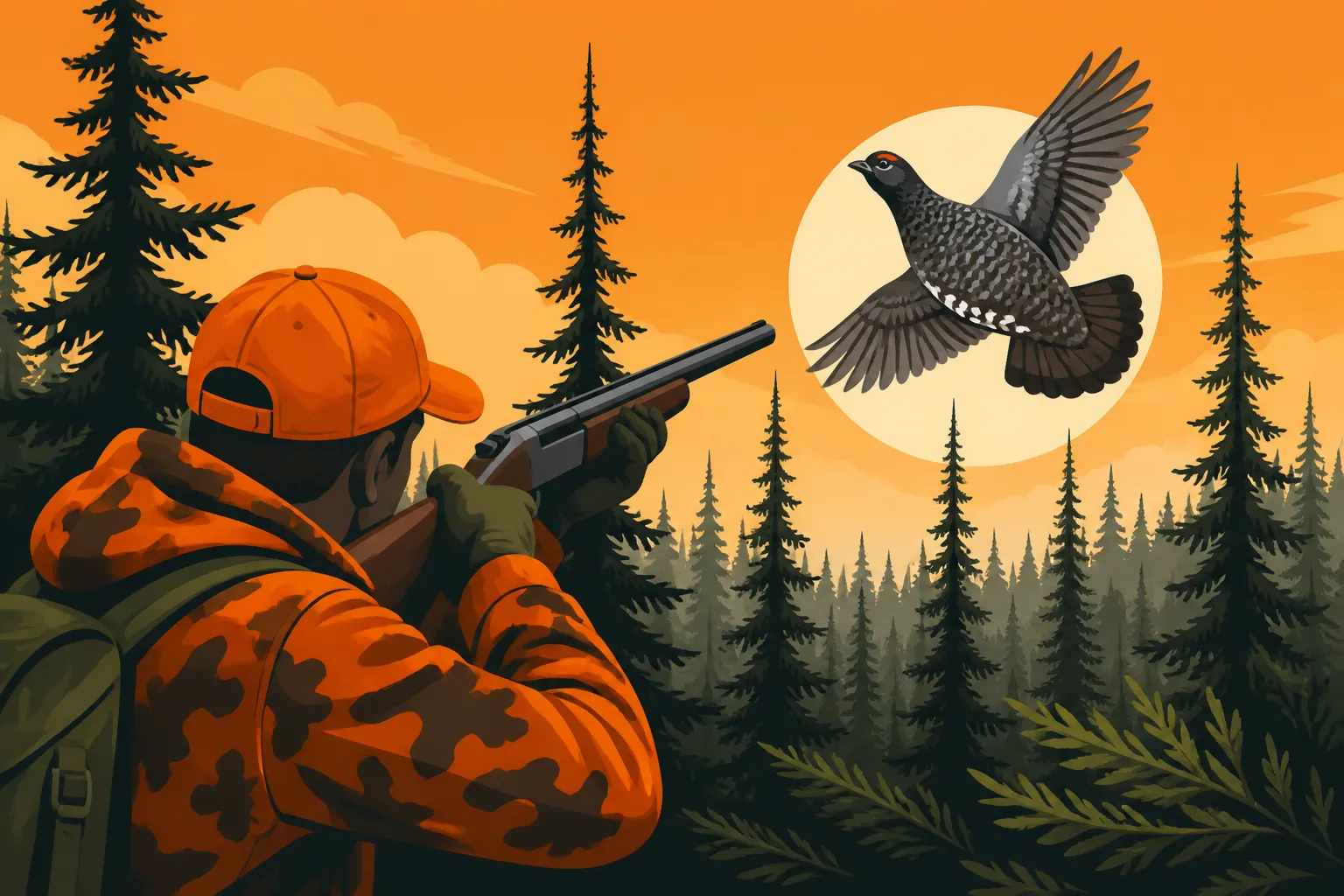
Finding spruce grouse in Ontario can feel like searching for a needle in a vast, green haystack, especially when you're specifically targeting those dense, often boggy black spruce stands they call home. Many hunters, accustomed to flushing ruffed grouse from aspen thickets or mixed woods, find themselves stumped by the elusive "fool hen" and its preference for what seems like impenetrable wilderness. This guide is here to demystify the process, offering a deep dive into where these unique birds live and how to hunt them successfully within Ontario's challenging northern landscape.
The Unique World of Spruce Grouse in Ontario
Spruce grouse (scientific name: Canachites canadensis) are truly a creature of the deep boreal forest, utterly distinct from their more widespread cousin, the ruffed grouse. Unlike the ruffie that thrives in successional habitats and mixed woods, the spruce grouse has evolved to live almost exclusively within mature coniferous forests, particularly those dominated by black spruce, balsam fir, and jack pine. If you’re not looking for that specific habitat, you'll simply walk past them without ever knowing they were there. Their very existence is tied to these specific ecosystems, which means if you want to find them, you need to understand their specialized needs.
One of the defining characteristics of spruce grouse is their remarkable tameness, which has earned them the moniker "fool hen" or "spruce chicken." They often hold incredibly tight, allowing a hunter to approach within feet, sometimes even touching distance, before they decide to flush. This isn't due to stupidity, but rather a survival adaptation. In their natural, remote habitat, they historically faced few ground predators that would associate human presence with danger. Instead, their primary predators were avian raptors, making a "freeze" response their best defense. This tameness is a double-edged sword for hunters: it makes them easier to harvest once found, but incredibly difficult to stumble upon by chance if you’re not specifically targeting their habitat. They don't explode from cover with the same noisy flurry as a ruffed grouse, making them easy to overlook in the dense undergrowth.
Their diet is also heavily specialized, revolving around the needles of coniferous trees, especially black spruce. This allows them to thrive in areas where other grouse species would struggle to find enough food. You'll often find them feeding on these needles, buds, and twigs, supplementing their diet with berries, insects, and fungi when available. This specialized diet is another reason why their presence is such a strong indicator of specific forest types. Understanding this helps you predict where they might be feeding and roosting throughout the day.
Locating Prime Black Spruce Habitat for Hunting
The key to hunting spruce grouse effectively in Ontario isn't about covering vast amounts of ground, but rather about identifying and focusing on very specific micro-habitats within the larger boreal forest. It's about being a habitat detective before you even lace up your boots.
Identifying Key Habitat Features
When we talk about "black spruce habitat," we're generally looking for areas characterized by dense, often stunted black spruce trees, frequently growing in boggy, acidic soils. Think muskegs, sphagnum bogs, and poorly drained lowlands. These aren't the towering, majestic pines you might see elsewhere, but rather tightly packed, slender trees, often with mossy undergrowth and an abundance of Labrador tea or other bog plants. You'll often find these areas bordering open water, like beaver ponds, small lakes, or slow-moving streams, as the moist conditions are crucial for their preferred coniferous growth.
Using modern mapping tools like the GoHunt app or other digital mapping platforms is an absolute game-changer here. Before you head out, spend time with satellite imagery and topographic maps. Look for the tell-tale dark green hues that indicate dense conifer stands, especially those in low-lying areas or adjacent to water features. GoHunt's detailed maps can often highlight these specific forest types and topography, giving you a huge head start. Pay attention to areas marked as "wetlands" or "swamps" on topographic maps, as these often contain the boggy black spruce forests that spruce grouse love. You're looking for areas that might deter other hunters, which is often a good sign for spruce grouse.
On-the-Ground Scouting and Exploration
Once you've identified potential areas on a map, it's time for on-the-ground scouting. While it might sound daunting, venturing into these dense environments is part of the experience. Look for areas where the black spruce forms a nearly impenetrable canopy, creating shaded, damp conditions. Old logging roads or ATV trails that cut through these areas can be excellent starting points, offering easier access into the fringes of otherwise dense cover. Don't be afraid to walk these trails slowly, peering into the shadows. You might be surprised to find a spruce grouse perched quietly on a low branch, watching you intently.
Another prime spot is along the edges of these black spruce stands where they transition into other forest types or open areas. Sometimes, spruce grouse will venture out slightly from the deepest cover, especially if there are berry bushes or other food sources available. Pay close attention to areas where there's a mix of black spruce and jack pine, or even some balsam fir, as these coniferous blends provide excellent cover and food. When Reading an Ontario WMU Map Before You Go, specifically seek out the WMUs (Wildlife Management Units) known for extensive boreal forest, such as those in Northwestern Ontario's Big Bush or Northeastern Ontario's Clay Belt. These regions offer the largest expanses of suitable habitat. Using GPS, whether a handheld unit or a feature on your GoHunt app, is absolutely critical when venturing into these remote and often featureless environments. It's incredibly easy to get turned around when the terrain all looks the same, so knowing What to Do If You Get Turned Around and having reliable navigation is paramount.
Strategies and Gear for Successful Spruce Grouse Hunting
Hunting spruce grouse requires a different mindset and approach than chasing other upland birds. Forget the fast-paced flushes; here, patience and keen observation are your best allies.
Hunting Tactics and Techniques
Since spruce grouse are known for holding extremely tight, speed is your enemy. Slow down. Way down. Walk at a snail's pace, pausing frequently to scan the trees and ground ahead. Their camouflage is excellent, blending seamlessly with the shadows and needle-strewn forest floor. Look for unusual shapes, a slight movement, or the tell-tale glint of an eye. They often perch on low branches, sometimes only a few feet off the ground, or sit perfectly still on the forest floor, relying entirely on their camouflage and stillness to avoid detection.
Many hunters will use a small-gauge shotgun, like a .410 or 20 gauge, with light game loads. Given their tendency to hold tight, shots are often at very close range. Some hunters even carry a .22 rifle or pistol for headshots, especially if they are looking to maximize meat salvage and avoid damaging the bird with shot. This method requires excellent marksmanship and an even calmer approach, as you'll likely need to get very close. If you're Hunting an Old Logging Road in the North or walking a well-defined trail, always be ready. They might be right on the edge.
Dogs can be incredibly effective for spruce grouse. A good pointing dog will "lock up" on a grouse that's holding tight, allowing you to walk in and flush the bird or take a standing shot. Flushers can also work, but the density of the black spruce often means a bird can disappear quickly once flushed. For Using a Pointing Dog in Ontario Cover, a dog that works close and methodically is ideal. For Using a Flushing Dog in Thick Bush, ensure your dog is well-trained to stay within shotgun range. The advantage of a dog is their superior scenting ability, helping them find birds you'd undoubtedly walk past.
Essential Gear for Black Spruce Terrain
The habitat spruce grouse call home is often wet, dense, and bug-ridden, especially earlier in the fall season. Your gear needs to reflect these challenging conditions.
Footwear: Waterproof boots are non-negotiable. Whether you opt for rubber boots or waterproof hiking boots, ensure they provide good ankle support and can withstand constant moisture from boggy ground and dew.
Navigation: As mentioned, GPS is vital. A handheld GPS unit or a robust hunting app like GoHunt on your smartphone, ideally with downloaded offline maps, will be your best friend. Always carry a physical map and compass as a backup, and know how to use them.
Bug Protection: Mosquitoes, black flies, and deer flies can be relentless in the boreal forest. Pack strong insect repellent (DEET is often recommended) and consider a head net, especially for early season hunts.
Clothing: Layers are always a good idea in Ontario, as weather can change quickly. Blaze orange is mandatory for hunters during gun seasons in Ontario and is always a smart choice for visibility, even during archery-only seasons for small game. It helps you stand out in the dense cover.
Firearm/Ammunition: A small-gauge shotgun (e.g., .410, 20 gauge) with light loads (7.5 or 8 shot) is generally sufficient. If using a .22, bring solid point ammunition. Always ensure you are using legal firearms for small game in Ontario.
Game Vest/Bag: You'll need somewhere to carry your birds, water, snacks, and extra layers. A comfortable game vest or a small daypack is ideal.
Knife/Gloves: For field dressing, if you choose to do so.
Here's a quick comparison of spruce grouse and ruffed grouse hunting considerations in Ontario:
| Feature | Spruce Grouse Hunting | Ruffed Grouse Hunting |
|---|---|---|
| Primary Habitat | Dense black spruce, bogs, muskeg, jack pine forests | Mixed woods, aspen stands, old clearcuts, forest edges |
| Hunting Style | Slow, methodical, silent stalk, keen observation | Fast walking, flushing cover, listening for flushes |
| Bird Behavior | Holds very tight, often "tame," rarely flushes far | Flushes explosively, often flies into dense cover |
| Typical Shot Range | Very close (5-20 yards), sometimes standing shots | Close to medium (15-35 yards), flying shots |
| Best Gun Gauge | .410, 20 gauge, or .22 LR | 12 or 20 gauge |
| Dog Use | Pointing dogs excellent for finding and holding | Flushing dogs effective, pointing dogs also great |
| Terrain | Wet, boggy, thick, challenging to traverse | Varied, can be hilly, dense, or open |
| Focus | Locating specific coniferous micro-habitats | Covering varied successional cover types |
Remember that spruce grouse are one of Ontario's Northern and Boreal Species, perfectly adapted to their environment. Your success hinges on adapting your methods to their world.
Ethical Considerations and Enjoying the Experience
Harvesting spruce grouse, or any game bird for that matter, carries with it a responsibility to act ethically and respect the resource. Because spruce grouse are so docile, some hunters view them as "too easy" or question the ethics of shooting them on the ground or in a tree. However, it's important to remember that ethical hunting isn't solely defined by the difficulty of the shot, but by the intent, legal adherence, and respect for the animal.
Responsible Harvesting and Conservation
When hunting spruce grouse, aim for quick, clean kills. If you're using a shotgun, ensure you're at a range where you can consistently hit the bird cleanly. If you choose a .22 for headshots, practice extensively to ensure your proficiency. The goal is always to harvest the animal efficiently and minimize any suffering.
Bag limits for spruce grouse are typically quite generous in Ontario, often falling under the general "grouse" category which also includes ruffed grouse. Always consult the current Ontario Hunting Regulations Summary for the specific Wildlife Management Unit (WMU) you are hunting in to ensure you are adhering to all local rules and limits. While these birds might seem easy targets once found, their specific habitat requirements and sometimes localized populations mean responsible harvesting is key to ensuring their continued abundance.
Remember that hunting is also about the experience, not just the harvest. The beauty of chasing spruce grouse is that it takes you deep into some of Ontario's most wild and pristine environments. Embrace the quiet solitude of the black spruce forest. Notice the intricate mosses underfoot, the unique scent of pine and bog, and the subtle signs of other wildlife. It’s an opportunity to truly connect with the boreal ecosystem. Whether you’re Hunting a Jack Pine Ridge Up North or exploring a vast Hunting a Boreal Muskeg Edge, each step offers a chance to observe nature in its rawest form.
The Rewards of a Spruce Grouse Hunt
Beyond the meat, which is dark and has a distinct flavour that some find an acquired taste (often likened to pine, fittingly!), the true reward of a spruce grouse hunt is the adventure itself. It's about exploring forgotten corners of the province, mastering a specialized form of hunting, and successfully locating a bird that thrives where few others do. It's about the challenge of deciphering the landscape and understanding the intricate relationships within the forest. When you finally spot that perfectly camouflaged bird, sitting still as a statue, you'll know you've earned your reward through patience, observation, and a deep appreciation for Ontario's wilderness.
This hunt is often part of a broader Small Game Hunting in Ontario experience, perhaps combined with Ruffed Grouse Hunting Ontario's Bush Roads in more diverse habitats. It’s a chance to diversify your skills and experience the full spectrum of what Ontario's wild lands have to offer. So, next time you're planning a trip north, consider dedicating some time to the subtle, rewarding pursuit of the spruce grouse in its black spruce kingdom.
Disclaimer
Please note that hunting regulations, seasons, and licensing requirements can change. Always consult the most current official Ontario Hunting Regulations Summary published by the Ontario Ministry of Natural Resources and Forestry (MNRF) before heading out on any hunt. This guide is for informational purposes only and does not replace official regulatory documents.