Hunting Moose From a Boat or Canoe
Ontario's vast wilderness, with its endless lakes, winding rivers, and countless beaver ponds, often presents a unique challenge to the eager moose hunter. The roads eventually run out, the trails grow faint, and suddenly, you're faced with what feels like an impenetrable wall of dense bush. But what if that wall could become your highway? This guide is all about embracing that watery highway, transforming your canoe or small boat from a mere means of transport into an integral part of your moose hunting strategy, opening up remote, low-pressure hunting grounds that foot hunters rarely touch.
The Unique Appeal of Water-Based Moose Hunting in Ontario
Hunting moose from a boat or canoe isn't just a different way to get around; it's a completely different philosophy of hunting. It forces you to think like the landscape, to understand how water dictates animal movement and human access. For many, it's the purest form of hunting in the Ontario bush, combining elements of exploration, physical challenge, and profound connection to the wild.
Reaching Untouched Territories and Escaping Pressure
One of the most compelling reasons to utilize a watercraft for your moose hunt is the sheer access it provides to areas that most other hunters simply can't reach. Think about it: once you get beyond the well-worn ATV trails and logging roads, the pressure drops dramatically. You're no longer competing with dozens of other groups for the same patches of bush. This is especially true for those remote lakes and river systems only accessible by a long paddle, a portage, or a boat launch that sees minimal traffic.
These pristine areas often hold larger, less pressured moose that haven't been educated by constant human interaction. It's an opportunity to truly immerse yourself in the wilderness, experiencing the solitude and raw beauty that Moose Hunting Ontario's Northern Bush is famous for. You might find yourself on a lake where no other hunter has set foot all season, increasing your chances of encountering a receptive bull during the rut or an undisturbed cow and calf. This sense of being truly "out there" is a huge draw for many who choose the water route.
The Stealth Advantage on Water
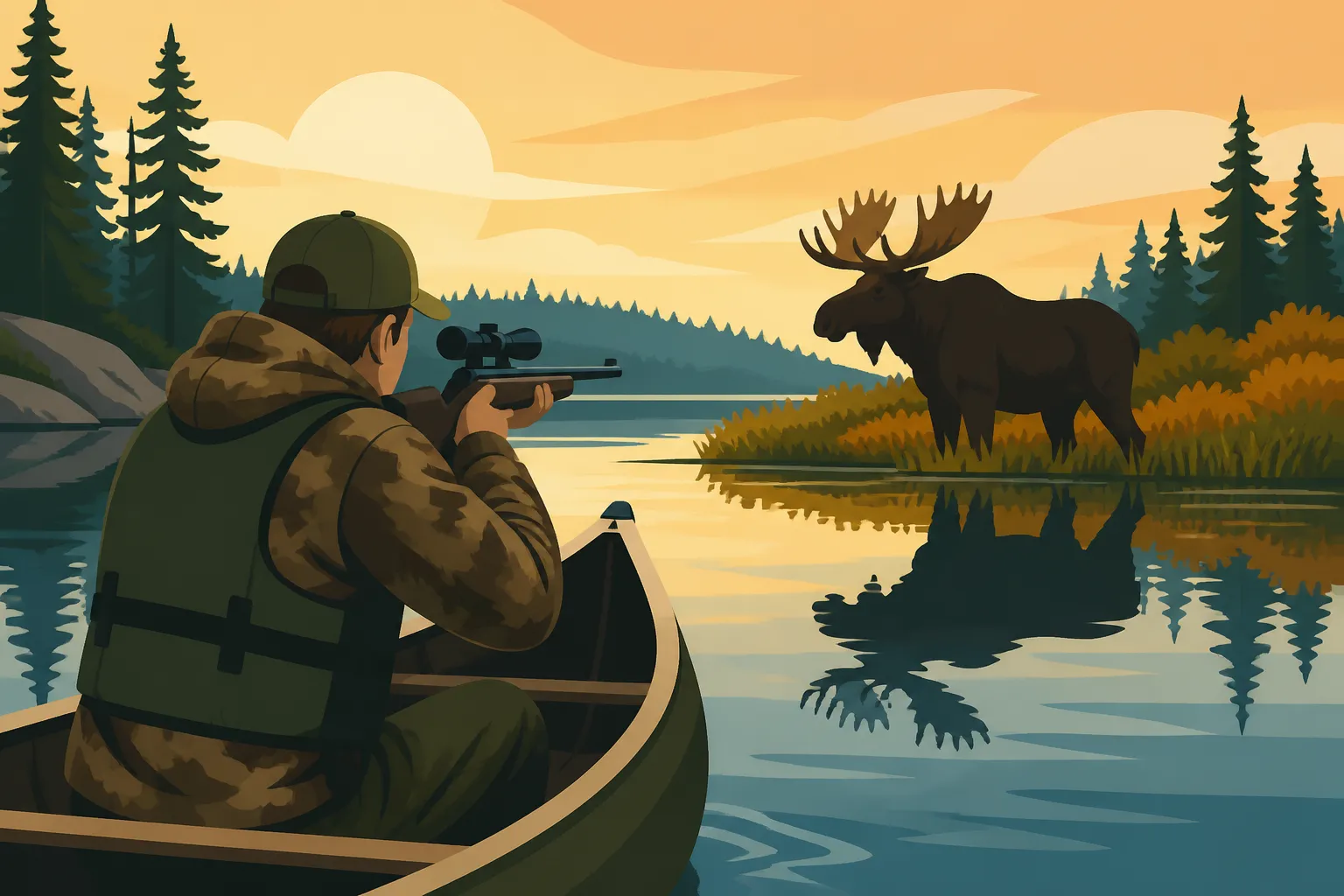
Another significant benefit of hunting from a boat or canoe is the incredible stealth it offers. Imagine paddling silently along a shoreline at dawn, the fog lifting off the water, revealing a bull moose browsing peacefully in a bog. The quiet approach of a canoe or an electric trolling motor is unmatched by the crunch of boots on dry leaves or the rumble of an ATV. Sound travels differently over water, often carrying further, but a well-executed quiet approach can get you surprisingly close to unsuspecting animals.
This stealth isn't just about approaching an animal; it's also about scanning and listening. You can stop, drift, and glass shorelines for extended periods without disturbing the environment. The water also helps to manage your scent. While wind direction is always critical, being on the water can sometimes help disperse your scent more effectively than being bogged down in thick timber. During When Ontario's Moose Rut Peaks, this silent approach can be absolutely deadly for calling in a bull without giving away your exact position too early.
Choosing Your Vessel Wisely: Canoe vs. Small Boat
The choice between a canoe and a small motorboat for your moose hunt hinges entirely on your hunting style, the terrain you'll encounter, and your comfort level. Each has distinct advantages and drawbacks, and understanding these will be key to a successful and safe trip.
Canoes: The Silent, Agile Backcountry Workhorse
For many, the canoe is the quintessential symbol of Canadian wilderness travel, and for good reason. It offers unparalleled quietness, allowing you to slip through the water almost silently, which is a huge advantage when trying to approach wary moose. Canoes are also incredibly agile, capable of navigating shallow rivers, tight channels, and even being portaged around rapids or between lakes. If your hunt involves traversing smaller, winding waterways or accessing truly remote, roadless areas, a canoe, especially a sturdy freighter canoe, might be your best bet. They allow for a deeper connection with the environment and the satisfaction of human-powered exploration.
However, canoes demand more physical effort, especially when loaded with gear, and even more so when loaded down with moose meat on the way out. Stability can be a concern, particularly in choppy water or when trying to shoot from the craft (which is generally not recommended or legal in many scenarios, requiring you to get ashore). Their capacity, while decent for a couple of hunters, can quickly be maximized with camping gear and the substantial bulk of a moose. If you're considering Getting a Moose Out by Canoe, remember that you'll be quartering the animal and making multiple trips, or using a very large freighter canoe to haul it out.
Small Boats: Power, Capacity, and Comfort
On the other hand, a small aluminum utility boat (often called a "tinny" in Ontario) or a jon boat equipped with a reliable outboard motor offers significant advantages in terms of speed, capacity, and stability. If your hunting area involves larger lakes, wider rivers, or if you need to cover substantial distances quickly, a motorboat will save you immense time and effort. They can carry more gear, more hunters, and critically, a much larger load of meat on the return trip, reducing the number of runs you'll need to make. The added stability is also a plus for carrying equipment and moving around within the boat.
The primary drawback of a motorboat is the noise. While electric trolling motors offer quiet propulsion, they have limited range and speed. A gas outboard, while powerful, will alert any moose in the vicinity to your presence, meaning you'll likely need to cut the motor well in advance and paddle the final approach. They also require more draft than a canoe, limiting access to very shallow areas. Launching and retrieving a motorboat, especially in remote spots, can also be more complicated than simply sliding a canoe into the water. For hunters prioritizing comfort and the ability to haul substantial loads without excessive physical exertion, a small boat is often the preferred choice.
Here's a quick comparison to help you weigh your options:
| Feature | Canoe (e.g., Freighter Canoe) | Small Boat (e.g., 14-16ft Aluminum Utility) |
|---|---|---|
| Stealth | Excellent (silent paddling/electric motor) | Good (electric motor), Poor (gas motor) |
| Speed | Slow to Moderate (paddling), Moderate (small electric) | Fast (gas motor), Moderate (electric) |
| Capacity | Moderate (2 hunters + gear), Good (freighter + quartered moose) | Excellent (2-3 hunters + gear + quartered moose) |
| Stability | Fair to Good (depending on type/load) | Good to Excellent |
| Access | Excellent (shallow water, portaging) | Good (deeper water, limited portaging options) |
| Physical Exertion | High (paddling, portaging, loading meat) | Low to Moderate (less paddling, easier loading with higher freeboard) |
| Cost | Lower (canoe, paddles, maybe small electric motor) | Higher (boat, motor, trailer, larger battery) |
Essential Gear and Safety Protocols for Water Hunts
Venturing into the Ontario wilderness by water, especially for something as demanding as moose hunting, means you need to be impeccably prepared. Safety isn't just a suggestion; it's a lifeline. The remote nature of many water-access hunting spots means you're often far from immediate help, and adverse conditions can appear suddenly.
Navigation and Communication in Remote Waters
When you're out on sprawling lakes or winding river systems, it's incredibly easy to get turned around, especially when the weather shifts or darkness falls. A reliable GPS unit is absolutely non-negotiable. Modern handheld GPS devices are waterproof and come pre-loaded with detailed topographic maps. Better yet, consider a comprehensive mapping app like GoHunt on your smartphone or tablet, pre-downloading maps for offline use. This allows you to mark your camp, identify potential moose crossings, Hunting an Ontario River Valley routes, and plan your egress. Remember, technology can fail, so always carry a physical map of your Ontario's Wildlife Management Units and a compass, and know how to use them. These old-school tools are crucial when batteries die or screens fog up.
Communication is equally vital. Cell service is often non-existent in the remote areas where moose thrive. A satellite messenger device, such as a Garmin inReach or a Zoleo, allows you to send and receive text messages, share your location, and, most importantly, send an SOS in a true emergency. If you're on a larger lake or waterway, a VHF marine radio can be useful for communicating with other boaters or local services, but its range is limited. Tell someone your float plan – where you're going, when you expect to return, and what to do if you don't check in. This simple step is one of the most effective safety measures you can take for a Fly-In and Boat-In Camps type of hunt.
PFDs, Emergency Kits, and Cold Water Precautions
Always, always wear a properly fitted Personal Flotation Device (PFD). It's the law, and more importantly, it can save your life. Even strong swimmers can quickly succumb to cold water shock or be incapacitated by an unexpected capsize, especially when wearing heavy hunting clothes. Ontario waters, even in early fall, can be dangerously cold. Hypothermia is a real threat, so pack all essential gear in dry bags or waterproof containers. This includes spare layers of warm, non-cotton clothing, a reliable fire starter (multiple methods!), a thermal blanket, and a compact emergency shelter.
Your emergency kit should be robust. Beyond standard first aid supplies, include items specific to a remote wilderness setting: water purification tablets or a filter, high-energy food, a signaling mirror, a whistle, a headlamp with spare batteries, and a multi-tool. If you're using a gas motor, bring spare shear pins, a spark plug, and a basic tool kit. For those hunting in colder weather, neoprene waders can offer some protection against the elements, but be mindful of their limitations if you do go into the water. A Truck Kit for a Northern Ontario Hunt is a great start, but adapt it for waterborne excursions.
Powering Your Progress: Motors and Paddles
The power source for your watercraft is a critical decision. For canoes, paddles are fundamental, and having a reliable set of spares is non-negotiable. Many canoe hunters also opt for a small electric trolling motor, which offers silent, emissions-free propulsion for covering longer distances or fighting currents without exhausting yourself. Just remember to carry sufficient battery power for your intended range, and consider a small solar charger for extended trips.
For small boats, a gas outboard motor is typically used. Reliability is key here, so ensure your motor is recently serviced and in excellent working order. Carry extra fuel, considering your anticipated travel distance and a buffer for unexpected delays or changes in conditions. Noise is a factor with gas motors, so plan your approach accordingly, often cutting the engine and paddling the last stretch. Always have a set of oars or a powerful paddle as a backup, even if you have a motor. Imagine being miles from camp on a large lake with a dead engine – it's a terrifying prospect.
Locating and Calling Moose from the Water's Edge
One of the most exciting aspects of water-based moose hunting is the ability to cover vast amounts of prime habitat and use the water itself as an acoustic amplifier for calling. Knowing where to look and how to use your calls effectively from the water can dramatically increase your success.
Reading the Shoreline: Prime Moose Habitat from Afar
Moose are often creatures of the shoreline, drawn to the abundance of aquatic vegetation and the succulent browse found in transitional zones between water and forest. As you silently glide along, keep your eyes peeled for tell-tale signs. Look for fresh tracks in soft mud along beaver ponds and marshy inlets, especially at dawn and dusk. Droppings, easily visible on bare banks or exposed rocks, indicate recent activity. Pay close attention to browsed vegetation: stripped willow, alder, and dogwood branches are clear signs of moose feeding. These areas, particularly where a Hunting a Beaver Dam Crossing might exist, are absolute magnets.
GoHunt's detailed satellite imagery can be invaluable for pre-scouting these kinds of habitats. You can identify vast areas of wetland, fingers of land extending into water, or dense stands of young deciduous trees near water that serve as prime bedding and feeding areas. Use your binoculars or a spotting scope to carefully scan distant shorelines, islands, and even floating bogs. Moose often blend incredibly well into their surroundings, so look for abnormal shapes, patches of dark hide, or the tell-tale gleam of antlers in the early morning sun. Knowing Hunting Moose Around an Ontario Beaver Pond can offer key insights into these specific habitats.
The Art of Water-Based Calling
The unique acoustics of water offer a fantastic advantage for moose calling. Sounds, particularly low-frequency cow calls and bull grunts, travel incredibly well across open water. This allows you to project your calls further and potentially draw a bull from a greater distance than you might be able to in dense timber. The lack of obstructions over water means your calls resonate more clearly, imitating a moose across the lake.
When calling from the water, consider your setup carefully. If you're paddling, try to find a small point or an island to land on, giving you a stable platform and some visual cover. If calling from a boat, you might drift quietly, but always ensure you have a clear understanding of the wind direction. A common strategy is to make a series of cow calls, followed by silence, listening intently for a response. If a bull replies, assess his direction and distance. If you're trying Calling Moose in Ontario's Boreal Forest, the sheer volume you can achieve over water can be a game-changer. Remember to be patient; moose can take a long time to commit, especially if they're coming from a distance. GoHunt can also help identify prime calling locations, such as isolated points or marshy inlets that funnel sound.
The Moment of Truth: Stalking, Shooting, and Retrieval
Successfully locating and calling in a moose from the water is a huge accomplishment, but it's only part of the journey. The final approach, the shot, and the monumental task of retrieval demand careful planning, execution, and a realistic understanding of the challenges.
Approaching Shore and Making the Shot
Once you've spotted or called in a moose, the real stalk begins. Your primary goal is to get off the water and onto solid ground for a safe, ethical shot. Never shoot a moose from a moving boat, and only consider shooting from a stationary boat if absolutely necessary and fully legal in your specific WMU, ensuring extreme stability and a safe backstop. Always prioritize getting ashore. Quietly paddle or motor towards a suitable landing spot, taking into account wind direction and potential cover. Secure your vessel so it doesn't drift away while you're focused on the animal.
Once on land, move slowly and deliberately, using any available cover to get within comfortable shooting range. Identify clear shooting lanes and ensure you have a steady rest. Ethical shot placement is paramount, aiming for the vital zone. Take your time, control your breathing, and make a clean, humane shot. Remember that a moose, even after a good hit, can travel a surprising distance, so keep an eye on its escape route and mark the last spot you saw it.
The Ultimate Challenge: Moose Recovery and Meat Care
This is where the true test of a water-based moose hunt comes into play: getting the animal out. A mature bull moose can weigh upwards of 1,200 pounds, with an average What a Big Bull Moose Weighs being around 800-1,000 pounds. This isn't like dragging a deer; it's a monumental undertaking that requires forethought, appropriate tools, and often, sheer grit. Your first priority is to get to the animal quickly after the shot, especially in warmer early seasons.
Immediate field dressing is critical to start the cooling process. You'll likely need to completely Quartering a Moose Alone in the Bush, or with your hunting partners. This means bone-out the meat, removing the quarters, backstraps, tenderloins, neck meat, and any other salvageable parts. This significantly reduces weight and allows the meat to cool more rapidly, preventing spoilage. Refer to Meat Care in Ontario's Warm Early Seasons for detailed strategies on preserving your harvest.
Once quartered, the challenge shifts to getting those massive pieces of meat into your boat or canoe. This might involve multiple trips if you're in a smaller canoe, or a single, very heavy load in a larger freighter canoe or small boat. Tarps, game bags, and perhaps a small, collapsible game cart for the short distance to the water are invaluable. Load the meat carefully to maintain the stability of your vessel. Remember, a swamped boat full of prime moose meat is a heart-breaking disaster. Many hunters also bring large coolers or insulated bags to help keep the meat cool during the journey back to the vehicle, especially if the weather is still mild.
Planning Your Water-Access Hunt: Logistics and Permits
A successful water-based moose hunt in Ontario isn't just about the on-the-water tactics; it's equally about meticulous planning before you even leave home. Understanding regulations, scouting remote areas, and preparing for the realities of wilderness camping are all crucial components.
Mapping and Scouting for Water Access Points
Before you even think about packing your gear, devote considerable time to mapping and scouting. Utilize advanced mapping tools like GoHunt, which overlays satellite imagery with topographical maps and public land boundaries. This allows you to virtually explore vast areas of Hunting Northwestern Ontario's Big Bush or Hunting Northeastern Ontario's Clay Belt from your home. Look for hidden lakes, navigable rivers, and areas of prime moose habitat accessible only by water. Identify potential launch points, portage routes, and safe camping spots. You can even mark potential stand locations or calling sites based on terrain features.
Understanding Ontario's Wildlife Management Units is paramount, as moose seasons and regulations vary considerably by WMU. Ensure your chosen area has an open moose season for the dates you plan to hunt and that you have the correct tag for that specific WMU. Look for choke points or natural funnels that moose might use to cross water or move along shorelines, such as narrow sections of rivers, islands, or points of land. If you're considering a remote fly-in or boat-in camp, GoHunt can also help you visualize the access points and surrounding terrain, complementing the information you'd get from Fly-In and Boat-In Camps resources.
Legalities and Practicalities of Hunting From a Boat
Ontario has specific regulations regarding hunting from a boat or canoe. Generally, it is illegal to discharge a firearm from a boat that is being propelled by a motor, whether running or not. You must be completely off the water, on solid ground, to take your shot, or at the very least, completely stationary and not using the motor. Always consult the current Ontario Hunting Regulations Summary for the most up-to-date and precise rules. Ignorance of the law is no excuse, and violations can carry severe penalties.
Ensure you have all the necessary licenses and tags well in advance. For moose, this means having your Outdoors Card, a moose hunting license, and the appropriate validation tag for the WMU you intend to hunt. Non-residents have additional requirements, including potentially needing a Non-Resident Crown Land Camping Permit if you plan to camp on Crown land. It's also important to understand the rules around Hunting a Beaver Dam Crossing or Hunting a Poplar Stand at First Light if these areas are common targets from your watercraft. Respect private property boundaries if you encounter them along waterways; even if you're on the water, accessing private land without permission is trespassing.
Preparing for Remote Camping and Unexpected Challenges
A water-based hunt often means multi-day trips and remote camping. Your gear list will need to be comprehensive, accounting for all possible weather conditions and emergencies. Pack a durable, waterproof tent, a warm sleeping bag rated for colder temperatures, and a good sleeping pad. Food planning is crucial: bring non-perishable, high-energy foods, and ensure you have a reliable cooking system. Water purification is a must, whether through filters, tablets, or boiling.
Critically, be prepared for encounters with bears. Store all food, scented items, and garbage in bear-proof containers or hung from a tree well away from your camp. Carry bear spray and know how to use it. Bugs, particularly blackflies and mosquitoes, can be relentless, especially in early season. Pack strong insect repellent, head nets, and even a bug suit if you're sensitive. Weather in Ontario's north can change rapidly, so expect rain, cold, and even snow, regardless of the forecast. Having a comprehensive Truck Kit for a Northern Ontario Hunt at your vehicle is a great start, but adapt and augment it for what you'll carry in your boat or canoe. A well-planned and executed water-based moose hunt can be one of the most rewarding experiences a hunter can have in Ontario, opening up vast, wild territories often overlooked by others.
Disclaimer
Hunting is a challenging and potentially dangerous activity. This guide provides general information and recommendations. Always consult the most current Ontario hunting regulations, obtain the necessary licenses and permits, and prioritize safety above all else. Local conditions, regulations, and personal skill levels can vary, and it is the hunter's responsibility to ensure compliance and safe practices.