What a Big Bull Moose Weighs
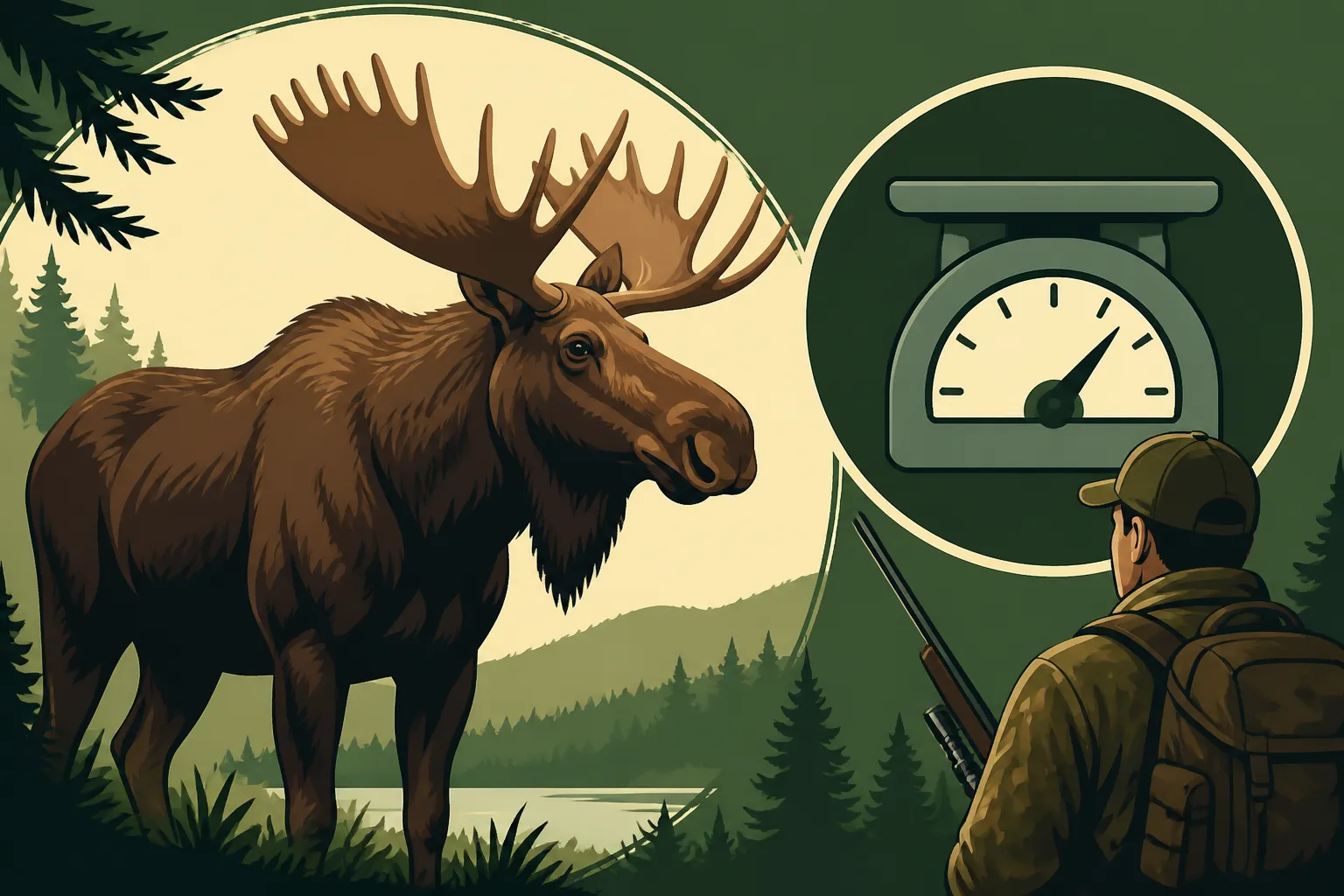
When you're out in Ontario's vast wilderness, hearing that guttural grunt or spotting a dark silhouette in the distance, one of the first things that often crosses a hunter's mind isn't just the thrill, but the sheer size of an animal like a bull moose. It's easy to underestimate their true mass until you're standing next to one, and that incredible weight has major implications for the hunt itself and what comes after. This guide is going to dive deep into what a big bull moose actually weighs in Ontario, from live weight to the practicalities of getting that meat out of the bush.
Understanding Moose Weight: Live vs. Dressed
Hunters often talk about moose weight, but there's a crucial distinction between the animal's live weight and its dressed weight. Misunderstanding this can lead to unrealistic expectations and logistical headaches once you've successfully harvested your bull.
The "On the Hoof" Estimate
Imagine standing fifty yards from a mature bull moose, his antlers spread wide, easily clearing a six-foot bush. He looks like a small truck with legs, and indeed, his live weight is staggering. When we talk about a "big bull," we're picturing an animal that might push or even exceed 1,200 to 1,500 pounds standing in the bush. This is the weight that includes all organs, blood, hide, and every bone and muscle. It’s the impressive number that makes them kings of the northern forest. Many hunters dream of seeing such a beast, and mapping out potential travel routes with tools like GoHunt can help you find areas where these giants roam.
When you're out scouting, or just admiring a bull from afar, that live weight is what gives them their commanding presence. They move through the dense bush with surprising grace for their size, but the sheer bulk is undeniable. This is the animal that can provide an incredible amount of meat and a lifetime of memories, but it's also the animal that presents a significant challenge from the moment it's on the ground. Hunters often share stories of seeing massive bulls that seem to defy belief, and it’s these encounters that truly highlight the scale of Ontario’s moose population.
The Reality of Dressed Weight
However, that impressive live weight isn't what you're dealing with once the animal is on the ground. The dressed weight, or field-dressed weight, refers to the animal after the internal organs have been removed. This is the practical weight that you'll be hauling out, and it's significantly less than the live weight. Typically, the dressed weight of a moose is about 60-70% of its live weight. So, a 1,200-pound live bull might yield 720 to 840 pounds of dressed carcass. This still sounds like a lot, and it is, but it's important to remember this reduction when planning your extraction strategy. Many experienced hunters will tell you that even with a strong crew, Quartering a Moose Alone in the Bush becomes a necessity for anything but the easiest recovery.
The difference between live and dressed weight is critical for logistical planning. If you estimate a bull's live weight at 1,500 pounds, you might be looking at roughly 900 pounds of carcass to move. That's still equivalent to several large deer. Without proper planning for field dressing and meat care, a successful hunt can quickly turn into a stressful and challenging experience. Understanding this distinction from the outset allows you to prepare adequately, bringing the right gear and the right mindset to handle the immense task of processing such a large animal in the wilderness.
Factors Influencing an Ontario Bull Moose's Weight
Just like people, not all moose are created equal, and several key factors contribute to how big a bull moose can truly get in Ontario's diverse landscapes.
The Role of Nutrition and Forage
A moose's weight is intrinsically linked to the quality and abundance of its diet. Moose are browsers, meaning they primarily feed on twigs, leaves, and aquatic vegetation. Areas with a rich supply of preferred browse, such as willow, aspen, balsam fir, and various aquatic plants, allow moose to put on significant weight, especially through the summer and fall. A mild winter following a good growing season means less energy expended staying warm and more available for growth. Conversely, a prolonged, harsh winter can deplete their fat reserves, potentially impacting overall size and health. Knowing What Moose Eat Through the Year can help you scout productive feeding areas.
Consider a bull moose residing in a region flush with nutrient-rich aquatic plants during the summer months; it can pack on an incredible amount of fat and muscle. This nutritional intake is crucial for surviving the lean winter months and for bulls to grow those impressive racks year after year. Conversely, in areas with poor soil quality or dense, mature forests lacking diverse browse, even a healthy moose might not reach the peak body size seen in more fertile regions. The availability of food directly translates to the physical heft of these animals.
Age and Genetic Potential
While nutrition is vital, age and genetics play a massive role. A young bull, even one feeding on excellent forage, simply hasn't had the years to pack on the muscle and bone mass of a mature bull. Moose continue to grow in body size and antler mass for several years, often peaking in their prime around 6-10 years old. After that, while they remain large, their growth might stabilize or even decline slightly as they age further. Furthermore, just like humans, some moose are genetically predisposed to grow larger than others, carrying the potential for truly massive body weights and impressive racks. This genetic potential is often seen in areas with less hunting pressure, allowing bulls to reach their full maturity.
A prime-age bull, typically between five and ten years old, represents the peak of physical development. These are the animals that have survived multiple winters, evaded predators, and had ample opportunity to feed and grow. While you might occasionally see a very large younger bull, it’s the older, more experienced animals that tend to carry the most impressive body weight and antler spread. Some areas simply seem to produce larger-bodied moose due to a combination of genetics and consistent, high-quality habitat that allows them to live long enough to reach their full potential.
Habitat Differences Across Ontario
Ontario is a massive province, and the habitat varies significantly from south to north, and east to west. These regional differences directly impact moose weight. In the more northerly reaches, where winters can be longer and harsher, moose may not always attain the same average body weight as those in areas with more consistent, high-quality forage and slightly less severe conditions. For example, a bull moose roaming the productive forests around Cochrane or Kapuskasing might grow exceptionally large due to the specific conditions of the clay belt, whereas a bull deep in the Canadian Shield might, on average, be slightly leaner. Understanding Where Ontario's Moose Are Densest can give you clues about potential big bull country.
The Boreal Forest region, in particular, offers vast tracts of diverse habitat, from regenerating clearcuts that provide abundant browse to wetlands rich in aquatic vegetation. These areas, especially in Northwestern Ontario, are renowned for producing some of the province's largest bulls. Hunters using advanced mapping features in GoHunt can pinpoint these varied habitats, increasing their chances of finding areas that sustain big, healthy moose. Conversely, areas that have been heavily logged decades ago without sufficient regeneration, or regions with a higher density of other ungulates competing for food, might see moose with slightly lower average weights.
Typical Weight Ranges for Ontario Bulls
So, with all these factors in mind, what can an Ontario hunter realistically expect a big bull moose to weigh? It's not always about breaking records, but understanding the general scale.
Average Southern vs. Northern Bulls
It's a common misconception that all northern moose are automatically giants. While the vast expanse of the north certainly holds its share of trophy animals, the sheer diversity of Ontario's moose range means there's a spectrum. A "big bull" in the more accessible areas of Central Ontario, say near the Algonquin fringe, might average a dressed weight of 650-800 pounds, with live weights potentially hitting 1,100-1,300 pounds. As you venture further north into the true boreal forest, especially in areas with prime habitat near Lake Superior or up towards Pickle Lake, those dressed weights can easily climb to 850-1,000 pounds, putting their live weight well over the 1,400-pound mark. These are the giants many hunters dream of, and using mapping tools within GoHunt can highlight the remotest areas where these older, larger bulls are more likely to thrive.
The differences aren't always stark, but they are noticeable. A northern bull often appears rangier and more robust, a testament to surviving tougher conditions and often having access to more undisturbed habitat. Southern bulls, while still massive, might show variations based on proximity to human activity and smaller habitat patches. Regardless of region, any mature bull moose is a significant animal, requiring careful planning and respect for its size and the effort involved in a successful hunt.
Record Book Contenders
While average weights are useful, the true giants are what often fuel the campfire stories. Ontario has produced some incredibly large moose over the years, with a few pushing the very upper limits of what the species can achieve. These exceptional bulls, often 8 years old or older, can sometimes have dressed weights exceeding 1,100 pounds, implying a live weight closer to 1,800 pounds or even more. These are rare animals, a testament to ideal genetics, abundant nutrition, and years of avoiding hunters and predators. While most hunters will be thrilled with a healthy bull in the 700-900 pound dressed weight range, knowing that truly colossal animals exist adds to the mystique of Moose in Ontario's Boreal Forest.
Chasing a record-class bull is often a lifelong pursuit, demanding extensive scouting, patience, and a bit of luck. These animals are not found on every ridge or in every swamp; they are products of specific conditions and often inhabit remote, hard-to-reach areas. For many hunters, just harvesting any bull moose in Ontario is a trophy in itself, given the challenge and the experience of hunting this magnificent animal in its natural habitat. However, the potential for truly enormous bulls keeps the dreams alive for those dedicated to finding the absolute giants.
Table: Estimated Moose Weights (Ontario Bull)
| Characteristic | Average Young Bull (3-4 years) | Average Mature Bull (5-7 years) | Large, Prime Bull (8+ years) | Record Class Bull (Exceptional) |
|---|---|---|---|---|
| Live Weight | 800 – 1,100 lbs | 1,100 – 1,400 lbs | 1,400 – 1,600 lbs | 1,600 – 1,800+ lbs |
| Dressed Weight | 480 – 660 lbs | 660 – 840 lbs | 840 – 960 lbs | 960 – 1,080+ lbs |
| Meat Yield (Boned) | 300 – 450 lbs | 450 – 600 lbs | 600 – 750 lbs | 750 – 900+ lbs |
Note: Weights are approximate and can vary widely based on individual animal, habitat, and time of year.
Field Dressing and Transporting a Heavy Moose
The sheer weight of a big bull moose isn't just a number; it's a monumental challenge that begins the moment the animal hits the ground. Being prepared for this reality is just as crucial as the hunt itself.
Managing the Weight in the Bush
Even a "small" dressed moose is a substantial amount of weight to move. For a large bull, it's often impossible to drag it whole, even a short distance, without heavy equipment or a very large crew. This is why quartering is so critical. Breaking the animal down into manageable pieces – usually four quarters, the backstraps, tenderloins, neck meat, and sometimes the rib sections – makes it possible for two or more hunters to carry the meat out. Each quarter alone can weigh 150-250 pounds or more, so packing frames become indispensable. Having a well-equipped Truck Kit for a Northern Ontario Hunt will include items like robust knives, game bags, and perhaps a small gambrel and hoist for processing.
In many remote parts of Ontario, especially where you might find those truly impressive bulls, you're not going to be able to drive right up to your downed game. This means planning for a long pack-out, potentially over challenging terrain. Consider what you’ll do if you harvest a bull in a deep swamp or at the bottom of a ravine. Planning for this possibility before the hunt, including routes for Getting a Moose Out by Canoe or even hiring a specialized retrieval service if necessary, is paramount. Many hunters underestimate this physical demand, and it's where good preparation and proper gear truly shine. Utilizing the detailed topographic maps found on platforms like GoHunt can assist in identifying potential extraction routes beforehand.
Practical Tips for Meat Handling
Given the immense volume of meat from a large bull moose, proper handling to ensure quality is non-negotiable, especially during the warmer early seasons. Once quartered, the meat needs to be cooled as quickly as possible. This means getting it into breathable game bags and hanging it in a shaded, airy spot, away from predators. In early September, when temperatures can still be quite mild, this task becomes even more urgent. Understanding Meat Care in Ontario's Warm Early Seasons is vital to prevent spoilage.
Transporting the meat home also requires careful planning. You'll need sufficient cooler space or a refrigerated trailer, particularly if you have a long drive. If you're heading back to a remote camp, ensuring you have proper hanging facilities and cold storage is key. For non-residents, there are specific regulations regarding Transporting Game Meat in Ontario across the border, so make sure all paperwork is in order. A big bull moose provides an incredible amount of lean, healthy meat, but only if you put in the work to care for it properly from the moment it hits the ground.
Disclaimer
This article is for general informational purposes only and does not constitute professional advice. Laws, prices and regulations vary by location and change over time. Consult a qualified professional for guidance on your specific situation.