Waterfowl Hunting Across Ontario
There's nothing quite like that crisp morning air, the sound of wings whistling overhead, and the distant call of geese to stir the soul of an Ontario hunter. But let's be honest, successfully putting waterfowl on the table in this province isn't always as simple as it sounds. From navigating confusing regulations to figuring out where the birds actually are, it can be a real head-scratcher. This guide is here to cut through the confusion and provide you with a comprehensive look at everything you need to know about waterfowl hunting across Ontario, ensuring you're well-prepared for a rewarding season.
Understanding Ontario's Waterfowl Landscape
Ontario is a huge province, and with that size comes an incredible diversity of habitats, each offering unique opportunities for waterfowl hunters. From the vast freshwater seas of the Great Lakes to the remote northern wetlands and the fertile agricultural fields of the south, the sheer variety can be overwhelming. Knowing where to focus your efforts and why certain areas attract different species is key to consistent success.
Diverse Habitats Across the Province
When you picture waterfowl hunting, you might immediately think of classic cattail marshes, and Ontario certainly has its fair share, particularly in the southern reaches. Iconic areas like Lake St. Clair and Long Point on Lake Erie are world-renowned for their incredible concentrations of ducks and geese. These vast, nutrient-rich wetlands provide crucial staging and feeding grounds for millions of birds during migration. The shallow, vegetated waters offer abundant food sources and shelter, making them magnets for dabbling ducks like mallards, pintails, and various teal species, as well as significant numbers of diving ducks and geese.
However, venture further north, and the landscape changes dramatically. The immense Boreal Forest region, dotted with countless lakes, rivers, and beaver ponds, offers a different kind of waterfowl hunting experience. Here, you'll find more localized populations of black ducks, wood ducks, and Canada geese, often utilizing smaller, more secluded water bodies. Hunting in these northern areas often involves canoeing into remote spots or focusing on traditional staging areas along major river systems. Even the far north, stretching towards the Hudson Bay Lowlands, becomes a vital nesting and migratory corridor, though access can be challenging, often requiring fly-in trips. Then, don't forget the extensive agricultural lands of Southern and Eastern Ontario. These areas, with their endless fields of corn, soybeans, and winter wheat, become irresistible feeding grounds for Canada geese and often attract large flocks of puddle ducks, especially after harvest.
Key Migratory Flyways and Species
Ontario is uniquely positioned to be a waterfowl hotspot because it lies within two major North American migratory flyways: the Atlantic Flyway and the Mississippi Flyway. This geographical advantage means that during spring and fall migrations, birds from vast breeding grounds further north funnel through our province, offering incredible opportunities for hunters. Understanding these flyways helps predict bird movements and concentration points. The sheer volume of birds passing through or staging here is truly impressive, and it's what makes Ontario hunting so special.
Within these flyways, you'll encounter a wide array of species. For ducks, mallards are king, found almost everywhere, but you'll also chase fast-flying green-winged teal, secretive wood ducks, and hardy black ducks. Diver ducks, such as bluebills (scaup), canvasbacks, redheads, and goldeneyes, are heavily concentrated on the Great Lakes, especially Lake Erie and Lake Ontario, where they dive for mollusks and aquatic vegetation. Geese are predominantly Canada geese, with massive resident populations and waves of migratory birds moving through. Canada Goose Numbers Around Ontario Cities are particularly robust, offering excellent opportunities for early-season hunting. We also see significant numbers of snow geese, particularly in the spring and fall, especially in certain agricultural belts. Occasionally, you might even spot a Tundra Swan, a species that is federally protected and cannot be hunted, so proper identification is crucial.
Essential Gear and Setup for Waterfowl Success
Waterfowl hunting is often gear-intensive, and for good reason. The right equipment can make the difference between a frustrating day and a successful hunt. From attracting birds to staying warm and dry, every piece of gear plays a role. Don't let anyone tell you it's about brute force; it's about strategy, patience, and having the right tools for the job.
Decoys and Spreads for Different Scenarios
Decoys are the cornerstone of most waterfowl hunts, acting as a visual magnet to draw birds into shooting range. For goose hunting in fields, a spread of full-body decoys offers the most realism and is often the most effective, especially when birds are wary. Shell decoys and even silhouettes can supplement your spread, giving the illusion of a larger, more confident flock. The key is to make your spread look natural and inviting, mimicking feeding or resting geese. When Setting a Goose Spread in Cut Corn, consider creating a "landing zone" or an open pocket in your spread where birds feel comfortable dropping in.
For duck hunting, floating decoys are standard. Mallard decoys are a universal choice, but adding species-specific decoys like wood ducks, teal, or pintails can increase realism, especially if those birds are prevalent in your area. Motion decoys, such as spinning-wing decoys (often called spinners) or jerk strings, add vital movement to an otherwise static spread, mimicking active birds and catching the attention of circling flocks. The size of your spread depends on the pressure, location, and target species. Sometimes, a small, ultra-realistic spread is best for wary birds in highly pressured areas, while other times, a massive spread is needed to attract high-flying migrants on big water.
Blinds, Boats, and Hiding Strategies
Waterfowl, especially geese, have incredible eyesight. If they see you, your hunt is likely over before it begins. Blinds are essential for concealment. In open fields, layout blinds are king. These low-profile blinds allow you to lie down almost completely hidden, blending in with the stubble or cover. For marsh hunting, natural blinds built from local vegetation like cattails or dogwood can be highly effective, or you can opt for manufactured permanent blinds that blend into the shoreline. When Hunting Ducks in an Ontario Cattail Marsh, positioning your blind with the wind at your back, forcing birds to land in front of you, is a classic tactic.
Boats are often indispensable for accessing prime waterfowl spots, especially for diver hunting on the Great Lakes or navigating flooded timber. Boat blinds, custom-built to hide your vessel, can turn your boat into an effective mobile blind. Safety is paramount when using a boat for hunting, particularly on large bodies of water where weather can change rapidly. Always ensure your boat is properly equipped, your PFDs are accessible, and someone knows your float plan. Even for smaller water, a canoe or kayak can be a stealthy way to approach jump-shooting opportunities on rivers or beaver ponds.
Ammunition, Calls, and Other Must-Haves
One non-negotiable aspect of waterfowl hunting in Ontario is the use of non-toxic shot. Steel shot is the most common and affordable option, but bismuth and tungsten alternatives offer denser patterns and better knockdown power, albeit at a higher cost. Non-Toxic Shot Requirements for Waterfowl are strict and apply to all migratory game birds. Your shot size will vary depending on the target species: larger shot (BB, 1, 2) for geese, and smaller shot (2, 3, 4) for ducks. Matching your choke to your chosen shot and distance is also crucial for ethical, clean kills.
Calling is an art form that takes practice, but even basic calls can be effective. A good mallard call and a Canada goose call are staples. Learning to make basic quacks, feeding chuckles, and greeting calls can significantly improve your success rate. Beyond the big items, don't forget the essentials: waders (chest waders are often best for deep water), waterproof and warm clothing layers, a quality gun case, a reliable headlamp for pre-dawn setups, and a dog, if you're lucky enough to have a retriever. Your dog will appreciate a good vest, especially for cold water retrieves.
Navigating Ontario's Waterfowl Regulations
Hunting in Ontario, especially for migratory game birds, comes with its own set of rules and regulations that can feel like a labyrinth at times. It's not just about what's legal but understanding the why behind it – conservation, species management, and ensuring a sustainable future for hunting. Missing a key permit or misunderstanding a season date can lead to fines and the loss of hunting privileges, so paying close attention here is vital.
Licensing and Permits You'll Need
Before you even think about stepping into a marsh or field, you need to ensure all your paperwork is in order. Every hunter in Ontario, resident or non-resident, must possess a valid Outdoors Card. This is your basic identification as a hunter in the province. Next, you'll need a Small Game Licence, which covers most waterfowl species. On top of these provincial requirements, because waterfowl are migratory, you also need federal permits. This means purchasing a Migratory Game Bird Permit from Environment and Climate Change Canada, which comes with a Canadian Wildlife Habitat Conservation Stamp. Both of these federal components are mandatory. Understanding Ontario Hunting Licences and What They Cost and making sure your Ontario's Outdoors Card Explained is up-to-date should be your first step. Non-residents have additional considerations, but the core permits remain the same.
It's also crucial to remember that these licences and permits are annual. They expire, and you'll need to renew them each year before hunting season begins. Keep digital or physical copies readily accessible while hunting, as conservation officers will ask to see them. Don't be that hunter caught off guard; it's an easy check to pass if you're prepared.
Season Dates, Bag Limits, and Shooting Hours
Waterfowl season dates and bag limits in Ontario are not uniform across the entire province. Instead, they are typically divided into different hunting zones: the Northern District, Central District, and Southern District, with some variations. These zones reflect the varying migratory patterns and breeding cycles of birds across such a large geographical area. For instance, the Northern District often opens earlier but closes earlier, while the Southern District has later seasons that align with peak migration. It's your responsibility to consult the current Ontario Hunting Regulations Summary, published annually by the Ministry of Natural Resources and Forestry (MNRF), to confirm the exact dates for your specific Wildlife Management Unit (WMU) and the species you intend to hunt.
Bag limits also vary by species and district. For instance, mallards might have a higher daily limit than pintails, and certain diving ducks might have specific restrictions. It's critical to accurately identify the birds you harvest to avoid exceeding limits or mistakenly shooting a protected species. Shooting hours are another vital regulation, typically starting a half-hour before sunrise and ending a half-hour after sunset. This ensures ethical hunting conditions and allows birds a period of rest. Always check a reliable sunrise/sunset chart for your exact location, as these times shift daily.
Important Rules and Prohibitions
Beyond licences and season dates, there are several other critical rules and prohibitions to be aware of. As mentioned, the use of non-toxic shot is mandatory for all waterfowl hunting throughout Ontario. This regulation helps protect birds of prey and other scavengers from lead poisoning. Baiting, which involves attracting birds with feed, is strictly prohibited for migratory game birds. You cannot hunt within 400 meters of an area where bait has been deposited. This rule is designed to prevent unfair advantage and ensure birds are harvested through natural foraging patterns.
Additionally, regulations cover aspects like the use of motorized vehicles, especially in sensitive wetland areas, and rules around retrieving downed birds. You are generally required to make every reasonable effort to retrieve any migratory game bird you shoot. This speaks to the ethical responsibility of a hunter to minimize waste. Also, remember that possessing more than your daily bag limit while in the field, or exceeding your possession limit (which often means the total number of birds you can have at home or in your freezer) is illegal. Always leave some evidence of sex or species on your birds until they reach your home or storage facility, as this helps conservation officers verify compliance. This often means leaving a wing or the head attached.
Hunting Strategies for Ducks in Ontario
Ontario offers an incredibly diverse range of duck hunting opportunities, each demanding different strategies and setups. Whether you're sneaking up on birds in a quiet backwater or bracing against the wind on a big lake, understanding the nuances of each approach can significantly increase your success. It’s about more than just pulling a trigger; it’s about reading the water, the weather, and the birds themselves.
Marsh and Wetland Hunting Techniques
Marsh and wetland hunting is arguably the quintessential duck hunting experience, and Ontario has some fantastic marshes. These environments are typically rich in aquatic vegetation, providing food and cover for dabbling ducks like mallards, wood ducks, and various species of teal. One common technique is jump shooting, where you silently approach small ponds, creeks, or dense sections of marsh, flushing birds and taking quick shots. A canoe or kayak can be invaluable for jump shooting, allowing stealthy access to areas inaccessible by foot or larger boats. When Jump-Shooting an Ontario Beaver Pond, move slowly, pay attention to the wind, and be ready for fast action when birds explode from cover.
Another highly effective method is setting up over decoys. This involves placing a spread of floating decoys in a natural-looking pattern, then hiding yourself in a blind (natural or manufactured) nearby. Key to success here is concealment – birds will flare if they see you – and proper decoy placement, typically with an open landing zone into the wind. Early season marsh hunting often targets resident birds, while later in the season, you'll see more migratory flocks moving through. Species like wood ducks tend to feed in shallower, timbered areas, so placing some wood duck decoys near flooded trees can be very effective.
Great Lakes Diver Hunting
For those seeking a different kind of challenge, the Great Lakes offer world-class diver hunting. Species like bluebills (scaup), canvasbacks, redheads, and goldeneyes are common on Lake Erie, Lake Ontario, and Lake Huron, especially during the colder months when they congregate on vast expanses of open water. This type of hunting requires specialized equipment and a healthy respect for the power of these large lakes. Layout boats, which are low-profile vessels designed to be nearly invisible on the water, are often used. Hunters lie down in these boats, completely hidden, while large spreads of diver decoys (sometimes hundreds of them) are set around them.
Safety is paramount when Diver Hunting Ontario's Big Water. High winds, cold water, and rapidly changing weather conditions can be extremely dangerous. Always hunt with experienced partners, use appropriate vessels, and carry all recommended safety gear. The reward for braving the elements is often fast-paced shooting over large flocks of powerful, fast-flying ducks. These hunts are often conducted with a guide due to the specialized equipment and local knowledge required.
River and Small Water Opportunities
Beyond the large marshes and Great Lakes, Ontario's countless rivers, creeks, and smaller water bodies provide excellent, often overlooked, duck hunting opportunities. These areas are perfect for hunters who prefer a more solitary experience or don't have access to large boats or extensive decoy spreads. Rivers can be fantastic for jump shooting or setting up small decoy spreads in quiet eddies or backwaters. Look for stretches with good cover, feed, and natural funnels where ducks might travel.
Small ponds, including those created by beavers, can be absolute goldmines, especially for wood ducks and local mallards. These spots are often best hunted from a hidden position on the bank, perhaps with just a handful of decoys or even none if you're jump shooting. Remember to be exceptionally quiet and move slowly when approaching these smaller, more intimate settings. During colder weather, open stretches of river, often kept ice-free by currents, can concentrate ducks that have been pushed out of frozen ponds and marshes. Hunting a Beaver Meadow Crossing can also yield excellent opportunities, as ducks often use these areas as travel corridors between larger water bodies.
Goose Hunting Tactics Across Ontario
Goose hunting in Ontario presents a thrilling challenge. These birds are intelligent, wary, and have incredible eyesight, making successful hunts a true test of skill and preparation. From massive migratory flocks to local resident birds, Ontario offers diverse goose hunting experiences.
Field Hunting Canada Geese
Field hunting Canada geese is one of the most popular and productive methods in Ontario, particularly in the agricultural belts of the south and east. Geese spend a significant portion of their day feeding in harvested grain fields (cut corn, winter wheat, soybean stubble), making these areas prime hunting locations. The most critical step in field hunting is scouting. You need to actively Scouting Fields for Ontario Waterfowl to locate where geese are feeding consistently. This means spending time driving back roads, glassing fields, and observing flight patterns. Once you've found a field, gaining permission from the landowner is absolutely essential. Respecting private property is paramount, and a friendly conversation goes a long way.
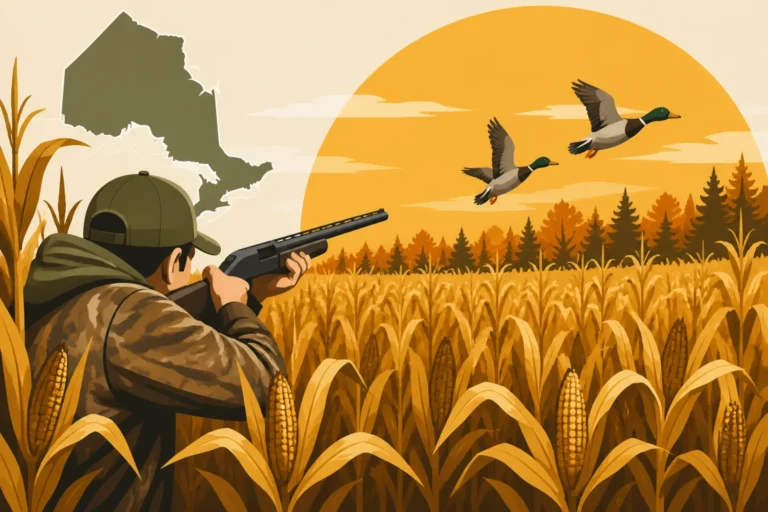
Once permission is secured, the setup is crucial. A large spread of realistic decoys, mimicking feeding or resting geese, is necessary to draw in wary birds. Full-body decoys are highly effective, but shell decoys and silhouettes can add to the perceived size of your flock. Hunters typically conceal themselves in layout blinds, which allow them to lie flat in the field, blending in with the stubble. Calling is also vital, mimicking the excited chatter of a feeding flock to reassure incoming birds. The wind is always a factor; set your decoys and blinds so geese finish into the wind, presenting an ethical shot. Field Hunting Geese in Ontario Stubble requires patience, attention to detail, and a good understanding of goose behavior.
Early Season and Resident Geese
Ontario has a very healthy population of resident Canada geese that do not migrate far, if at all. These birds often breed and live locally, providing excellent early-season opportunities before the main migratory push begins. Early goose seasons typically open in September, offering a chance to hunt when the weather is still mild. Resident geese can be found in a variety of habitats, including urban parks (where hunting is generally prohibited), farm ponds, golf courses, and smaller agricultural fields.
Hunting resident geese often involves smaller spreads and less intense calling than later-season migratory birds, as they can be less wary initially. However, they can quickly become "educated" if pressured. Look for them feeding in freshly cut hayfields or short grain stubble. These hunts can be an excellent way to introduce new hunters to the sport, as the weather is more forgiving and the action can be steady. Finding good, unpressured spots often means getting off the beaten path and finding smaller flocks that haven't been harassed as much.
Snow Geese and Their Unique Challenges
While Canada geese are a staple, snow geese offer a completely different, often epic, hunting experience in Ontario. These "white devils" migrate in immense flocks, sometimes numbering in the tens of thousands, creating a spectacle in the sky. However, their sheer numbers also make them incredibly wary and challenging to hunt. They often require very large decoy spreads—sometimes hundreds or even thousands of white decoys—to entice them to land. Electronic calls, which are legal for snow geese in certain areas under federal regulations (always check current rules), are often used to mimic the deafening roar of a snow goose feeding frenzy.
Timing is everything with snow geese. Their migration through Ontario can be swift, so hunters need to be ready to go when the birds are in the area, often for only a few days at a time. When Snow Geese Pass Through Ontario is typically in early spring and late fall. Their feeding habits can be destructive to agricultural fields, which sometimes makes farmers more open to hunters. Hunting snow geese is a true commitment, requiring extensive gear, scouting, and often a team effort. But when a massive flock commits to your spread, it's an unforgettable experience.
Accessing Prime Waterfowl Locations
Finding good places to hunt waterfowl in Ontario can be one of the biggest challenges for new and even experienced hunters. Our province has a mix of public and private land, each with its own access rules and etiquette. It’s not just about knowing where the birds are, but where you’re allowed to be when the birds show up.
Public Lands and Conservation Areas
Ontario offers a substantial amount of public land, primarily Crown Land, which is generally open to hunting unless otherwise posted. The challenge with Crown Land is often finding accessible parcels that hold good waterfowl habitat and aren't overly pressured. Mapping tools are your best friend here. Services like GoHunt (a fantastic resource for overlaying property boundaries and habitat types) can help you identify promising Crown Land blocks with proximity to water, wetlands, or agricultural fields. Hunting Ontario's Crown Land can provide excellent opportunities, but be prepared to put in some legwork, as the best spots are often remote.
In Southern Ontario, Conservation Authority properties can also offer waterfowl hunting opportunities. These lands are managed by local Conservation Authorities, and many allow hunting in designated areas, often with specific permits or sign-in procedures. Always check the specific rules and regulations for each Conservation Area, as they can vary greatly. For example, Hunting a Conservation Authority Property might require pre-registration or have specific shooting hours. Some Provincial Parks also have designated hunting zones, but this is less common for waterfowl, so always consult the park's specific management plan. Researching Wildlife Management Units (WMUs) in advance and using tools like GoHunt can save you a lot of time and effort.
Gaining Private Land Access
In many of Ontario's prime agricultural and wetland regions, particularly in the south, much of the best waterfowl habitat is on private land. Gaining permission from landowners is often the key to consistent success. This requires respect, good manners, and often a bit of networking. Start by knocking on doors well in advance of the season, explaining who you are, what you want to hunt, and that you understand the importance of respecting their property. Offer to share your harvest, help with chores, or simply maintain good communication. Many farmers are happy to grant access to respectful hunters, especially if geese are causing crop damage.
Always carry your hunting licence and proof of insurance (if you have it, which is highly recommended). Leave gates as you found them, avoid driving on wet fields, pick up your spent shells, and never litter. If you're granted permission to Hunting Canada Geese on Ontario Farmland, be sure to clarify any specific rules or areas where the landowner does not want you to hunt. A bad experience with one hunter can sour a landowner on all hunters, so being a good ambassador for the sport is crucial. Building a good relationship with a landowner can lead to hunting opportunities for years to come.
Guided Hunts and Outfitters
For hunters who are new to Ontario, don't have the time to scout extensively, or want to experience a high-quality hunt without the upfront investment in gear, booking a guided waterfowl hunt with an outfitter is an excellent option. Ontario has a number of reputable outfitters specializing in ducks and geese, particularly in the prime Great Lakes regions and agricultural belts. These services provide everything from decoys and blinds to experienced guides and often even trained retriever dogs.
An outfitter's local knowledge is invaluable. They scout fields daily, know the birds' patterns, and have established relationships with landowners, often providing access to prime, unpressured ground. Ontario Goose Guide Services often guarantee a certain level of effort, if not success, and can be a great way to learn new techniques. While generally more expensive than a DIY hunt, the cost can be justified by the convenience, expertise, and often higher success rates. Many outfitters offer different packages, from single-day hunts to multi-day excursions. Just ensure you vet your outfitter thoroughly, check references, and understand exactly what is included in the package.
Ethical Hunting and Conservation
Waterfowl hunting is more than just a pastime; it's a deep connection to nature and a commitment to conservation. Ethical hunting practices are the backbone of our tradition, ensuring that these incredible birds continue to thrive for future generations. It’s a responsibility we all share, from seasoned veterans to those just getting started.
Respecting the Resource and Landowners
The core of ethical hunting lies in respecting the resource and the land. For waterfowl, this means taking clean, ethical shots to ensure quick, humane kills and making every effort to retrieve all downed birds. Leaving crippled birds or unretrieved game is simply unacceptable. Being a responsible hunter also means being a good steward of the environment. Always pick up your spent shotshells, dispose of any trash properly, and leave the hunting area cleaner than you found it. This applies whether you're on Crown Land, a Conservation Area, or private property.
When hunting private land, extending that respect to landowners is crucial. As mentioned earlier, their generosity provides countless hunting opportunities. Follow their rules to the letter, communicate openly, and express your gratitude. A small thank-you gesture at the end of the season can go a long way. Beyond landowners, respecting other outdoor users is also important. Waterfowlers often share spaces with birdwatchers, hikers, and other recreationalists. Maintaining a safe distance, being courteous, and minimizing disturbances ensures a positive image for all hunters.
Waterfowl Conservation Efforts in Ontario
The health of Ontario's waterfowl populations is a testament to decades of dedicated conservation efforts, largely funded and driven by hunters themselves. Organizations like Ducks Unlimited Canada play a massive role, restoring and preserving critical wetland habitats across the province. Every time you purchase a Migratory Game Bird Permit with its attached Canadian Wildlife Habitat Conservation Stamp, a portion of that fee goes directly towards these vital conservation initiatives. This is how hunters directly contribute to the sustainability of the sport.
The Ministry of Natural Resources and Forestry (MNRF) also conducts extensive research and management programs, including bird banding, population surveys, and habitat assessments. This scientific data informs season dates and bag limits, ensuring that hunting pressure remains sustainable. Hunter contributions to programs like the North American Waterfowl Management Plan are instrumental in securing the future of waterfowl across the continent. By participating in these programs and adhering to regulations, hunters are not just taking from the resource; they are actively giving back and ensuring its longevity.
Safety First in Waterfowl Hunting
Waterfowl hunting often involves challenging conditions – cold weather, wet environments, and early morning darkness – making safety absolutely paramount. The consequences of negligence can be severe. First and foremost, always practice proper firearm handling. Treat every gun as if it's loaded, keep the muzzle pointed in a safe direction, and be absolutely certain of your target and what lies beyond it before taking a shot. In a duck blind, this means being acutely aware of your hunting partners and maintaining safe zones of fire.
Boat safety is another critical component, especially on larger bodies of water. Always wear a PFD (Personal Flotation Device), even if you're a strong swimmer. Ensure your boat is well-maintained, adequately fueled, and equipped with all required safety gear. Cold water immersion is a serious risk in fall and winter, so dress in layers that insulate even when wet, and always have a means of communication and a way to signal for help. Know your limits and don't take unnecessary risks. Hunting with experienced partners and communicating your plans is essential. And finally, when birds are flying, always be absolutely sure of your target species. Telling a goose from a protected swan, or knowing your duck species to adhere to bag limits, is part of being a responsible and safe hunter.
The Future of Waterfowl Hunting in Ontario
The world is constantly changing, and waterfowl hunting is no exception. From shifts in climate to advancements in technology, the future will bring new challenges and opportunities for hunters in Ontario. Adapting to these changes and embracing new approaches will be key to ensuring the sport continues to thrive.
Adapting to Changing Migratory Patterns
Climate change is already having an impact on waterfowl migration patterns, and this trend is likely to continue. Milder winters in some regions can mean birds short-stop further north, arriving later or departing earlier from traditional staging areas in Ontario. This requires hunters to be more adaptable and flexible in their strategies. Scouting becomes even more important, as historical "hot spots" might shift. Hunters might need to explore new areas or adjust their peak hunting times to coincide with these changing patterns.
For instance, if early freezes become less common in certain parts of Southern Ontario, ducks and geese might stay in those areas longer, altering the timing of traditional pushes into more southern latitudes. This means keeping a close eye on weather patterns not just locally but across the continent. What Climate Shift Means for Ontario Game is a complex issue, but for waterfowl, it often boils down to a need for increased vigilance and an open mind to new hunting locations and timings. Being able to read the current conditions, rather than relying solely on past experiences, will be a valuable skill.
Technology and Scouting Advancements
Technology has already transformed many aspects of hunting, and waterfowl is no different. The rise of sophisticated mapping applications, like GoHunt, has revolutionized how hunters scout and access land. These tools provide incredibly detailed satellite imagery, property boundaries (including Crown Land), and topographic maps, allowing hunters to identify prime habitat, potential access points, and optimal setup locations from their couch. This pre-scouting capability saves countless hours in the field.
Beyond mapping, advancements in weather forecasting allow for more precise planning, identifying optimal wind conditions and frontal movements that often trigger big migrations. Trail cameras, though not as common in waterfowl as deer hunting, can still provide insights into bird movements in certain areas. Drones, while illegal for hunting purposes in most jurisdictions (including federally for migratory birds), highlight the rapid pace of technological development. Responsible use of technology, focusing on scouting and safety rather than gaining an unfair advantage, will be a hallmark of the modern waterfowl hunter. Scouting With Satellite Imagery in Ontario has become an essential tool for many.
Mentorship and Passing on the Tradition
Perhaps the most critical aspect of the future of waterfowl hunting in Ontario lies in mentorship and passing on the tradition. As society becomes increasingly urbanized, fewer young people are exposed to hunting. It's up to experienced hunters to introduce newcomers, sharing not just the techniques but also the ethics, conservation values, and profound satisfaction that comes from spending time in the marsh or field.
Programs that facilitate youth hunts and apprentice hunting initiatives are vital. Taking a new hunter under your wing, teaching them about bird identification, calling, decoy spreads, and most importantly, gun safety and responsible hunting practices, ensures the legacy continues. This isn't just about preserving a sport; it's about fostering an appreciation for wildlife, wetlands, and the natural world. The future of waterfowl hunting depends on a new generation of passionate, ethical, and conservation-minded hunters.
Common Ontario Waterfowl Species and Key Characteristics
To help you get started, here's a quick reference for some of the common waterfowl species you'll encounter in Ontario:
| Species | Identification Notes | Preferred Habitat | Typical Season Range |
|---|---|---|---|
| Mallard | Green head (drake), mottled brown (hen), orange legs. | Marshes, ponds, rivers, agricultural fields | Early to Late Fall |
| Wood Duck | Iridescent crest (drake), white eye-ring (hen). | Wooded swamps, beaver ponds, small streams | Early to Mid Fall |
| Bluebill (Scaup) | Black head (drake), white band on wing. | Large lakes, open water | Mid to Late Fall |
| Canada Goose | Black neck/head with white chin strap, grey body. | Agricultural fields, large lakes, marshes | Early to Late Fall |
| Green-winged Teal | Small, fast-flying, green speculum on wing. | Shallow marshes, flooded fields | Early Fall |
| Canvasback | Distinctive sloped forehead, red eye. | Large, deep lakes, diving for food | Mid to Late Fall |
| Redhead | Rounded red head (drake), uniform grey (hen). | Large lakes, shallow bays | Mid to Late Fall |
Disclaimer
The information provided in this guide is for general knowledge and informational purposes only, and does not constitute legal advice. Hunting regulations in Ontario are subject to change and vary by specific Wildlife Management Unit (WMU) and species. It is the sole responsibility of the hunter to consult the most current official Ontario Hunting Regulations Summary, published annually by the Ministry of Natural Resources and Forestry (MNRF), and any relevant federal regulations prior to engaging in any hunting activity. Failure to comply with all applicable regulations may result in penalties. Always prioritize safety and ethical hunting practices.