Hunting a Beaver Meadow Crossing
For any seasoned hunter in Ontario, a beaver meadow crossing can look like a goldmine on a map—a natural funnel, a water source, an edge habitat brimming with potential. But if you’ve spent frustrating hours overlooking what seemed like a prime spot only to see nothing, you know the reality can be far more complex. These dynamic ecosystems require a nuanced approach. This comprehensive guide will peel back the layers of hunting beaver meadow crossings in Ontario, helping you decipher the subtle clues, master strategic setups, and increase your chances of success for deer, moose, and bear.
The Allure and Challenge of Beaver Meadow Crossings
Beaver meadows are more than just flooded areas; they are constantly evolving ecosystems that provide critical resources for a wide array of wildlife. Understanding why these areas are so attractive to game, and equally, why they can be so challenging to hunt, is the first step towards unlocking their potential.
Why Beaver Meadows Attract Wildlife
Think about a beaver meadow, especially in the vastness of Ontario's bush country. These aren't just stagnant pools. Beavers are incredible landscape engineers, constantly damming, flooding, and cutting. This activity creates a mosaic of habitats that benefit game animals immensely. First, there's the water itself, which is a lifeblood, especially during dry spells. But beyond that, the flooding kills off mature trees, making way for new, succulent growth like willow, poplar, and various forbs and grasses that sprout up around the edges and on higher ground within the meadow. Moose, for instance, absolutely relish this new browse, often seen knee-deep in water, stripping leaves from young saplings. Whitetail deer also utilize these areas for the diverse forage, finding cover in the thick regrowth along the banks, and they'll often follow the path of least resistance across a dam or a narrow, drier section. Black bears, ever the opportunists, will frequent beaver meadows for berries, grubs, and even the occasional carrion found along the edges.
These meadows often serve as natural travel corridors, or at least pinch points, within larger tracts of forest. Animals navigating dense timber might find it easier to skirt the edge of a meadow or cross a dam rather than push through an impenetrable cedar swamp or climb a steep ridge. The edges of a beaver meadow, where the forest transitions to wetland, are classic "edge habitats"—zones known for high biodiversity and game activity. It's a place where different food sources converge, where cover is abundant, and where animals can move relatively unhindered.
Common Misconceptions and Hunter Frustrations
Despite their apparent promise, beaver meadows can be incredibly frustrating for hunters who don't understand their nuances. One common misconception is that if it looks good on a satellite map, it'll be easy to hunt. The reality on the ground can be vastly different. What appears as open water might be a treacherous bog, knee-deep in mud, or choked with dense cattails. Moving through these areas quietly is often impossible, sending deer crashing through the brush or moose splashing away long before you're in range.
Another significant frustration stems from unpredictable wind patterns. Open water and varying terrain around a beaver meadow can create swirling thermals and shifting winds, making scent control a constant battle. You might think you have the perfect downwind setup, only for the breeze to switch unexpectedly, carrying your scent right into the prime crossing point. Many hunters also struggle with finding definitive sign. Animals might pass through quickly, leaving only subtle tracks that are easily missed, especially if the ground is already disturbed by water or other animal activity. You might not find the obvious deer rubs or heavily worn trails you'd expect in a hardwood ridge, leading to uncertainty about where to focus your efforts. All these factors combined can lead to hours of quiet, unproductive sitting, leaving you wondering if the animals even use the area at all.
Deciphering Sign and Identifying Key Crossings
To effectively hunt a beaver meadow, you need to become a skilled detective, interpreting the subtle clues animals leave behind. It’s not just about seeing tracks; it’s about understanding their story and predicting future movements.
Reading Tracks and Trails Around the Meadow
When you approach a beaver meadow, don't just stare at the open water. Start by meticulously scouting the edges, looking for those tell-tale signs. You're searching for worn paths that lead in and out of the thicker cover, guiding you to where animals prefer to enter or exit the meadow. Look for tracks – not just any tracks, but fresh ones. A crisp, defined track with clear edges, perhaps even with displaced mud or damp soil, indicates recent activity. Older tracks will have rounded edges, may be filled with debris, or appear faded. Pay attention to the size and shape to differentiate between deer, moose, and bear. For instance, moose leave much larger, more elongated prints compared to the smaller, heart-shaped tracks of a whitetail. If you're interested in more specific deer sign, check out our guide on how to be successful "Reading Whitetail Sign in Ontario Hardwoods" which can offer additional insights.
Beyond tracks, keep an eye out for other indicators. Scrapes and rubs along the treeline bordering the meadow can be goldmines for deer hunters, signalling consistent buck activity. For moose, look for heavily browsed saplings, especially willow or poplar, with torn leaves and broken branches. Bear sign might include overturned rocks or logs where they've dug for grubs, claw marks on trees, or fresh scat containing berry seeds. The more consistent and fresh the sign, the higher the likelihood of repeated use, which translates to a better hunting opportunity.
Identifying Entry and Exit Points
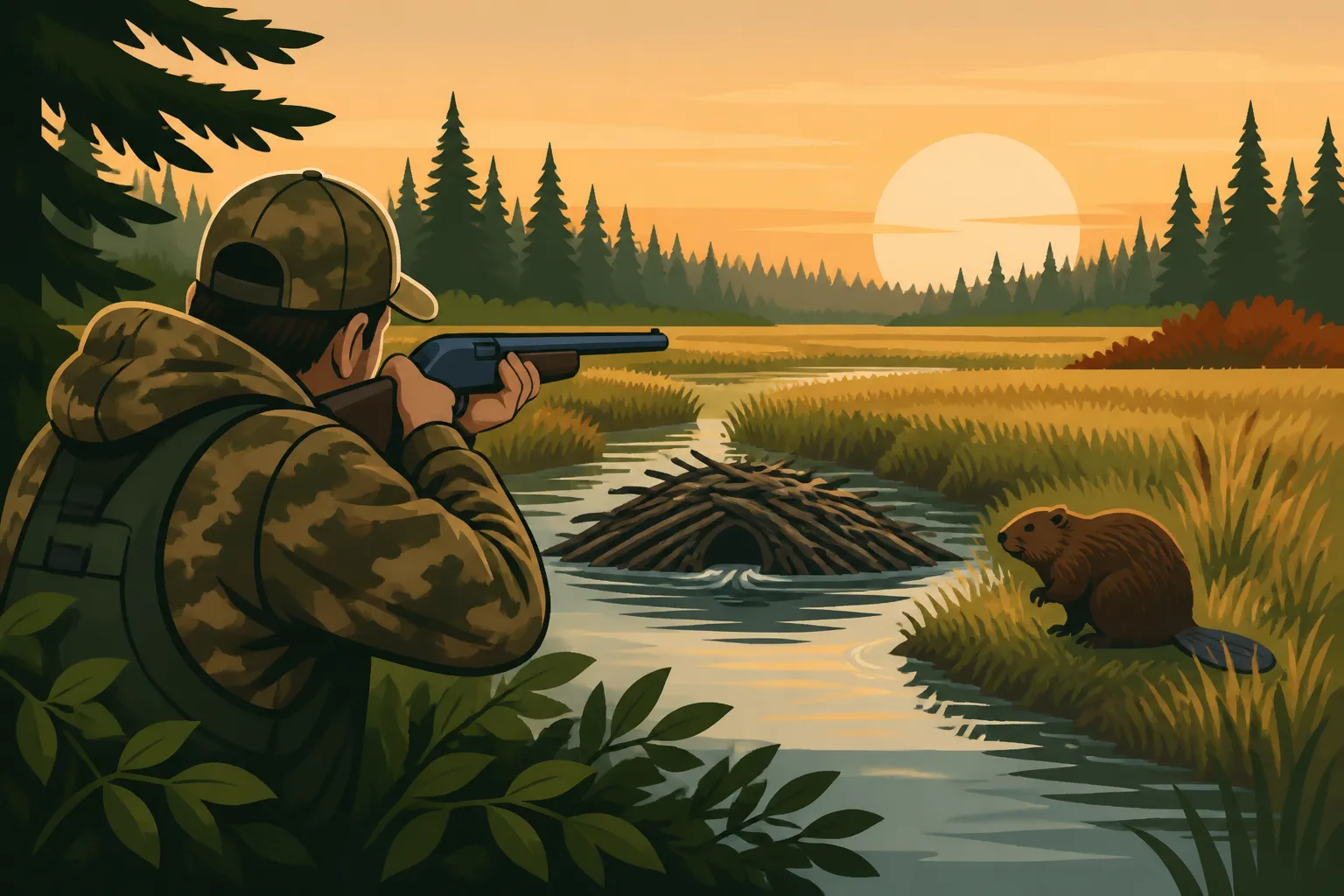
This is where the real strategy comes into play. Animals don't just randomly appear and disappear; they use the path of least resistance, especially when entering or exiting an open area like a meadow. Start by looking for natural funnels. These could be narrow sections of bush between two thicker blocks of cover that lead directly to the meadow's edge. Often, the beaver dam itself serves as the primary crossing point—it's usually the driest, most stable route across the water. Many times, you'll find a well-worn game trail right over the top of a dam or along its base.
Old logging roads or ATV trails that intersect the meadow or run along its perimeter are also prime candidates for entry and exit points. These cleared paths offer easy travel for game. Consider the terrain: does a slight rise in elevation offer a drier crossing? Is there a narrow section of water that animals would prefer to wade through? Don't forget about edges that offer good cover right up to the crossing, allowing animals to feel secure as they approach or depart. Sometimes, a subtle dip in the landscape or a small point of land extending into the meadow will be the preferred route. Tools like GoHunt's mapping features can be incredibly useful here, allowing you to identify terrain features, old roads, and potential pinch points from an aerial perspective before you even step foot in the bush. This kind of pre-scouting can save you countless hours.
Water Levels and Their Impact on Game Movement
Water levels in a beaver meadow are constantly in flux, dictated by rainfall, snowmelt, and, of course, the beavers themselves. These fluctuations have a profound impact on how game animals use the area. During periods of high water, large sections of the meadow might become inaccessible or too deep for deer to cross comfortably. In these conditions, animals will be forced to use higher, drier routes, often concentrating movement to a very few specific pinch points. A dam that might normally be one of several crossing options could become the only viable crossing.
Conversely, during periods of low water, more of the meadow might become dry enough to walk across. While this opens up more feeding opportunities within the meadow itself, it can also disperse game, making their travel patterns less predictable. Instead of being funnelled to one or two spots, they might cross anywhere. Beavers are always working; a new dam could suddenly flood a previously dry section, or an old dam could blow out, draining water and creating new opportunities or closing old ones. Always observe the current water levels and adjust your strategy accordingly. If a heavy rain has come through, focus on those few high, dry crossings. If it’s been a dry spell, animals might be more spread out but also more likely to use the center of the meadow for foraging. Understanding "Hunting a Beaver Dam Crossing" can really elevate your game in these specific scenarios.
Strategic Approaches to Hunting Beaver Meadow Crossings
Once you've identified potential hot spots and understood the dynamics of the meadow, the next challenge is positioning yourself effectively. This involves careful consideration of wind, timing, and species-specific tactics.
Stand Placement and Wind Considerations
This is arguably the most critical aspect of hunting any sensitive area, and beaver meadows are no exception. The open nature of a meadow, combined with the presence of water, can create unpredictable wind currents. Your primary goal is always to position yourself downwind of the anticipated travel routes. This often means approaching your stand from a direction that keeps your scent blowing away from where game is likely to appear. Don't be afraid to take a longer, more circuitous route to your stand if it means maintaining a favourable wind.
Consider thermal currents, especially at dawn and dusk. As the air warms in the morning, thermals tend to rise; as it cools in the evening, they fall. Over water, these can be even more pronounced and can carry your scent in unexpected directions. A common strategy is to set up slightly elevated, overlooking a primary crossing point. This could be a sturdy treestand positioned along the treeline, offering a good vantage point over a dam or a narrow crossing. If treestands aren't an option, a well-placed ground blind with natural backdrop (like a cluster of evergreens or a thick blowdown) can work, but always prioritize concealment and ensuring your scent is carried away from the crossing. Think about the sun's position too; you want the sun at your back in the morning or evening to illuminate incoming game, not blind you. A good mapping app like GoHunt can help you visualize wind direction over the terrain before you even head out, allowing for better planning.
Timing Your Hunt for Peak Activity
Just like any other hunting location, timing is everything when it comes to beaver meadows. The early morning and late evening hours are almost always prime time. Animals are typically moving to and from feeding and bedding areas during these periods. A beaver meadow, offering both forage and a travel route, will see increased activity as game transitions. Set up well before first light, allowing the woods to settle down before animals start moving. Similarly, stay until well after dark, as animals often linger or only start moving after the last vestiges of daylight fade.
During the whitetail rut, bucks might be cruising the edges of meadows at any time of day, scent checking for does. For insights into this period, our article "Hunting the Rut in Early to Mid November" offers a deep dive. Moose, especially bulls during their rut, can be quite vocal and active around water bodies, making mid-day calling an option. If it's been particularly cold, or if winter snows are deep, animals might utilize the meadow edges more consistently for browsing during the warmer, mid-day hours when the sun offers some comfort. Keep an eye on weather changes: a sudden drop in temperature or a fresh snowfall can often trigger increased movement.
Techniques for Different Game Species Deer, Moose, Bear
Each species requires a slightly different approach when hunting a beaver meadow crossing.
For whitetail deer, stealth and scent control are paramount. Focus your setup on active trails, particularly those with fresh rubs or scrapes nearby, indicating a buck's presence. Scent eliminators, ozone generators, and careful attention to wind direction are crucial. While sitting patiently is often the best tactic, don't be afraid to try some soft calling. During the rut, a few tending grunts or a subtle rattle might entice a curious buck that's cruising the perimeter. For more advanced tactics, our guide on "Rattling and Calling Ontario Whitetails" can provide valuable tips. Always keep your shooting lanes clear and be ready for a quick, ethical shot.
Moose hunting around beaver meadows often involves a combination of patience and calling. These massive animals are drawn to the browse found along meadow edges and are often quite comfortable wading in the water. Look for heavily browsed saplings and large, distinctive tracks. During the rut, calling can be incredibly effective. Cow calls, grunts, and even antler raking can draw in a bull looking for a mate. Positioning yourself near a known crossing or a heavily used feeding area, and then employing patient calling sequences, can pay off big. Check out "Calling a Bull Moose in the Rut" for detailed strategies. Be prepared for a long retrieve if you drop a moose in or near the water!
For black bears, your strategy will depend heavily on the season and whether baiting is permitted in your area. If baiting is allowed and you've decided to go that route, a beaver meadow edge can be an excellent location to set up a bait site, as bears naturally patrol these areas for food. Our article on "Setting a Bear Bait Site in Ontario" offers comprehensive advice. If you're spot-and-stalk or still-hunting, focus on meadows with abundant natural food sources like berries in late summer and fall, or areas where bears might be digging for grubs. Bears often use thick cover, so concentrate on the dense edges of the meadow and any natural corridors leading into it. Patience is key, as bears can be incredibly elusive.
| Species | Primary Attraction to Meadow | Key Sign to Look For | Recommended Strategy | Prime Timing |
|---|---|---|---|---|
| Whitetail Deer | Forage, water, travel corridors, security cover | Tracks (hoof prints), rubs, scrapes, browse lines | Treestand/ground blind overlooking crossings, scent control, light calling | Dawn/Dusk, Rut (Mid-day) |
| Moose | Browse (willow, poplar), water, travel lanes | Large tracks, heavily browsed saplings, distinct scat | Calling, patient sitting near feeding areas/crossings | Dawn/Dusk, Rut (Anytime) |
| Black Bear | Berries, grubs, carrion, travel routes | Tracks (pads), scat, overturned rocks/logs, claw marks | Baiting (if legal), still-hunting dense edges with food sources | Dawn/Dusk, Berry season |
Gear and Preparation for Wetland Hunts
Hunting beaver meadow crossings effectively isn't just about strategy; it's also about being properly equipped for the unique challenges these wet environments present. The right gear and thorough preparation can make all the difference between a miserable, unproductive hunt and a successful, comfortable one.
Essential Equipment for Wet Terrain
First and foremost, you need to stay dry. This means investing in quality waterproof footwear. Depending on the depth of the water and mud in your chosen meadow, this could range from tall rubber boots (like Lacrosse or Muck Boots, which are popular choices among Ontario hunters) to full hip waders or even chest waders if you anticipate crossing deeper sections. Getting wet feet early in the morning can quickly ruin a hunt, especially as temperatures drop. Along with waterproof boots, ensure you have quick-drying layers of clothing. Even if you don't get soaked, the humidity around wetlands can make cotton feel heavy and cold. Synthetic or wool base layers that wick moisture away are far superior.
Insect repellent is non-negotiable, especially during Ontario's spring and early fall seasons. Mosquitoes, black flies, and deer flies can be relentless in wetland areas. A head net can also be a sanity-saver. You'll also need a sturdy, waterproof pack to carry all your essentials, and ideally one that can handle some weight if you're lucky enough to pack out game. Consider a dry bag within your pack for sensitive items like your phone, extra socks, and anything you absolutely cannot get wet. A headlamp with a red light option is crucial for hands-free navigation during pre-dawn approaches and post-dusk exits, helping you maintain situational awareness and not spook game.
Scouting Tools and Mapping
Modern hunting has been revolutionized by technology, and beaver meadows are prime examples of where these tools shine. A reliable GPS device or a smartphone with a robust mapping application like GoHunt, onX Hunt, or HuntStand is an absolute must-have. These apps allow you to:
- Identify Crown Land boundaries: Crucial for staying legal while hunting "Hunting Ontario's Crown Land".
- Pinpoint access points: Mark where you park and where you enter the bush.
- Mark potential crossings: Scout from home using satellite imagery to identify narrow sections, old dams, or high ground within the meadow.
- Record game sign: Drop pins where you find tracks, scat, rubs, or beds.
- Track your route: Essential for navigating dense bush, especially in low light.
- Overlay property lines: Ensure you are not trespassing on private land.
When using a smartphone for mapping, always carry a portable power bank, as cold weather and constant screen use can drain batteries quickly. While digital tools are fantastic, never rely solely on them. Always carry a physical compass and a laminated paper map of your Wildlife Management Unit (WMU). Batteries can die, and signals can drop, especially in remote parts of Ontario. Understanding "Reading an Ontario WMU Map Before You Go" is a fundamental skill that every hunter should possess.
Binoculars are also critical. From a distance, they allow you to scan the entire meadow and its edges for subtle movements without disturbing game. A good quality pair can save you unnecessary walking and prevent spooking animals. Finally, consider using trail cameras. Placed strategically on known crossing points or game trails leading into the meadow, they can provide invaluable intelligence on what animals are using the area, when they're moving, and even help you identify specific deer or moose. This passive scouting can dramatically increase your efficiency and help you choose the most opportune times to hunt. For more comprehensive scouting tactics, refer to our article on "Scouting With Satellite Imagery in Ontario".
Disclaimer
Hunting is an activity with inherent risks. Always prioritize safety, understand and follow all local hunting regulations, and ensure you have the necessary licenses and permits. This guide is for informational purposes only and does not replace professional instruction or local knowledge. Always hunt ethically and responsibly.