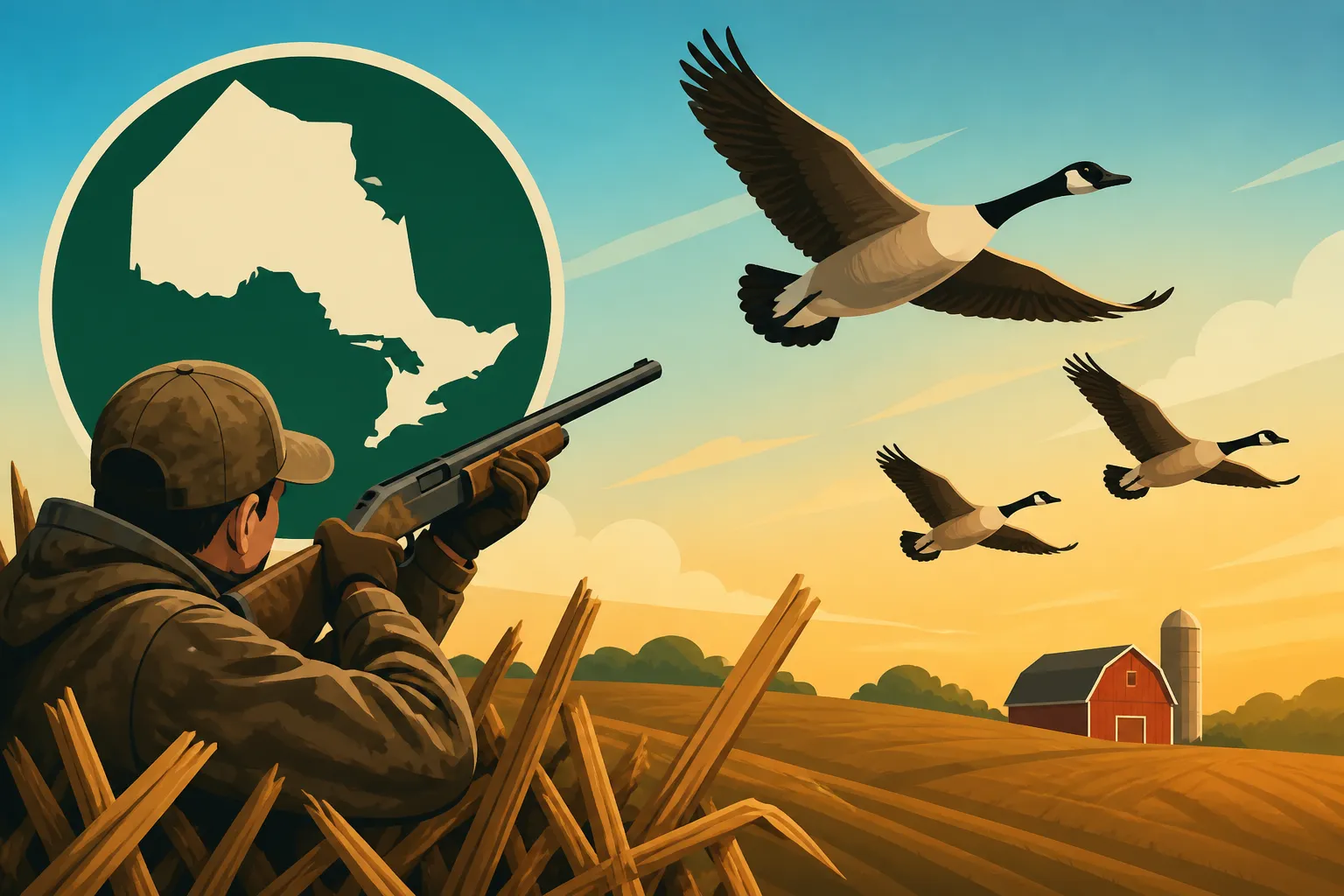
Hunting Canada Geese on Ontario Farmland
There's nothing quite like the sight of a flock of Canada Geese cupping their wings, committed to your spread, or the sound of their wild honking echoing across a crisp Ontario morning. But let's be honest, successfully hunting these intelligent birds on vast farmland can feel like trying to outsmart a seasoned general. They're wary, their vision is incredible, and they have an uncanny ability to know when something just isn't right. This comprehensive guide will walk you through the nuances of hunting Canada Geese specifically on Ontario's agricultural lands, helping you understand their patterns, master your setup, and ultimately, put more birds in the bag.
Understanding Canada Geese in Farmland Environments
Canada Geese are incredibly adaptable birds, and Ontario's agricultural heartlands provide an irresistible buffet for them, drawing them in like a magnet. To consistently intercept these birds, you first need to understand why they're there and how they interact with these landscapes.
Why Farmland Attracts Geese
Ontario's sprawling fields of corn, soybeans, and winter wheat are a goldmine for geese, offering a high-energy diet essential for their migratory journeys and daily sustenance. After harvest, waste grain left behind becomes an easy meal, far more accessible and energy-efficient than foraging in natural wetlands. Think about it: a goose expends less energy picking up spilled corn kernels than digging for roots or seeds in denser cover. These fields often come with open sightlines, which is critical for these highly visual birds to detect predators. They'll utilize a freshly harvested cornfield in late fall or a greening winter wheat field in spring. Even a stubble field offers not just food, but also a sense of security due to the unobstructed views.
Beyond food, geese also need water and safe loafing areas. While they might feed in a dry field, they often gravitate towards nearby ponds, slow-moving rivers, or even drainage ditches for drinking and resting. These areas provide a vital sense of security where they can digest, preen, and watch for danger without the constant threat of ground predators. Sometimes, they'll simply loaf in an open field away from their primary feeding area, preferring a bare patch of ground where they can easily spot a coyote or eagle from a distance. Understanding this trifecta of food, water, and security is paramount to predicting their movements.
Seasonal Movements and Patterns
The way Canada Geese use Ontario farmland changes throughout the seasons, driven by local breeding, migratory pushes, and weather patterns. In the early fall, you'll primarily be dealing with "resident" birds – those that hatched and summered locally. These flocks tend to have established patterns, often feeding in the same fields day after day until food sources are depleted or hunting pressure makes them move on. These birds can be a bit more forgiving, but they also learn quickly.
As late fall approaches, often coinciding with the Ontario Goose Season Dates by District, massive waves of migratory geese begin to descend from the north. These birds are often less pressured, but their movements are dictated by prevailing winds, major weather fronts, and the availability of prime feeding grounds. A significant cold snap up north can push thousands of birds into southern Ontario within a day or two. Keeping an eye on weather forecasts and migration reports from organizations like Ducks Unlimited Canada can give you an edge, helping you anticipate these pushes and position yourself for the best opportunities.
Goose Behavior and Adaptations
Canada Geese are incredibly intelligent and social birds, and their success on the landscape is largely due to their keen senses and collective behavior. Their eyesight, for example, is legendary. They can spot an out-of-place hunter, a shiny blind, or even unnatural movement from an incredible distance, often circling high above a field several times before committing. This isn't just a challenge; it’s a direct instruction to prioritize concealment above all else.
They also rely heavily on communication within their flocks. The constant honking, clucking, and murmuring are not random; they're signals about perceived threats, food availability, and group cohesion. When a flock is feeding contentedly, their calls are softer, more relaxed. If a bird spots something amiss, a distinct "alarm honk" will instantly alert the entire group, causing them to lift off in unison. This collective intelligence means that if one bird senses danger, the whole flock reacts, which is why a well-placed decoy spread and realistic calling are essential to make your setup appear safe and inviting.
Essential Scouting and Reconnaissance for Farmland Geese
You can have the best decoys and the fanciest calls, but without knowing where the geese want to be, you’re just guessing. Scouting is, without a doubt, the most critical step in consistently harvesting Canada Geese on Ontario farmland. It’s an investment of time that pays dividends.
The Art of Field Reconnaissance
Successful field reconnaissance isn't about driving aimlessly; it's a strategic mission to find where geese are actively feeding and to understand their flight lines. Start by focusing on areas with known goose activity or large tracts of agricultural land. Drive the backroads, but keep your distance – spooking birds during scouting defeats the purpose. Look for flocks feeding in fields, and pay close attention to which fields they prefer. Is it a freshly cut cornfield, a winter wheat patch, or a soybean stubble? These preferences change, so constant observation is key.
Once you spot birds, don't just note the field. Observe their flight path into and out of the field. Where are they coming from? Where are they going to roost or water? These flight lines are crucial for positioning your spread. Geese are creatures of habit; if they use a particular power line, tree line, or bend in a river as a flight corridor, they'll likely continue to do so. Understanding these subtle landscape features can help you anticipate their approach and ensure your spread is in their direct path. This detailed observation is far more productive than simply identifying a "goose field."
Timing Your Scouting Efforts
The timing of your scouting is almost as important as the act itself. Geese often follow predictable daily routines, heading out to feed at dawn, returning to water or loafing areas mid-morning, then heading back out for an afternoon feed before returning to roost for the night. The best times to scout are often during these peak movement periods: first light, mid-day, and the last hour before dark.
Scouting at dawn allows you to see where birds are flying from their roosts to their feeding fields. Mid-day scouting can show you where they go to loaf or find water. And scouting at dusk will reveal their flight lines back to their roost. If possible, scout several days in a row, particularly if you're targeting resident birds, to confirm their patterns. Migratory birds can be more unpredictable, so a last-minute scout the day before a hunt is often essential. Remember, fields that were hot one day might be empty the next if feeding conditions change or pressure mounts. A reliable tool like the GoHunt app can assist greatly here by allowing you to mark fields, observe patterns, and even note conditions for future reference.
Tools for Effective Scouting
You don't need a full reconnaissance kit, but a few key items will significantly improve your scouting efficiency. High-quality binoculars are non-negotiable for spotting distant birds and identifying field types without getting too close. I prefer 10×42 or 12×50 power for this kind of work. A spotting scope on a tripod can be incredibly useful if you need to identify species, estimate flock sizes, or discern whether birds are actually feeding or just loafing in a far-off field, particularly on public land where you might need to observe from a greater distance.
Beyond optics, a good mapping application like onX Hunt or GoHunt is invaluable. These apps allow you to mark active fields, potential hide locations, access points, and flight corridors directly on your phone or tablet. They show property lines, which is vital for respecting private land and knowing where you can legally hunt or scout. Having a map with you, whether digital or physical, helps you understand the topography, identify windbreaks, and plan your approach long before you even set foot in a field. Don't forget a notebook and pen to jot down observations – wind direction, field conditions, time of day, and approximate flock size.
Setting Up for Success: Decoys, Blinds, and Calling
Once you've done your homework and found where the geese want to be, the real game begins: convincing them that your spot is safe and inviting. This involves careful planning and execution of your decoy spread, choosing the right concealment, and mastering your calling.
Decoy Spreads for Farmland Success
The right decoy spread can make all the difference when hunting Canada Geese on farmland. The goal is to mimic a contented flock, drawing in approaching birds. For farm fields, full-body decoys are often considered superior to silhouettes or shells because of their three-dimensional realism, especially under bright sun or clear skies. However, a large spread of high-quality silhouettes like those from Avery GHG or Big Al's Decoys can be incredibly effective, and they're much easier to transport and deploy. A mix can also work wonders, using full bodies up front near the kill hole, with silhouettes extending out.
The "numbers game" often applies to geese; larger spreads tend to be more effective, especially for wary migratory birds. Aim for at least 2-3 dozen, but don't shy away from 5-10 dozen if you have the resources. Spacing is important too: don't cram them together. Geese like their personal space, typically 3-5 feet between decoys. Create a "landing zone" or "kill hole" – an open area within your spread where you expect the birds to land, ideally 20-30 yards from your blinds. The classic "U" or "J" pattern works well, with the open end of the shape facing into the prevailing wind, as geese always land into the wind. Adding some movement with a few full-body 'flapper' decoys or flags can also add a crucial layer of realism that can seal the deal on hesitant birds.
Concealment is Key
As mentioned earlier, goose eyesight is phenomenal. If they see you, you're done. Effective concealment is paramount. Layout blinds, like those from Final Approach or Tanglefree, are purpose-built for field hunting and are often the best option. They allow you to lie low, covered in stubble straps that you can customize with local vegetation – corn stalks, grass, or soybean residue. Make sure your blind blends perfectly with the field you're hunting. A blind that looks like a lump in an otherwise flat, open field will stick out like a sore thumb.
If layout blinds aren't an option, or if you prefer a different setup, consider using natural cover. The edge of a standing corn field, a fencerow, or a slight dip in the terrain can offer surprising amounts of concealment. Just be sure that your position allows for clear shooting lanes and that you can comfortably watch the approaching birds. Camouflage clothing that matches the dormant vegetation is also crucial, along with face masks or paint to break up your human outline. Even a subtle shine from a gun barrel or glasses can flare birds, so pay attention to every detail. You can even find success Hunting a Standing Corn Field Edge or a Hunting a Winter Wheat Field by simply blending in with the crop itself.
Calling Techniques and Strategies
Goose calling is an art, not a science, and it takes practice to develop realism and consistency. The goal of your calling should be to mimic a real flock, providing reassurance to approaching birds. Start with basic sounds: the loud "honk" to get attention from distant birds, the "cluck" for closer birds, and the "moan" or "murmur" for birds that are about to land.
Avoid overcalling, especially as birds get closer. If they're locked up and committed, sometimes the best call is no call at all. Think about the rhythm of a real flock: it's not a constant cacophony. There are bursts of communication, then periods of quiet. Vary your volume and intensity based on the birds' distance and reaction. For example, if birds are flying high and ignoring you, use louder, more aggressive honks. If they're closer and circling, switch to softer clucks and murmurs. Don't be afraid to experiment. Sometimes, a single, plaintive honk is all it takes to turn a flock. Learning from experienced callers or watching instructional videos can dramatically shorten your learning curve.
Tactics and Considerations for the Hunt
Even with the best scouting and setup, the actual hunt requires careful execution, ethical decision-making, and a good understanding of landowner relations.
Approaching and Decoying
The moment of truth arrives when birds respond to your calls and start to approach your spread. Always keep the wind in mind. Geese prefer to land into the wind, so your blind setup and kill hole should be positioned accordingly. If the wind shifts during the hunt, be prepared to make minor adjustments to your decoy spread if possible, or at least mentally note how the birds will approach.
As birds get closer, minimize movement in the blind. Even a subtle twitch can be detected. Use hand signals with your hunting partners to communicate, rather than talking. Wait until the geese are fully committed, with their wings set and feet dropping, over your kill hole, before calling the shot. This ensures the birds are within ethical range for a clean kill. Speaking of range, it's wise to practice your shotgunning before the season, perhaps at a trap or skeet range, to ensure you're confident in your ability to make clean shots on fast-moving targets. Proper lead and follow-through are critical.
Ethical Shooting and Retrieval
Ethical hunting dictates that we strive for clean, humane kills and recover every bird we shoot. For Canada Geese, non-toxic shot is mandatory in Ontario, typically steel, bismuth, or tungsten. Choose a shot size appropriate for geese, generally BB, 1, or 2 steel shot, or similar in other non-toxic varieties. Pattern your shotgun with your chosen load before the season to understand its effective range. Many hunters find 3-inch or 3.5-inch shells in 12 gauge to be ideal for geese.
Once the shot is called and birds are down, swift retrieval is important. A well-trained retrieving dog is an invaluable asset for field hunting, reducing lost birds and making the hunt more efficient. If you don't have a dog, mark where each bird falls and immediately head to retrieve them. Wounded birds should be dispatched quickly and humanely. Remember that Non-Toxic Shot for Ontario Waterfowl is a critical regulation to follow.
Navigating Landowner Relations
Hunting on private farmland in Ontario almost always requires explicit permission from the landowner. This isn't just a courtesy; it's a legal requirement and fundamental to maintaining a positive public image for hunters. The best way to secure permission is to simply ask, well in advance of the season if possible. Be polite, respectful, and prepared to offer something in return, such as helping with chores, providing some of your harvest, or just being a reliable presence to watch their property.
Build rapport by showing appreciation and respect for their land. Always close gates, avoid driving on wet fields, pick up your spent shells and any trash, and report any suspicious activity you might observe. If you secure permission for a field, don't assume it extends to adjacent fields or future seasons. Reconfirm each year. Many long-term hunting opportunities are built on strong, respectful relationships with landowners. Knowing how to go about Getting Permission for a Goose Field is truly a cornerstone of successful and sustainable farmland goose hunting in this province.
| Aspect of Hunting | Key Considerations for Farmland Geese | Impact on Success |
|---|---|---|
| Scouting | Identify active feeding fields, flight lines, water sources. Observe daily patterns (morning/evening). | High: Pinpoints exact locations where geese want to be, minimizing wasted time. |
| Decoy Spreads | Use 2-5+ dozen full-body or quality silhouette decoys. Create a landing zone into the wind (U, J patterns). Add motion. | High: Mimics a safe, inviting flock, convincing wary birds to commit. |
| Concealment | Layout blinds with natural vegetation, natural field edges, fencerows. Minimal movement, no shine. | Critical: Geese have exceptional eyesight; any visible hunter will flare the flock. |
| Calling | Vary calls: loud honks for distance, soft clucks/moans for close birds. Avoid overcalling when committed. | Moderate to High: Reassures birds and helps them locate your spread. |
| Wind Direction | Always set up with the wind at your back, so geese land into the wind over your spread. | Critical: Geese must land into the wind; ignored winds lead to flared birds. |
| Landowner Relations | Obtain explicit permission, be respectful, clean up, offer help. Build trust for long-term access. | Critical: Without access, there is no hunt. |
Keeping it Safe and Legal: Ontario Regulations
Hunting Canada Geese on Ontario farmland comes with specific regulations that every hunter must adhere to. Ignorance of the law is not a defence, and conservation officers are vigilant.
Federal Migratory Bird Regulations
Canada Geese are migratory birds, meaning they fall under both federal and provincial regulations. Federally, you need a valid Migratory Game Bird Hunting Permit and a Canadian Wildlife Habitat Conservation Stamp affixed to it. These are annual permits and are essential before you even think about heading out. You can purchase them online through the federal e-Permitting system. Always double-check the federal migratory bird hunting regulations booklet for current season dates, bag limits, and possession limits, as these can change annually. The permit and stamp fund critical conservation efforts, so it's a small but vital contribution.
Remember that strict rules also apply to ammunition type (non-toxic shot only for all waterfowl) and shotgun capacity (plugged to hold no more than three shells in the magazine and chamber combined). These rules are in place to ensure fair chase and sustainable harvesting.
Provincial Regulations and WMU Specifics
In addition to federal rules, Ontario has its own set of regulations administered by the Ministry of Natural Resources and Forestry (MNRF). You'll need an Ontario hunting licence and a valid Outdoors Card. Provincial regulations dictate specific season dates and bag limits by Wildlife Management Unit (WMU) or district. For instance, dates for Waterfowl Hunting Across Ontario can vary significantly depending on whether you're hunting in Southern Ontario's agricultural belt or up north.
Always consult the current Ontario Hunting Regulations Summary, available online or from licence issuers, for the most up-to-date information for your specific WMU. Pay close attention to shooting hours, which are typically half an hour before sunrise to half an hour after sunset. Understanding the boundaries of your chosen WMU and any local restrictions (e.g., municipal bylaws prohibiting discharge of firearms) is also crucial. Some WMUs may have special zones or sanctuaries where hunting is restricted or prohibited, even on private land, so research is always necessary.
Ethical Conduct and Conservation
Beyond the legalities, ethical conduct is paramount for the future of hunting. This includes ensuring all shots are within your effective range to minimize crippling birds, making every effort to recover all downed game, and treating landowners and the environment with respect. Never trespass, always pick up your spent shells, and leave the land cleaner than you found it.
Reporting your harvest, when required, provides valuable data to wildlife managers who use this information to set future season dates and bag limits, ensuring sustainable populations for generations to come. Your participation in these data collection efforts is a direct contribution to conservation. Adhering to these principles not only upholds the integrity of the sport but also fosters positive relationships with the non-hunting public, securing access and opportunity for all of us who cherish our hunting heritage.
Disclaimer
Please be aware that hunting regulations, season dates, and licence requirements in Ontario are subject to change. This guide is intended for informational purposes only and should not be considered legal advice. It is the individual hunter's responsibility to consult the most current Ontario Hunting Regulations Summary and federal migratory bird regulations before engaging in any hunting activities. Always ensure you are familiar with and adhere to all applicable laws and regulations.