Hunting a Winter Wheat Field
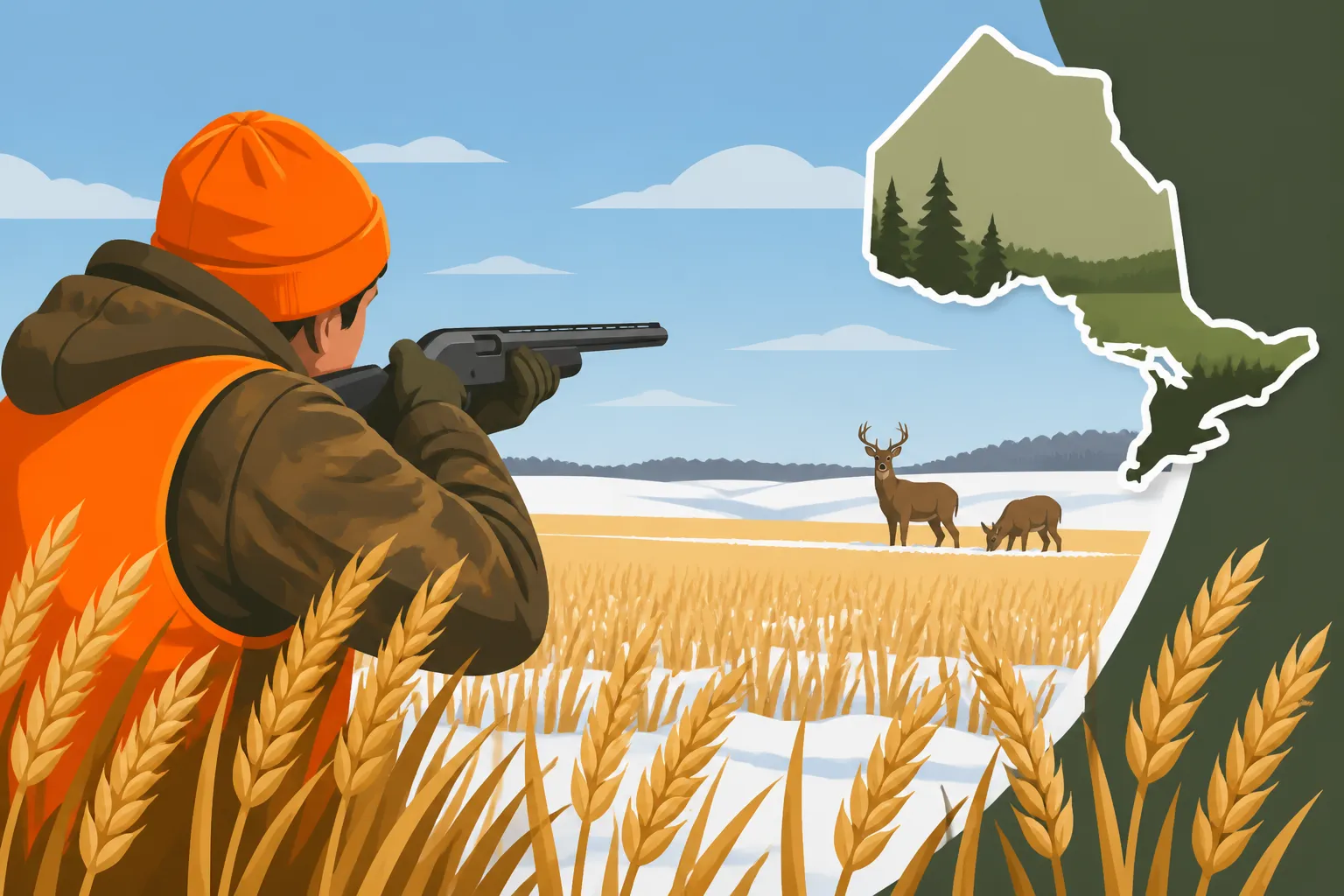
That pristine carpet of green, stretching across a late fall or early spring landscape, is a sight many Ontario hunters have pondered. Winter wheat fields look incredibly inviting, don't they? They offer early forage, often when other food sources are dwindling or buried under snow. But while deer certainly use them, hunting these open, often sprawling areas effectively can be a real head-scratcher. It's not as simple as just setting up on the edge. This guide is here to break down the complexities and give you actionable strategies for hunting winter wheat fields in Ontario, helping you turn those promising green expanses into successful hunting grounds.
Decoding Deer Activity in Winter Wheat Fields
Understanding why deer use winter wheat fields, and how they use them, is the first step to successful hunting. It's not just a buffet; it's a strategic resource, and their patterns will shift depending on the season, weather, and available cover. Many hunters make the mistake of assuming deer will be in the middle of the field all the time, when in reality, their interaction with the wheat is far more nuanced.
Why Deer Are Attracted to Winter Wheat
Winter wheat offers a crucial food source when other options are scarce. As soon as those tender green shoots emerge in the fall, or push through the thawing ground in late winter and early spring, they become highly palatable and digestible forage. This isn't just a casual snack for deer; it's often a vital component of their diet, especially in areas where acorns or other mast crops might have been sparse or quickly consumed. The early growth provides much-needed protein and energy, which is especially important for bucks recovering from the rut and does preparing for fawning season.
Consider the harsh realities of an Ontario winter. Once the hard frosts arrive and snow begins to accumulate, natural browse can become frozen, buried, or simply less appealing. A lush winter wheat field stands out like a beacon. Deer, being creatures of efficiency, will gravitate towards this easily accessible food. In southern Ontario, particularly, where agricultural lands dominate the landscape, these fields are often a primary food source for large populations of whitetails. The sheer volume of nutritious forage can sustain a significant number of deer, making these fields a magnet for activity.
Seasonal Patterns and Field Usage
Deer don't use winter wheat fields in a static way; their patterns evolve throughout the hunting seasons.
Early Archery Season and Late Fall
In the early archery season, typically late September through October, winter wheat might just be starting to emerge, or it could be established enough to draw deer in. At this time, deer might be less dependent on the wheat if there's still plenty of standing corn, acorns, or other natural browse available. They might visit these fields more sporadically, perhaps just before heading to bedding cover, or for a quick bite after leaving it. However, as the rut approaches and energy demands increase, you might see more consistent evening activity. During Hunting Ontario's November Gun Season, especially if it's been a cold snap or other food sources are dwindling, deer will become more reliant on these fields. Bucks will cruise the edges, scent-checking for does, and the fields themselves become key staging areas.
Late Season and Winter
When temperatures drop and snow blankets the ground, winter wheat fields become even more critical. During Hunting Ontario's December Muzzleloader Days and into the late archery seasons, deer will often hit these fields in force, particularly in the late afternoon and evening, right before they move to their winter yarding areas or dense thermal cover. This is when the nutritional value of the wheat truly shines, helping deer conserve energy. If you're looking for Where Ontario Whitetails Yard in Deep Snow, remember that their path to those yards often involves a stop at a reliable food source like a wheat field. They might even bed down in the taller sections of wheat if there's enough height and protection from wind, especially if adjacent cover is limited. This is less common in deeply frozen or snow-covered fields, but don't rule it out entirely in milder conditions.
Strategic Scouting for Winter Wheat Success
Hunting a winter wheat field isn't about blind luck; it's about smart, detailed scouting. You can't just show up on opening day and expect results. The sheer openness of many wheat fields means deer can spot you from a long way off, making precise stand placement and understanding their approach routes absolutely critical. This is where your pre-hunt homework truly pays off.
Identifying Key Entry and Exit Points
Deer are creatures of habit, and they rarely just pop out of the bush into the middle of a wide-open field. They will almost always use specific travel corridors, pinch points, and cover to enter and exit a field. Your job is to find these preferred routes. Start by walking the perimeter of the field, looking for worn trails leading from adjacent woodlots, fencerows, thickets, or even ditches. Look for tracks, droppings, and rubbed saplings that indicate heavy usage.
Pay close attention to corners of the field where two different types of cover meet, or where a fencerow provides a natural screen. These are often funnel points. A good digital mapping tool like GoHunt can be invaluable here. You can use its satellite imagery to identify lines of cover, small islands of trees, or even subtle topographical features that might guide deer movement. Map out potential bedding areas in nearby forests or swamps and try to connect those dots to the wheat field using the trails you find. Don't forget water sources; deer will often hit a water source either before or after feeding, so a trail leading past a farm pond or creek could be a hot path.
Using Technology for Advanced Scouting
In today's hunting world, ignoring technology is like trying to navigate the bush without a compass. Satellite imagery and mapping applications are indispensable for scouting winter wheat fields, especially those vast tracts where walking every inch isn't practical.
GoHunt for Detailed Topography and Cover Analysis
Tools like GoHunt allow you to zoom in and identify subtle changes in elevation, small ditches, or slight rises that might offer deer cover as they approach the field. You can mark potential stand locations, map out bedding areas, and trace suspected travel corridors long before you ever set foot on the property. Look for variations in the field itself – sometimes deer will preferentially feed in areas with slightly different soil or moisture content that might produce more tender shoots. You can also identify adjacent cover, such as a Hunting a Cedar Swamp Edge or Hunting a Hardwood Ridge for Whitetails, which often dictate deer entry and exit patterns.
Beyond just satellite views, use the public land overlays if you're hunting Crown Land. While most winter wheat is on private land, understanding property boundaries is critical for asking permission or knowing where you can legally hunt. GoHunt can also help you track wind direction relative to your potential stand sites and the deer's likely approach, which is vital for not spooking animals.
Trail Cameras for Real-Time Intel
Once you've identified key entry points or travel corridors using your map, deploy trail cameras. Place them strategically on main trails leading into the field, or even on the edge of the field itself, facing into a corner or along a fencerow. Position them discreetly to avoid disturbing deer. Your goal is to gather intelligence on:
- Timing: When are deer entering and exiting the field? Is it primarily morning, evening, or are some deer moving during daylight hours?
- Quality: Are you seeing mature bucks, or mostly does and young bucks? This helps you gauge the potential of the area.
- Direction: Are they coming from a specific woodlot or section of cover? This confirms your suspected travel patterns.
Review your trail camera footage diligently. Look for patterns, not just individual pictures. Is a particular buck showing up at the same time every few days? Are they consistently using one trail over another? This data is gold and will inform your final stand placement and hunting strategy. Remember, Scouting With Satellite Imagery in Ontario combined with on-the-ground confirmation and trail camera intel is the most effective approach.
Reading the Sign in and Around the Field
Deer leave a treasure trove of information, if you know how to read it. Around a winter wheat field, this sign can tell you where deer are feeding, bedding, and traveling.
Tracks and Trails
Fresh tracks are your best friend. Look for them along the edges of the field, where deer step from cover onto the softer ground of the agricultural field. Pay attention to the size and depth of the tracks. Larger, deeper tracks often indicate a bigger, heavier deer. Follow these tracks into the adjacent cover to get a sense of where deer might be bedding.
Within the wheat field itself, you might find trails matted down where deer have consistently walked. These "highways" are excellent indicators of primary travel routes and can help you pinpoint exactly where to set up.
Droppings and Rubs
Droppings are a clear indicator of recent deer activity. Clustered droppings suggest deer are spending time in that specific area, likely feeding. If you find them along a trail, it confirms a travel route.
Rubs, particularly in the fall, will be found on saplings and small trees along the edges of the field or within the adjacent cover. Bucks rub their antlers to remove velvet, mark territory, and work out aggression. A fresh rub line indicates a buck's travel path and can be an invaluable clue for targeting a specific animal. Combined with tracks, they paint a clearer picture of deer movement.
Bedding Areas
While deer often bed in adjacent woodlots or thickets, don't rule out the wheat field itself, especially if it's tall and dense enough. On milder days, or if pressure is low, deer might bed right in the field, particularly on a rise that offers a good vantage point. Look for flattened areas within the wheat, especially near the edges or thicker patches. These will be oval-shaped depressions where deer have laid down. Identifying these helps you understand where deer are spending their time and how you might intercept them moving between bedding and feeding. A Hunting a Bush Edge is a classic spot for bedding, offering deer quick access to both cover and the open field.
Effective Hunting Tactics for Winter Wheat Fields
Once you’ve done your scouting homework and understand how deer are using the winter wheat, it’s time to plan your hunt. The open nature of these fields demands careful consideration of stand placement, wind, and approach routes.
Optimal Stand Placement
Your stand placement is paramount when hunting winter wheat. Because these fields offer minimal cover, deer are incredibly wary.
Edge of the Field vs. Interior Setups
Most hunters automatically think of setting up on the edge of the woods overlooking the field, and this can be effective for catching deer as they enter or exit. However, deer often stage just inside the treeline before committing to the open field, or they might enter the field further away from the conventional "bush edge" setup. Look for natural funnels like narrow strips of woods, fencerows, or even small ravines that extend into the field or border it. A Hunting a Fencerow Between Two Fields can be a fantastic ambush point.
Consider an interior setup if the field is particularly large and has a stand of trees, a thick brush patch, or even a large, neglected round bale of hay that can offer some concealment. These isolated pockets of cover can be excellent spots for a ground blind or a low-profile treestand, allowing you to intercept deer that might be moving more confidently into the middle of the field. However, accessing and exiting an interior setup without spooking deer is significantly harder.
Access Routes and Wind Direction
Your approach and exit paths are just as important as your stand location. You must be able to get to and from your stand without alerting deer. This means using natural cover, ditches, or travelling under the cover of darkness. Always, and I mean always, consider the wind direction. Deer rely heavily on their sense of smell. If your scent blows into the field or across a travel corridor, your hunt is over before it begins. Use a wind checker constantly. Sometimes, even if you’ve found the perfect entry trail, the prevailing wind makes it unhuntable from that angle. In such cases, you might need to find an alternative stand, even if it's not "perfect," to stay downwind. This is where having multiple scouted locations pays off.
Timing Your Hunt
The exact time of day you hunt a winter wheat field can make or break your success.
Morning Hunts: Catching Deer Exiting
For morning hunts, your best bet is usually to set up well before daylight, focusing on trails leading out of the wheat field and back to bedding areas. Deer that have been feeding all night in the open will often linger until just before sunrise, then slowly filter back to the safety of the woods. This is where you might catch a weary buck heading back to bed. Set up on the downwind side of a well-used trail, ideally with some visibility into the field but also focused on the cover the deer will retreat to. Be incredibly patient; sometimes deer will wait in the field until the last possible minute.
Evening Hunts: Intercepting Deer Entering
Evening hunts are arguably more productive for winter wheat fields. Deer tend to move into these fields in the late afternoon and early evening to feed. Set up early, giving yourself plenty of time for deer to be moving before you arrive. Focus your stand on trails leading into the field from known bedding cover. Again, ensure your wind is perfect, carrying your scent away from the deer's approach. Often, the first deer to emerge will be does and younger animals, acting as decoys. Be patient, as a big buck might hang back in the thick cover until it's almost dark, observing the field before committing. Consider using a decoy, like a doe or jake turkey, to draw attention away from your location, but make sure it’s legal in your Ontario Deer Season Dates and Tags rules.
Calling and Decoying Strategies
While not always necessary, calling and decoying can sometimes give you the edge needed to pull a wary buck into range in a winter wheat field.
Grunts and Rattling
During the rut, in late October and November, deer in agricultural areas respond well to calls. Soft tending grunts can pique a cruising buck's interest, making him think a hot doe is nearby. If you're seeing bucks cruising the field edges but not committing, a series of aggressive rattling sequences might draw one in, especially if you set up in a location where the sound will carry across the open field. Be mindful of the Rattling Volume in Thick Bush versus an open field; in the open, sounds carry further, so you might not need to be as loud. A grunt tube is a valuable tool for Grunt Calls Late in Ontario's Rut. Always be prepared for an immediate response when rattling or grunting, as a buck could appear quickly.
Decoy Placement
Decoys can work wonders in open field settings by providing a visual focal point for deer. A doe decoy placed strategically can draw in a curious buck, especially if he thinks she's receptive. When using a decoy, ensure it's visible from a distance but also positioned in a way that forces the approaching deer to expose themselves to your shooting lane. Consider the sun's position to prevent glare and make the decoy look as natural as possible. Place the decoy downwind of your stand so that any approaching deer will be funnelled into your shooting zone as they circle downwind to scent-check it. For a mature buck, a buck decoy can sometimes challenge him to come in closer, but be careful, as some older bucks might just skirt around it if they're wary.
Gear and Essential Considerations
Hunting a winter wheat field, particularly in the later seasons, comes with its own set of gear requirements and environmental considerations. Being prepared can make the difference between a successful hunt and a frustrating one.
Appropriate Camouflage and Scent Control
The open nature of winter wheat fields means you're much more exposed than in dense bush. Your camouflage needs to blend not just with the treeline, but also with the light conditions of an open field. Earth tones, patterns that mimic sparse branches, and good concealment from head to toe are critical.
Blending into the Field Edge
When hunting the edge of a winter wheat field, your camouflage needs to break up your outline against the backdrop of the woods or a fencerow. Avoid solid blocks of colour that can stand out. Many hunters find that a versatile pattern with browns, greys, and greens works well as it blends with both the field and the adjoining cover. If you're setting up a ground blind, choose one that matches the surrounding vegetation closely.
The Importance of Scent Control
Scent control is non-negotiable. With deer often approaching from a long distance and relying heavily on their nose, any human odour can send them packing. This means:
- Scent-eliminating sprays: Use these on your clothing, boots, and gear before every hunt.
- Scent-free detergents: Wash your hunting clothes in specialized detergents and store them in airtight containers.
- Avoid strong odours: No cologne, scented deodorant, or even strong coffee breath can be carried on the wind.
- Playing the wind: This is your ultimate scent control. No amount of spray can beat being upwind of a deer.
Weather Conditions and Their Impact
Ontario weather is notoriously unpredictable, and it plays a huge role in deer movement, especially in open fields.
Wind and Temperature Swings
Strong winds can make deer movement unpredictable. Deer dislike being in exposed areas during high winds, often preferring the calmer, protected pockets within the woods. However, lighter winds can actually be your friend, as they mask sound and can allow you to use calls more effectively. Pay attention to how the wind affects thermals, especially in the mornings and evenings when air currents can shift rapidly.
Dramatic temperature swings, which are common in Ontario's late fall, can also influence deer. A sudden cold snap after a mild period might push deer into the wheat fields more aggressively to feed. Conversely, a warm front might make them more lethargic or delay their movements into the open until later in the evening. Always check the forecast and adjust your hunting plans accordingly.
Snow Cover and Its Advantages
Snow can be a game-changer for hunting winter wheat. Fresh snow makes tracks incredibly easy to spot, allowing you to confirm travel routes and recent activity. It also forces deer to expose themselves more, as browse within the woods can become more difficult to access. A light dusting of snow on the wheat can even make the green shoots stand out more, drawing deer in. However, deep snow can sometimes deter deer from crossing wide-open spaces, preferring to stick to plowed roads or more sheltered paths. In such conditions, focusing on the very edge of the field, where it meets thicker cover, becomes even more important. This is crucial knowledge if you're Hunting Ontario Late When Snow Piles Up.
Legal and Ethical Considerations
Hunting any agricultural land in Ontario comes with specific rules and ethical responsibilities.
Landowner Permission
The vast majority of winter wheat fields are on private land. This means you absolutely must secure permission from the landowner before you even scout, let alone hunt. Knocking on Doors in Southern Ontario can be intimidating, but it's the only way to gain access. Always be respectful, offer to help with chores, and leave the property in better condition than you found it. A written agreement is always a good idea to avoid any misunderstandings. Respecting landowner wishes builds good relationships for future hunting opportunities.
Safe Shooting Lanes and Backgrounds
In open fields, it's easy to get tunnel vision on a deer. However, you must always be aware of your background. There are often roads, farmhouses, other fields, or even livestock nearby. Ensure that your shot is safe, with a clear and adequate backstop. This is not just a safety measure but a legal requirement. In agricultural areas, stray bullets can travel surprisingly far. Always confirm your target and what's beyond it before taking a shot.
| Time of Day | Pros for Winter Wheat Hunting | Cons for Winter Wheat Hunting | Optimal Stand Location |
|---|---|---|---|
| Morning | Catch deer returning to bed. | Requires early setup in dark. Deer might linger and see you. | On trails leading from field back to bedding cover. |
| Evening | Deer typically move in to feed. Higher daylight activity. | Mature bucks may wait until last light. Wind shifts common. | On trails leading from bedding cover into field. |
| Mid-Day | Low deer activity in open. Deer usually bedded. | Extremely challenging due to exposure. | Only effective if field offers significant interior cover (rare). |
Final Thoughts and Disclaimer
Hunting winter wheat fields in Ontario offers unique challenges and rewards. It demands patience, meticulous scouting, and a deep understanding of deer behaviour. By applying these strategies, respecting the land, and staying safe, you can significantly increase your chances of success on those beautiful green carpets.
Disclaimer
The information provided in this guide is for general informational purposes only and does not constitute legal advice. Hunting regulations in Ontario are subject to change and vary by Wildlife Management Unit (WMU) and specific season. It is the responsibility of every hunter to consult the most current Ontario Hunting Regulations Summary, available from the Government of Ontario, and to obtain all necessary licenses, permits, and landowner permissions before hunting. Always prioritize safety, ethical hunting practices, and respect for wildlife and private property.