Diver Hunting Ontario’s Big Water
There’s nothing quite like the raw power and unpredictable nature of Ontario’s big water. Many duck hunters dream of wide-open spaces and the challenge of pursuing fast-flying diver ducks, but the sheer scale and inherent risks can feel overwhelming. This guide is here to break down the ins and outs of diver hunting on Ontario’s expansive lakes, helping you understand the birds, the gear, the techniques, and most importantly, how to stay safe while chasing those adrenaline-pumping moments.
Understanding Diver Ducks and Their Habits in Ontario
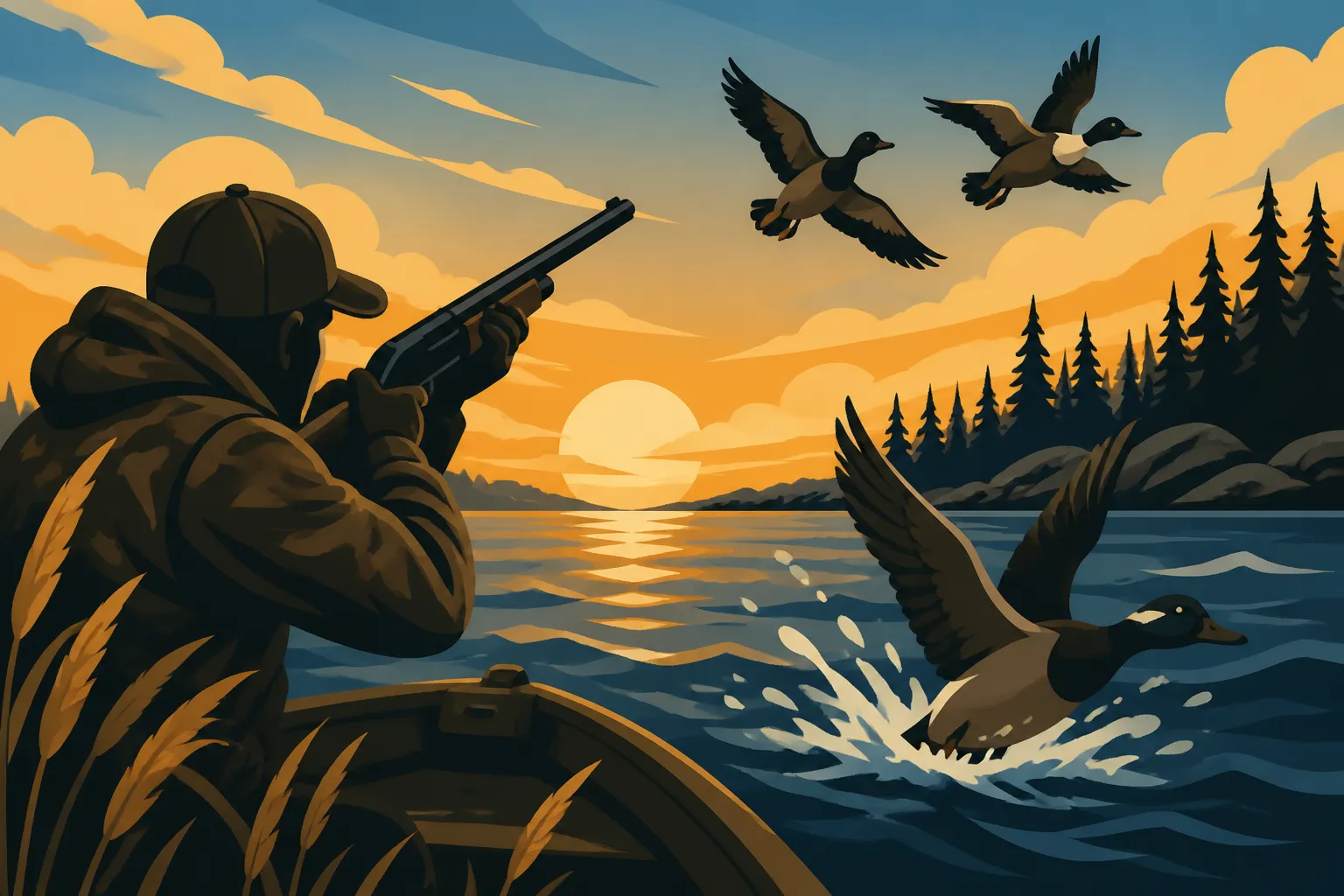
Diver ducks are a breed apart. Unlike dabblers that prefer shallow marshes and tip-up to feed, divers plunge deep, chasing baitfish and aquatic invertebrates. This feeding habit ties them to larger, deeper bodies of water, which is why we find them on Ontario’s Great Lakes and other significant inland lakes. Their flight is typically lower, faster, and more direct than dabblers, often in tight, powerful formations that make for exciting shooting opportunities.
Key Diver Species You'll Encounter
When you’re out on Ontario’s big water, you’ll primarily be targeting a few distinct species of diver ducks, each with its own characteristics. Knowing who you're looking for helps with identification, understanding their behaviour, and even setting up your spread effectively.
The most common and sought-after divers include Greater and Lesser Scaup (often called bluebills or broadbills), Canvasbacks, Redheads, and Ring-necked Ducks. Scaup are incredibly numerous, often traveling in massive rafts that can stretch for miles. They're fast, agile, and readily decoy. Canvasbacks, often hailed as the "king of ducks," are known for their sleek, wedge-shaped heads and powerful flight. They are prized for their beauty and table fare, and their presence usually indicates prime feeding grounds. Redheads are another beautiful bird, with a distinctive rusty red head and a high forehead. They often mix with scaup and canvasbacks. Ring-necked ducks, while technically divers, are often found in slightly shallower, more sheltered waters than the other big water species, making them a transition bird between dabblers and true open-water divers. Sometimes you'll also see Goldeneyes and Buffleheads, smaller divers that are equally challenging targets with their erratic flight.
Preferred Habitats and Migration Patterns
Diver ducks are intrinsically linked to vast expanses of water. They thrive in large lakes, bays, and open sections of rivers where they can find their preferred food sources. Think deep-water mussel beds, submerged aquatic vegetation, and abundant baitfish populations. On the Great Lakes, this means hunting vast open stretches, protected points, and sometimes the outer edges of large marshes. During migration, these birds use Ontario’s massive water bodies as vital staging areas, refueling stops on their long journeys south.
Their migration typically kicks off in the fall as the northern breeding grounds start to freeze, pushing them south. Early in the season, they might be found closer to shore or in larger bays, but as temperatures drop and hunting pressure increases, they’ll often move further out into the vastness of the Great Lakes. Understanding Ontario Duck Season Dates by District is crucial, as timing your hunt to coincide with major migration pushes can be the difference between an empty cooler and a memorable day. These ducks will follow predictable flyways, often hugging coastlines or crossing large bodies of water at specific points. Learning these routes through scouting and local knowledge is paramount to consistent success.
Reading the Big Water for Diver Sign
Reading the water and the sky for diver sign is a skill honed over many seasons, but there are definite indicators you can look for. Unlike deer sign on land, duck sign isn't left on the ground; it's in their movements, feeding patterns, and where they choose to rest.
One of the most obvious signs is seeing large rafts of ducks sitting on the water. Even from a distance, binoculars or a spotting scope can help you identify these congregations. Pay attention to how they behave: are they actively feeding, diving constantly, or just resting? Resting birds might indicate a safe loafing area, while active feeders suggest a current food source worth setting up on. Look for patterns in their flight paths – are they consistently rounding a certain point, crossing a particular channel, or flying low along a shoreline? These are potential travel corridors to intercept. High-flying flocks might just be passing through, but those low, determined groups often have a destination in mind. Use mapping tools like GoHunt to scout potential deep-water feeding zones marked by contours or historically productive areas. Also, observe other hunters if possible – sometimes seeing where they are not setting up can be as informative as seeing where they are!
Essential Gear for Big Water Diver Hunting
Big water hunting is a gear-intensive pursuit, and for good reason. Safety and success depend on having the right equipment that can withstand the elements and function reliably when you need it most. Skimping on quality here is not an option.
Decoy Spreads and Rigging Techniques
Decoys are your primary tool for attracting divers, and the sheer scale of big water means you need a substantial spread to get noticed. We’re not talking about a dozen or two; serious diver hunters often deploy hundreds of decoys.
For diver hunting, confidence in numbers is key. You'll want a large spread, often 100 to 300 decoys or more, to create the illusion of a massive, safe flock. Mix your species: a good base of scaup, with smaller groups of canvasbacks and redheads mixed in for realism. The pattern often involves a large blob or "U" shape, with an open landing zone directly in front of your blind or boat. Diver decoys are typically weighted for stability in choppy water and rigged with heavy line and keel weights to prevent tangles and ensure they ride correctly. Long lines are popular, where multiple decoys are clipped onto a single mainline, making deployment and retrieval more efficient. You might have several such lines, often 50-100 feet long, with a dozen decoys per line. Consider adding movement: a jerk cord or even specialized spinning wing decoys designed for water use can add crucial realism to your spread, especially on calm days. The goal is to make your spread look as natural and inviting as possible against the vast backdrop of the lake.
Boat and Motor Requirements for Safety and Efficiency
Your boat is arguably the most critical piece of equipment for big water diver hunting, directly impacting your safety and ability to access prime locations. This isn't a puddle jump in a jon boat; you need a vessel designed for serious conditions.
A sturdy, deep-V aluminum or fiberglass boat, typically 16 to 20 feet in length, is essential. Look for high sides, a wide beam for stability, and a robust hull that can handle waves. Many serious diver hunters prefer boats specifically designed for big water duck hunting, often with open floors for decoys and heavy-duty transom designs. Safety features like proper navigation lights, a powerful bilge pump, anchor systems with plenty of line, and a marine-band VHF radio are non-negotiable. Your motor needs to be powerful and reliable. A primary outboard with sufficient horsepower to safely get you to and from your hunting spot, even in adverse conditions, is crucial. Additionally, a reliable kicker motor is not just a luxury, it's a critical safety device. If your main motor fails miles offshore, that kicker motor could save your life. Brands like Lund and Alumacraft are popular choices for their robust construction and suitability for big water conditions. Remember to check all safety equipment regularly.
Shotguns, Ammunition, and Other Crucial Equipment
Beyond the boat and decoys, there’s a whole host of other gear you’ll need to ensure a successful and safe diver hunt.
A reliable 12-gauge shotgun is standard for waterfowl, capable of handling 3-inch or 3.5-inch magnum shells. Semi-automatics or pump actions are generally preferred for their quick follow-up shots. As for ammunition, non-toxic shot is legally required for all waterfowl hunting in Ontario. Steel shot is the most common and cost-effective, but bismuth or tungsten alloys offer better performance, especially at longer ranges, albeit at a higher cost. Use larger shot sizes like BB, BBB, or T for divers, given their robust build and fast flight. Choke selection typically ranges from Modified to Full or even Improved Modified, depending on your shooting style and the ranges you anticipate.
Don't forget personal safety gear: a properly fitting PFD (Personal Flotation Device) must be worn at all times, not just stored under a seat. Dress in layers with waterproof outer shells to combat the cold, wind, and spray that are common on big water. A good pair of waterproof binoculars will help you spot ducks at a distance. A robust decoy retriever pole is indispensable for fetching tangled lines or stragglers. Finally, make sure you have your The Federal Migratory Game Bird Permit and your provincial hunting license, along with your Outdoors Card. And for navigating the vast expanses, a reliable GPS unit or a mapping app like GoHunt on your phone, with downloaded offline maps, is absolutely essential.
Mastering Diver Hunting Techniques on Large Lakes
Diver hunting on big water requires more than just good gear; it demands a strategic approach, a keen understanding of duck behavior, and the ability to adapt to ever-changing conditions. It’s a game of patience and precision.
Scouting Strategies for Productive Diver Spots
Scouting for diver ducks isn't like scouting for deer in the woods. You're looking for different clues and covering much larger areas. This is where modern tools really shine.
Start your scouting by poring over topographical maps and satellite imagery. Look for deep-water points, submerged shoals, channels between islands, and the edges of large bays where divers might feed on mussels or submerged vegetation. Areas with consistent wind or current patterns that create natural convergences can also be hotspots. Using an app like GoHunt to mark potential waypoints and observe historical duck activity patterns can give you a significant advantage. Don't underestimate "road scouting" – driving along shorelines with good vantage points, equipped with powerful binoculars or a spotting scope, can reveal massive rafts of birds that indicate where divers are congregating. Once you've identified potential areas, a pre-hunt boat trip, ideally a day or two before your hunt, allows you to observe bird movements, identify actual feeding zones, and note any current or wind patterns. Pay close attention to When Divers Reach the Great Lakes in your area, as scouting before the main push will be less effective than right before or during the migration. Knowing where the "X" is on these big bodies of water makes all the difference.
Setting Up Your Spread for Optimal Results
Once you've found your spot, the real work begins: setting up a decoy spread that is both effective and efficient. This is where your heavy investment in decoys and rigging pays off.
The primary goal of your diver spread is to create a large, visible landing zone directly in front of your hide or boat. A common and highly effective setup is a "J" or "U" shaped spread. The long arm of the "J" extends downwind, acting as a funnel to guide ducks into the open pocket, which should be within easy shooting range (20-35 yards). The vast majority of your decoys will be in this main body. You can add a few "confidence decoys" (such as a pair of Canada geese or even some coots) slightly outside your main spread to suggest a safe haven. For species like Canvasbacks, placing a dedicated block of Can-decoys slightly upwind or downwind of your main diver blob can be very effective, as they often prefer to land with their own kind. Consider the wind and current: divers almost always land and take off into the wind. Your landing hole needs to be positioned so that incoming ducks fly directly into the wind, placing them right in your face. Make sure your lines are weighted heavily enough so decoys don't drift or tangle in choppy water.
Calling Techniques and In-Blind Strategies
Diver ducks are typically not as vocal as dabblers, but calling still plays a role, especially for pulling in high-flying flocks or birds that are hesitant to commit.
For scaup, a sharp, quick purr or "brrrr" can be effective, mimicking their chatter. Redheads have a distinctive "meow" call that can sometimes pull them in. Canvasbacks are generally less responsive to calling, but a soft chuckle or growl can sometimes seal the deal, especially if they're already working your spread. The key is to be subtle; loud, aggressive calling isn't usually necessary or effective for divers. The primary draw is almost always the visual spectacle of your large decoy spread. Once the birds are committed and working the decoys, the focus shifts to in-blind strategies. Minimize movement. Stay absolutely still until the moment you decide to shoot. Many hunters prefer to take birds that have fully committed and are "feet down" in the spread, ensuring ethical, close-range shots. Learn the flight patterns and speed of the birds, and practice your swing. Remember, divers are fast and often fly low to the water, requiring quick reactions and proper lead.
Safety Considerations for Hunting Ontario's Big Water
Hunting on large bodies of water, particularly the Great Lakes, presents unique challenges and inherent dangers that demand utmost respect and meticulous preparation. Safety isn't just a recommendation; it's a lifeline.
Navigating Changing Weather and Water Conditions
Ontario’s big water is notorious for its rapidly changing conditions. A calm morning can turn into a raging tempest in a matter of hours, often with little warning. This is perhaps the biggest danger a diver hunter faces.
Before you even launch, always, always check the marine weather forecast. And don't just check one source; cross-reference multiple reliable forecasts from Environment Canada, NOAA, or local marine weather stations. Pay attention to wind speed and direction, wave heights, and any special weather statements. If conditions are marginal or expected to deteriorate, it’s always better to err on the side of caution and stay home. Once on the water, continuously monitor the conditions. Keep an eye on the sky for rapidly forming clouds, watch the water for increasing chop, and feel for shifts in wind. Have a pre-planned escape route or a safe harbour identified. If conditions begin to worsen, pack up and head for shore immediately. Never push your luck; a few ducks are never worth risking your life. This consideration also extends to What a Hard Ontario Winter Culls on the ice; if you hunt late season, ice conditions must be factored in.
Cold Water Preparedness and Emergency Gear
Falling into cold water is a dire emergency, and understanding cold water immersion is crucial for survival. Even in the relatively "mild" fall, Ontario’s big lakes are dangerously cold.
Every person in the boat must wear a properly fitting PFD at all times. This isn't just a rule; it's what keeps you afloat and alive if you go overboard. Beyond PFDs, dressing in layers of synthetic or wool clothing (avoid cotton) is critical for insulation. A waterproof outer layer is a must. Consider investing in an immersion suit or dry suit for extreme cold water conditions, especially if you hunt late in the season. Essential emergency gear in your boat should include: a marine-band VHF radio (fully charged, in a waterproof bag), a powerful air horn or whistle, flares, a first-aid kit, a spare paddle, a bailing device, a throwing rope, a substantial anchor with plenty of rode, a fully charged cell phone in a waterproof case, and a robust knife. A high-quality GPS or chart plotter with up-to-date charts is vital for navigation, especially if fog rolls in or you need to find your way back in the dark.
Legal Requirements and Best Practices
Beyond general boating safety, there are specific legal requirements and best practices for hunting waterfowl on Ontario’s big water that all hunters must adhere to.
Ensure your boat is equipped with all required safety equipment as per Transport Canada regulations. This includes PFDs for everyone on board, a sound-signalling device, navigation lights if operating after sunset or before sunrise, and fire extinguishers if your boat has an inboard motor. You also need to have a valid Pleasure Craft Operator Card (PCOC) if you operate a powerboat. For hunting, your shotgun must be cased and unloaded when traveling to and from your hunting area, unless you are actively retrieving birds, and ammunition must be stored separately. Always be aware of your surroundings and any no-hunting zones or restricted areas. Maintaining a safe distance from other hunters, shorelines, and navigation channels is not just courteous, it's often legally required. Before you head out, review Non-Toxic Shot Requirements for Waterfowl and ensure your ammunition complies. Finally, always let someone know your hunting plan, including your intended location, departure time, and expected return time. This "float plan" is a simple yet effective safety measure.
Key Ontario Big Water Diver Hunting Locations
Ontario is blessed with an abundance of diverse waterways, offering incredible opportunities for diver hunting. Knowing where to focus your efforts can save you a lot of time and fuel.
The Great Lakes: Erie, Huron, and Ontario Hotspots
The Great Lakes are without a doubt the premier destination for big water diver hunting in Ontario. Their vastness and productive waters attract millions of migrating waterfowl.
Lake Erie is often considered a diver duck mecca. Its shallower depths compared to the other Great Lakes mean more abundant submerged aquatic vegetation and mussel beds, which divers absolutely feast on. The western basin of Lake Erie, particularly around Long Point and Rondeau Bay, is legendary for its concentrations of scaup, canvasbacks, and redheads. The vast marshes and bays act as staging grounds before birds push further out into the open lake. Areas near Point Pelee and the islands also hold incredible numbers of ducks. The shallow waters here mean divers often raft up closer to shore, making them more accessible than some other Great Lakes areas.
Lake Huron, especially its Georgian Bay and North Channel areas, also offers excellent diver hunting. While generally deeper, specific bays and protected inlets, particularly those with strong currents that keep some areas ice-free longer, can be hotspots. Look for points and shoals that attract birds. Saginaw Bay and areas around the Bruce Peninsula can hold strong numbers.
Lake Ontario, while deeper, still offers fantastic diver hunting, particularly in its eastern basin. The bays and river mouths, such as the Bay of Quinte and areas around Prince Edward County, provide crucial staging and feeding areas. Ducks often congregate near areas with strong current or deeper water access points. For instance, Where Canvasbacks Raft in Ontario often includes specific areas of these Great Lakes where conditions are ideal.
Other Notable Large Lakes and Rivers for Divers
While the Great Lakes steal the spotlight, Ontario has numerous other large inland lakes and wide rivers that host healthy populations of diver ducks. Don't overlook these hidden gems.
Big lakes in Central and Eastern Ontario, like Lake Simcoe, Lake Scugog, and sections of the Trent-Severn Waterway, can hold good numbers of divers, especially during the peak migration. These lakes often feature a mix of deeper open water and shallower, productive bays that appeal to various diver species. The large, wide sections of major rivers like the Ottawa River also attract divers, especially where there are significant current breaks, islands, or deeper pools. Hunting an Ontario River Valley can offer fantastic diver opportunities, often with less pressure than the Great Lakes. The key is to find those deeper sections with good food sources, away from heavy recreational traffic. Scouting is critical in these areas, as diver hot spots can shift year to year based on water levels and food availability.
Accessing and Navigating Prime Diver Territory
Accessing and navigating these large bodies of water requires careful planning and a robust understanding of the terrain.
Public boat launches are your primary access points. Always check the ramp conditions and ensure it's suitable for launching a large boat. Many prime diver spots might require a significant boat ride from the launch, so factor in travel time, fuel, and potential weather changes. Mapping software like GoHunt, with its detailed bathymetric charts, is invaluable for identifying safe travel lanes, avoiding hazards like shoals or submerged rocks, and finding those key underwater features where divers feed. Don't be afraid to travel to less accessible spots. Sometimes, the best diver hunting is found miles offshore or tucked away behind islands where many casual hunters won't venture. For instance, Hunting an Island on a Northern Lake might provide untouched diver action due to the effort required to reach it. Always be mindful of private land boundaries if you're hunting near shorelines, and respect any navigational markers or fishing nets.
Disclaimer
Hunting is an activity with inherent risks. This guide provides general information and recommendations. All hunters are responsible for understanding and complying with all applicable federal, provincial, and local hunting regulations, as well as boating safety laws. Always prioritize safety, exercise good judgment, and consider consulting with experienced local hunters or guides.