The Federal Migratory Game Bird Permit
For many hunters in Ontario, especially those just getting into the exciting world of waterfowl, the myriad of licenses and permits can feel like a confusing maze. You’ve got your provincial Outdoors Card, maybe a small game license, and then suddenly, you hear whispers of a "Federal Migratory Game Bird Permit." It's enough to make your head spin! But don't you worry, because this comprehensive guide is here to untangle all the ins and outs of this essential federal permit, ensuring you're fully prepared and legal for your next duck or goose hunt.
Understanding the Federal Migratory Game Bird Hunting Permit
When you’re gearing up to chase ducks and geese across Ontario’s marshes and stubble fields, it’s crucial to understand that these aren't just any game animals. Migratory game birds fall under a unique set of rules that involve both federal and provincial authorities. This dual layer of regulation is often where the confusion begins, but once you grasp the basics, it’s quite straightforward.
What Exactly is This Permit?
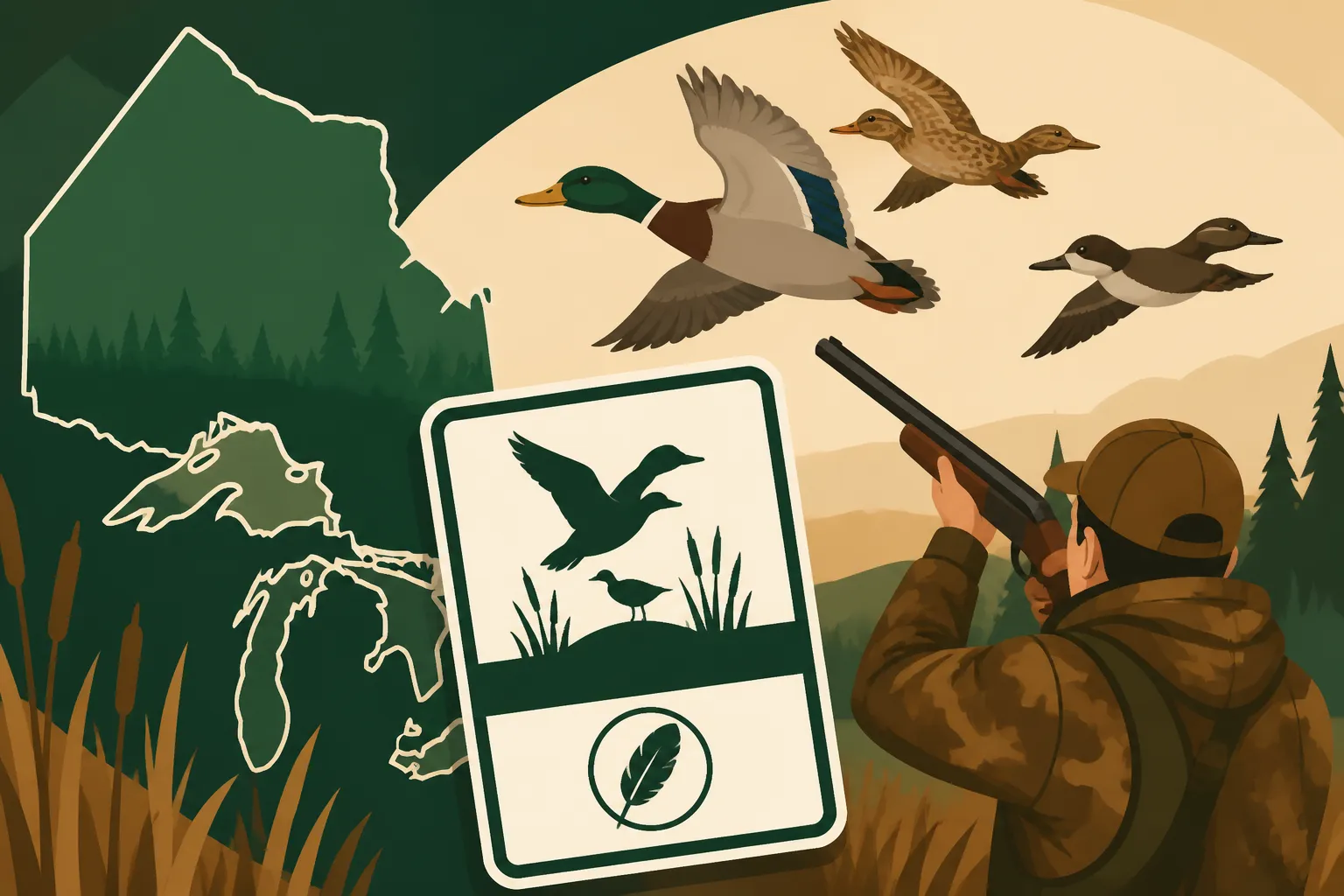
At its core, the Federal Migratory Game Bird Hunting Permit is a federal license issued by Environment and Climate Change Canada (ECCC). Unlike your standard provincial hunting license, which covers resident game like deer, moose, or grouse, this federal permit specifically targets migratory birds. Think of it as your golden ticket to legally pursue ducks, geese, coots, snipe, and woodcock anywhere in Canada where hunting is permitted. It's a testament to Canada's commitment to international conservation agreements, particularly the Migratory Birds Convention Act.
It’s important to stress that this permit is not a standalone document that lets you hunt. It works in conjunction with your provincial licenses. In Ontario, this means you must possess a valid Ontario's Outdoors Card Explained and an Ontario Small Game Licence in addition to your federal permit. Without all three, you’re not compliant, and trust me, conservation officers are well-versed in checking for every piece of paper. Missing one can lead to fines and even seizure of equipment, which is a headache no hunter wants.
Why is it Mandatory for Waterfowl Hunters?
The requirement for a federal permit stems from the Migratory Birds Convention Act, a treaty signed between Canada and the United States way back in 1916. This historic agreement recognized that migratory birds don't respect international borders and, therefore, require coordinated conservation efforts across their entire range. This act is the legal backbone that allows the federal government to regulate the hunting of these shared species.
The federal government, through ECCC, is responsible for the overall management and conservation of migratory bird populations throughout Canada. This includes setting hunting seasons, bag limits, and other regulations to ensure sustainable populations for generations to come. Your federal permit contributes directly to this mandate. Without it, there would be no consistent framework for managing these birds, leading to potential overharvest and decline, something no responsible hunter wants to see. It’s a collective effort, and your permit is a small but significant part of that larger conservation puzzle.
The Habitat Conservation Stamp: A Crucial Component
When you purchase your Federal Migratory Game Bird Hunting Permit, you'll notice it includes something called the Canadian Wildlife Habitat Conservation Stamp. Many hunters might view this as just another fee tacked onto their permit, but it's far more than that. This stamp is an integral part of Canada's waterfowl conservation strategy and is mandatory for all migratory bird hunters.
The funds generated from the sale of these stamps are dedicated exclusively to habitat conservation projects across Canada. These projects, often carried out in partnership with organizations like Ducks Unlimited Canada, focus on protecting, restoring, and enhancing wetlands and other crucial habitats that migratory birds rely on for breeding, staging, and wintering. So, every time you buy a permit with the stamp, you’re directly contributing to ensuring those ducks and geese have healthy places to live and breed, which in turn means better hunting opportunities for all of us down the line. It's a direct investment in the future of our cherished waterfowl resources.
How to Obtain Your Federal Migratory Game Bird Permit in Ontario
Getting your federal permit is relatively straightforward, but knowing the exact steps can save you time and frustration, especially when you're just days away from the Ontario Duck Season Dates by District opening. Don't leave it to the last minute!
Online Purchase Through the ECCC Portal
The easiest and most common way for hunters in Ontario (and indeed across Canada) to obtain their Federal Migratory Game Bird Hunting Permit is online through the Environment and Climate Change Canada (ECCC) website. This portal is designed to be user-friendly, guiding you through the process step-by-step. You'll typically navigate to the "Hunting and Trapping" section, then look for "Migratory Game Bird Hunting Permit."
Once you've completed the purchase, you'll receive a digital copy of your permit, usually via email. It's essential to print this permit and carry a physical copy with you whenever you are hunting migratory birds. While digital versions on your phone might seem convenient, a dead battery or a poor signal in remote areas means you can't present it to a conservation officer, which is a problem. Always have that hard copy tucked safely in your wallet or hunting vest. Planning your hunt, including checking Ontario Game Bird Seasons and Limits and specific WMU regulations, is something a tool like GoHunt can make incredibly easy, helping you ensure you're compliant before you even step foot in the marsh.
What Information You'll Need
Before you even log on to the ECCC portal, make sure you have all your necessary information at hand. This will make the process much smoother and prevent any frustrating delays. You'll primarily need your full legal name, current address, date of birth, and most importantly, your valid Outdoors Card number. This number is your unique identifier within Ontario’s hunting system and links your provincial eligibility to your federal permit.
Accuracy is paramount when filling out this information. Any discrepancies could lead to issues if you're ever checked by enforcement. Double-check all spellings and numbers before finalizing your purchase. Remember, this permit is a legal document, and mistakes can be costly. It's also worth noting that non-residents will need to ensure they meet Rules for Non-Residents Hunting Ontario requirements before applying for this federal permit.
Understanding the Cost and Validity
The cost of the Federal Migratory Game Bird Hunting Permit is generally quite affordable, typically in the range of $17-$20 CAD, which includes the mandatory Canadian Wildlife Habitat Conservation Stamp. This modest fee provides significant value, not just in terms of legal access to hunting migratory birds but also through its direct contribution to habitat conservation. It's a small price to pay for the privilege and responsibility of waterfowl hunting.
The permit is valid for a specific hunting season, usually from September 1st of one year to August 31st of the following year, regardless of when you purchase it. This means it expires annually, and you’ll need to purchase a new one each year you plan to hunt migratory birds. There’s no rolling renewal, so mark your calendar or set a reminder to get your new permit before When Ontario's Bow Season Runs kicks off if you’re planning an early archery waterfowl hunt. Always confirm the exact validity dates when you make your purchase, as regulations can sometimes see minor adjustments.
Key Regulations and Responsibilities for Permit Holders
Holding a Federal Migratory Game Bird Hunting Permit comes with important responsibilities. Beyond just having the permit, you need to understand and adhere to the regulations designed to protect these shared resources. This includes everything from how many birds you can harvest to the type of ammunition you use.
Bag Limits and Possession Limits
Understanding bag limits and possession limits is absolutely critical. A daily bag limit refers to the maximum number of birds of a certain species (or aggregate of species) you can harvest within a single day. For example, the daily bag limit for mallards might be six, while for Canada geese it could be eight, depending on your hunting zone and the time of the season. These limits are set by the federal government but can vary provincially and even by specific zones within Ontario, so always consult the Ontario Game Bird Seasons and Limits for your particular Wildlife Management Unit (WMU).
Possession limits, on the other hand, refer to the maximum number of migratory game birds that a hunter may have in their possession at any given time, whether in their home, vehicle, or freezer. This limit is often twice the daily bag limit but can vary. For instance, if the daily bag for mallards is six, the possession limit might be twelve. These limits are designed to prevent excessive stockpiling of harvested birds and to distribute hunting pressure more evenly across the population. Keeping track of your harvest is key to staying within these limits, and remember, these apply to all birds, fresh or frozen, until they are consumed.
Non-Toxic Shot Requirements
One of the most important regulations for waterfowl hunters in Ontario, mandated by the federal permit, is the requirement to use non-toxic shot. This rule has been in place for decades and is absolutely non-negotiable when hunting migratory game birds. You cannot, under any circumstances, use lead shot for ducks, geese, coots, or any other migratory game bird in Canada.
The reason for this regulation is simple: lead is a toxic heavy metal. When lead shot is deposited into wetlands, ponds, and fields, it can be ingested by birds, leading to lead poisoning. Waterfowl are particularly susceptible as they forage for grit and food in these areas. Non-toxic alternatives like steel, bismuth, or various tungsten alloys have been developed to mitigate this environmental and wildlife health risk. While some hunters initially found the transition challenging, modern non-toxic loads are highly effective. Always double-check your ammunition to ensure it’s clearly marked as non-toxic before heading out. Ignoring this rule is a serious offense, so make sure to review Non-Toxic Shot Requirements for Waterfowl before your hunt.
Carcass and Feather Identification Requirements
Another important federal regulation often overlooked by new waterfowl hunters relates to evidence of species and sex. When you harvest a migratory bird and are transporting it, especially back to your home or camp, you must ensure that at least one fully feathered wing or the head remains attached to the bird. This is crucial for identification purposes.
Conservation officers need to be able to confirm the species of bird and, in some cases, its sex, to ensure you haven't exceeded specific bag limits for certain species or violated any other regulations. For example, some species like canvasbacks or pintails might have lower daily bag limits than mallards, and an officer needs to be able to positively identify the bird. Once you're at your final destination, like your home, and are ready to process the bird for consumption or storage, you can then remove the wing or head. But until that point, keep it attached. This simple step helps law enforcement do their job and protects you from potential misunderstandings.
Hunting Hours and Methods
Federal regulations also dictate specific hunting hours for migratory game birds. Generally, hunting is permitted from one half-hour before sunrise to one half-hour after sunset. These times are critical for ethical hunting and for preventing dangerous low-light shooting situations. Always check a reliable sunrise/sunset table for your specific location on the day of your hunt. GoHunt, for instance, often integrates these times directly into their mapping tools, making planning your hunt much more convenient.
Beyond hours, federal rules also prohibit certain hunting methods and equipment. For migratory birds, this explicitly includes the use of bait (though "baiting" has specific definitions related to migratory birds and differs from bear baiting), live decoys, or electronic calls that imitate bird sounds. These restrictions are in place to ensure fair chase principles and prevent unsporting advantages that could lead to overharvest. Understanding these prohibitions is just as important as knowing what you can do, ensuring your hunt remains legal and ethical.
Why This Permit is More Than Just a Piece of Paper
It's easy to look at any permit or license as just another bureaucratic hurdle, another fee to pay. But with the Federal Migratory Game Bird Hunting Permit, the reality is that it's a vital tool, a cornerstone of conservation that benefits both the birds we pursue and the hunting community at large. It's a shared investment in a valuable resource.
Conservation and Funding Initiatives
As mentioned earlier, the funds generated from the sale of the permit and its integrated Habitat Conservation Stamp are not just absorbed into general government coffers. They are specifically earmarked for critical wetland conservation and habitat restoration projects across Canada. Organizations like Ducks Unlimited Canada are key partners in delivering these projects, working tirelessly on the ground to secure and improve the breeding, staging, and wintering grounds that migratory birds depend on.
Consider a project to restore a degraded wetland in southern Ontario, or to secure a crucial staging area for Geese That Stage in Ontario along the Great Lakes. These initiatives are expensive, requiring significant capital, scientific expertise, and boots-on-the-ground effort. Your permit fee directly fuels these efforts, creating healthier ecosystems not just for ducks and geese, but for countless other species that rely on these wetland habitats. It's a tangible way that hunters contribute directly to the health of the very ecosystems where they love to hunt, making you a vital part of the conservation solution.
Data Collection and Management
Another less visible but equally important aspect of the federal permit system is its role in data collection. When you purchase your permit, you're not just getting a piece of paper; you're also becoming part of a crucial data-gathering network. ECCC conducts annual surveys, such as the National Harvest Survey (NHS) and the Species Composition Survey (SCS). The NHS asks hunters about their hunting effort and success, while the SCS asks hunters to mail in a wing from each bird harvested.
The information gathered from these surveys provides biologists with vital data on harvest levels, hunter participation, and population trends for various migratory bird species. This data is indispensable for making informed management decisions, such as adjusting season dates, setting bag limits, and identifying populations that might need additional protection. Without this direct input from hunters, wildlife managers would be flying blind, unable to effectively conserve these species. When you use tools like GoHunt to track your harvest and contribute to these surveys, you're actively participating in the scientific management of Canada's migratory bird populations.
Ensuring Sustainable Hunting Practices
Ultimately, the entire federal permit system is designed to ensure that the hunting of migratory game birds remains sustainable. This means ensuring that current hunting levels do not negatively impact the long-term health and abundance of migratory bird populations. By regulating who can hunt, when they can hunt, how many birds they can take, and what equipment they can use, the system creates a controlled environment for responsible harvest.
Sustainable hunting is a cornerstone of wildlife conservation in North America. It recognizes that hunters are not just consumers of wildlife but are also its most ardent supporters and primary funders of conservation efforts. The Federal Migratory Game Bird Hunting Permit reinforces this principle, giving hunters a direct role and responsibility in the stewardship of these incredible creatures. It's about respecting the resource, adhering to the rules, and ensuring that future generations of hunters can experience the thrill of Marsh Hunting Ducks on the Great Lakes or calling in a flock of honkers to a Setting a Goose Spread in Cut Corn.
Key Elements of the Federal Migratory Game Bird Permit
Here's a quick overview of the essential components and requirements associated with the Federal Migratory Game Bird Hunting Permit:
| Element | Description | Requirement |
|---|---|---|
| Issuer | Environment and Climate Change Canada (ECCC) | Federal government |
| Purpose | Authorizes hunting of migratory game birds (ducks, geese, snipe, woodcock, coots, rails) | Mandatory for all migratory bird hunters in Canada |
| Cost | Modest annual fee (approx. $17-$20 CAD), includes Habitat Conservation Stamp | Purchase annually before hunting season |
| Validity | September 1st to August 31st of the following year | Valid for one hunting season only |
| Accompanying Licenses | Must be held in conjunction with a valid provincial Outdoors Card and Ontario Small Game Licence | Essential for legal hunting in Ontario |
| Habitat Conservation Stamp | Mandatory component, funds dedicated to wetland and habitat conservation | Integrated into the permit purchase |
| Ammunition | Non-toxic shot only (steel, bismuth, tungsten, etc.) | Legal requirement for all migratory bird hunting |
| Identification of Birds | At least one fully feathered wing or the head must remain attached to birds during transport | For species and sex verification by conservation officers |
| Bag & Possession Limits | Federally set, but can vary by province and specific hunting zones/WMUs. | Must be strictly adhered to; refer to annual regulations for details (e.g., Duck Daily Bag Limit by Species) |
| Hunting Hours | Generally one half-hour before sunrise to one half-hour after sunset | Check local sunrise/sunset tables daily |
| Prohibited Methods | Baiting (specific to migratory birds), live decoys, electronic calls | Ensures fair chase and prevents overharvest |
| Hunter Surveys | Participation in National Harvest Survey (NHS) and Species Composition Survey (SCS) | Voluntary but highly encouraged for conservation data |
Disclaimer
The information provided in this guide is intended for general informational purposes only and does not constitute legal advice. Hunting regulations, seasons, and licensing requirements in Ontario and federally can change. It is the sole responsibility of every hunter to consult the most current official regulations published by the Government of Ontario and Environment and Climate Change Canada before engaging in any hunting activities. Failure to do so may result in fines or other penalties.