Hunting a Drawn Ontario Elk Tag
Finally, after countless applications and what feels like an eternity of waiting, that email lands in your inbox: you've drawn an Ontario elk tag. It's an incredible feeling, a mix of pure excitement and perhaps a touch of trepidation. This isn't your everyday whitetail hunt; an Ontario elk tag is a rare opportunity, and making the most of it requires solid preparation, smart strategies, and a deep understanding of these majestic animals. This guide is designed to walk you through everything you need to know, from deciphering your tag to celebrating a successful harvest, ensuring you're ready for the hunt of a lifetime.
Understanding Your Ontario Elk Tag
Drawing an elk tag in Ontario is akin to winning a lottery for many hunters. It’s not an annual certainty, and the anticipation can build for years. This rarity is precisely why understanding every facet of your tag and the unique environment you'll be hunting in is paramount.
The Rarity of an Ontario Elk Tag
Let’s be honest, getting an Ontario elk tag feels like striking gold. For many, it's a once-in-a-lifetime opportunity, a testament to the dedication of conservation efforts and the limited, carefully managed populations of elk we have in the province. Unlike deer or bear tags that are widely available, elk tags are issued through a draw system, making them incredibly competitive. You might know friends who’ve been applying for decades without success, which really puts the significance of your drawn tag into perspective.
This rarity means that every moment of your hunt needs to be treated with respect and meticulous planning. You can't just casually hit the bush; this is an expedition that demands thorough research, scouting, and preparation. It's a privilege, and you owe it to the animal and yourself to be as prepared as humanly possible.
Where Ontario's Elk Herds Roam
While elk once roamed much of Ontario, today’s huntable populations are concentrated in specific areas, primarily the Bancroft-North Hastings area and parts of the Lake Huron North Shore. These herds are the result of extensive restoration efforts that began decades ago, bringing elk back to their historical range. Understanding the history of Ontario's Restored Elk Herd really helps appreciate their presence.
The Bancroft herd, for example, is well-established, thriving in a mosaic of agricultural lands, mature hardwoods, and swamps. The Lake Huron North Shore herd, while also growing, offers a different type of terrain, often characterized by more rugged Canadian Shield country. Each region presents its own unique challenges and opportunities, and knowing which herd area your tag covers is your first step in narrowing down your scouting efforts. Familiarizing yourself with the general characteristics of these areas will give you a significant advantage when you start diving into detailed maps.
Tag Specifics and Regulations
Your hard-won elk tag isn't just a piece of paper; it's a detailed document outlining precisely what you're permitted to harvest and when. It will specify the Wildlife Management Unit (WMU) you're allowed to hunt in, the sex of the animal (bull, cow, or calf), and the exact season dates. Ignoring these specifics is not an option and can lead to serious legal repercussions.
Before you even think about packing your hunting boots, sit down with the current Ontario Hunting Regulations Summary. Read it cover to cover, paying particular attention to the sections on elk. Double-check your WMU boundaries, understand legal hunting hours, and be absolutely clear on carcass tagging and reporting requirements. Regulations can change, and what was legal last year might not be this year. Being proactive here ensures your hunt is not only successful but also fully compliant with Ontario law.
Pre-Season Scouting and Preparation
Once that coveted tag is in hand, the real work begins. Successful elk hunting in Ontario isn't a walk in the park; it demands serious pre-season scouting and preparation. These animals are smart, they have incredible senses, and they know their home turf intimately. Your job is to learn it almost as well as they do.
Leveraging Technology for Initial Scouting
In today's hunting world, technology is your best friend when it comes to long-distance scouting. Before you ever set foot in the woods, spend hours poring over satellite imagery. Tools like Google Earth or dedicated hunting apps such as GoHunt allow you to zoom in on potential elk habitat from the comfort of your home. Look for patterns: clearcuts and regenerating forest provide browse and cover, old burns create prime forage in the years following, and the edges of mature timber offer security and travel corridors.
Pay close attention to water sources – creeks, ponds, swamps – especially during dry periods. Identify potential bedding areas on north-facing slopes or thick conifer stands, and feeding areas in open clearings or agricultural fields. Pinpoint access points like old logging roads, ATV trails, or even less obvious bush trails. These initial digital reconnaissance missions are crucial for narrowing down vast expanses of land into manageable scouting blocks. Think of it as your virtual boots-on-the-ground, helping you create a hit list of areas to investigate further. This systematic approach is a key part of Scouting With Satellite Imagery in Ontario.
Boots-on-the-Ground Reconnaissance
As invaluable as digital scouting is, nothing beats putting actual boot leather to the ground. Once you've identified promising areas on your maps, it's time to visit them. Ideally, you want to do this before the season opens, several times if possible, to get a true feel for the land and what the elk are doing. Look for elk sign: large tracks, especially those with dewclaws showing, indicating a heavier animal. Rubs on trees, often much higher and more substantial than deer rubs, are a clear indicator of bull activity. Wallows, muddy depressions where elk roll to cool off and deter insects, are also tell-tale signs.
Don't forget droppings; fresh piles can tell you how recently elk have been in an area. As you walk, pay attention to the terrain: natural funnels, pinch points between thick cover and open feeding areas, and subtle benches on hillsides where elk might travel. Understanding these nuances, the vegetation, and how the wind typically flows through the area will be critical when it comes time to hunt. It's about building a comprehensive mental map of the elk's world.
Understanding Elk Behavior Seasonally
Elk behavior isn't static; it changes dramatically throughout the hunting season, primarily driven by food availability, weather, and the rut. If your tag is for an early archery season, you'll likely be hunting pre-rut, when bulls are still bachelor-grouped and feeding heavily to build energy reserves. They might be in more open areas, focused on forage. As the season progresses into the peak rut, typically in late September and early October, bulls become vocal and territorial, focused on breeding. This is when calling can be highly effective.
Later in the season, as the rut winds down and colder weather sets in, elk will shift their focus back to feeding, often congregating in larger herds and seeking out secure cover, especially if hunting pressure is high. Understanding these shifts is crucial for developing an effective hunting strategy. A spot that's hot in early September might be devoid of elk in mid-October. Keeping an eye on local conditions, forage availability, and even weather patterns will help you predict where the elk are most likely to be.
Hunting Strategies for Ontario Elk
With your tag in hand and your scouting complete, it's time to think about how you'll actually hunt these magnificent animals. Ontario's diverse landscapes, from dense bush to more open agricultural fringes, offer a variety of challenges and opportunities, meaning a flexible approach is often the most successful.
Calling Tactics for Rutting Bulls
For many elk hunters, the bugle of a bull elk echoing through the autumn woods is the sound that defines the hunt. During the rut, typically from late September into early October, calling can be an incredibly effective strategy, especially if you're hunting an open-sex or bull tag. There’s a whole repertoire of calls you can use: a challenge bugle to entice a dominant bull, a cow call to sound like a lonely female, or a soft "mew" or "chirp" to pique a bull's curiosity.
The key is knowing when and how to use each call. Over-calling can make elk wary, while subtle, well-timed calls can bring a bull charging in. Learning to read the bull's response – whether he's raking a tree, bugling back defiantly, or simply circling downwind to get your scent – is crucial. Adapt your calling to the situation; sometimes a soft cow call is all it takes, other times a full-blown bugle sequence is warranted. While we often talk about Calling a Bull Moose in the Rut, many of the principles of reading animal responses and adjusting your calling apply equally to elk, which are also highly vocal during their breeding season. Practice your calls well before the hunt to ensure you sound convincing.
Still Hunting and Spot-and-Stalk
Sometimes, the woods are quiet, or the elk are simply not responding to calls. This is where still hunting and spot-and-stalk tactics shine. Still hunting involves moving incredibly slowly and deliberately through the elk's habitat, taking a few steps, then pausing for several minutes to observe, listen, and scan. Your eyes and ears become your primary tools. Look for flicking ears, the subtle sway of a branch, or a patch of hide through the trees. The goal is to move so stealthily that you blend into the environment, allowing you to catch elk unaware.
Spot-and-stalk, particularly effective in more open terrain or along logging cuts, involves using optics (binoculars or a spotting scope) from a high vantage point to locate elk, then planning a careful approach to get within shooting range. This requires reading the wind perfectly, using terrain features for cover, and moving quietly. It’s a game of chess with the animal, where patience and precision are your greatest assets. Always move into the wind, or at least across it, to prevent your scent from spooking the elk.
Ambush Hunting from Blinds or Stands
Another highly effective strategy, especially if you've done thorough scouting and identified key elk travel routes, feeding areas, or wallows, is ambush hunting from a blind or stand. Setting up a ground blind near a well-used water source or a pinch point between thick cover and an open field can be incredibly productive. These setups provide excellent concealment and can keep your scent contained.
If you prefer elevated positions, a treestand can offer a wider field of view and help your scent dissipate above the elk's nose. Consider placing your stand along a hardwood ridge for whitetails, but the same principles apply for elk on high ground. Remember to think about what the elk are doing. Are they moving between bedding and feeding? Are they coming to a wallow to cool off? Your setup should intercept their natural patterns. When considering where to place a stand or blind, the advice given for Hanging a Stand on an Ontario Bush Edge often translates well, emphasizing key travel corridors and wind direction. The key is to be in place well before first light or stay until dark, remaining absolutely still and quiet.
Essential Gear and Logistics for Your Elk Hunt
An Ontario elk hunt is a serious undertaking that can take you deep into rugged terrain. Being prepared with the right gear isn't just about comfort; it's about safety and increasing your chances of success. Don't skimp on essentials, and always pack for the unexpected.
Weaponry and Ammunition Considerations
Choosing the right weapon is a personal decision, but for elk, power and precision are paramount. For rifle hunters, legal calibers for big game in Ontario are typically .270 and up, with many opting for cartridges like the .30-06, .300 Win Mag, or 7mm Rem Mag for their flat trajectory and knockdown power. Make sure your rifle is sighted in perfectly, and practice shooting from various field positions, not just off a bench. Knowing your ethical range and sticking to it is crucial.
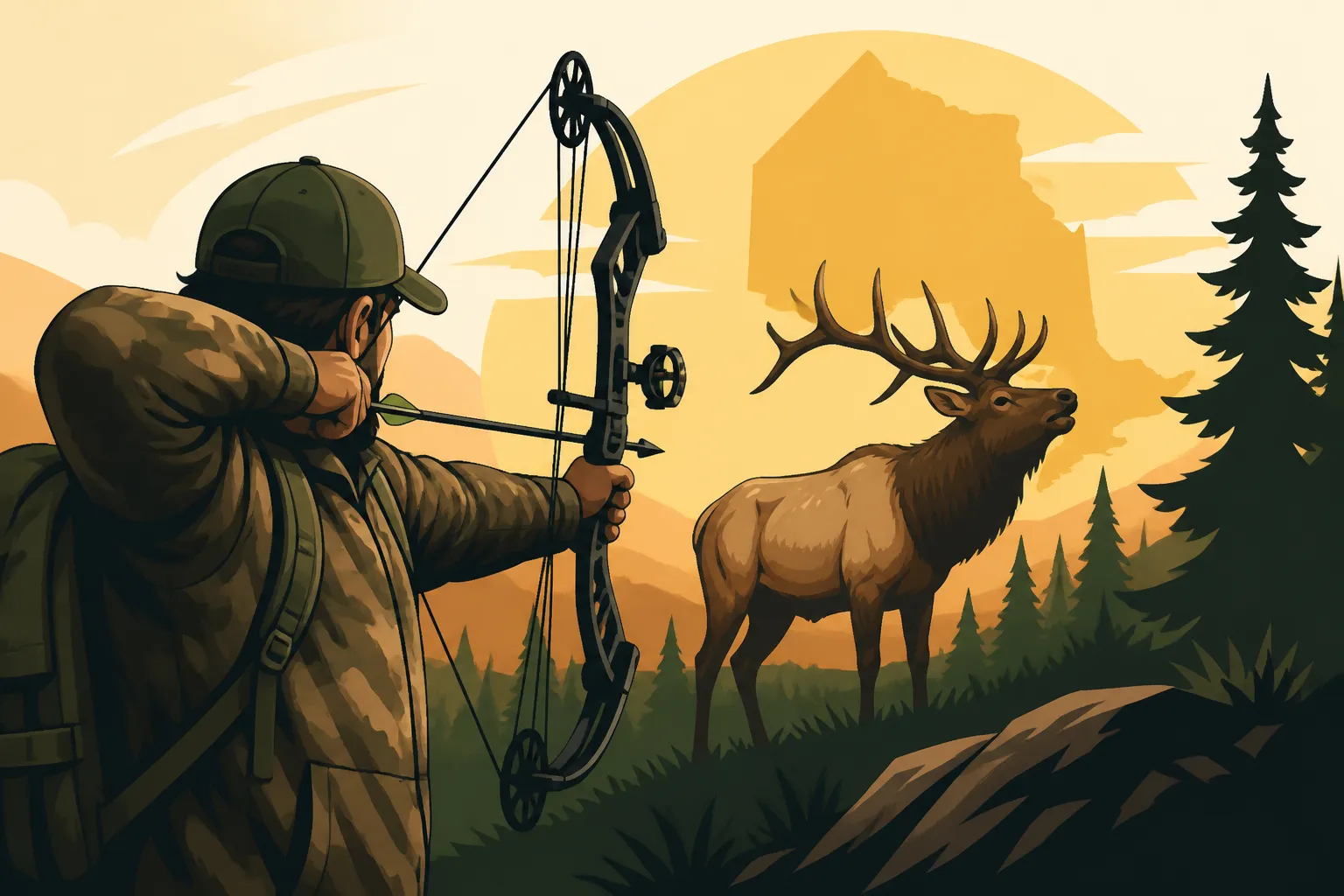
If you're a bowhunter, ensuring your equipment meets Ontario's draw weight and arrow minimums is a must. A minimum draw weight of 40 pounds for bows and 150 pounds for crossbows is standard, but always check the current regulations. Practice extensively with broadheads to ensure your setup delivers consistent accuracy. Whether rifle or bow, use premium ammunition or broadheads designed for large, tough-skinned game like elk. For a comprehensive overview, look into Legal Firearms and Bows for Big Game.
Navigation and Communication in the Bush
Ontario's elk country can be vast and unforgiving, and getting turned around is a very real possibility, especially in dense bush. A reliable GPS device, whether a dedicated unit or a smartphone app, is non-negotiable. Load it with detailed topographical maps, including Crown Land layers, and mark all your access points, scouting locations, and potential escape routes. Always carry a physical map and compass as a backup, and know how to use them.
Cell service can be spotty to non-existent in many prime elk hunting areas. If you're heading into remote territory, a satellite messenger or satellite phone is a critical safety tool. Devices like the Garmin inReach allow you to send emergency messages and your location even when out of cell range. Remember, What Ontario Cell Coverage Ends in a hurry once you leave main highways. Always inform someone of your hunting plan, including your expected return time and exact hunting location.
Packing for Success and Survival
Elk hunting is physically demanding. You’ll be covering a lot of ground, often up and down hills, in potentially challenging weather. Layered clothing is key, allowing you to adapt to fluctuating temperatures from crisp mornings to warmer afternoons. Choose moisture-wicking base layers, insulating mid-layers, and a waterproof/windproof outer shell. Comfortable, broken-in hunting boots with good ankle support are essential.
Your pack should contain all the essentials for a day in the woods, and then some: a robust first-aid kit, plenty of water or a water filter, high-energy snacks, a sharp knife, game bags for meat, a headlamp, fire-starting materials, and emergency shelter. Consider carrying a lightweight tarp and rope for emergency shelter. The physical demands of an elk hunt mean you should start a conditioning program well before the season. The more fit you are, the more enjoyable and effective your hunt will be.
Post-Harvest: Meat Care and Reporting
Congratulations, you've harvested an Ontario elk! This is the culmination of all your hard work, but the job isn't over. Proper post-harvest care is crucial for ensuring the meat is fit for consumption and that you comply with all provincial regulations.
Field Dressing and Quartering in the Field
An elk is a large animal, much bigger than most deer, and getting it out of the bush often requires quartering it in the field. Speed is of the essence to start the cooling process. Immediately after the shot, focus on getting to the animal safely and confirming it’s expired. Then, get it field dressed as quickly as possible. Remove the internal organs to allow the body cavity to cool.
If you're miles from a road, you'll need to quarter the animal. This involves breaking it down into manageable sections: typically, the four quarters, the backstraps, and the tenderloins. Removing the hide at this stage can also aid in cooling. Having a good, sharp knife, a bone saw (or a reciprocating saw if you have a portable power source and proximity to an ATV), and sturdy game bags are indispensable. The process is similar to Quartering a Moose Alone in the Bush, just on a slightly smaller scale. Work cleanly, keep the meat off the ground, and try to keep it as free of hair and debris as possible.
Cooling and Transporting Your Harvest
Once quartered, the most critical step is rapid cooling, especially if you're hunting in the early season when temperatures can still be quite warm. Meat spoils quickly if not cooled properly. Hang the quarters in game bags in a shady, airy spot to allow air circulation. If you're staying in camp for a few days, having coolers packed with ice is vital for keeping the meat cold until you can get it to a processor or your home freezer.
For transport, ensure your vehicle is equipped to handle the weight and bulk of an elk. Large coolers, tarps, and plenty of ice will be needed. If you're using a local meat processor, arrange this beforehand so you can deliver the meat immediately upon leaving the bush. Failing to properly cool and transport your meat is a tragedy, wasting a precious resource and disrespecting the animal. Remember the importance of Meat Care in Ontario's Warm Early Seasons – planning for this before you even pull the trigger is key.
Mandatory Reporting and Trophy Care
Ontario has mandatory harvest reporting for elk, just like many other big game species. After you’ve successfully harvested your elk, you are legally obligated to report it to the Ministry of Natural Resources and Forestry (MNRF) within a specific timeframe. This is often done online through the Fish and Wildlife Licensing Service or by calling the reporting line. Reporting accurately provides valuable data that helps the MNRF manage elk populations and set future tag allocations. This responsibility is covered under Reporting Your Ontario Harvest.
If you've harvested a trophy bull and plan to have it mounted, proper caping and skull preparation are essential. Learn how to cape the animal for a shoulder mount or European mount beforehand, or contact a taxidermist immediately after the harvest for guidance. Protecting the antlers during transport is also important to prevent damage. Remember, this is a once-in-a-lifetime memory; taking the extra steps to preserve it properly is well worth the effort.
| Elk Sign | What It Indicates | Best Time to Look |
|---|---|---|
| Tracks | Recent elk presence, size can indicate bull/cow | Soft ground, mud, snow, riverbanks |
| Droppings | Recent activity, diet (firm/loose) | Feeding areas, travel corridors, bedding sites |
| Rubs | Bull activity, marking territory (higher than deer) | Rutting season (late Sep – Oct), dense timber |
| Wallows | Elk cooling off, deterring bugs, rutting activity | Warm weather, rutting season, near water sources |
| Beds | Resting areas, often in thick cover | Afternoons, cooler parts of day, security cover |
| Trails | Regular travel routes between feeding, bedding, water | Anytime, especially distinct trails |
| Bugles/Calls | Bull presence, dominance, cow location | Rutting season, early morning, late evening |
| Scrapes | Less common than deer, but can indicate bull presence | Rutting season, near rubs or bedding areas |
Disclaimer
The information provided in this guide is for general informational purposes only and is not intended as legal advice. Hunting regulations in Ontario can change, and it is the hunter's responsibility to consult the most current Ontario Hunting Regulations Summary published by the Ministry of Natural Resources and Forestry (MNRF) before participating in any hunting activity. Always prioritize safety, ethical hunting practices, and respect for wildlife and the environment.