Field Hunting Geese in Ontario Stubble
Hunting Canada geese in vast Ontario stubble fields can feel like trying to outsmart a seasoned general on their home turf. These birds are incredibly intelligent, wary, and often highly pressured, making it tough to get them into decoy range. But with the right strategy, rooted in diligent scouting and precise execution, you can consistently put geese on the ground. This guide will walk you through everything you need to know to transform challenging field hunts into successful outings across Ontario's agricultural heartland.
Understanding Ontario Geese and Their Habits
Before you even think about setting out a single decoy, you need to understand the quarry you're pursuing. Canada geese in Ontario's stubble fields are a different beast than the small family groups you might jump on a pond. These are often large flocks, sometimes thousands strong, that have seen every trick in the book.
The Canada Goose in Ontario's Agricultural Belt
Ontario's agricultural regions, particularly in the south and east, are a magnet for Canada geese. They thrive on the abundant waste grain left behind after harvest. We're talking corn, soybeans, winter wheat, and even barley or oat stubble. These aren't just transient birds; many are resident populations that breed here, while others are migrating through on their journey along the Atlantic and Mississippi Flyways. The sheer number of birds can be staggering, but don't let that fool you into thinking it's easy pickings. They quickly learn to associate hunters with danger, making them incredibly difficult to fool unless you've done your homework. Their large size, keen eyesight, and social nature mean they constantly communicate and are quick to spot anything out of place.
Migration Patterns and Local Populations
Ontario sees a fascinating mix of geese. We have significant resident populations that spend their entire lives within the province, breeding and feeding in the same general areas. Then, as fall progresses, we get waves of migratory geese pushing south from the Boreal Forest and further north. These migratory birds can be slightly less wary initially, having encountered less pressure, but they learn fast. Understanding if you're dealing with local birds or fresh migrants can influence your calling style and decoy spread. For instance, local birds might be more accustomed to specific calling rhythms, while new arrivals might respond better to more aggressive, "come on in" calls. The peak migration periods can offer some of the most exciting hunting opportunities, with sheer numbers of birds moving through, but they also mean more hunters are out, increasing the pressure. Tracking weather patterns and recent harvest reports can give you clues about when these big pushes are happening, as severe cold fronts up north often mean new birds heading our way.
Preferred Field Types and Feeding Behavior
Geese are opportunists, but they definitely have preferences. They gravitate towards fields with easily accessible, high-energy food sources. Cut corn fields are often a top choice, offering scattered kernels that are quickly hoarded. Soybean fields after harvest can also be golden, especially if there was a problem with the combine and a lot of beans hit the ground. Winter wheat fields, particularly if they're freshly seeded, offer tender green shoots that geese adore, acting like a salad bar. They generally prefer larger, open fields where they have clear sightlines, making them feel safe from predators. You'll rarely see a large flock commit to a small, treed-in bush lot unless they've been severely pressured elsewhere. Their feeding behavior is methodical; they'll often land on one edge of a field and systematically work their way across, leaving behind droppings and trampled areas. This behavior leaves critical clues for you during scouting, showing exactly where they want to be.
Scouting is Your #1 Priority
I cannot stress this enough: scouting is the absolute bedrock of successful field hunting for geese. Without it, you're essentially just guessing, and geese are far too smart for guesswork. You need to find "the X" – that specific spot in a field where geese want to be.
The Art of Reconnaissance: Finding the X
Finding the X isn't about driving around for five minutes; it's a dedicated mission. This means spending hours, sometimes days, observing fields from a distance. Get yourself a good pair of binoculars or a spotting scope, find a vantage point where you won't spook the birds (a distant hillside, an intersecting road, or even a neighbour's driveway with permission), and watch. Don't just look for geese in a field; look for patterns. What time do they arrive? Where do they land first? Which direction do they approach from? How do they spread out as they feed? Are they flying out to water, or are they just moving from one field to another? Pay attention to the wind direction when they land, as this will be crucial for your decoy spread. A valuable tool like GoHunt can help you scout from home with satellite imagery, identifying potential fields and access points before you even hit the road. When you finally locate a field with consistent goose activity, resist the urge to drive right up to it. Park far away and approach on foot if necessary, always staying out of sight. Remember, if you bump the birds, they might not come back.
Reading Goose Sign and Field Selection
Once you've identified potential fields, it's time to get a closer look – but only after the geese have left for the day or are definitely not returning. Fresh droppings are your best friend. They tell you exactly where the birds have been feeding most recently. If the droppings are still moist and shiny, you're hot. If they're dry and chalky, the activity was from days ago. Look for trampled vegetation, particularly in cut corn or soybean fields, where they've really churned up the ground. Feathers can also be a good indicator, but droppings are more reliable for pinpointing current activity. Beyond the obvious sign, consider the surrounding topography. Are there power lines they might be avoiding? Are there tall trees that would obstruct their landing approach? Look for the high points in a field where geese might rest and scan for danger. When selecting the field, prioritize those with fresh, heavy feeding sign. The goal is to set up where they were and make them think their friends are still there. If you're looking for prime locations, you might want to delve into strategies for Hunting Canada Geese on Ontario Farmland, as these areas are often goose hotspots.
Timing Your Scouts for Success
Timing is everything in scouting. Ideally, you want to scout in the late afternoon or evening, as geese often finish their day's feed around dusk before heading to a roosting site on water. This gives you the most current information for the next morning's hunt. Watching them leave a field will tell you their preferred flight lines. If possible, a quick drive-by first thing in the morning the day of your hunt can confirm they returned to that field. However, don't risk spooking them. If you spot them, back off immediately. For those planning their hunting seasons, knowing Ontario Goose Season Dates by District is critical, as prime scouting times will align with open seasons. Remember, geese can change fields daily, especially if they're pressured or food sources dwindle, so recent intelligence is paramount. A good rule of thumb is to have at least two or three "backup" fields scouted, just in case your primary spot is empty or someone else got there first. It’s also wise to track local harvest schedules. A freshly cut corn field, for example, will attract geese almost immediately.
Essential Gear for Stubble Field Success
Having the right gear isn't just about comfort; it's about deception and efficiency. From decoys to calls to your blind, every piece plays a crucial role in convincing wary geese to drop into your spread.
Decoy Spreads: Realism and Numbers
When it comes to field hunting, your decoys are your primary drawing power. Forget those cheap, shiny plastic shells; modern geese have seen it all. You need realism. Full-body decoys are king, especially those with flocked heads and natural paint schemes that don't shine in the sun. Silhouettes can work too, especially in larger spreads to create the illusion of numbers, but they should be high-quality and strategically placed. Combining full bodies and silhouettes can offer a cost-effective way to build a large, realistic spread. The number of decoys you need depends on the pressure the birds are under and the size of the flocks you're targeting. For large migratory flocks, a spread of 50-100+ decoys might be necessary to make an impact. For smaller, less pressured local birds, 2-3 dozen good full bodies might suffice. You're trying to replicate a relaxed, feeding flock. Pay attention to variety: feeding postures, sentry heads, and even a few resters. When creating your spread, consider checking out guides on Setting a Goose Spread in Cut Corn for specific layout tips.
A crucial consideration for goose decoys is transport and setup time. Full-body decoys take up a lot of space and can be heavy, especially if you're hiking into a field. Investing in good decoy bags or trailers can save you a lot of hassle. Some hunters even use large, flexible plastic goose socks, which offer high numbers in a small footprint, though they lack the full-body realism. The key is to make whatever you put out look as natural as possible. Don't mix species in a field hunt unless you're confident that particular field is being used by both (e.g., a few duck decoys on a pothole edge in the field), as it can sometimes spook wary geese.
Blinds and Concealment: Becoming Invisible
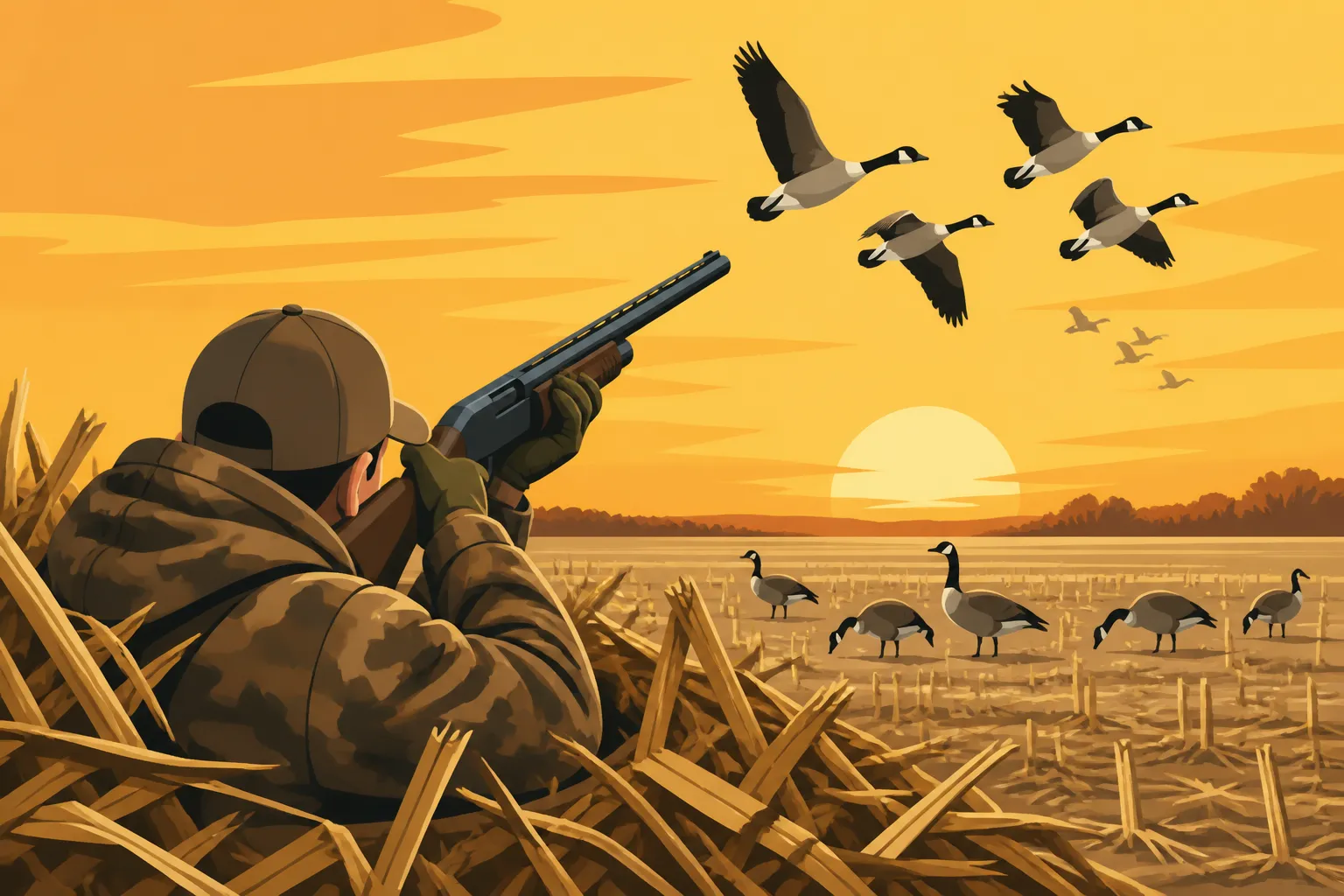
Geese have incredible eyesight, and if they spot anything out of place, they're gone. Good concealment is non-negotiable. Layout blinds are the gold standard for field hunting. They allow you to lie prone, hidden within the stubble, and spring up when the birds are in range. Look for blinds that are low-profile, comfortable for long waits, and easy to brush in. Brushing in your blind is absolutely critical. Use natural vegetation from the field itself – corn stalks, soybean stubble, dry grass – to break up the outline of the blind. Don't just throw a few stalks on top; make it look like a natural part of the field. Many hunters use a base layer of artificial stubble straps on their blinds, then add natural material on top. The goal is to make your blind disappear from a goose's aerial perspective. For larger groups, A-frame or panel blinds can work, but they are harder to conceal and require even more brushing.
Whatever blind type you choose, ensure it's comfortable. You might be spending hours lying motionless in potentially cold, wet conditions. Good padding, waterproof bottoms, and adequate space are important. Another key factor is minimizing shine. Any reflective surfaces on your blind, gun, or even face can flair birds. Wear dark, matte clothing and consider face paint or a face mask. Remember to keep your head down and only peek up when the geese are committed. Even a subtle head movement can be enough to send a wary flock spiraling out of range. Your blind's position in the spread is also important, typically just below the main landing zone.
Calls and Calling Strategies
A good call and knowing how to use it is like adding another hunter to your spread. While decoys bring them close, calling often seals the deal, giving the geese the confidence to commit. There are many different types of goose calls, from short-reed calls (which are popular for their versatility and realism) to flute calls (which are great for carrying sound over long distances). Start with a quality short-reed call from a reputable brand like Zink or Foiles. Learning to call takes practice, and I mean a lot of practice. You need to master the basic honk, the cluck, the moan, and the much-needed "comeback call" for those birds that start to peel off. Listen to real geese, watch instructional videos, and practice consistently.
Your calling strategy should adapt to the birds' behavior. If they're distant, start with some loud, drawn-out honks to get their attention. As they get closer, transition to softer clucks and moans, mimicking a contented feeding flock. If they hesitate or start to drift, a sharp, urgent "comeback call" can sometimes pull them back. The biggest mistake callers make is overcalling. If the geese are locked up and coming, put the call down. Let the decoys do their work. It’s also crucial to coordinate your calling if you’re hunting with a group. One lead caller is usually best, with others adding subtle clucks or moans to create a realistic conversation. Understanding when to be aggressive and when to be quiet is a learned skill that comes with experience.
Setting Up for the Perfect Field Hunt
Once you've scouted your spot and gathered your gear, the real work begins before dawn. Proper setup is paramount; a brilliant scouted location can be ruined by a sloppy decoy spread or visible blinds.
Decoy Placement and Wind Considerations
The wind is your best friend or your worst enemy in field hunting. Geese always land and take off into the wind. This is a non-negotiable biological fact you must exploit. Your decoys should be set up so that geese will approach them into the wind, ideally positioning themselves over your blinds. A classic spread is the "J-hook" or "U-shape," with the opening of the J or U facing into the wind. Your blinds are typically placed at the bottom of the J or inside the curve of the U, where the geese will naturally want to land.
Beyond wind direction, consider density. Create "family groups" of 3-5 decoys clustered together, with some space between groups. This looks natural. Avoid straight lines or perfect circles. Leave a clear "landing zone" directly in front of your blinds – an open area free of decoys where geese can comfortably set their wings. For larger spreads, you might have some "blocker" decoys further out to guide the birds into your landing zone. Mixing up feeding, resting, and sentry positions adds realism. For more in-depth advice on this, a guide on Setting a Goose Spread in Cut Corn is highly recommended. Make sure all decoys are facing into the wind for a natural appearance. Even a single decoy facing the wrong way can stand out to sharp-eyed geese.
Blind Setup and Hunter Positioning
As mentioned, proper blind concealment is key. Set up your layout blinds or A-frames before you deploy decoys if possible, especially in low light. This minimizes movement near the final setup area. Position your blinds at the "kill hole" – the sweet spot where geese will be directly overhead or slightly in front of you. This is typically 20-30 yards from the nearest decoys in the landing zone. Ensure you have clear shooting lanes. There’s nothing worse than having geese perfectly commit only to realize a decoy or a clump of stubble is blocking your swing.
For layout blinds, dig them in slightly if the ground allows, or pile stubble around the edges to truly blend them into the terrain. Ensure the blind doors open freely and quietly. Hunter positioning within the blind is also crucial. You need to be able to comfortably sit or lie, then quickly and smoothly rise into a shooting position. Practice this at home in your blind before the hunt. For ethical reasons and safety, communicate with your hunting partners about shooting zones and who will take which birds. In a typical layout blind setup, hunters will cover different sectors of the incoming birds.
Safety and Spacing in the Field
Safety is always paramount. Before the hunt, have a clear safety brief with everyone in your party. Establish shooting lanes, boundaries, and a safe firing zone. Never shoot at low-flying birds over other hunters or populated areas. Always be aware of your surroundings, including farm buildings, livestock, and roads. When setting up, ensure enough space between hunters for safe swinging and shooting. Layout blinds should be placed far enough apart that a hunter's gun barrel won't accidentally cross into another's space when rising to shoot.
Shotguns loaded with non-toxic shot are required for all migratory bird hunting in Ontario. For more information, check out Non-Toxic Shot Requirements for Waterfowl. Ensure your gun is in good working order and you've patterned it with your chosen load. Carry extra shells, but always handle firearms responsibly. When setting up in the dark, move slowly and deliberately. Use headlamps sparingly and direct the beam down. Once in the blinds, keep noise and movement to an absolute minimum. A rustling snack bag or an ill-timed conversation can ruin an hour of careful setup in seconds.
Executing the Hunt: From Flight to Finish
All the scouting and meticulous setup culminate in those thrilling moments when geese appear on the horizon. Execution is about patience, proper calling, and decisive shooting.
Calling Geese into Range
As geese appear, your calling team springs into action. Start with soft, inviting calls when they're distant, mimicking the contented chatter of a feeding flock. As they get closer, read their body language. Are they looking your way? Are they circling? Are they flaring? Adjust your calling accordingly. If they seem interested but hesitant, increase the intensity slightly, perhaps with a more urgent series of clucks and honks. If they're locked up with their wings cupped, coming right in, scale back the calling. Let the decoys do the heavy lifting at that point. Overcalling a committed flock is a common mistake that can spook them.
Remember, the goal isn't just to get them to land; it's to get them to land in your kill hole. Use your calls to guide them. If they're drifting wide, call aggressively from the side you want them to turn towards. If they're too high, use a loud, pleading "come back" call. Experience is the best teacher here, but practice beforehand is invaluable. Being able to execute a good sequence of calls, from greeting to contented feeding to urgency, makes a huge difference.
Shot Selection and Follow-Through
Once the geese are overhead and committed to the landing zone, it’s crucial to wait for the right moment. The classic command is "Take 'em!" or "Kill 'em!" from the lead caller or senior hunter. This signal is critical for safety and maximizing effectiveness. You want birds low enough, with wings cupped and feet down, within your effective shooting range (typically 25-45 yards). Resist the urge to jump up too early; let them get close. When you do rise, do so quickly and smoothly, mounting your gun to your shoulder.
Focus on a single bird, pick it out, and swing through it, firing as you pass. Don't stop your swing! Follow-through is essential for consistent hits on these large, fast-moving targets. If you drop a bird, immediately shift your attention to another if you have shells left and other targets are present. Many hunters make the mistake of watching their downed bird instead of finishing their volley. Different Duck Daily Bag Limit by Species exist, but generally for geese, you'll want to focus on clean kills and efficient shooting. For those seeking additional tips on waterfowl, information on Waterfowl Hunting Across Ontario often covers these critical aspects.
Retrieving Birds and Post-Hunt Etiquette
After the shooting stops, secure your gun and safely exit your blind. A good retriever dog is an invaluable asset for field hunting, saving you time and effort and ensuring minimal lost birds. If you don't have a dog, mark where each bird falls and retrieve them systematically. A wounded bird should always be dispatched quickly and humanely.
Once all birds are retrieved, take a moment to admire your harvest. This is the reward for all your hard work. After you've taken pictures or celebrated, quickly get the birds picked up and your decoys and blinds packed away. If geese continue to fly over, you might consider leaving a small "clean-up" spread of a few decoys and staying hidden for a bit longer. Before leaving the field, ensure you've picked up all your shells, trash, and equipment. Leave the field cleaner than you found it. This respects the landowner, the environment, and the hunting tradition. It’s also good practice to report your harvest, as Reporting Your Ontario Harvest helps wildlife management agencies track populations and make informed decisions about future seasons.
Disclaimer
Hunting is an activity that carries inherent risks. Always prioritize safety, understand and follow all local, provincial, and federal hunting regulations. Consult the official Ontario hunting regulations summary for the most up-to-date information on seasons, limits, and licensing requirements. Ensure you have the proper licenses and permits, including the Federal Migratory Game Bird Permit and The Habitat Conservation Stamp Requirement. This guide is for informational purposes only and should not replace professional instruction or official government resources.