Hunting a Swamp Edge for Whitetails
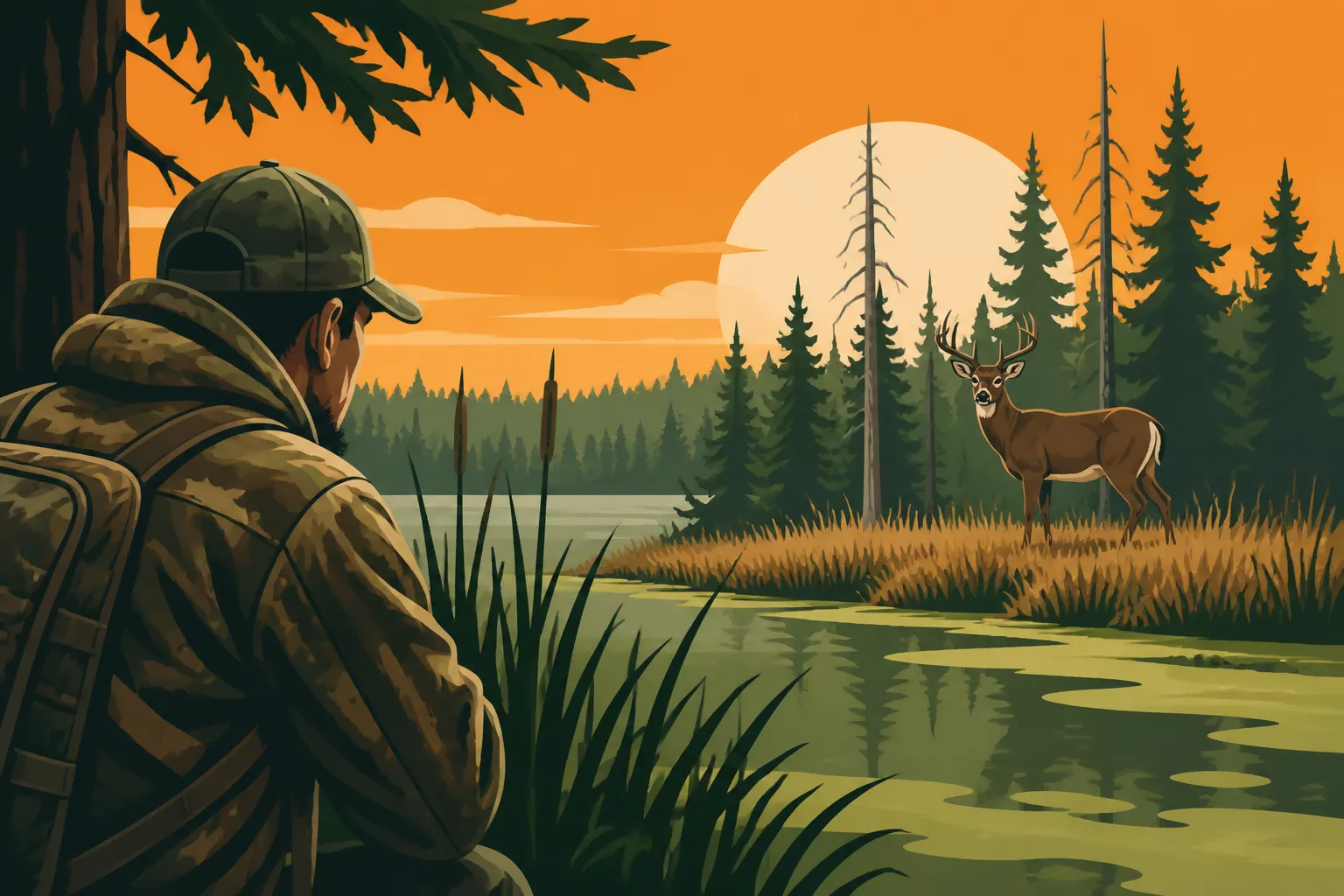
Hunting whitetails can often feel like a game of hide-and-seek, especially when those wily deer seem to vanish into thin air. Many hunters overlook the true potential of swamp edges, a seemingly impenetrable habitat that actually acts as a magnet for deer seeking food, water, and most importantly, security. This guide will take a deep dive into understanding why these often-dreaded areas are whitetail hotspots and how you can effectively hunt them in Ontario.
Why Swamp Edges are Whitetail Havens in Ontario
Let's be real, trudging through a swamp is rarely anyone's first choice for a pleasant walk in the woods. But for a whitetail deer, a swamp edge offers everything they need to survive and thrive, often with minimal human disturbance. It's a sanctuary, a pantry, and a nursery all rolled into one, making it an incredibly productive area if you know what to look for and how to approach it.
Unparalleled Cover and Security
Think about it from a deer's perspective: a dense, often wet, and difficult-to-navigate swamp provides an almost impenetrable fortress against predators, including us hunters. The thick vegetation, ranging from cedar and spruce stands to alders, cattails, and dogwood, creates incredible visual and scent cover. Deer can bed down in these areas feeling incredibly secure, knowing that anything approaching will have a tough time getting through quietly or unseen. This is especially true during hunting season when pressure from other hunters drives deer into the thickest, nastiest cover they can find. If you've ever wondered where those big, mature bucks disappear to once the season starts, chances are they're tucked deep into the local swamp system, only venturing out under the cloak of darkness or during the rut.
Moreover, swamp edges often border more open habitats like agricultural fields or hardwood ridges, acting as a natural transition zone. Deer can utilize the dense cover of the swamp for bedding during the day and then slip out to feed in the more open areas during low light. This strategic positioning makes these edges prime locations for intercepting deer moving between bedding and feeding areas. Understanding this movement pattern is critical to successful hunting.
Abundant Food and Water Sources
Swamps aren't just about cover; they're also a buffet for whitetails. The varied vegetation in and around a swamp edge provides a diverse diet. Red-osier dogwood, willow, and various sedges are common browse items deer will readily consume. In many parts of Ontario, especially where wetlands meet agricultural land, deer can feast on crops like corn and soybeans in nearby fields, then retreat into the swamp to digest and rest.
Water, naturally, is always present in a swamp. While deer can get much of their water from the vegetation they eat, a reliable water source is still important, especially during dry spells or if they're injured. The consistent moisture also promotes lush growth, ensuring a steady supply of fresh forage throughout the year. Combine this with the thermal cover provided by dense evergreens like cedar during harsh winters, and a swamp edge truly becomes a year-round home for whitetails. You might find yourself thinking, "Why do they even leave this place?" The answer usually comes down to more desirable food sources during specific times of the year or the urge to breed.
Natural Travel Corridors
Despite their dense nature, swamps often contain subtle "highways" that deer use. These can be slightly elevated ridges or hummocks within the swamp, dry strips of land along its edge, or even old logging trails that have grown over but still offer easier passage. Deer are creatures of efficiency, and they will always take the path of least resistance. These natural travel corridors are essentially funnel points, concentrating deer movement into predictable pathways. Learning to identify these trails, often marked by tracks, rubs, and droppings, is key to positioning yourself effectively.
A common scenario in Ontario might involve a swamp extending along the back of a farmer's field, acting as a highway between two larger blocks of timber. Deer will follow this edge, utilizing the cover of the swamp while still being close enough to nip at the field crops. Hunters can use a tool like GoHunt to analyze satellite imagery, looking for these subtle breaks in topography or changes in vegetation density that suggest a natural travel route through or along the swamp.
Reading the Sign: Unlocking Swamp Edge Secrets
You can't just walk into any swamp edge and expect success. The real magic happens when you become a detective, meticulously reading the signs that whitetails leave behind. These clues tell you where deer are eating, sleeping, and traveling, painting a picture of their daily routines.
Tracks and Trails
The most obvious sign of deer presence are their tracks. In and around a swamp edge, you'll often find distinct trails worn into the softer ground. Look for these "deer highways" exiting and entering the swamp, especially where it meets a field, a hardwood ridge, or a more open area. Pay attention to the size and freshness of the tracks. Large, splayed tracks can indicate a heavier deer, possibly a mature buck. Fresh tracks, particularly after a rain or a light snow, tell you that deer are using the area now.
It's crucial to differentiate between well-used trails and random deer crossings. A consistently used trail will be distinct, sometimes even worn down to bare earth, while a random crossing might just be a couple of sets of tracks. These main travel routes are gold. They often parallel the swamp's edge, just inside the dense cover, or cut across drier fingers of land that extend into the swamp. When you're scouting, note where these trails intersect or funnel into smaller openings. These are prime locations for a stand or blind.
Rubs and Scrapes: Buck Activity
Swamp edges, particularly those bordering timber, can be hotspots for buck sign. Rubs — where bucks scrape their antlers against trees and saplings — tell you that bucks are in the area and marking their territory. Look for fresh rubs with exposed lighter wood, indicating recent activity. A series of rubs forming a "rub line" can show you a buck's preferred travel route through a section of timber or along the swamp's edge.
Scrapes, on the other hand, are spots where bucks paw away leaves and debris, then urinate and often rub their pre-orbital glands on an overhanging branch. These are essentially communication hubs for deer. While scrapes are more common during the rut, you can find them earlier in the season. A fresh scrape, especially one beneath a well-used licking branch, is a clear indicator of buck activity. In a swamp edge, look for scrapes on the slightly drier ground or along the transition zone where the swamp meets the upland. Combining rub and scrape knowledge helps you understand where bucks are feeling comfortable enough to display their presence. For more on this, check out our guide on Reading Whitetail Sign in Ontario Hardwoods.
Bedding Areas
Finding where deer bed down within or along a swamp edge can be challenging but incredibly rewarding. Look for flattened areas in dense cover, often under a thick cedar or spruce canopy, or tucked into tall grasses or reeds. These beds will typically be found in spots offering good wind detection and escape routes. In a swamp, deer might bed on slightly elevated hummocks or dry patches, especially if the surrounding ground is waterlogged.
During your scouting, pay attention to prevailing wind directions. Deer will often bed with the wind at their back, allowing them to smell danger approaching from behind, while relying on their eyesight to detect movement ahead. Identifying these bedding areas allows you to plan your approach and stand placement to avoid alerting deer before you even get set up. This knowledge is crucial for any successful hunt, whether you're Hunting a Cedar Swamp Edge or anywhere else.
Tactics for Hunting Swamp Edges Effectively
Once you've done your homework scouting and understanding the signs, it's time to put a plan into action. Hunting swamp edges requires specific tactics, often demanding more patience and adaptability than other terrains.
Stand Placement and Approach
Setting up a stand or blind correctly is paramount when hunting swamp edges. Your goal is to intercept deer as they move, ideally without them detecting your presence. Focus on natural funnels: narrow strips of dry land, bottlenecks where the swamp narrows, or points where deer trails converge. A common strategy is to place your stand just inside the swamp's edge, overlooking a well-used trail or an opening that deer use to enter or exit a field.
Consider the wind direction meticulously. Your scent can quickly ruin a hunt, so always approach and set up with the wind in your favour, carrying your scent away from where you expect deer to approach. If the wind changes, be prepared to move or adjust your strategy. Early season might see deer moving more in daylight, but as pressure mounts, those mature bucks will often only move during low light. Therefore, morning and evening hunts are often most productive, catching deer as they transition from bedding to feeding and vice versa. Using a detailed mapping app like GoHunt can help you mark precise stand locations, approach routes, and potential deer movement corridors, allowing for better planning.
| Tactic | Pros | Cons | Best Conditions |
|---|---|---|---|
| Tree Stand | Excellent vantage point, scent dispersal from height | Limited mobility, noisy setup, not always possible in thick swamp | Clearly defined trails, mature trees, consistent wind |
| Ground Blind | Great concealment, warmth, scent containment (enclosed) | Limited visibility, can be seen by deer if not brushed in | Dense swamp edges, open areas deer cross, wet ground |
| Still Hunting | Highly adaptable, covers more ground, finds active deer | Requires extreme stealth, constant wind checks, easy to spook deer | Light precipitation, soft ground, scouting new areas |
| Deer Drive | Effective for pushing deer out of thick cover | Requires multiple hunters, can push deer off property, less selective | High deer density, challenging terrain, late season |
Still Hunting and Sneaking
Sometimes, a fixed stand isn't the answer, especially in dense swamp cover where visibility is limited or deer movement is unpredictable. This is where still hunting or sneaking comes into its own. This tactic involves moving slowly and deliberately through the woods, taking a few steps, pausing, and scanning for deer. It requires immense patience and an acute awareness of your surroundings.
When still hunting a swamp edge, focus on the drier transition zones. Move into the wind, taking advantage of any natural sounds like rustling leaves or falling snow to mask your footsteps. Look for fresh sign as you go, and be prepared to stop and wait for long periods if you suspect deer are nearby. This method can be incredibly effective for finding deer bedded down or moving through the thickest parts of the swamp. It’s also a great way to explore new territory and identify new patterns. Just remember, it's called "still hunting" for a reason – you'll spend more time still than moving. If you're hunting in late season when snow starts to pile up, moving quietly can be a bit easier. You can learn more about this in our guide on Hunting Ontario Late When Snow Piles Up.
Deer Drives
In particularly thick, extensive swamp systems, a well-executed deer drive can be an excellent strategy, especially if you have a group of hunters. The idea is to have "pushers" move slowly and deliberately through a section of the swamp, while "posters" are strategically positioned on the edges to intercept deer that are pushed out. This tactic is particularly effective for extracting wary bucks that are holed up deep in cover and are reluctant to move during regular still hunting or stand hunting.
Careful planning is essential for a successful drive. Everyone needs to understand their role, the boundaries of the drive, and safety protocols. Communication is key, often utilizing radios or pre-determined signals. The pushers should move at a slow, consistent pace, pausing frequently to allow deer to filter out naturally, rather than bolting. Posters need to be alert and positioned to cover escape routes. This can be a very exciting and productive way to hunt, especially when those deer refuse to show themselves in more conventional ways. You might want to consider Deer Drives With Three or Four Hunters to maximize your chances.
Gear and Safety Considerations for Swamp Hunting
Hunting a swamp edge is physically demanding and presents unique challenges. Having the right gear and prioritizing safety are non-negotiable if you want a successful and safe experience.
Essential Gear for Wet Conditions
First and foremost, you need to stay dry and comfortable. A good pair of waterproof boots or chest waders is essential. Depending on the depth of the water and mud you expect to encounter, waders might be the better choice, allowing you to traverse deeper sections and even cross small beaver ponds. Look for durable, insulated options for colder weather. Your outer layers should also be waterproof and breathable to protect against rain, snow, and the inevitable splashes.
Beyond staying dry, consider navigation. A reliable GPS device or a smartphone with a robust hunting app is critical. Swamps can be disorienting, and it's easy to get turned around, especially when focused on tracking deer or navigating dense cover. Mark your vehicle, stand locations, and any significant landmarks as waypoints. Using GoHunt or a similar mapping application can be invaluable here, letting you drop pins for those subtle dry hummocks or hidden trails within the swamp. Don't forget a compass and map as a backup – batteries die!
Navigating Dense Vegetation and Tricky Terrain
The thick vegetation in a swamp edge can be tough to move through. A good quality pair of pruning shears or a small folding saw can be handy for clearing shooting lanes around your stand or making your approach a little quieter. Be mindful of branches and thorns that can snag your clothing or make noise.
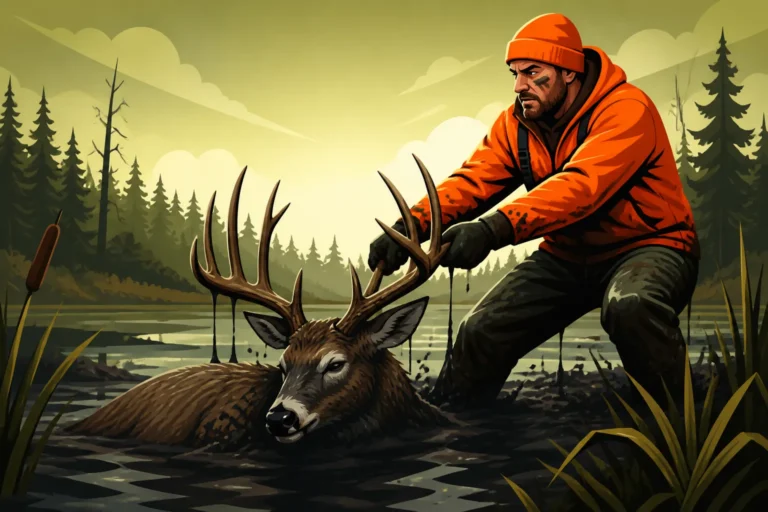
The ground itself can be treacherous. Expect soft mud, hidden holes, tangled roots, and slippery moss-covered logs. A sturdy walking stick can provide balance and help test the ground ahead of you. Move slowly and deliberately, especially when crossing water or uneven terrain. This is not the place for rushing. Your awareness of your surroundings will not only keep you safe but also help you move quietly enough to not spook game. It's similar to hunting a Boreal Muskeg Edge where conditions can be equally challenging.
Dealing with Bugs and Wildlife
Swamps are prime habitats for insects, especially mosquitoes and blackflies during the warmer parts of the hunting season. A good quality insect repellent with DEET or picaridin is a must-have. Consider a head net or bug jacket if the conditions are particularly bad. Nothing ruins a hunt faster than being constantly harassed by biting insects.
While whitetails are your primary target, be aware of other wildlife you might encounter. Ontario's swamps are also home to black bears, moose, coyotes, and various small game. Always carry bear spray in bear country, and know how to use it. Be respectful of all wildlife and maintain a safe distance. Knowing what's in your "truck kit" for a northern Ontario hunt can also apply to southern swamp hunts, as preparedness is key.
Hunting swamp edges for whitetails is not for the faint of heart, but it offers some of the most rewarding and challenging hunting experiences in Ontario. By understanding why deer use these areas, meticulously reading their sign, employing smart tactics, and being prepared with the right gear, you can unlock the secrets of the swamp and find success where others simply turn back.
Disclaimer
Please note that hunting regulations, seasons, and licensing requirements can change. Always consult the official Ontario Hunting Regulations Summary published by the Ministry of Natural Resources and Forestry (MNRF) before heading out. Safety should always be your top priority.