Hunting a Cattle Pasture Bush Lot
Hunting a bush lot next to a cattle pasture in Ontario can feel like you're trying to solve a puzzle with a lot of moving pieces. You're dealing with deer that are accustomed to livestock, open fields that offer little cover, and the ever-present challenge of managing landowner relationships. This guide will walk you through the unique considerations and strategies for successfully hunting these often-overlooked and highly productive areas.
Understanding the Dynamics of a Cattle Pasture Bush Lot
When you're looking at a bush lot that borders an active cattle pasture, you're not just looking at a patch of woods; you're seeing a dynamic ecosystem where two very different worlds — wild deer and domestic livestock — interact daily. This interaction creates a unique set of circumstances that, once understood, can be leveraged to your advantage. It’s not your typical deep bush hunt, nor is it a pure agricultural field hunt; it's a fascinating hybrid that demands a specific approach.
Why Deer Gravitate Towards Cattle Pastures
It might seem counterintuitive at first glance – why would a wary whitetail choose to spend time near a noisy, smelly herd of cattle? But deer, especially in certain parts of Ontario, are remarkably adaptable, and these pasture edges offer a surprising array of benefits that outweigh the drawbacks. For starters, cattle often drop feed, whether it's spilled grain from a feeder or even just the rich, trampled forage that grows within the pasture itself. This provides an easy, low-effort food source for deer, especially when natural forage in the woods is scarce or less nutritious.
Beyond the direct food benefits, cattle pastures often have specific forage grasses that deer find palatable. The constant grazing by cattle can also keep brush and taller weeds in check, promoting the growth of certain broadleaf plants or tender new shoots that deer prefer. Water sources, often established for the livestock, also become readily available for deer. Ponds, troughs, or even low-lying, damp areas created by cattle traffic can be a consistent water supply in dry periods. These elements combined make the periphery of a cattle pasture an irresistible draw for local whitetail populations.
Key Differences from Other Farmland Hunting
Hunting a cattle pasture bush lot isn't quite like Hunting Deer in Southern Ontario Farmland that's dominated by corn or soybean fields, nor is it akin to the deep, unbroken forests of the north. Here, you're dealing with a blend of influences. Unlike a typical cash crop field where deer might feed aggressively for a few weeks before the harvest, the forage and feed around a cattle pasture can be available for much longer periods, sometimes throughout the entire hunting season. This consistency makes it a reliable destination for deer.
The presence of livestock also means a different kind of human activity. While farmers are certainly on these properties, their movements are often predictable and less "threatening" to deer than, say, a recreational hiker or a weekend woodcutter. Deer learn to tolerate the sounds of tractors or the presence of people on horseback or ATVs moving cattle. This tolerance can sometimes make them less jumpy to certain sounds or movements than deer in more pristine, unpressured areas. However, this doesn't mean you can be careless; deer still possess an innate wariness. The fenceline itself often acts as a critical travel corridor, a clear line of demarcation and a subtle funnel for deer moving between the open pasture and the safety of the bush.
Scouting for Deer Sign Amidst Cattle Activity
Scouting these areas demands a keen eye and a bit of detective work. The biggest challenge is distinguishing deer sign from cattle sign. You'll find plenty of tracks, droppings, and rubbed vegetation, but not all of it will be from your target animal. Start by looking for the subtle differences: deer tracks are pointed and smaller, while cattle tracks are broad and round. Deer droppings are distinct pellets, unlike the large, messy patties left by cattle. Pay close attention to browsing height; deer will typically browse lower on saplings and shrubs than cattle, which can reach higher.
Rubs on small trees and saplings are a clear indicator of a buck's presence, and these will be distinctly different from any rubs or damage caused by cattle rubbing against larger trees or fences. Look for bedding areas just inside the bush lot, especially on small ridges or benches that offer a view of the pasture but protection from the wind. Using a reliable mapping app like GoHunt can help you identify subtle terrain features, even if the satellite imagery shows active pasture. These apps allow you to mark specific observations, helping you build a comprehensive picture of deer movement. The goal is to find patterns in deer activity that are independent of, or at least predictable around, the cattle's movements.
Gaining Access and Building Landowner Relationships
Hunting private land, especially land with active farming or livestock operations, hinges entirely on gaining and maintaining good relationships with landowners. Without their permission, you’re simply out of luck. This isn't just about courtesy; it's about mutual respect, safety, and ensuring future hunting opportunities for everyone.
The Importance of Permission
Let’s be honest: in many parts of Ontario, especially in the more populated southern regions, prime hunting ground is often on private property. A bush lot adjacent to a cattle pasture is almost certainly private land. Hunting without permission is not only illegal under Ontario Trespass Law for Hunters but it also jeopardizes the sport for everyone by eroding trust between landowners and hunters. A single irresponsible act can close off access to an entire area for years. Approaching a landowner respectfully, clearly stating your intentions, and understanding their specific concerns about their livestock, property, and family is paramount.
You need to know if they want you to hunt, where they want you to hunt, what times are acceptable, and if there are any areas that are off-limits (e.g., near buildings, specific fields, or where cattle are currently grazing). Are there particular gates that must be kept closed? Are there times of the day or week when they definitely don't want you on the property? All these details need to be clear before you ever step foot in the woods with a firearm or bow.
How to Approach Landowners Effectively
Knocking on Doors in Southern Ontario can feel daunting, but it's often the most effective way. Don't show up in your full camo with a rifle slung over your shoulder. Dress neatly, perhaps in casual clothes that show respect. Have a concise, polite request ready. Introduce yourself, state why you’re there (to ask permission to hunt deer), and immediately address any potential concerns they might have about safety, property damage, or their livestock. Offer to share some venison if you're successful.
Bring a small map of their property, perhaps printed from GoHunt or a similar mapping service, and ask them to mark off areas where you can and cannot hunt. This visual aid clarifies boundaries and shows your preparedness and respect for their property. Leave your name and phone number. Offer to help them with small chores around the farm, like fixing a fence or moving some firewood, as a way to build rapport and demonstrate goodwill. Even if they say no, thank them for their time. A polite "no" today could turn into a "yes" next season.
Navigating Livestock Concerns and Safety
Hunting near livestock introduces a layer of responsibility that hunters absolutely must take seriously. First and foremost, you must prioritize the safety and well-being of the animals. This means keeping all gates closed – every single time. It means not spooking the cattle unnecessarily. If you see cattle moving, give them a wide berth. Avoid making sudden movements or loud noises that could cause them to stampede or become agitated. A spooked herd can damage fences, injure themselves, or even escape.
Beyond ethical considerations, there are practical safety measures. Always be absolutely certain of your target and what lies beyond it. A deer might be standing in front of a cow you can't see, or your shot might carry into a pasture where cattle are present. Never take a shot if there's any doubt. Discuss with the landowner how close is too close to livestock. Some might be comfortable with you hunting a bush lot right up to the fenceline, while others might ask you to maintain a greater distance. Respect their wishes, as they know their animals and their land best. You might even consider carrying extra rope or zip ties to secure gates more thoroughly if needed, showing your commitment to their property.
Strategic Hunting Methods for These Unique Areas
Hunting these mixed-use landscapes requires a flexible and intelligent approach. You can't just set up anywhere; you need to find where the deer funnel, when they move, and how to stay concealed despite the often-open surroundings.
Identifying Prime Deer Travel Corridors
Deer moving between the protective cover of the bush and the feeding opportunities of the pasture will almost always use the path of least resistance or the most secure route. This usually means the fenceline itself. Deer will often skirt the edge, using the dense growth on the bush side of the fence for cover while still having easy access to the pasture. Look for areas where the fenceline forms a natural funnel, perhaps where the bush lot narrows, or where there’s a distinct transition in terrain or vegetation. A small dip in the land, a gully, or even a line of thicker brush along the fence can become a highway for deer.
Also, pay attention to any small trails or worn paths leading directly into the pasture from the bush. Deer often have established crossings. You might even find where deer have pushed under or jumped over fences at specific points. Use your GoHunt app or a topo map to identify these subtle changes in elevation or cover that might create a natural pinch point. These are the spots where you want to focus your efforts. These movements are often predictable, similar to how deer move along Hunting a Fencerow Between Two Fields.
Stand Placement and Concealment
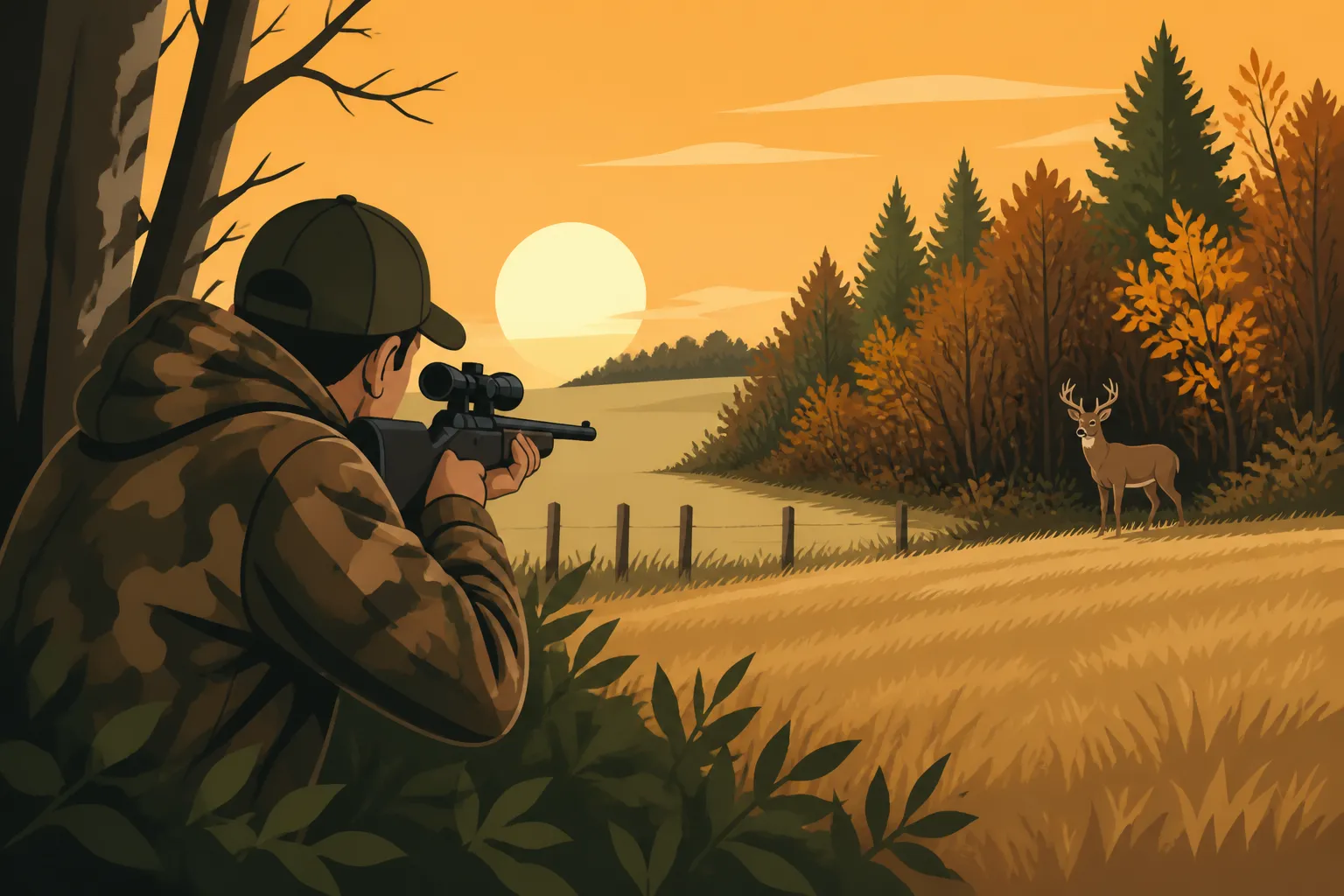
Given the often-open nature of pastures, elevated stands are frequently your best bet. A well-placed tree stand in a mature tree on the bush side of the fenceline offers a vantage point over the pasture and the fenceline itself. It also helps with scent dispersal, getting your scent stream above the primary travel routes of deer. When choosing a tree, look for one that offers not just height, but also good background cover. You don't want to be silhouetted against the sky. Think about Hanging a Stand on an Ontario Bush Edge effectively.
If suitable trees are scarce, a ground blind can work, but it needs to be exceptionally well-camouflaged and set up well in advance of your hunt, giving deer time to get used to its presence. Place it against a natural backdrop, like a dense thicket, a fallen log, or a rise in the ground. Always consider the wind direction, as deer will approach the pasture and bush edge from different directions depending on the prevailing winds. A sudden swirl of wind carrying your scent across an open pasture will send deer running faster than almost anything else.
Timing Your Hunt Around Livestock and Deer Habits
Timing is crucial. Deer movement around cattle pastures is often influenced by when and where the cattle are. If the cattle are active in a certain part of the pasture, deer might avoid that area during those hours. Conversely, if cattle are moved to a different pasture or penned up, the newly vacant pasture edge can become a hot spot. Early morning and late evening are almost always prime times for deer movement, as they are most active during these low-light periods.
Observe when the landowner typically moves or feeds cattle. If cattle are fed in the morning, deer might shy away from the area until midday or late afternoon. If the farmer is out working the fields during the day, deer might stay bedded deep in the bush, only venturing out after the human activity has subsided. A GoHunt app with weather overlays can also help you predict wind direction and thermal currents, which are especially critical in areas with open fields where air currents can be tricky. Try to be in your stand or blind well before dawn and stay until well after dusk, capitalizing on those critical transition periods.
Gear and Tactics for Success
Having the right gear and knowing how to adapt your tactics to this specific environment can make all the difference between going home empty-handed and filling your tag. These bush lots present unique challenges, but also distinct opportunities for the prepared hunter.
Essential Gear Considerations
For these hunts, a good pair of binoculars and a rangefinder are indispensable. The open nature of pastures means you might spot deer at longer distances, and a rangefinder will give you precise yardage for an ethical shot. Quality, quiet clothing is always important, but particularly so when dealing with a habitat where subtle noises can spook both deer and nearby livestock. Think about fabrics that won't rustle or snag as you move. Sturdy, waterproof boots are also a must, as pasture edges can be muddy, especially after rain or heavy cattle traffic.
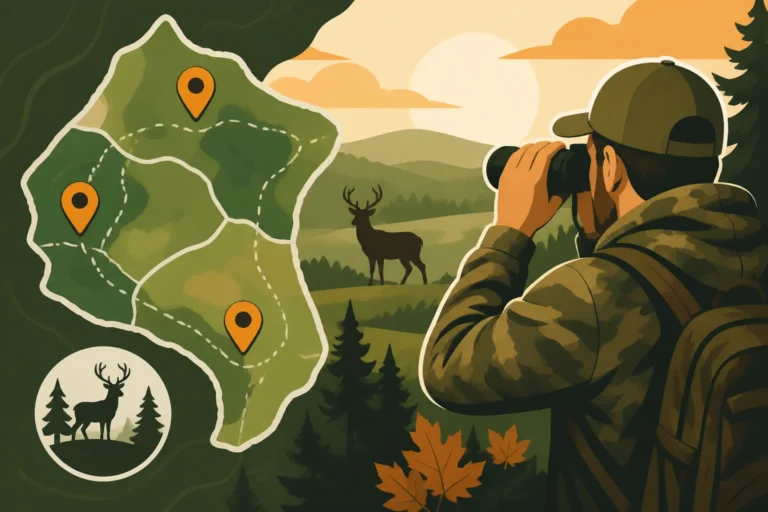
A mapping application like GoHunt is invaluable here. Before you even set foot on the property, you can use it to pinpoint property boundaries, identify potential cover, water sources, and likely travel corridors based on satellite imagery and topographical maps. This kind of pre-scouting and in-field navigation is essential for maximizing your time and understanding the lay of the land, helping you Scouting With Satellite Imagery in Ontario effectively. Carrying a small pruning saw or clippers can also be helpful for clearing shooting lanes if you're hunting a tight bush edge.
Dealing with Scent and Noise
Scent control is always a priority for deer hunters, but it takes on a different dimension near cattle. While the cattle themselves produce a lot of ambient scent that might mask some human odor, deer are still incredibly attuned to novel threats. You might think the smell of manure covers your scent, but a deer's nose will often pick up the distinct human scent regardless. Stick to your usual scent-control regimen: clean clothes, scent-eliminating sprays, and playing the wind. The primary goal is to keep your scent from blowing directly into where deer are likely to be.
Noise is another critical factor. While deer might be accustomed to the sounds of farm machinery or cattle, sudden, unnatural noises will still put them on high alert. Move slowly and deliberately. When climbing into a stand or setting up a blind, avoid banging equipment. Close gates gently. The less disturbance you create, the more likely deer are to move naturally. Practice silent movement, especially during those crucial times when deer are most active near the pasture edge.
Tracking and Retrieval Challenges
One of the benefits of hunting a bush lot adjacent to a pasture is that if you make a good shot and the deer runs out into the open, tracking can sometimes be easier. However, if the deer retreats back into the thick bush or falls in a dense part of the pasture, tracking can become challenging. Cattle traffic can quickly obscure blood trails in muddy or soft ground, making it tough to follow. Always mark the precise spot where the deer was standing when you shot it and the last place you saw it. Take mental notes of landmarks.
Patience is key. If you're confident in your shot placement, give the deer ample time before you begin tracking. This allows the animal to expire and prevents you from pushing it further. When tracking, move slowly and methodically. If the blood trail becomes sparse or disappears, expand your search outward in circles. Having a hunting partner can be immensely helpful for tracking. And remember, once you've recovered your deer, you'll need to consider how to get it out. If it's warm, quick action will be needed for Field Dressing in Warm Ontario Weather. Hauling a deer across a sometimes uneven, potentially muddy pasture to a truck can be a significant effort, so plan your extraction route beforehand.
Using Technology to Your Advantage
Modern hunting often involves leveraging technology, and hunting a cattle pasture bush lot is no exception. Beyond basic GPS functions, GoHunt offers detailed satellite imagery that can reveal subtle features not visible from the ground. You can often see historical cattle trails, old fence lines, or variations in vegetation density that indicate prime deer bedding or travel areas. Even if the current satellite image shows a field full of cattle, an older image or different map layers might highlight features that persist.
Using the GoHunt app, you can drop pins for observations like fresh tracks, rubs, bedding areas, or even where you’ve seen deer enter or exit the bush. This helps build a detailed record of deer activity over time. You can also mark property lines, ensuring you stay within the legal hunting zone. Sharing these marked maps with landowners (if they're interested) can also foster good relations and show your professionalism. The ability to overlay different map types, such as topo and satellite, provides a comprehensive understanding of the terrain, making your scouting and stand placement decisions much more informed.
| Feature / Aspect | Challenges in Cattle Pasture Bush Lots | Opportunities in Cattle Pasture Bush Lots |
|---|---|---|
| Deer Sign | Distinguishing deer from cattle tracks/droppings; cattle obscure trails | Consistent food/water draws deer; fencelines funnel movement |
| Land Access | Requires meticulous landowner approach; livestock concerns | Building trust can grant exclusive access to productive areas |
| Concealment | Open pasture limits cover; visibility from distance | Elevated stands effective; use bush edge density for cover |
| Deer Movement | Influenced by unpredictable cattle movement; farmer activity | Predictable movement patterns during low-light hours; consistent food source |
| Scent/Noise Control | Cattle smells can be distracting; loud machinery sounds | Deer may be more tolerant of background noise; wind crucial for scent control |
| Tracking/Retrieval | Cattle can obscure blood trails; muddy terrain; long drags possible | Open areas can aid in spotting downed deer; relatively flat terrain for dragging |
| Technology Use | Differentiating true deer hotspots from general cattle activity | GoHunt for precise boundary, travel corridor, and stand placement identification |
Disclaimer
Hunting is a regulated activity. It is the responsibility of every hunter to know and understand all current provincial and federal hunting regulations, including season dates, bag limits, permitted hunting methods, and licensing requirements, as set out by the Ontario Ministry of Natural Resources and Forestry (MNRF) and Environment and Climate Change Canada. This guide is for informational purposes only and does not replace official regulations or expert advice. Always prioritize safety, ethical hunting practices, and respect for wildlife and landowners.