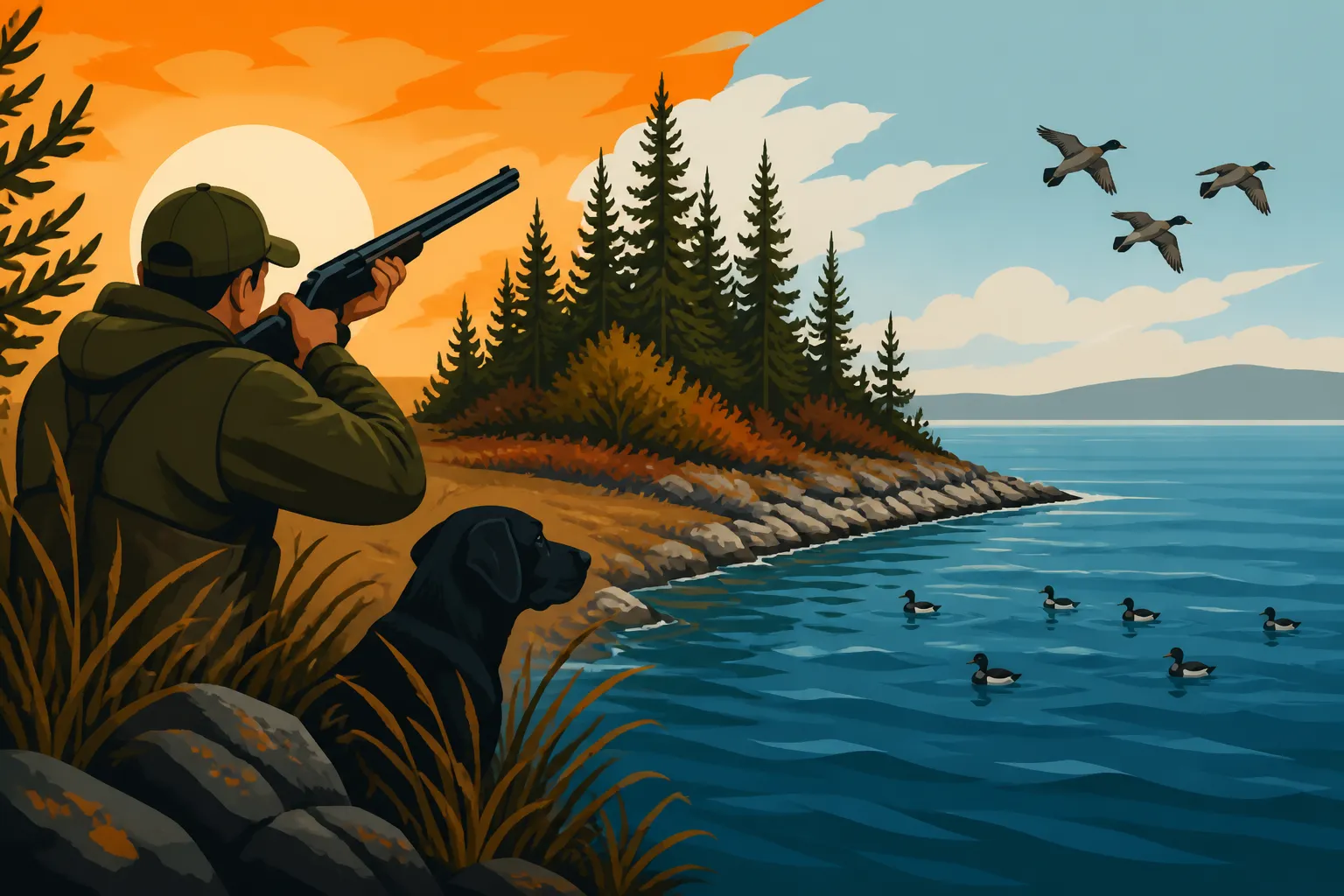
Hunting Divers Off a Great Lakes Point
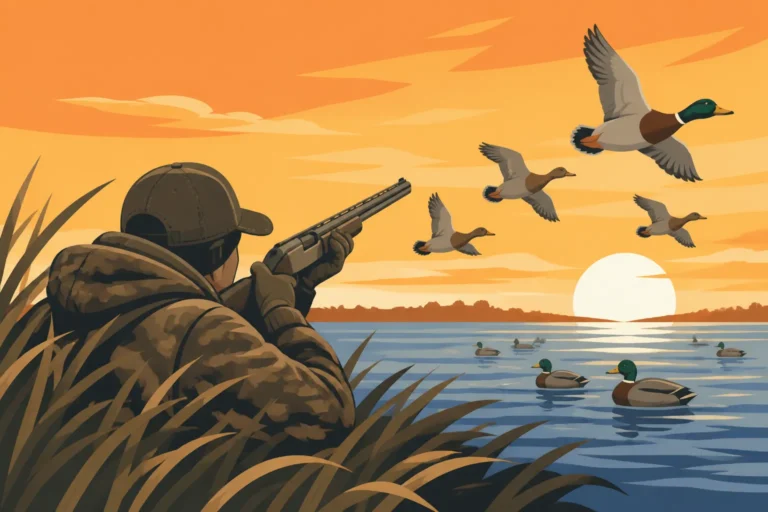
There’s nothing quite like the raw energy of a Great Lakes morning, especially when the wind is whipping up waves and you know those hardy diver ducks are out there, riding the chop. Many hunters dream of those fast-paced, high-volume shoots, but the sheer scale and unpredictable nature of these massive waters can feel utterly overwhelming. This guide will walk you through the intricacies of successfully hunting divers off a Great Lakes point, helping you understand their movements and how to set up for a truly memorable hunt.
Understanding Diver Ducks and Their Habits on the Great Lakes
Diver ducks are a special breed, built for life on big water. Unlike dabblers that tip up in shallow marshes, divers actively swim beneath the surface, propelling themselves with their large feet to chase fish, crustaceans, and aquatic vegetation in deeper, often turbulent, waters. This makes hunting them a unique challenge, requiring a different approach than what you might use in a quiet backwater.
Key Diver Species to Target
When you’re out on the Great Lakes, you'll likely encounter a few common species of divers, each with its own quirks and appeal. Knowing who you're after can really help refine your strategy, from decoy choice to calling cadence.
The most common you’ll see are the Greater and Lesser Scaup, often just called "bluebills." They're dark-headed ducks with white flanks (males) and a distinctive blue bill, and they often travel in large rafts. Then there are the Goldeneyes – both Common and Barrow's, though Common Goldeneyes are far more prevalent. These are striking ducks with bright yellow eyes and distinct head shapes; the Common male has a round white spot on its cheek, while the Barrow's has a crescent. They're quick, agile flyers. Buffleheads are the smallest and arguably cutest divers, with oversized heads, compact bodies, and zippy flight. They tend to come in smaller groups or pairs. You might also encounter Redheads, known for the brilliant copper heads of the males, and the highly sought-after Canvasbacks, often dubbed the "king of ducks" for their large size, distinctive sloped profile, and incredible speed. Occasionally, you'll even see Long-tailed Ducks (formerly Oldsquaw), particularly later in the season when the big water freezes up further north. Each of these birds has adapted perfectly to the expansive, often brutal conditions of the Great Lakes, making them truly challenging and rewarding quarry.
Why Great Lakes Points Attract Divers
It’s no accident that these big water ducks congregate around points on the Great Lakes. These geological features aren't just pretty scenery; they're vital stopover and feeding grounds, acting like natural magnets for diver species. The primary draw is often food sources. Many points feature rocky substrates, mussel beds, and aquatic vegetation that are prime foraging grounds for divers. These areas might also concentrate small fish, providing a buffet for species like goldeneyes and buffleheads.
Beyond food, points offer crucial shelter from prevailing winds or, conversely, act as current breaks where divers can rest out of the roughest waves while still being able to feed. On a blustery day, the lee side of a point can be a calm oasis, allowing birds to conserve energy. When the wind switches, the opposite side of the point might suddenly become the preferred area. Furthermore, points naturally funnel migrating birds. Imagine thousands of ducks moving along a vast shoreline; a prominent point creates a natural obstacle that birds will either fly around or over, often bringing them within gunning range if you’re set up correctly. They’re essentially highways and rest stops all rolled into one for transient waterfowl. Understanding these dynamics is key to knowing where to focus your scouting efforts and precisely where to deploy your spread.
Reading the Water and Weather for Divers
Hunting divers off a Great Lakes point is less about timber and potholes, and more about truly understanding the open water environment. The wind and waves are your primary shapers of success. Wind direction and speed dictate where the ducks will fly, where they’ll seek shelter, and how your decoys will behave. A stiff onshore wind can push birds closer to shore or into bays behind points, while an offshore wind might keep them further out. Strong crosswinds can also funnel birds tightly along a point’s edge. Always consider the wind when deciding where to anchor your boat and how to orient your spread.
Wave action is another critical factor. While divers thrive in rough water, even they have limits. Extremely large waves can make it impossible for ducks to land comfortably in your spread, or even see your decoys effectively. Conversely, too calm of water might make your spread look unnatural if there’s no motion. You're looking for that sweet spot where there's enough chop to create movement and hide your boat, but not so much that it's unsafe or unwelcoming to landing birds. The water depth around a point is also paramount. Divers need access to their food sources, and if a point drops off too quickly, or stays too shallow for too long, it might not be ideal. Understanding where the deeper feeding channels are, relative to the shallower resting areas, will help you place your spread in the most effective zone. This intricate dance with Mother Nature is what makes hunting ducks on the Great Lakes so uniquely challenging and rewarding; it’s never quite the same hunt twice. If you're looking for specific species or general movements, our guide on When Divers Reach the Great Lakes can offer valuable insights.
Essential Gear and Setup for Point Hunting
Hunting diver ducks off a Great Lakes point isn't your typical marsh hunt. The vastness of the water, the unpredictable weather, and the species you're targeting all demand a robust and specialized gear setup. Skimping on quality or safety here isn't just a risk to your hunt; it's a risk to your life.
Decoy Spreads for Open Water
When it comes to diver hunting, especially off a Great Lakes point, your decoys are your primary call. The visual appeal of a large, realistic spread is often far more effective than calling alone. You'll want to think big – divers often travel and raft in large groups, so a spread of 50-100 decoys isn't uncommon. Quantity definitely matters here, but so does quality. You want durable, life-sized, or even oversized decoys that can handle the abuse of big water. Brands like GHG, Avery, and Tanglefree offer excellent options.
The type of spread you choose is crucial. A "J-hook" or "U-shape" spread is popular, with the open end facing into the wind, guiding incoming birds into your shooting zone. The "hook" part of the J provides a landing strip, while the long leg extends downwind, drawing attention. Another effective method for divers is a "pancake" spread or blob of decoys, often deployed on long lines with several decoys per line. This mimics a large, resting raft of divers. You'll often see these birds raft up in a tight group, so this can be very convincing. A mix of active (swimmer) and resting (sleeper) positions adds realism. Don't forget your anchor weights; big water requires heavy-duty anchors to keep your expensive spread from drifting away in a stiff breeze. Many hunters utilize "Texas rigs" for easier deployment and retrieval in shallower areas, but for deep water off a point, long lines with gang clips might be more efficient for connecting multiple decoys quickly. Remember, the goal is to create a large, visible, and inviting landing zone that looks like a safe haven for passing birds.
Boat and Blind Considerations
The Great Lakes demand serious watercraft. Forget the flimsy jon boat; you need a seaworthy vessel that can handle chop, cold water, and potentially long runs. Options range from purpose-built layout boats like those from Great Lakes Boat Building, which allow hunters to lie nearly prone on the water's surface for ultimate concealment, to larger, more stable scows or V-hull boats that can transport more gear and offer a safer platform in rougher conditions. Whatever your choice, it absolutely must be rated for the conditions you're heading into. A robust engine, preferably with a kicker motor for backup, is non-negotiable.
Concealment is paramount. If you’re in a layout boat, the low profile is your blind. From a larger boat, you'll need a well-designed blind system that blends seamlessly with the water's edge or your decoy spread. Some hunters use pop-up blinds on their larger boats, while others might create natural blinds from driftwood or reeds on a point if permitted and available. The key is to break up your silhouette against the horizon. Remember to factor in safety gear: life jackets for everyone on board (worn, not just stowed), a marine radio, flares, a first-aid kit, and an emergency repair kit for your boat are absolute necessities. The Great Lakes are beautiful but unforgiving, and prioritizing safety is the most important part of your preparation. Our detailed guide on Diver Hunting Ontario's Big Water further explores specialized tactics for these challenging conditions.
Ammunition and Choke Selection
When hunting divers on the Great Lakes, you're often dealing with powerful, fast-flying birds that can be quite durable, and you're typically taking shots over open water, sometimes at a bit of a distance. This means your ammunition and choke selection are critical for clean, ethical kills.
Non-toxic shot is a legal requirement for all waterfowl hunting in Ontario, including divers. While bismuth and tungsten-based loads offer excellent density and knockdown power, they can be pricey. For many hunters, steel shot is the workhorse. The key with steel is to go up one or two shot sizes compared to lead for equivalent pellet energy. For divers, popular choices are #2 or #3 steel shot, which provide a good balance of pellet count and energy for birds like scaup and goldeneye. For larger, tougher divers like canvasbacks, some hunters will opt for BB or #1 steel. Consider the maximum range you realistically expect to shoot, and choose your load accordingly.
For choke selection, a Modified or Improved Modified choke is often a great all-around choice for diver hunting. It provides a dense enough pattern at typical shooting distances (25-45 yards) without being overly tight, which can be unforgiving on fast-moving targets. Some hunters might opt for a Full choke if they are confident in their long-range shooting and consistently engage birds at greater distances, but remember that steel shot patterns tighter than lead, so a Full choke with steel can be extremely dense and might blow out patterns too quickly at closer ranges. The goal is a consistent, effective pattern at the distances you’ll be shooting. Always pattern your shotgun with your chosen ammunition before the season to ensure optimal performance. This attention to detail will help you make clean shots and retrieve your birds efficiently.
Strategic Approaches to Hunting Divers Off a Point
Successfully hunting divers off a Great Lakes point is a chess game against nature. It requires careful planning, adaptation to dynamic conditions, and an understanding of how these powerful birds interact with their environment. It’s not just about showing up; it’s about anticipating their moves.
Scouting and Location Selection
You wouldn’t go into a big game hunt without scouting, and the same applies, even more so, for Great Lakes divers. Pre-season scouting is absolutely invaluable. Spend time observing key points from shore or with binoculars from a boat (respecting all property laws, of course). Look for areas where divers are consistently rafting, flying, or feeding. Pay attention to how different wind directions affect their movements. Do they prefer the lee side of a point on a northwest wind? Do they fly directly over a certain finger of land?
When you can't be on the water, satellite imagery and mapping tools are your best friend. Services like GoHunt allow you to zoom in and identify underwater structures, depth contours, and potential feeding areas that aren't visible from the surface. You can mark potential setup locations, identify access points, and get a better sense of the terrain. Look for areas with rock piles, submerged shoals, or changes in depth that might concentrate food sources. Specific points on Lake Erie, such as those near Long Point or Port Maitland, are renowned diver hotspots, as are many headlands along Lake Ontario or the numerous rocky points of Georgian Bay. Don't just pick a spot based on convenience; pick it based on evidence of active bird use. Even checking local fishing reports can give you clues about where baitfish, and thus divers, might be concentrating. Our guide on Scouting Fields for Ontario Waterfowl provides general tips that can be adapted for big water, too.
Setting Up for the Conditions
Once you’ve done your scouting and picked a promising point, the actual setup needs to be highly adaptable to the day’s specific conditions. The wind and wave action are the most critical factors. Your decoy spread should always be set up with the open "landing zone" facing directly into the wind, as ducks almost always land into the wind. This means your boat or blind should be downwind of your primary decoy spread, allowing incoming birds to finish their approach over the decoys and present broadside or slightly quartering shots as they commit to landing.
If the wind is strong, you might need to adjust the density and size of your spread. A tighter, more consolidated spread can appear more natural in heavy chop, mimicking birds hunkering down. Conversely, on a calmer day, you might spread your decoys out a bit more to cover a larger area and create more visual attraction. Pay close attention to current. Even in seemingly calm conditions, the Great Lakes can have strong underwater currents that will drag your decoys. Heavier weights and appropriate rigging are essential. For your blind or boat, think about its position relative to the sun. Placing it so the sun is at your back gives you an advantage, preventing birds from seeing your silhouette as easily and reducing glare for your shooting. A successful setup isn't static; it's a dynamic response to the conditions that the Great Lakes throw at you, constantly evaluating what the birds are doing and adjusting your strategy accordingly.
Calling Divers Effectively
Unlike mallards in a swamp, calling divers is generally a much simpler affair. While dabblers respond to intricate quacks and greetings, divers are more about the visual. Your large, realistic decoy spread is the primary magnet. However, a little vocal persuasion can often seal the deal, especially on wary birds or those flying just out of range.
The calls you’ll use are typically different from your standard duck calls. For scaup, a simple, sharp brrr-brrr or purrr on a diver whistle or a dedicated scaup call can be effective. This mimics their rapid chattering. Goldeneyes respond well to a high-pitched peep or whistling sound, often from a whistle call, which imitates their courtship calls. Buffleheads have a similar, almost squeaky whistle. Canvasbacks and redheads primarily respond to confidence in your spread, but a low, guttural meow call can sometimes be used for redheads, especially if you have a few Redhead decoys in your spread.
The key with diver calling is subtlety and timing. Don't overcall. A few short, sharp calls as birds approach can help grab their attention, but then let your decoys do the work. If birds are locked onto your spread, stop calling. The visual of a safe, inviting landing zone is usually all they need. If they start to peel off, a few soft calls can sometimes bring them back for another look. Remember, divers are often moving quickly, and you have a short window to influence them. Practice these calls before the season, but always prioritize your setup and concealment; they are usually far more critical than fancy calling sequences for these open-water specialists.
Safety, Regulations, and Ethical Hunting
Hunting the Great Lakes is an incredible experience, but it comes with serious responsibilities. The vastness and power of these waters, combined with the presence of other users and specific regulations, mean that safety, adherence to the law, and ethical conduct are paramount.
Navigating Great Lakes Safety Challenges
The Great Lakes are stunning, but they are also incredibly dangerous if not treated with the utmost respect. Cold water immersion is one of the biggest threats. Even in early fall, the water temperature can be lethal, and hypothermia can set in rapidly. Always wear a PFD (personal flotation device) – not just have it stowed. Dress in layers, preferably with synthetic or wool base layers that retain warmth when wet, and always have a change of dry clothes in a waterproof bag.
Rapidly changing weather conditions are another major hazard. A calm morning can turn into a raging storm in a matter of hours. Always check multiple weather forecasts, paying close attention to wind warnings and wave predictions, before you even consider launching. If in doubt, stay on shore. Your boat must be in top mechanical condition, with all required safety equipment on board, including a marine radio or satellite communicator, flares, a horn, and a fully charged cell phone (though cell service can be spotty in some areas). Always let someone know your float plan – where you’re going, when you expect to return, and who to call if you don’t check in. Finally, always be aware of ice formation later in the season. Even thin skim ice can become incredibly dangerous, especially around points where currents can break it up unexpectedly. These aren't suggestions; they are non-negotiable rules for anyone venturing onto the Great Lakes for hunting.
Ontario Regulations Specific to Waterfowl
Hunting waterfowl in Ontario comes with a distinct set of regulations that every hunter must know and follow. First and foremost, you need an Ontario Outdoors Card and a valid Ontario Migratory Game Bird Hunting Permit. This federal permit is crucial and often includes the Canadian Wildlife Habitat Conservation Stamp, which funds habitat projects. You also need a provincial small game license.
A critical regulation for waterfowl is the non-toxic shot requirement. You absolutely cannot use lead shot for hunting ducks, geese, or other migratory game birds. Steel, bismuth, or tungsten-based alternatives are mandatory. Your daily bag limits and possession limits vary by species and district. For example, the daily limit for most diver ducks like scaup, goldeneye, and bufflehead might be six, but always consult the most current Ontario Hunting Regulations Summary, often available online from the Ministry of Natural Resources and Forestry (MNRF), as well as the federal migratory bird regulations. You also need to be aware of shooting hours, which typically begin 30 minutes before sunrise and end 30 minutes after sunset. Finally, ensure you are retrieving all downed birds. Leaving cripples or unrecovered birds is not only unethical but also against regulations. Always keep a dog or a robust retrieval system handy. Understanding and following these rules ensures you're hunting legally and responsibly. For more details on what's allowed, our page on Non-Toxic Shot for Ontario Waterfowl is a good resource.
Practicing Ethical and Responsible Hunting
Ethical hunting goes beyond simply following the law; it’s about upholding the integrity of the sport and ensuring the future of wildlife. For diver hunting on the Great Lakes, this means a few key considerations. Swift retrieval of downed birds is paramount. Wounded ducks can dive and swim long distances, especially in rough water. A good retriever dog is invaluable, but if you don't have one, a fast, maneuverable boat and a keen eye are essential to ensure every bird you shoot is recovered. This minimizes waste and prevents unnecessary suffering.
Respecting private property is another critical aspect, even on large bodies of water. While you might be hunting "public" water, access points, shorelines, and certain islands can be privately owned. Always know who owns the land and obtain permission before accessing private property or setting up a blind on private land. Our guide on Getting Permission for a Goose Field has principles that apply to any private land access. Also, be mindful of other water users. The Great Lakes are popular for fishing, boating, and other recreational activities. Set up your spread and conduct your hunt in a way that minimizes disturbance to others and ensures their safety. This often means choosing less-trafficked areas or hunting during off-peak times. Finally, it’s about sharing your knowledge and passion responsibly. Mentoring new hunters, adhering to conservation principles, and advocating for habitat protection all contribute to a positive legacy for Ontario hunting.
| Diver Species | Key Identification Features | Typical Great Lakes Habits | Calling Strategy (Basic) |
|---|---|---|---|
| Greater Scaup | Glossy greenish head, black breast, white flanks (male) | Large rafts, feeds in deeper water, migrates late fall | Short, sharp "brrr" or "purrr" on diver whistle |
| Lesser Scaup | Purple sheen on head, similar to Greater but smaller | Similar to Greater, often found closer to shore or in shallower bays | Short, sharp "brrr" or "purrr" on diver whistle |
| Common Goldeneye | Round white cheek patch (male), bright yellow eye | Travels in smaller groups, fast flight, feeds on fish/crustaceans | High-pitched "peep" or whistle |
| Bufflehead | Smallest diver, large head, white cap on black head (male) | Small groups/pairs, active divers, feeds on invertebrates | Squeaky whistle, often silent |
| Canvasback | Distinctive sloped profile, red head (male), large size | Prefers wild celery, often flies high, wary | Low "gurr", mostly relies on decoys |
| Redhead | Copper-red head (male), bluish bill with black tip | Prefers aquatic vegetation, often mixes with other divers | Low "meow" or purr, can be gregarious |
Disclaimer
Hunting is an inherently risky activity. The information provided in this guide is for informational purposes only and is not a substitute for professional instruction, adherence to all applicable laws and regulations, or sound judgment. Always prioritize safety, understand and follow all provincial and federal hunting regulations, and respect private property. Consult the most current Ontario Hunting Regulations Summary and federal migratory bird regulations before every hunt.