Glassing a Cut for Ontario Moose
Spotting a bull moose in the vastness of Ontario's northern forests can feel like trying to find a needle in a haystack, especially when the bush is thick and visibility is low. Many of us have spent countless hours trudging through dense timber, only to come up empty-handed. This guide is all about giving you the tools and techniques to effectively glass recent cutovers, dramatically increasing your chances of locating one of these magnificent animals.
Understanding Ontario Moose Behavior in Cutovers
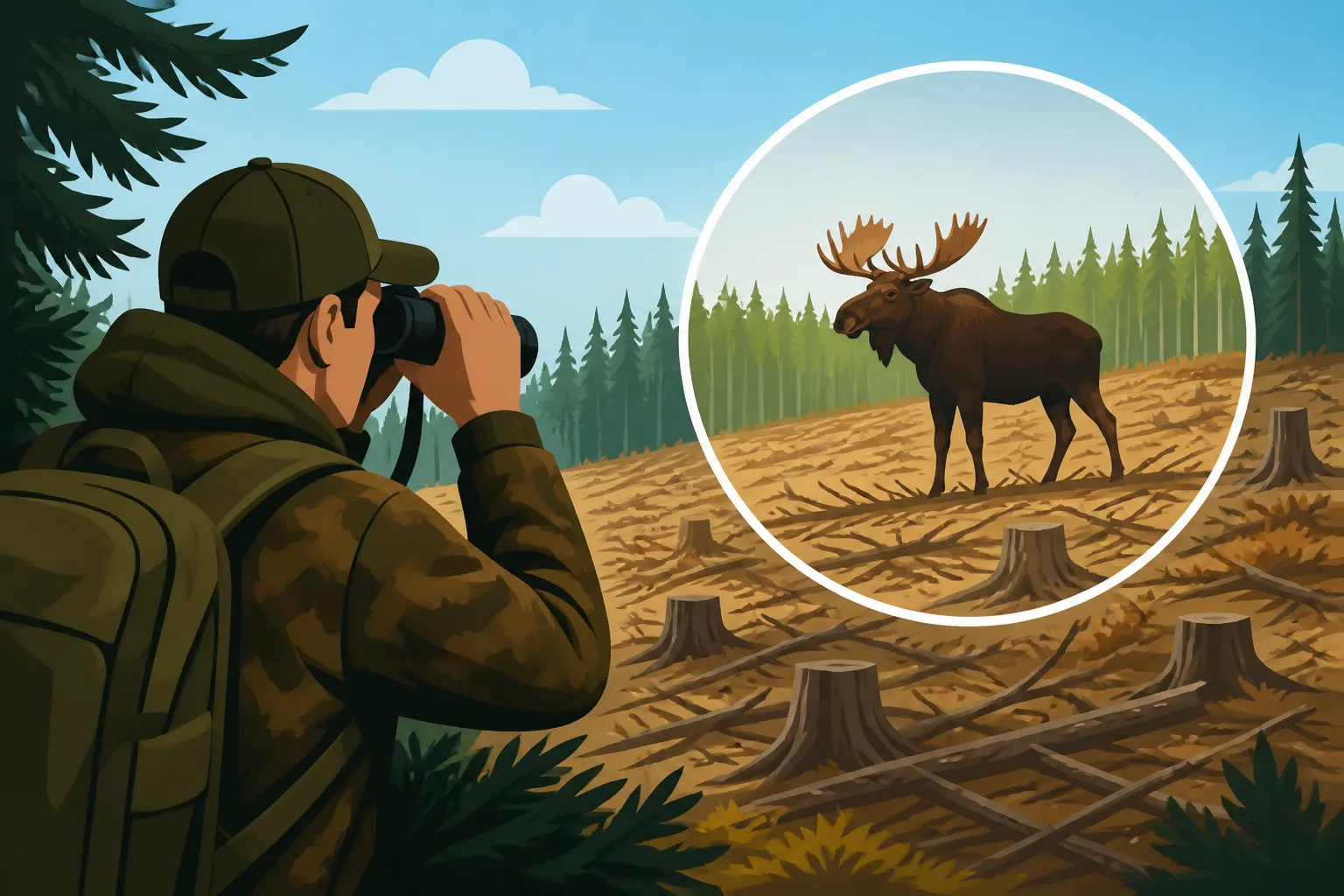
Moose, particularly in Ontario's expansive boreal forest, are creatures of habit and opportunity. They thrive in environments that offer a unique blend of food, cover, and water. Recent cutovers, whether they're clear-cuts from logging operations or areas impacted by natural disturbances like wildfires, become ecological hotspots that draw moose in like a magnet. Understanding why they are there and how they use these areas is the first step to successfully glassing them.
Why Moose Gravitate Towards Recent Cuts
Think about it from a moose's perspective: a freshly logged area, especially one that's been regenerating for a few years, is essentially a giant buffet. The heavy machinery that comes through for logging opens up the canopy, allowing sunlight to reach the forest floor. This burst of light fuels the growth of pioneer species – the young, tender plants that moose absolutely adore. We're talking about delicious balsam fir, red osier dogwood, willow, mountain ash, and the ever-popular trembling aspen and white birch saplings. These regenerating shoots are packed with nutrients and are much easier for a moose to browse than the mature, tougher vegetation found in older forests.
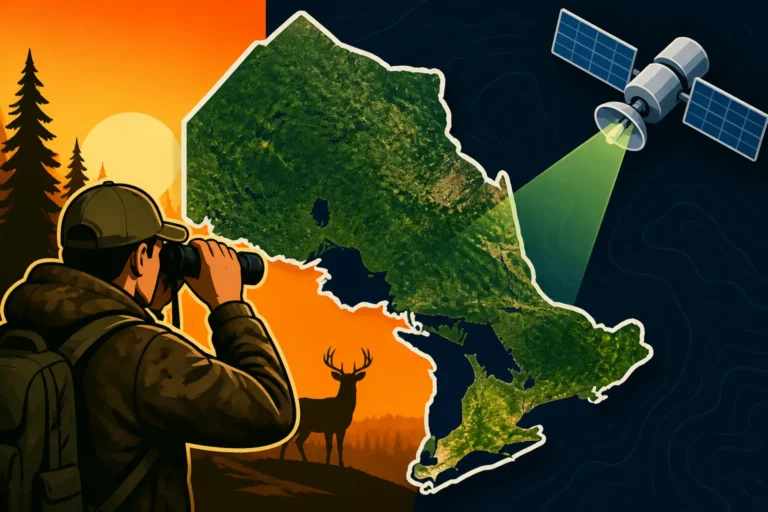
Moreover, these cuts often feature disturbed ground, creating pockets of soft earth and shallow pools that can be important mineral licks. The stumps and fallen timber also offer unique bedding opportunities, allowing a moose to lie down and be largely concealed, yet still have a good vantage point over their surroundings. They’re looking for those pockets of dense regenerating growth where they can feed undisturbed and melt away if a threat approaches. If you're wondering how to find such areas, remember that satellite imagery can be a game-changer when Scouting With Satellite Imagery in Ontario.
Timing Your Glassing Efforts for Peak Activity
Just like us, moose have preferred times for going about their day. While they can be seen at any hour, your chances of spotting one significantly increase during the low-light periods of dawn and dusk. In the early morning, they're often moving out of their bedding areas to feed, taking advantage of the cool air and reduced visibility. As the sun climbs higher, they'll typically retreat into denser cover to chew their cud and escape the heat and pesky insects. The late afternoon and evening see another surge of activity as temperatures drop and they resume feeding before settling down for the night.
Weather plays a huge role too. On cool, overcast, or even light drizzly days, moose might be active for much longer periods. They don't mind a bit of rain and actually prefer cooler temperatures, as overheating is a major concern for them, especially larger bulls. Conversely, on hot, sunny days, they'll seek the deepest shade and often won't move much until the sun is nearly gone. During the rut, which often peaks in late September and early October, you might find increased daytime movement as bulls search for cows, even in less-than-ideal conditions. If you're trying Calling Moose in Ontario's Boreal Forest, knowing when they're most active will be key.
Essential Gear for Effective Moose Glassing
You can't expect to effectively scan vast cutovers for moose with just your naked eye. The right optics and supporting gear are absolutely crucial for picking apart distant patches of cover and identifying those subtle signs that give away a moose's presence. Investing in quality equipment isn't just about spotting more moose; it's about making your time in the field more enjoyable and productive.
Optics Selection for Long-Range Observation
This is where the rubber meets the road. For moose hunting, you'll want high-quality binoculars as your primary tool, and possibly a spotting scope for extreme distances.
- Binoculars: For general glassing of cutovers, a good pair of 10×42 or 12×50 binoculars is ideal. The "10x" or "12x" refers to the magnification – meaning the object appears 10 or 12 times closer than it actually is. The "42" or "50" is the objective lens diameter in millimeters, which dictates how much light the binoculars gather. Larger objective lenses generally mean a brighter image, especially in low light conditions. Look for reputable brands known for optical clarity, robust construction, and good light transmission. Many hunters prefer a wide field of view to scan broad areas quickly, and crisp edge-to-edge clarity is paramount so you don't miss a tell-tale ear flick at the periphery. Consider brands like Vortex, Zeiss, or Swarovski for top-tier performance, but there are excellent mid-range options that offer superb value.
- Spotting Scopes: If you're regularly glassing across truly expansive cuts, clear-cuts that might be kilometres wide, or open areas from a distant ridge, a spotting scope becomes invaluable. A 20-60x magnification range is standard. Paired with a sturdy tripod, a spotting scope allows you to literally pick apart distant areas, identifying details like antler growth on a bull that would be impossible with binoculars alone. While they add bulk, the ability to confirm if that dark blob is a moose or just a stump, or to count antler points, is priceless. When using a spotting scope, always use a solid tripod; even slight movements will be magnified. Companies like GoHunt often review and recommend various optical setups, helping you choose what’s best for your budget and hunting style.
Table: Binoculars vs. Spotting Scopes for Moose Glassing
| Feature | Binoculars (e.g., 10×42) | Spotting Scope (e.g., 20-60x) |
|---|---|---|
| Magnification | Moderate (8x-12x) | High (20x-60x, variable) |
| Field of View | Wide, excellent for scanning large areas | Narrow, precise for examining details |
| Portability | Lightweight, handheld, easy to carry | Heavier, requires a tripod, less mobile |
| Image Brightness | Good, sufficient for most conditions | Excellent, especially with larger objective lens |
| Cost | Varies widely, good options for various budgets | Generally higher investment, especially for quality |
| Primary Use | Quick scanning, general observation, tracking moving animals | Detailed examination of distant objects, trophy assessment |
Clothing and Ancillary Gear Considerations
Beyond optics, the rest of your kit should support quiet, patient observation.
- Clothing: You'll want quiet, comfortable layers that allow you to sit still for extended periods without rustling or getting cold. Camouflage patterns that blend into the browns, greens, and greys of Ontario's bush are ideal. Forget noisy rain gear; invest in quiet, waterproof outer layers. Remember, if you're out late or early, even on a mild day, you can get chilly quickly when sitting still. Prepare for the variable conditions you'd expect when Dressing for Ontario's November Cold or even earlier in the season.
- Tripod: Even for binoculars, a lightweight tripod can significantly reduce fatigue and steady your view, allowing you to pick out subtle movements that you'd miss with handheld glassing. Many binos come with an adapter for tripod mounting.
- Rangefinder: Once you spot a moose, knowing the exact distance is critical for making an ethical shot. A reliable laser rangefinder is a must-have.
- Wind Indicator: A small bottle of wind-checker powder can confirm wind direction before you make a stalk, ensuring you approach downwind.
- Backpack: A comfortable daypack to carry your optics, extra layers, snacks, water, and emergency supplies is essential. You'll likely be covering ground on foot to get to your vantage points, so a well-fitted pack makes all the difference. Don't forget a Truck Kit for a Northern Ontario Hunt if you're venturing far from the beaten path.
Mastering the Art of Glassing Cut Lines and Clearings
Glassing isn't just about looking through binoculars; it's a patient, methodical process that requires technique and discipline. The goal is to train your eyes to differentiate a moose from its surroundings, often through tiny details that would otherwise go unnoticed.
Strategic Positioning and Scan Techniques
Your success in glassing often hinges on your vantage point. Look for areas that offer elevation – a ridge, a knoll, even a large rock outcropping – that overlooks the cutover. The higher you are, the more ground you can cover, and the better angle you have into the regenerating growth.
Once you're in position, resist the urge to just randomly scan. Employ a methodical grid-scanning technique. Start at one edge of the cutover, at the nearest point. Slowly move your binoculars across, covering every inch of ground. When you reach the opposite side, drop your gaze a small increment and scan back across. Repeat this process, moving slowly from near to far, until you've meticulously covered the entire area. Pay extra attention to:
- Edges: Where the cut meets mature timber is often a transition zone where moose feel secure entering and exiting.
- Islands of Cover: Patches of uncut timber or denser regeneration within the cut provide security and bedding.
- Water Sources: Moose love water. Look for beaver ponds, small creeks, or boggy areas within or adjacent to the cut. You might even consider Hunting Moose Around an Ontario Beaver Pond.
- Shadow Lines: Moose will often bed down just inside the shadows on a sunny day.
Sometimes, it’s not just about what you see, but what you don't see. That slight break in a perfectly straight line of young saplings, that patch of dark that seems a little too solid, or that shimmer that isn't quite the heat off the ground – these are the clues. GoHunt mapping software can be instrumental in identifying these features from satellite imagery before you even leave camp, helping you pinpoint potential vantage points and areas of interest within a WMU.
Interpreting Moose Sign and Movement Patterns
Identifying a moose isn't always about seeing the entire animal. Often, it's about picking up on subtle clues.
- Color and Shape: Moose are big, dark animals. Their black or dark brown hides will often stand out against the lighter greens, grays, and browns of the regenerating forest. Look for horizontal lines (a moose's back) in a world of vertical lines (trees). The distinct shape of an ear, the curve of a back, or the bulky mass of a body can be enough.
- Movement: Even a tiny movement can give them away. An ear flick to shoo a fly, a tail twitch, a head raising to browse, or the subtle sway of a browsing moose are all things to look for. Sometimes, the movement of a branch or the top of a sapling might indicate a moose moving through, even if you can't see the animal itself.
- Contrast: Look for anything that doesn't quite fit. A patch of deep black that seems too uniform to be just shadow, a reflection of light off a damp nose, or the gleam of an antler tine.
The key is immense patience. You might spend an hour or more glassing a single cutover before a moose even reveals itself. Don't rush it. Take short breaks to rest your eyes, then resume the scan.
Dealing with Environmental Challenges
Ontario's environment can throw some curveballs at glassing efforts.
- Heat Shimmer: On warm, sunny days, heat rising from the ground can create a wavy distortion through your optics, making it incredibly difficult to get a clear picture. The best solution is to hunt earlier or later in the day when the air is cooler, or to try and get closer to your target area.
- Fog and Rain: Fog severely limits visibility. Heavy rain makes it hard to see and even harder to keep your optics clear. In these conditions, you might need to adjust your strategy entirely, perhaps focusing on still-hunting or tracking, or waiting for conditions to improve. A good lens cloth and anti-fog solution are always handy.
- Wind: While a stiff wind can make moose more nervous, it also helps mask your sound. However, it can make holding binoculars steady more challenging if you're not using a tripod.
Remember, every day in the bush is different. Be adaptable and patient. Sometimes the best thing to do is simply wait out a challenging condition rather than pushing on and potentially spooking an animal.
Advanced Strategies and Safety Considerations
Once you've got the basics down, there are always ways to refine your approach and ensure you're as safe as possible while out in the vastness of Ontario's moose country, especially if you're in an area like Hunting Northwestern Ontario's Big Bush.
Using Technology to Enhance Your Glassing
Modern technology has revolutionized how hunters approach the bush. Embrace it to give yourself an edge.
- GPS and Mapping Apps: Before you even leave home, use GPS-enabled mapping apps on your phone or a dedicated GPS unit. These tools, often featuring detailed satellite imagery and topographic maps, are indispensable for pre-scouting. You can mark potential vantage points, identify existing logging roads (or Hunting Moose on an Ontario Logging Road), plot your approach routes, and save the locations of promising cutovers. Many hunters use apps like GoHunt to mark where they've seen signs, where they've glassed from previously, and even potential escape routes for moose. This lets you analyze terrain without even being there and helps you navigate accurately in dense bush.
- Satellite Imagery Overlays: Study satellite imagery to discern the age and type of vegetation in various cutovers. Newer cuts will appear lighter green, while older, denser regeneration will show as darker patches. This helps prioritize which areas to focus your glassing efforts on, as moose prefer different stages of regeneration depending on the time of year and specific food needs. Look for areas with a mix of cover and browse.
- Weather Apps: Always have a reliable weather app. Knowing when a front is moving in, when temperatures are expected to drop, or when precipitation is likely will inform your timing and preparation. A sudden shift in weather can change moose activity patterns.
Safety While Hunting Remote Cutovers
Ontario's northern bush is wild and unforgiving if you're not prepared. Safety must always be your top priority.
- Bear Awareness: You are in black bear country. Be aware of your surroundings, carry bear spray, and know how to use it. Make noise as you move between glassing spots to avoid surprising a bear. If you down a moose, especially a large one (considering What a Big Bull Moose Weighs), bears will be drawn to the scent.
- Communication Devices: Cell service is non-existent in many remote areas. Carry a satellite phone, a Garmin inReach, or a similar two-way satellite messenger. These devices can be life-savers in an emergency, allowing you to contact help or let loved ones know your status.
- First Aid Kit: A comprehensive first aid kit is non-negotiable. Learn basic wilderness first aid.
- Navigation: Always carry a compass and a physical map in addition to your electronic devices. Know how to use them. Mark your truck, camp, and key landmarks. It's surprisingly easy to get turned around, especially when traversing irregular terrain in cutovers.
- Identify Other Hunters: While glassing, you might also spot other hunters. Make sure you're wearing appropriate blaze orange and are always aware of your shooting lanes and what lies beyond your target. Communication with other groups, if possible, can help prevent accidents.
- Emergency Shelter and Fire Starting: Pack a lightweight emergency shelter, fire starters (waterproof matches, lighter, ferro rod), and a small saw or knife. Hypothermia is a real danger, even in early fall, if you're stranded.
- Meat Care: If you are fortunate enough to harvest a moose, especially in early season warmth, be prepared for quick and efficient meat care. This often involves quartering the animal quickly to cool it down, as discussed in Quartering a Moose Alone in the Bush. If you're deep in the bush, having a plan to get the meat out, whether on foot, by ATV, or potentially with a canoe as outlined in Getting a Moose Out by Canoe, is crucial.
By combining diligent glassing techniques with smart use of technology and an unwavering commitment to safety, you can significantly improve your odds of a successful and memorable moose hunt in Ontario's incredible wilderness.
Disclaimer
Hunting is a challenging and inherently risky activity. This guide provides general information and recommendations. Always consult the official Ontario Hunting Regulations Summary for the most current and specific laws, seasons, and licensing requirements. Ensure you have the necessary training, licenses, and permits before heading into the field. Safety should always be your paramount concern.