Wolves and Coyotes in Ontario
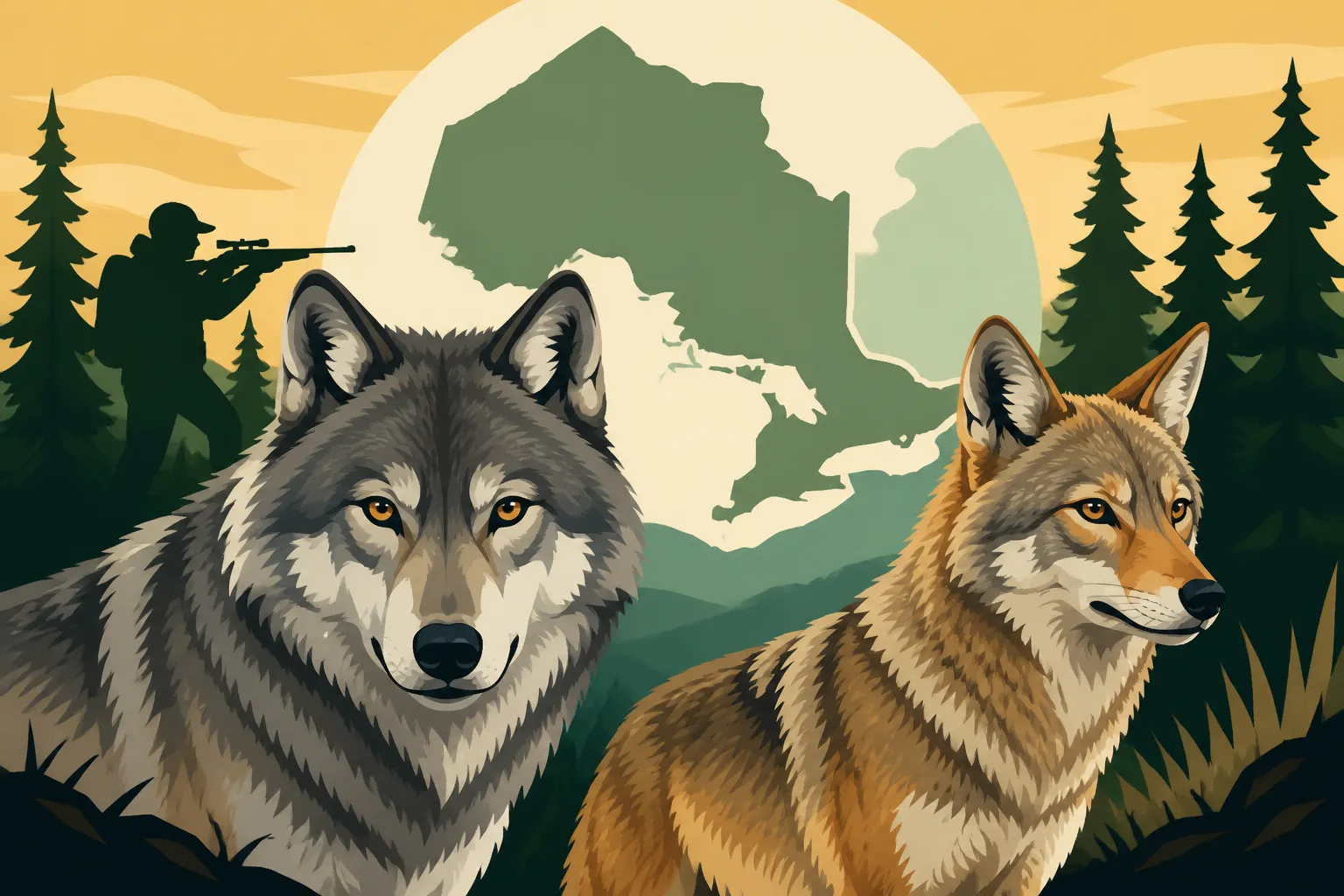
For many hunters and outdoor enthusiasts in Ontario, the sight or sound of a wild canid can stir a mix of awe and, sometimes, confusion. Are those distant howls a wolf or a coyote? What impact are they really having on local deer populations? This guide is dedicated to shedding light on the fascinating world of wolves and coyotes in Ontario, helping you understand their distinct characteristics, behaviours, and the vital role they play in our diverse ecosystems.
Understanding Ontario's Canids: Wolves vs. Coyotes
It's easy to lump all wild dog-like animals in Ontario into one category, but the reality is far more nuanced. We have true wolves, the incredibly adaptable coyotes, and a fascinating mix that blurs the lines between the two. Understanding these differences is key, not just for identification but also for appreciating their unique ecological roles and the specific regulations that apply to them.
The Elusive Eastern Wolf
When we talk about wolves in Ontario, we're primarily referring to the Eastern Wolf (Canis lycans), often also known as the Algonquin Wolf. These aren't the larger Grey Wolves you might find further west, but a species that has its own unique genetic lineage, closely tied to the Great Lakes region and southeastern Canada. Historically, their range was much broader, but human expansion and habitat loss pushed them into more remote areas. Today, they are most prevalent in Central and Eastern Ontario, especially in and around Algonquin Provincial Park and surrounding wilderness areas like the Kawartha Highlands and Haliburton Highlands.
What makes the Eastern Wolf so compelling is its elusive nature. They are quintessential wilderness inhabitants, operating in highly organized pack structures. A typical Eastern Wolf pack might consist of a breeding pair, their pups, and offspring from previous years, totalling anywhere from 4 to 8 animals, though larger packs are certainly not unheard of. These packs maintain vast territories, often hundreds of square kilometers, which they actively patrol and defend. Their primary prey includes white-tailed deer, moose calves, and beaver. Their presence is a strong indicator of a healthy, intact forest ecosystem. Unfortunately, the Eastern Wolf is a species of special concern in Ontario, and in certain areas, particularly within and surrounding Algonquin Provincial Park, there are specific protections, meaning Where Wolf Hunting Is Closed in Ontario is a critical piece of information for any hunter. The continued survival of this species depends heavily on preserving large tracts of wilderness and careful management.
The Adaptable Eastern Coyote
In stark contrast to the Eastern Wolf's wilderness preference, the Eastern Coyote (Canis latrans x Canis lycans) is the undisputed champion of adaptability. These animals are everywhere in Ontario, from the deep woods of the north to the agricultural fields of Southern Ontario, and yes, even on the fringes of our most populated cities. You've likely heard their distinct chorus of yips, barks, and howls echoing across farm fields or through suburban woodlots at dusk. The Eastern Coyote is a highly successful generalist predator, thriving in disturbed landscapes and areas with human activity.
Unlike wolves that rely on large pack structures, coyotes are far more flexible. While they can form small family units or loosely cooperative groups, especially during pup-rearing season, they are often seen hunting alone or in pairs. This solitary nature, combined with their incredible intelligence and wariness, makes them a challenging but rewarding quarry for hunters. Their diet is incredibly varied; they'll eat anything from mice, rabbits, and hares to deer fawns, wild turkeys, fruit, insects, and even carrion. Farmers often view them as a nuisance due to potential livestock predation, particularly on sheep and chickens, though their primary impact is often on small game and deer fawns. Their widespread distribution means that Why Ontario Has So Many Coyotes often comes down to their ability to exploit diverse food sources and habitats that wolves simply cannot.
Hybridization and the Coywolf Phenomenon
Here's where things get really interesting and, frankly, a bit confusing for those trying to identify what they're seeing. The "coywolf" isn't a separate species, but rather a hybrid animal resulting from the interbreeding of Eastern Coyotes with Eastern Wolves. This genetic blending has been occurring for centuries, primarily as European settlement pushed wolves into contact with westward-expanding coyotes. As wolf populations dwindled and their ranges fragmented, lone wolves or smaller groups sometimes bred with coyotes.
The result is an animal that often displays a mix of traits. Genetically, they are predominantly coyote, but with a significant percentage of wolf DNA (and sometimes even a small amount of domestic dog DNA!). Physically, they tend to be larger than Western Coyotes but smaller than Eastern Wolves, often weighing 30-50 pounds. They have larger jaws and more powerful bodies than pure coyotes, making them more effective predators of larger prey like adult deer. Behaviourally, they exhibit a blend of both parents: they can be as solitary and adaptable as coyotes, yet sometimes form small, cohesive packs that hunt more cooperatively like wolves. This evolutionary advantage has allowed them to thrive in human-modified landscapes, where large wolf packs struggle, but smaller coyotes might be less efficient at taking down larger prey. They are incredibly successful and represent a fascinating example of rapid evolution in response to environmental change. Understanding this hybridization is crucial for grasping the true nature of many of the canids encountered across Ontario today. Telling a Coyote From a Wolf becomes particularly tricky when you consider these hybrids.
Distribution and Habitat Across Ontario
Ontario is a massive province with incredibly diverse landscapes, and the distribution of our wild canids reflects this geographic variety. While there's certainly overlap, wolves tend to stick to the wilder northern reaches, while coyotes have truly colonized almost every corner of the province.
Where Wolves Roam: Northern Wilderness and Protected Areas
True Eastern Wolves, or Algonquin Wolves, are primarily found in the larger, more intact forest ecosystems of Central and Eastern Ontario. Their stronghold is undoubtedly Algonquin Provincial Park, which serves as a critical refuge and source population. Surrounding areas, like the Haliburton Highlands and sections of the Bancroft area, also support healthy wolf populations. Further north, in the vast boreal forest and Canadian Shield country of Northwestern Ontario and Northeastern Ontario, you'll find primarily Grey Wolves, which are larger and more common in those expansive wilderness tracts.
These areas are characterized by extensive, unbroken forests, large populations of ungulates like moose and deer, and minimal human disturbance. Wolves require vast territories to sustain their packs, and they are highly sensitive to habitat fragmentation and road development. For hunters venturing into these regions, especially for big game like Moose Hunting Ontario's Northern Bush or Whitetail Hunting in Ontario in the northern Wildlife Management Units (WMUs), understanding wolf presence is part of the challenge and reward. Their tracks are larger, their howls more resonant, and encountering a pack is an unforgettable wilderness experience. Conservation efforts in these areas focus on maintaining connectivity between protected landscapes and minimizing human-wildlife conflict to ensure these apex predators continue to thrive.
Coyote Strongholds: Farmland, Forest Edges, and Urban Fringe
If you're anywhere south of the Canadian Shield, or even within the more fragmented landscapes of the Shield, you're in prime Eastern Coyote country. They are truly masters of adaptation, able to exploit almost any habitat type. Southern Ontario, with its mix of agricultural fields, woodlots, river valleys, and even suburban green spaces, provides an ideal mosaic for coyotes. They can be found hunting along hedgerows, stalking deer in standing corn, or scavenging along the edges of towns.
In agricultural areas, coyotes can thrive on a diet of small rodents, rabbits, and whatever carrion is available, supplementing with fruits and berries in season. They've learned to navigate human infrastructure, often using old logging roads, utility corridors, and even railway lines as travel routes. Their ability to remain undetected, even when living surprisingly close to human habitation, is remarkable. This widespread presence means that hunters pursuing anything from Small Game Hunting in Ontario to Hunting Deer in Southern Ontario Farmland will almost certainly encounter coyotes. Their populations are robust, and they fill an important predatory niche, especially where wolves are absent. GoHunt can be particularly useful here, helping hunters identify key terrain features like bush edges, fencerows, and creek bottoms where coyotes are likely to travel and hunt, even in seemingly open farmland.
Overlap and Coexistence: Shared Territories
One of the most interesting aspects of canid distribution in Ontario is the significant overlap, particularly between Eastern Wolves and coywolves, and between coywolves and coyotes. In the transition zones between deep wilderness and more settled landscapes—think the southern fringe of Algonquin Park, the Muskoka region, or parts of Eastern Ontario—you'll find this genetic blending at its most pronounced. Here, the larger, more wolf-like hybrids might be found alongside smaller, more coyote-dominant individuals.
This overlap can create complex ecological dynamics. Coyotes generally avoid areas with strong wolf packs, as wolves will kill coyotes to eliminate competition. However, where wolf populations are sparse or fragmented, or where hybridization has become extensive, these distinctions blur. Hunters need to be particularly aware of the varying regulations in these overlap zones. For instance, some WMUs might have open seasons for coyotes but specific restrictions or outright prohibitions on wolf hunting, especially if Eastern Wolves are known to inhabit the area. It's a reminder that wildlife management is not always black and white, and staying informed about local rules and identifying your target accurately is paramount. A tool like GoHunt with its detailed WMU overlays can be invaluable for understanding these boundaries and restrictions.
Behavioral Patterns and Ecological Roles
Wolves and coyotes, despite their genetic similarities and occasional hybridization, exhibit distinct behavioral patterns that reflect their evolutionary paths and ecological roles. Understanding these differences can offer profound insights into their world and how they interact with the broader ecosystem, including the game animals we pursue.
Wolf Pack Dynamics and Hunting Strategies
The quintessential image of a wolf is that of a powerful, cooperative hunter, and this holds true for the Eastern Wolf in Ontario. They live in highly structured packs, typically an extended family led by an alpha male and female. This social cohesion is not just for companionship; it's a sophisticated survival strategy, especially when it comes to hunting large prey like deer and moose. A single wolf might struggle to bring down an adult white-tailed deer, but a coordinated pack can effectively chase, corner, and subdue even the largest ungulates.
Their hunting strategies are often characterized by endurance and intelligence. They will test herds, identify weak or sick individuals, and exploit terrain features to their advantage. A common tactic involves relay chases, where different pack members take turns leading the pursuit, eventually exhausting their prey. These hunts are often long, brutal affairs, but they are incredibly efficient. By culling the weakest, wolves play a vital role in maintaining the health and vigor of ungulate populations. They prevent overpopulation, reduce the spread of disease, and ensure that only the strongest genetics continue. This natural selection is crucial for the resilience of prey species like White-Tailed Deer Across Ontario. They are also significant predators of beaver, another large prey species requiring cooperative hunting. The presence of healthy wolf populations suggests a balanced ecosystem where apex predators are fulfilling their ecological responsibilities.
Coyote Opportunism and Solitary Hunts
Coyotes, on the other hand, are the ultimate opportunists. While they can and do hunt in pairs or small family groups, especially when raising pups, their default mode is often solitary. This gives them immense flexibility in foraging and hunting across diverse landscapes. A lone coyote is incredibly adept at catching small prey like mice, voles, rabbits, and hares, often employing a characteristic pounce. Their acute senses of smell and hearing make them highly effective rodent hunters, particularly in fields and open areas.
When it comes to larger prey, coyotes will readily take deer fawns, especially in spring, and adult deer weakened by harsh winters or injury. What Coyotes Do to Fawn Survival is a significant concern for deer managers and hunters, as high coyote densities can depress deer recruitment rates in some areas. They are also masters of scavenging, quickly locating and consuming carrion, which helps to clean up the environment and recycle nutrients. This flexibility in diet and hunting style allows them to thrive in human-modified landscapes where large, specialist predators might struggle. They're often seen as both a beneficial predator of agricultural pests and a challenging management issue for livestock producers.
Impact on Prey Species and Ecosystem Health
Both wolves and coyotes exert significant pressure on prey populations, but their specific impacts differ based on their species, density, and local ecosystem conditions.
Wolves, as apex predators, are often seen as "keystone" species. Their presence can trigger a trophic cascade, meaning their influence trickles down through the entire food web. By regulating ungulate populations, they can allow vegetation to recover, which in turn benefits other herbivores and the overall health of the forest. In northern Ontario, where moose are a primary food source, the health of the moose population is intricately linked to wolf dynamics. While they do take healthy animals, their primary role is often to remove the old, the weak, and the sick, making the prey population stronger in the long run.
Coyotes, while smaller, are far more numerous and widespread, leading to a different kind of ecological impact. In areas with high coyote densities, their predation on fawns can be a major limiting factor for white-tailed deer populations, especially in agricultural zones where deer might concentrate. They are also highly effective at controlling small game populations, such as rabbits and wild turkeys, particularly Calling a Bearded Bird in Spring where turkey poults are vulnerable. Their constant presence helps keep rodent populations in check, which can be beneficial for farmers. They also compete with other mesopredators like foxes and bobcats. Understanding this complex web of interactions is essential for effective wildlife management and appreciating the full picture of Ontario's ecosystems.
Identifying Canids in the Field
Being able to accurately identify whether you're looking at a wolf, a coyote, or a hybrid in the field can be quite challenging, especially at a distance or in fleeting glimpses. However, paying attention to key physical characteristics, vocalizations, and sign can help you make a more informed assessment, which is crucial for safety, legal compliance, and simply understanding the wildlife around you.
Physical Characteristics: Size, Color, and Track Differences
The most immediate and obvious differentiator is size. An adult Eastern Wolf (or Grey Wolf in the north) will be significantly larger and more robust than an Eastern Coyote.
| Feature | Eastern Wolf (Algonquin Wolf) | Eastern Coyote |
|---|---|---|
| Weight | 60-100+ lbs (27-45+ kg) | 25-50 lbs (11-23 kg) |
| Height | 28-32 inches at shoulder (71-81 cm) | 20-22 inches at shoulder (51-56 cm) |
| Length | 4.5-5.5 ft nose to tail (137-168 cm) | 3.5-4.5 ft nose to tail (107-137 cm) |
| Build | More robust, broader chest, longer legs | More slender, often "leggy" appearance |
| Head | Broader skull, rounded ears | Narrower skull, pointed ears |
| Snout | Broader, squarer muzzle | Pointed, dog-like muzzle |
| Tail | Shorter, thicker, often held straight down | Longer, bushier, often carried low or tucked |
| Fur Color | Variable: grey, brown, reddish-brown, black | Variable: often grizzled grey/brown, reddish tint on legs/ears |
| Tracks | Larger (4-5 inches long), more oval, parallel toes | Smaller (2.5-3.5 inches long), more rounded, splayed toes sometimes |
Coloration can be tricky. While wolves often have a richer, more varied coat with grizzled grey, brown, or even reddish hues, coyotes also exhibit a range, often with more reddish-brown on their legs, ears, and behind their shoulders. A key visual cue for coyotes is often a darker "mask" around the eyes and sometimes a dark stripe down the middle of their back leading to a dark tail tip.
Tracks are one of the most reliable indicators. Wolf tracks are notably larger, often 4-5 inches long, and tend to be more oval with tightly bunched, parallel toes. Coyote tracks are smaller, usually 2.5-3.5 inches long, and are often more rounded, with toes that can appear more splayed. It's often said that a line drawn through a wolf's track between the front and back toe pads will not intersect the outer toe pads, whereas it will for a domestic dog or coyote. Remember, a large coywolf might leave tracks that fall in an ambiguous size range, making definitive identification harder. This is where tools like GoHunt, which can show you satellite imagery to identify likely travel corridors, combined with fresh snow or mud, can help you interpret tracks in context.
Vocalizations: Howls, Yelps, and Barks
Hearing a canid's vocalizations can be an amazing experience, and they offer another clue to identification.
- Wolves are famous for their deep, resonant, prolonged howls. These howls are typically lower in pitch, have a consistent tone, and often crescendo into a rich, melodic chorus when a pack is communicating. A single wolf howl can carry for miles across the stillness of the northern bush. They use howls to communicate location, rally the pack, or announce territorial claims. It’s an unmistakable sound of the wilderness.
- Coyotes have a much more varied and often frantic vocal repertoire. Their calls are characterized by a series of sharp yips, barks, and shorter, higher-pitched howls that often trail off into a "yip-howl." A group of coyotes can create a complex, chaotic chorus that might sound like many more animals than are actually present. They use these sounds for communication, alarm, and to locate other coyotes. They also frequently bark, especially when alarmed or asserting dominance. For hunters trying Calling Coyotes at First Light, understanding these distinct sounds is essential to recognizing when and how they are responding.
Reading Sign: Scat, Tracks, and Kills
Beyond direct sightings and sounds, the "sign" an animal leaves behind can tell a story.
- Scat (feces): Wolf scat is typically larger (1-2 inches in diameter, 6-12 inches long), often rope-like, and will almost always contain hair and bone fragments from their prey. Coyote scat is smaller (around 0.5-1 inch in diameter, 4-8 inches long) and will also contain hair and bone, but might show more evidence of fruit or insect matter depending on the season.
- Tracks: As discussed, tracks are a prime indicator. Look for patterns of travel – wolves tend to trot in straight lines, sometimes stepping precisely in the tracks of the lead animal to conserve energy, especially in snow. Coyotes can be more erratic.
- Kills: Analyzing a kill site can offer clues. Wolf kills of large prey like deer or moose often show signs of struggle, with significant blood loss and dismemberment, and bones might be crushed due to their powerful jaws. Coyotes, when they take a deer, often target fawns or weakened adults, and the kill might appear less violent, with smaller bite marks and less dismemberment initially, although they will consume the carcass thoroughly. If you encounter a partially eaten carcass, particularly in areas where both might be present, careful examination of bite marks and track size around the site can help identify the predator.
Hunting and Managing Wolves and Coyotes in Ontario
For hunters, understanding the regulations and strategies for pursuing wolves and coyotes in Ontario is critical. While both are canids, their management and the opportunities available to hunters differ significantly, reflecting their ecological status and distribution.
Regulations and Seasons: What Hunters Need to Know
Ontario has specific regulations for hunting wolves and coyotes, and it’s imperative to consult the current hunting regulations summary provided by the Ministry of Natural Resources and Forestry (MNRF) before heading afield. These rules can vary by Wildlife Management Unit (WMU) and can change from year to year.
Generally, coyotes have a much more open hunting season across the province, often year-round in many WMUs, particularly in Southern Ontario where they are abundant and can impact livestock or deer populations. There are usually no bag limits for coyotes. This reflects their status as a widespread, adaptable species that benefits from population control in certain areas. For residents, a small game licence typically covers coyote hunting. You'll want to review the full Ontario Wolf and Coyote Tag Rules before your hunt.
Wolves, however, are managed more cautiously. In some WMUs, particularly those surrounding Algonquin Provincial Park, the hunting of wolves (specifically Eastern Wolves/Algonquin Wolves) is completely prohibited or heavily restricted due to their protected status as a species of special concern. In other northern WMUs where Grey Wolves are present, there might be specific open seasons, often shorter, and with strict bag limits (e.g., one wolf per hunter). Non-residents may have different regulations and costs for wolf tags. It cannot be stressed enough: always check the regulations for the specific WMU you plan to hunt. Mistaking an Eastern Wolf for a coyote can lead to serious legal consequences. Where Wolf Hunting Is Closed in Ontario is an essential read for any hunter.
Calling Strategies for Ontario Predators
Predator calling is a popular and effective method for both wolves and coyotes, requiring patience, stealth, and a good understanding of canid behaviour.
- Coyote Calling: Coyotes are notoriously curious and responsive to a variety of calls. Electronic calls are highly effective, offering a range of sounds from distress calls (rabbit, fawn, bird) to coyote vocalizations (howls, yips, barks). Hand calls, mimicking rabbit or mouse distress, are also very successful. When Calling Coyotes at First Light or any time of day, set up in an area with good visibility downwind, as coyotes will almost always circle to approach from downwind to use their superior sense of smell. Be patient, call in short sequences, and be prepared for a quick shot. Areas like Ontario's farm country, with their mixed cover and open fields, are excellent for coyote calling.
- Wolf Calling: Calling wolves is a different beast altogether. While distress calls can sometimes work, especially for younger or less experienced wolves, howling is often more effective, particularly for locating packs or challenging territorial males. Deep, prolonged howls mimicking a rival wolf or a lonely individual can elicit responses. Success depends on being in active wolf territory, often in the northern wilderness. Wolves are incredibly wary, and consistent calling with a lack of movement is key. Due to their protected status in some areas, wolf calling might be more about observation and photography than hunting.
Coexisting with Canids: Best Practices for Landowners and Hunters
Whether you're actively hunting them or simply sharing the landscape, learning to coexist with wolves and coyotes is an important aspect of living and hunting in Ontario.
For landowners, especially those with livestock, prevention is key. Secure fencing, guard animals (such as llamas or specific dog breeds like Great Pyrenees), and removing attractants can significantly reduce conflicts. Promptly removing livestock carcasses prevents coyotes and wolves from becoming habituated to scavenging around farmsteads. Reporting repeated livestock depredation to the MNRF is also crucial, as they can offer advice and sometimes assistance.
For hunters, practicing responsible hunting ethics means not only knowing your target and local regulations but also appreciating the role these predators play. Understanding What Coyotes Do to Fawn Survival might influence your deer management strategies on private land, but it doesn't mean indiscriminate killing. Respecting their place in the ecosystem means recognizing their value as a natural control on prey populations. When hunting, proper disposal of gut piles away from public trails or residential areas can prevent coyotes from being drawn into human-inhabited spaces. If you're Hunting Coyotes on Ontario Farm Ground and encounter a wolf, ensure you positively identify your target before taking a shot, especially where wolf hunting is restricted. Always remember that wildlife is a shared resource, and ethical conduct ensures healthy populations for future generations.
Disclaimer
The information provided in this guide is for general knowledge and informational purposes only, and does not constitute legal advice. Hunting regulations in Ontario are subject to change and vary by Wildlife Management Unit. It is the sole responsibility of the hunter to consult the most current official Ontario Hunting Regulations Summary, provided by the Ministry of Natural Resources and Forestry (MNRF), before engaging in any hunting activities. Always prioritize safety, ethical conduct, and legal compliance.