What Counts for an Ontario Trophy Record
That moment you finally get your hands on an animal that makes your heart pound a little harder, whether it's the size of its antlers, the sheer mass of its skull, or simply the incredible story behind the harvest, is something every hunter cherishes. But beyond that personal triumph, a common question often surfaces: "Does this animal count for an official Ontario trophy record?" It's a great question, and it speaks to a deeper desire to understand the benchmarks and traditions of our hunting heritage. This guide will walk you through what it really means for an animal to qualify as an Ontario trophy record, covering everything from official scoring systems to the critical ethics that underpin true recognition.
Understanding the Quest for an Ontario Trophy Record
The pursuit of a trophy animal is often misunderstood by those outside the hunting community. It's not just about the size of the rack or skull; it's deeply intertwined with the effort, the experience, and the respect shown to the animal and the land. In Ontario, like anywhere else, a true trophy is a blend of impressive physical characteristics and an ethical, memorable hunt.
More Than Just Antlers: The Spirit of the Hunt
For many of us, the "trophy" isn't solely defined by a tape measure. It's the memory of that crisp autumn morning, the challenge of the stalk, the patience required, or the sheer awe of being in the animal's presence. Perhaps it was a buck that eluded you for seasons, or a bear that tested your woodsman skills in a new way. These intangible elements are often far more valuable than any score. We hunt for meat, for sustenance, but also for these profound experiences and the connection to nature that a truly mature animal represents. Many hunters will never submit an animal for a record book, but they'll proudly display a set of antlers or a tanned hide because of the personal journey it represents. It’s a memento of a unique moment in time in the vast wilderness of this province.
The Importance of Fair Chase
Before any discussion of measurements or scores, the principle of fair chase must be the absolute foundation. Without it, no animal, no matter how large, can truly be considered a trophy in the ethical sense. Fair chase means giving the animal a reasonable chance to escape. This isn't just a suggestion; it's a deeply ingrained code of conduct for serious hunters and a non-negotiable requirement for all official record-keeping organizations. This means no hunting from vehicles, no illegal baiting, no spotlighting, and adhering strictly to all seasons, limits, and methods outlined in the Ontario Hunting Licences and What They Cost and Ontario Deer Season Dates and Tags guidelines. It means understanding the capabilities of your equipment and yourself, and never taking a shot that isn't clean and ethical. For many, fair chase extends beyond simply obeying the law, encompassing a personal commitment to conservation and respect for wildlife that goes above and beyond. It’s about honouring the animal in every step of the process.
Official Scoring Systems for Ontario Big Game
When it comes to putting a number to that trophy, there are established scoring systems used worldwide, and certainly here in Ontario. These systems provide a standardized method for comparing the physical characteristics of harvested animals, allowing for fair and consistent ranking.
Boone and Crockett vs. Pope and Young
The two most widely recognized North American record-keeping clubs are the Boone and Crockett Club and the Pope and Young Club. The primary difference between them lies in the weapon used:
- Boone and Crockett Club: This club recognizes animals taken with firearms (rifles, shotguns, muzzleloaders) or with bows in specific big game categories. It's the oldest and most prestigious record-keeping organization, focusing on mature animals taken under fair chase conditions. Their scoring system is intricate, measuring various dimensions of antlers, horns, or skulls.
- Pope and Young Club: This club is dedicated exclusively to archery-harvested animals. Their scoring system is essentially the same as Boone and Crockett for antlers and horns, emphasizing symmetrical growth and overall mass, but it is applied only to animals taken with a bow or crossbow.
Both systems use a series of measurements, including beam length, circumference, and tine length for antlered game, and overall spread. Deductions are made for non-symmetrical points or differences between sides, rewarding symmetrical, heavy, and long-antlered specimens. For typical racks, the goal is symmetry; for non-typical, it's about sheer mass and abnormal points. It's crucial to understand these distinctions if you're hoping your Ontario trophy will make it into one of their books.
Species-Specific Scoring Considerations
Each game species has its own set of criteria that contribute to its "score." It’s not a one-size-fits-all approach.
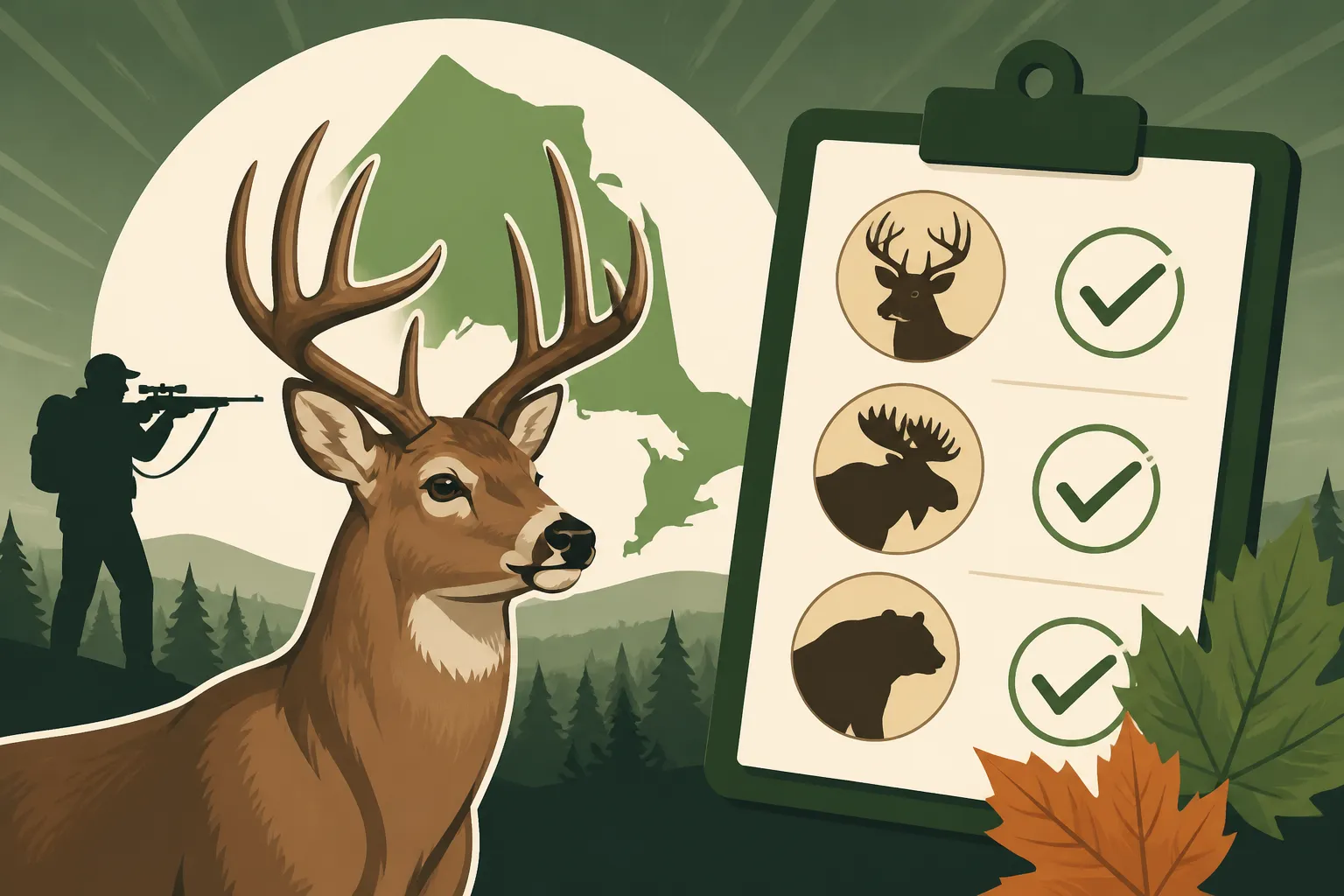
- Whitetail Deer: For these iconic Ontario deer, antler size is paramount. Measurements include the length of main beams, the length of each typical tine (G1, G2, etc.), the inside spread of the antlers, and four circumference measurements taken at specific points along the main beam. Non-typical points are measured separately. The greater the length, mass, and spread, with fewer deductions for asymmetry, the higher the score. Many of the bigger bucks come from areas like Hunting Deer in Southern Ontario Farmland where nutrition is abundant.
- Moose: A large bull moose trophy is primarily judged on the size and configuration of its palmate antlers. Key measurements include the greatest spread, the width and length of each palm, and the number and length of points along the palm edge. Symmetry is also valued, but the sheer size of the "shovel" is often what truly impresses. Finding a true giant often means heading into the remote reaches of Moose Hunting Ontario's Northern Bush.
- Black Bear: Unlike antlered game, black bears are scored based on their skull measurements. The length and width of the cleaned skull are measured, and these two figures are added together to get the total score. The larger the skull, the higher the score. It’s amazing how much What a Big Boreal Black Bear Weighs can vary, and that usually translates to skull size.
- Elk: Ontario's restored elk herd offers another opportunity for trophy recognition. Elk antlers are majestic, and scoring focuses on the length of the main beams, the length of each point (or tine), the inside spread, and circumference measurements at four points along the beam. A classic, symmetrical six-point (or more) rack is highly prized. If you're lucky enough to draw a tag, understanding What to Do After Drawing an Ontario Elk Tag is key.
- Wild Turkey: While not included in Boone and Crockett or Pope and Young, wild turkeys are a popular game species with their own informal trophy metrics. Hunters often consider the length of the beard, the length of the spurs (sharp protrusions on the back of the leg), and the bird's weight. Many hunting communities and some local clubs track these stats. Spring Turkey Hunting in Ontario is prime time for big gobblers.
The Role of Official Measurers
To ensure accuracy and impartiality, all animals submitted for official record books like Boone and Crockett or Pope and Young must be measured by a certified official measurer. These individuals undergo rigorous training to understand and apply the complex scoring rules consistently.
The process usually involves:
- Waiting Period: For antlered game, there's often a drying period (typically 60 days) after harvest before the antlers can be officially measured. This allows for any shrinkage to occur, ensuring a stable, final measurement.
- Contacting a Measurer: Hunters need to locate and schedule an appointment with a certified measurer. These individuals are often volunteers and can be found through the respective club's website.
- The Measurement: The measurer will meticulously take all required measurements, often with a witness present. They'll also verify fair chase, usually through a signed affidavit from the hunter and sometimes a witness to the hunt.
- Submission: The measurer will then compile the score sheet and necessary documentation for submission to the record book.
This meticulous process ensures that every entry meets the highest standards of integrity and accuracy, reflecting the true calibre of the animal harvested.
The Ontario Context: What Makes a Record Here
Ontario is a vast province, offering incredibly diverse hunting opportunities, from the dense agricultural lands of the south to the expansive boreal forests of the north. This diversity also means different regions are known for producing different types and sizes of trophy animals.
Regional Differences in Trophy Potential
It's a fact of nature: where game animals live significantly impacts their growth potential.
- Southern Ontario Whitetails: The rich agricultural fields of Southern Ontario provide an abundance of high-protein forage, leading to excellent antler growth and heavy body weights for whitetail deer. Areas with nutrient-rich soils and limited hunting pressure often produce some of the largest bucks in the province. If you're looking for a giant typical or non-typical whitetail, the southern WMUs are often your best bet. Why Southern Ontario Grows Heavy Bucks is a testament to the land's bounty.
- Northern Moose: Conversely, the vast, wild landscapes of Northern Ontario, particularly the boreal forest regions, are synonymous with big moose. While nutrition might not be as rich as southern farmland, the sheer age and genetic potential of moose in these less-pressured, expansive territories allow them to grow massive palmate antlers. Regions around the Clay Belt and Northwestern Ontario are legendary for their moose. Moose Hunting Ontario's Northern Bush offers prime opportunities for a record-book bull.
- Black Bears: Black bear populations are strong across much of Ontario's bush country. Larger skulls, indicative of older, heavier bears, are often found in areas with consistent food sources like berry crops and good denning habitat. The size of an Ontario bear often correlates to its age and the availability of food sources throughout its life, with some of the biggest coming from the remote northern reaches. Black Bear Hunting in Ontario often leads to significant encounters.
- Elk in Bancroft: Ontario's elk herd, primarily centered around the Bancroft area, has been a success story. While the herd is still growing and maturing, successful hunters have taken some impressive bulls. As the population continues to stabilize and expand, the potential for record-book elk will likely increase. Hunting Elk Around Bancroft details what makes this area special.
Understanding these regional nuances can significantly influence your hunt planning if a trophy is your goal. Scouting and research into specific WMUs are crucial. Many hunters rely on resources like GoHunt to gather intelligence on different regions and their historical harvest quality.
The Record Books and How to Enter
Once your animal has been officially measured, the next step is to submit it to the appropriate record book. This involves a formal application process.
- Boone and Crockett / Pope and Young: For these national organizations, you'll typically send the completed score sheet, along with photographs of the animal and a signed fair chase affidavit, to their headquarters. There might be a submission fee. They will review the submission, and if it meets their minimum entry score, it will be entered into their record book. Their books are generally published every few years, showcasing new entries.
- Provincial or Local Records: While Boone and Crockett and Pope and Young are national, some provinces or local hunting clubs might keep their own, less formal, record books. These can be a fantastic way to recognize local accomplishments and foster community among hunters. For example, some regional outdoors clubs or even online platforms like GoHunt might have their own systems for tracking impressive local harvests. Always check with local organizations for their specific criteria and submission processes.
Submitting an animal isn't just about personal recognition; it contributes valuable data to wildlife management. These record books track the health and quality of game populations over time, providing insights into habitat conditions, management strategies, and genetic potential. It’s a way for hunters to give back to the resource they cherish.
Beyond the Tape Measure: Other Factors for Recognition
While numbers are important for official records, the true essence of a "trophy" in hunting goes far deeper. It encompasses a hunter's ethics, respect for the animal, and the story that unfolds during the pursuit.
Ethical Harvest and Respect for the Animal
As we've touched upon, adhering to fair chase is non-negotiable. But beyond that, true respect for the animal extends to how it's treated after the shot. This means:
- Quick and Humane Harvest: Striving for a clean, ethical shot to minimize suffering.
- Diligent Recovery: Making every effort to track and recover the animal, especially in challenging terrain or Meat Care in Ontario's Warm Early Seasons. No animal should ever be left to waste.
- Proper Field Dressing and Care: Immediately field dressing the animal to preserve the meat and ensure it is utilized to its fullest. This also includes handling the cape and antlers carefully if a mount is desired.
- Honouring the Animal: Many hunters take a moment to reflect and express gratitude to the animal and the natural world. This profound connection is a hallmark of ethical hunting.
These practices demonstrate a deep respect for the wildlife we pursue and are arguably more important than any measurement.
Documentation and Verification
Even if you don't plan to submit for an official record, good documentation of your hunt and harvest is invaluable. If you do decide to pursue a record later, this documentation becomes crucial.
- Photographs: Take clear, well-lit photos of your animal from multiple angles, especially showcasing the antlers or skull. Include yourself, but focus on the animal.
- Video: A short video can capture the excitement and scale of the harvest.
- Witness Statements: If you were hunting with others, their testimony can corroborate the circumstances of the hunt, especially the fair chase aspect.
- Location and Date: Record the exact location (e.g., WMU, coordinates if possible), date, and time of the harvest.
- Weight (if practical): For species like wild turkey or smaller game, weighing the animal can add to the story.
This kind of detailed record-keeping not only helps with potential official submissions but also serves as a rich personal journal of your hunting adventures. Many hunters use digital tools or apps, including features often found on platforms like GoHunt, to organize this information efficiently.
The Personal Story and Community Value
Ultimately, a trophy is a story. It's the narrative of perseverance, skill, and sometimes, plain old luck. It's the tale you'll recount around the campfire, to your children, or to fellow hunters at the local sporting goods store. The journey to harvest that animal, the obstacles overcome, and the lessons learned are often far more impactful than its mere dimensions.
Sharing these stories within the hunting community fosters a sense of camaraderie and appreciation for the sport. Whether it's showing off pictures to friends, writing about your experience, or participating in a local hunter's banquet, these shared experiences enrich the hunting tradition. While a Boone and Crockett entry might be the pinnacle for some, the personal satisfaction of a hard-earned harvest, respected and utilized, is the true reward for most Ontario hunters.
Ontario Trophy Record Scoring Overview
Here’s a quick glance at the primary scoring elements for some popular Ontario big game species:
| Species | Primary Scoring Elements | Scoring System | Key Considerations |
|---|---|---|---|
| Whitetail Deer | Main beam length, tine length, inside spread, circumference | Boone & Crockett, Pope & Young | Symmetry (typical), abnormal points (non-typical) |
| Moose | Greatest spread, palm width/length, points on palm | Boone & Crockett | Palmate size and configuration, overall mass |
| Black Bear | Skull length + skull width | Boone & Crockett | Overall size of cleaned skull |
| Elk | Main beam length, tine length, inside spread, circumference | Boone & Crockett | Number of points, mass, symmetry |
| Wild Turkey | Beard length, spur length, live weight | Unofficial/Local Clubs | Longer beards and spurs, heavier birds |
This table serves as a general guide. For precise details, always consult the official scoring rulebooks of the respective organizations.
Disclaimer
This article is for general informational purposes only and does not constitute professional advice. Laws, prices and regulations vary by location and change over time. Consult a qualified professional for guidance on your specific situation.