Snowshoe Hare and Its Ten Year Cycle
If you've spent any time hunting or simply exploring the vast wild places of Ontario, you've probably encountered the snowshoe hare. These resilient little creatures are an iconic part of our northern and even some southern landscapes, but their populations can be notoriously unpredictable, leaving hunters scratching their heads about where all the hares have gone, or, conversely, wondering how to possibly shoot them all in a boom year. This comprehensive guide will pull back the curtain on the fascinating, sometimes frustrating, ten-year cycle of the snowshoe hare and equip you with the knowledge to understand and better hunt them across our province.
What are Snowshoe Hares and Where Do They Live in Ontario?
Snowshoe hares, often mistaken for rabbits, are a distinct and hardy species perfectly adapted to life in Ontario's varied climate. Their unique biology and habitat preferences dictate where you'll find them and how their populations ebb and flow. Understanding these fundamentals is the first step to becoming a more successful hare hunter.
Identification and Physical Characteristics
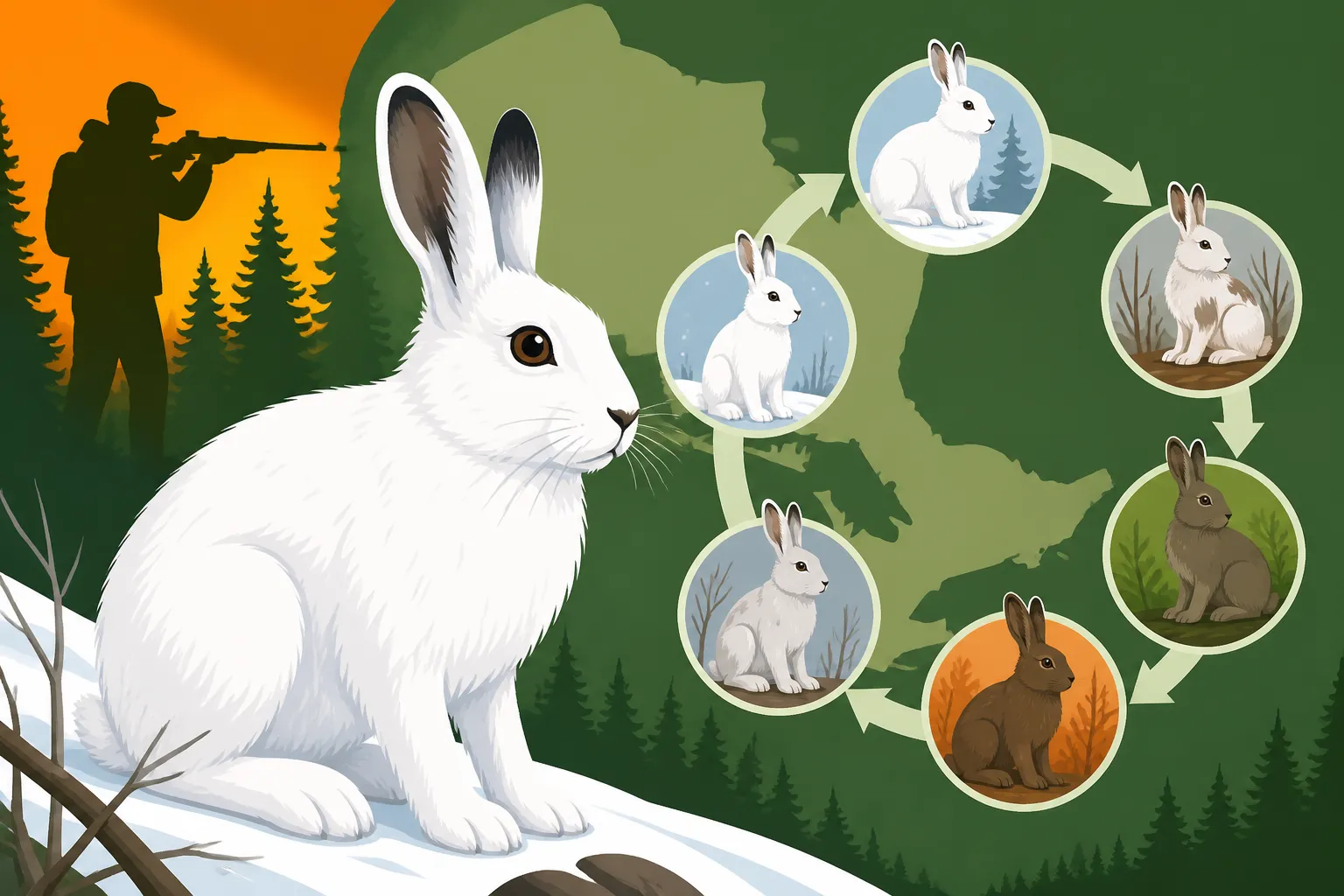
Snowshoe hares (Lepus americanus) are easily recognized by their large hind feet, which are densely furred and act like snowshoes, distributing their weight over snow and allowing them to travel with remarkable ease, even through deep drifts. This adaptation is crucial for their survival during our harsh Ontario winters. They typically weigh between three to five pounds and measure about 18 to 20 inches in length, not including their short, stubby tail. One of their most striking features is their seasonal coat change. In summer, their fur is a mottled reddish-brown, providing excellent camouflage against the forest floor and underbrush. As autumn progresses, their coat gradually transitions to a pristine white, blending seamlessly with the snowy landscape. This incredible adaptation, driven by photoperiod (the length of daylight), allows them to remain hidden from a multitude of predators. However, in years with early snow or late thaws, their camouflage can sometimes be out of sync, leaving them vulnerable.
Beyond their iconic feet and changing fur, snowshoe hares have long, powerful legs built for bursts of speed and incredible agility, capable of reaching speeds up to 45 kilometres per hour. Their large eyes are set on the sides of their head, giving them a wide field of vision to detect danger from almost any direction, while their long, twitching ears constantly scan for the slightest sound of an approaching predator. These sensory organs are finely tuned, allowing them to pick up the rustle of leaves or the soft pad of a lynx's paws even from a distance. The combination of their specialized feet, seasonal camouflage, and acute senses makes them a true master of evasion in the dense undergrowth they call home, presenting a significant challenge for even the most observant hunter.
Preferred Habitats in Ontario
In Ontario, snowshoe hares are primarily creatures of the dense forest, preferring areas with thick coniferous cover, mixed woods, and regenerating clear-cuts. You'll find them widely distributed across the northern and central parts of the province, and in suitable pockets in the south. These hares thrive in habitats that offer a mosaic of dense hiding cover and abundant browse material. Think tangled alder thickets, young spruce and fir stands, or dense cedar swamps. These areas provide both protection from aerial predators like owls and ground predators like coyotes and foxes, as well as a steady supply of twigs, buds, and bark to feed on, especially during the lean winter months.
They are particularly fond of areas undergoing natural regeneration or those disturbed by logging operations or wildfires. A three to twenty-year-old cutover block, for instance, provides a perfect mix of dense young growth for cover and plenty of new shoots for food. The edges of these areas, where they transition into mature forest or open clearings, are also prime hare country. While you might spot the occasional cottontail rabbit along a fencerow in Southern Ontario, the snowshoe hare is more truly a creature of the deep bush. Utilizing tools like Scouting With Satellite Imagery in Ontario can help you identify these types of regenerating forest habitats, dense stands, and transition zones before you even step foot in the woods. Looking for areas with dense undergrowth, recent timber harvest activity, or thick evergreen stands is key, and using a modern app like GoHunt can help you mark these potential hotspots for later exploration.
Understanding the Ten-Year Cycle: The Ecological Phenomenon
The snowshoe hare population cycle is one of the most famous and dramatic natural fluctuations in North American ecology. It's not just a minor variation; it's a boom-and-bust cycle that sees hare numbers explode and then plummet over roughly a decade. For hunters, understanding this cycle is paramount to managing expectations and adjusting strategies.
The Rise: Boom Periods
During the "rise" phase of the cycle, snowshoe hare populations begin to increase steadily. This period often follows a low point and can last for several years. Favourable conditions, such as mild winters that reduce mortality, abundant food resources, and perhaps a temporary dip in predator numbers, all contribute to this growth. Hares are prolific breeders, with females capable of having multiple litters (up to four) a year, each producing several young. When conditions are right, their numbers can truly skyrocket. You'll start noticing more tracks in the snow, more hares darting across trails, and evidence of their browsing becoming more widespread.
As the population swells, it can reach densities where it seems like there's a hare behind every bush. Hunters experience incredible success, with bag limits sometimes filled quickly. This peak period can be exhilarating, offering fantastic opportunities for Small Game Hunting in Ontario. During these boom years, even less experienced hunters can find success, as the sheer abundance of hares makes encountering them almost inevitable. This is also when you'll see a noticeable increase in the population of their main predators, who are also enjoying the abundant food supply, but typically with a slight lag in their own population growth.
The Fall: Population Crashes
Just as surely as the hares rise, they must fall. The "fall" or "crash" phase is often swift and dramatic, with hare numbers plummeting over a year or two. This decline isn't usually due to a single factor but a combination of escalating pressures. As hare populations become incredibly dense, they begin to overbrowse their habitat, depleting their food sources and making them more vulnerable to nutritional stress and disease. The sheer number of hares also makes them easier targets for predators, whose populations have now caught up and are also at their peak.
During a crash, it's not uncommon for hunters to go from seeing dozens of hares to only a handful, or even none, in areas that were recently crawling with them. This can be incredibly frustrating and confusing if you're not aware of the cycle. Suddenly, the bush feels empty. Disease can also play a significant role during these high-density periods, spreading rapidly through the stressed population and contributing to the dramatic die-off. The synchronicity of these declines across vast regions of Ontario is what makes the cycle so remarkable, illustrating a fundamental ecological principle of predator-prey dynamics.
The Recovery Phase
Following a sharp crash, the snowshoe hare population enters a "recovery" phase, which can be the longest part of the cycle. During this time, numbers remain low, sometimes for several years, as the ecosystem rebalances. With fewer hares, their primary predators, like the lynx, also experience a subsequent population decline due to food scarcity. This reduction in predator pressure, combined with the slow regeneration of browsed-out vegetation, allows the remaining hare population to slowly but steadily begin to reproduce and increase their numbers again.
For hunters, the recovery phase means challenging hunting. You'll need to work harder, scout more diligently, and often adjust your expectations. This is a time when understanding hare habitat and movements becomes even more critical. It’s also a time for patience, knowing that the pendulum will eventually swing back. The cycle is a powerful reminder of nature's inherent rhythm, a constant dance of life and death, and for those who pay attention, it offers profound insights into the complex web of life in Ontario's wilderness.
Here's a simplified look at the hare cycle:
| Cycle Phase | Duration (Approx.) | Hare Numbers | Predator Numbers (e.g., Lynx) | Key Characteristics | Hunter Experience |
|---|---|---|---|---|---|
| Low Point | 1-2 years | Very Low | Low (declining) | Scarcity of hares, habitat recovering. | Extremely challenging, few sightings. |
| Growth/Rise | 3-4 years | Increasing | Increasing (lagging) | Hares become more common, good breeding success. | Improving success, more consistent encounters. |
| Peak/Boom | 1-2 years | Very High | High | Hares abundant, habitat stress evident. | Excellent success, high bag limits possible. |
| Decline/Crash | 1-2 years | Rapidly Falling | Still High (then declining) | Sudden drop in hare sightings, disease, predation. | Very poor success, hares seemingly vanish. |
| Recovery | 2-3 years | Low to Moderate | Declining (food scarcity) | Hares slowly rebound, predator numbers drop. | Challenging, but improving year over year. |
Factors Influencing the Snowshoe Hare Cycle
The ten-year cycle isn't just a random pattern; it's a complex interplay of environmental forces, with predators and food sources being two of the most significant drivers. Understanding these factors provides deeper insight into why hare numbers fluctuate so dramatically.
Predator-Prey Dynamics (Lynx, Coyote, Owl)
At the heart of the snowshoe hare cycle is a classic predator-prey relationship, often cited as one of the best examples in ecology. The Canada lynx is perhaps the most famous and specialized predator of the snowshoe hare. Lynx populations closely track hare numbers, with their own cycles lagging slightly behind. When hare numbers are high, lynx thrive and reproduce successfully, leading to an increase in lynx. This increased predator pressure then contributes to the crash in hare numbers. As hares become scarce, lynx numbers inevitably decline due to starvation and reduced breeding success, allowing the hare population to begin its slow recovery. This continuous dance has been observed and studied for centuries, particularly through fur trapping records in Canada.
However, lynx are not the only players. Coyotes, foxes, bobcats, fishers, various owls (especially great horned owls), and even some hawks all feast on snowshoe hares. While these generalist predators might not be as solely dependent on hares as the lynx, their combined pressure can be immense, particularly during the peak hare years when hares are abundant and easier to catch. During the "fall" phase, when hares are already stressed by overcrowding and diminishing food, the increased efficiency of a dense predator population can quickly tip the scales, leading to a rapid decline. Knowing that predators are actively hunting in the area can also influence your own hunting strategy; if you're finding a lot of coyote tracks, for example, it might indicate areas where hares are under significant pressure. Remember, hunting coyotes in Ontario farm country can also indirectly benefit prey species like hares and deer.
Food Availability and Habitat Quality
Beyond predation, the quality and availability of food play a critical role in regulating hare populations. Snowshoe hares are herbivores, primarily browsing on twigs, buds, and bark of various shrubs and young trees, especially during winter. In summer, they also eat grasses, clover, and other herbaceous plants. During the boom phase of the cycle, when hare numbers are at their highest, their intense browsing can severely deplete the available vegetation. They essentially "eat themselves out of house and home," making their habitat less capable of supporting such a large population.
This overbrowsing leads to nutritional stress, making hares weaker, more susceptible to disease, and less capable of escaping predators. Young hares, in particular, may struggle to find enough nutritious food to grow and survive, impacting reproductive success. Furthermore, dense, regenerating forests that provide optimal cover can eventually grow too tall and open, reducing the quality of their prime habitat. This natural progression of forest succession means that even without human intervention, hare habitat changes over time, affecting their ability to thrive. Hunters scouting new areas should always consider the age and density of the forest stands, as these directly correlate with the likely presence of hares.
Weather Patterns and Disease
While not always the primary driver, weather conditions can significantly influence the timing and severity of the snowshoe hare cycle. Harsh winters with prolonged periods of deep snow and extreme cold can increase mortality rates, especially among young or weak hares. Conversely, mild winters can contribute to a stronger breeding season and higher overwinter survival, aiding in the recovery or boom phases. The timing of snow cover is also crucial; if hares turn white before snow falls or if snow melts prematurely, their camouflage is compromised, leaving them exposed to predators. This mismatch can lead to increased predation pressure and contribute to a sharper decline.
Disease can also act as a potent force, particularly in dense populations. When hares are crowded together, diseases and parasites can spread rapidly, further weakening individuals and contributing to a population crash. For example, parasites like internal worms or certain bacterial infections can become rampant when hare numbers are high and individuals are stressed by food shortages. While hunters generally don't need to worry about transmitting diseases from hares, understanding that these factors are at play helps complete the picture of why the population dynamics are so volatile. These environmental stressors combine with predation and food scarcity to create the cyclical pattern we observe, making the snowshoe hare a fascinating subject for both biologists and hunters alike.
Hunting Snowshoe Hares in Ontario: Strategies and Tips
Hunting snowshoe hares in Ontario can be an incredibly rewarding experience, especially during a boom cycle. Whether you prefer still-hunting or running dogs, adapting your strategy to the hare's behaviour and habitat is key.
Best Times and Locations for Hare Hunting
The prime time for hunting snowshoe hares in Ontario is during the winter months, typically from late November through March, depending on specific Ontario Small Game Season Dates and Limits. This is when their white coats are in full effect against the snow, and their tracks are easiest to follow. Snow cover is your best friend when hare hunting, as it not only highlights their travel routes but also simplifies spotting them against the white backdrop. Early morning or late afternoon are often the most productive times, as hares are crepuscular, meaning they are most active during dawn and dusk. However, on overcast days or in extremely dense cover, they can be active throughout the day.
When it comes to locations, focus on those dense, regenerating forest stands, alder thickets, and cedar swamps mentioned earlier. These areas provide the best cover and food sources. Look for fresh tracks around logging roads, power line corridors, or the edges of dense conifer plantations. These travel corridors offer easier walking for you and often funnel hares into predictable paths. Using a mapping application like GoHunt can help you identify these specific habitat types and plan your approach, marking likely crossings or dense pockets where hares might be hunkered down. Remember to always confirm access rules, especially if you're on private land or near specific conservation areas.
Hunting Methods: Still-Hunting vs. Running Hounds
There are a couple of popular methods for hunting snowshoe hares in Ontario, each offering a different experience.
Still-Hunting: This method involves slowly and quietly moving through prime hare habitat, carefully scanning the terrain ahead and to the sides. The goal is to spot a hare before it sees you. During the day, hares often "sit tight" in thick cover, relying on their camouflage to remain undetected. Move at a snail's pace, stopping frequently to look for the tell-tale black eye, twitching nose, or dark outline of a hare tucked into a snowdrift or under a spruce bough. Shadows and uneven light can play tricks on your eyes, so take your time. This method requires a lot of patience and sharp eyesight, but it offers a profound sense of connection to the winter woods. It's particularly effective in areas with dense pockets of cover where hares might be holding tight, or along trails where you can quietly observe their crossing points. You might be surprised how often you can almost step on one before it bursts out of cover.
Running Hounds: For a more active and exhilarating hunt, running small game hounds, like beagles, is a fantastic option. Beagles, with their incredible scenting ability and persistent baying, are perfectly suited for driving hares out of dense cover. The dogs will pick up a hare's scent and give chase, often running it in a large circle back towards the starting point or towards waiting hunters. This is where the strategy comes in: hunters position themselves on known hare runways, trails, or open cuts where the hare is likely to cross. The sound of the dogs working the trail creates a truly immersive and exciting hunting experience, a feeling that connects you to generations of tradition. This method is social, often done with a group of hunters strategically placed. If you're considering this, learn more about Running Beagles on Ontario Snowshoe Hare to understand the nuances of this classic hunting technique.
Essential Gear for a Successful Hare Hunt
A successful hare hunt in Ontario, especially in winter, relies heavily on having the right gear. First and foremost, dress in layers appropriate for the cold, snow, and potential wind. Good quality insulated, waterproof boots are non-negotiable, as you'll be slogging through snow and potentially wet areas. Warm gloves or mitts, a hat, and a moisture-wicking base layer will help regulate your body temperature. Consider bringing hand warmers for those frigid days.
For firearms, a .22 calibre rifle or a small-gauge shotgun (like a .410 or 20 gauge) are popular choices. The .22 is excellent for still-hunting and precise shots on stationary hares, while a shotgun with small shot (like 6 or 7.5) is ideal for flushing hares or those moving quickly in front of dogs. Always carry plenty of ammunition, even if you don't expect to use it all. A good quality backpack to carry snacks, water (hydration is key even in winter), a first-aid kit, and game bags for your harvest is essential. A sharp knife, a compass or GPS device (especially helpful if you're What to Do If You Get Turned Around), and a headlamp are also critical items. If you’re hunting with dogs, make sure they have appropriate cold-weather protection and collars with GPS tracking if you're using a system like GoHunt to keep tabs on them in the dense bush.
The Impact of the Hare Cycle on Other Game
The snowshoe hare cycle doesn't exist in a vacuum; its dramatic fluctuations send ripples throughout the entire ecosystem, profoundly affecting other wildlife populations, particularly predators and even other prey species. This interconnectedness is a hallmark of healthy, wild places like Ontario's forests.
Effects on Predator Populations
The most immediate and obvious impact of the snowshoe hare cycle is on predator populations. As discussed earlier, the Canada lynx is famously tied to the hare, with its numbers rising and falling in sync with its primary food source. When hare numbers crash, lynx face severe food shortages, leading to decreased reproductive success, increased mortality from starvation, and even forced dispersal into less suitable habitats. This direct link makes the hare cycle a critical driver of Lynx and the Snowshoe Hare Cycle dynamics. Other generalist predators, like coyotes, red foxes, and great horned owls, also experience population shifts, though perhaps not as dramatically as the lynx. During hare boom years, these predators can raise larger litters or fledge more young, benefiting from the abundant food. When hares are scarce, these predators must diversify their diet, increasing pressure on other available prey species or suffering population declines themselves.
Consider a scenario where the hare population has peaked and is beginning its rapid descent. A pair of great horned owls, having successfully raised several owlets thanks to the plentiful hares, now face a dwindling food supply as their young become independent. The owlets, already facing the perils of first-year survival, are now forced to hunt harder for scarce hares, or turn to voles, mice, or even smaller birds if available. This heightened competition and reduced food availability contribute to higher mortality rates among the young owls, reflecting the delayed but inevitable impact of the hare crash on the predator population. Similarly, a healthy coyote population, having grown robust during the hare's abundance, will now exert more pressure on deer fawns or other small game as hares become harder to find, illustrating how the cycle can shift predation pressure.
Implications for Other Prey Species
While the snowshoe hare is a cornerstone prey species, its fluctuating numbers also have indirect implications for other game animals. During years of hare abundance, the sheer volume of available hares can act as a "buffer" for other prey species. Predators, having an easy time catching hares, may exert less hunting pressure on alternative food sources like deer fawns, ruffed grouse, or small rodents. This can potentially lead to higher survival rates for these other prey species during hare boom times. Imagine a new litter of grouse chicks foraging in the woods; if the local fox is busy catching abundant hares, those chicks might have a better chance of making it to adulthood.
Conversely, when the hare population crashes, predators that relied heavily on hares are forced to switch their focus to other available food. This can lead to increased predation pressure on those alternative prey species, potentially causing their populations to dip. If coyotes and lynx are struggling to find hares, they will naturally turn to other, more challenging, but still available food sources. This might mean an increase in successful deer fawn predation, or a tougher year for grouse survival. It's a delicate balance; the cyclical nature of the snowshoe hare effectively creates periods of relief and periods of intensified pressure for other small game and even some big game species in the Ontario bush. This demonstrates the intricate web of life, where the fate of one species can profoundly influence the well-being of many others in the ecosystem.
Preparing for Your Ontario Hare Hunt
Getting ready for a snowshoe hare hunt involves more than just loading your gun or releasing your dogs; it's about understanding the specific conditions and regulations of Ontario, and ensuring you have everything in place for a safe and successful outing.
Licensing and Regulations for Small Game
Before you even think about heading into the bush, make sure your paperwork is in order. In Ontario, all hunters need a valid Outdoors Card and the appropriate small game hunting licence. For non-residents, there are specific requirements as outlined in Rules for Non-Residents Hunting Ontario, which generally include proof of hunter education and a non-resident licence package. Always double-check the current regulations, season dates, and bag limits for snowshoe hares in your specific Wildlife Management Unit (WMU) before you go. This information is typically available in the Ontario Hunting Regulations Summary, which you can usually find online or at licence issuers.
Understanding the specific rules is crucial. For instance, knowing the legal shooting hours for small game, any restrictions on hunting near roads or occupied dwellings, and proper tag notching and attachment rules if they apply to hares in your area. While hares are generally plentiful and often don't require specific draws, it's still your responsibility to be fully informed. Ignoring these details can lead to fines or loss of hunting privileges, so take the time to review everything thoroughly.
Scouting and Locating Hare Hotspots
Effective scouting is the cornerstone of a successful hare hunt, especially during the lower phases of their cycle. You want to identify areas with abundant dense cover, such as thick stands of young conifers (spruce, fir, cedar), alder swamps, or regenerating clear-cuts. Look for signs of hare activity: tracks in the snow, fresh browsing on twigs (small, clean cuts at an angle), and droppings. Hares often create well-used runways through the densest parts of their habitat, which become particularly evident in snow.
Modern technology can be a huge asset here. Using an app like GoHunt with detailed satellite imagery and topographic maps can help you pinpoint promising habitat features from your armchair. You can mark potential hotspots, dense bush edges, and old logging roads where hares might cross. Even in a low cycle, knowing where the most prime habitat exists increases your chances. Remember that hares, like deer, will often utilize dense cover for bedding during the day and move towards more open areas or specific food sources during crepuscular hours. Pay attention to changes in forest type, as a transition from hardwoods to a thick conifer stand can be a magnet for hares. Consider a slow walk through the bush, perhaps along an Hunting an Old Logging Road in the North or an Hunting an Ontario Bush Edge, where you can observe sign and listen for movement.
Safety Considerations in the Winter Bush
Hunting in winter comes with its own set of safety challenges that you absolutely must consider. Hypothermia is a real danger, so dressing appropriately in layers and avoiding cotton (which loses insulation when wet) is paramount. Always carry emergency supplies, including a fire-starting kit, extra food, water, a first-aid kit, and communication devices like a fully charged cell phone (though service can be spotty in the bush) or a satellite communicator. Tell someone where you're going and when you expect to return.
If you're hunting with a group, establish clear communication protocols and safety zones, especially when still-hunting or running dogs. Be aware of your shooting lanes and always identify your target positively before pulling the trigger. The dense cover where hares thrive can also make visibility challenging, so take extra precautions. Consider wearing blaze orange or blaze pink, even if not strictly required for small game in your area, to enhance your visibility to other hunters. Carrying a small survival kit in your pack is always a good idea, as is knowing basic first aid and self-rescue techniques for the deep snow and cold.
Disclaimer
This article is for general informational purposes only and does not constitute professional advice. Laws, prices and regulations vary by location and change over time. Consult a qualified professional for guidance on your specific situation.