Small Game Season Dates and Limits
Trying to keep tabs on all the various small game season dates and daily limits across Ontario can feel like deciphering a secret code. It’s not a one-size-fits-all scenario, and the regulations can change depending on where you are in the province or even what species you’re pursuing. This guide aims to clear up that confusion, offering a comprehensive look at what you need to know to enjoy small game hunting in Ontario.
Navigating Ontario's Small Game Regulations
The sheer volume of information can be overwhelming for any hunter, especially when you’re trying to plan a day afield for small game. Unlike big game seasons that often have clear, province-wide windows, small game seasons frequently vary by Wildlife Management Unit (WMU) or district, and sometimes even by species within those areas. It’s a common frustration to think you’re good to go, only to realize the specific field you wanted to hunt has a different opening date or a lower bag limit. This variability is designed to manage local populations effectively, but it certainly keeps us on our toes!
The Importance of the Official Hunting Summary
Your absolute best friend in navigating Ontario's hunting landscape is the current Hunting Regulations Summary. This isn't just a suggestion; it's a critical document that every hunter needs to consult before heading out. It’s published annually and contains all the legal specifics, including season dates, bag limits, licensing requirements, and any special conditions that might apply to certain species or areas. Relying on outdated information or hearsay from a buddy can lead to serious fines or worse, conservation charges, so always check the official source.
It’s easy to feel like you need a law degree to understand it all, but with a bit of patience, the summary is quite clear. It breaks down the province into different zones and WMUs, detailing exactly what you can hunt and when. For instance, when you're planning for your hunt, you'll find that details for upland birds like grouse are typically found under "Game Birds," while rabbits and squirrels fall under "Small Game Mammals." Take the time to bookmark or download the relevant sections for the areas you intend to hunt; it’s a proactive step that will save you a lot of grief.
Understanding WMU-Specific Variations
Ontario is a vast province, stretching from the dense agricultural lands of the south to the immense boreal forest of the north. It only makes sense that wildlife populations and, consequently, hunting regulations, would differ significantly across these diverse regions. This is where the Wildlife Management Unit (WMU) system comes into play. Each WMU has its own set of rules, often tailored to the local abundance of specific small game species. What might be legal for Ruffed Grouse in WMU 15 in Northwestern Ontario could be completely different from WMU 79 in Southern Ontario.
The key frustration here is the constant need to verify your specific location. You can't just assume what's true for one WMU applies to another, even if they're adjacent. Using mapping applications or online tools, such as those offered by GoHunt, can be incredibly helpful for identifying your exact WMU before you even step foot in the bush. This kind of precise mapping helps prevent those "oops" moments when you realize you've crossed an invisible line into a different regulatory zone. Always cross-reference the WMU number from your map with the official regulations to ensure you're compliant with the specific dates and limits for that area.
Upland Game Birds: Grouse, Pheasants, and Partridge
For many hunters, pursuing upland game birds is a quintessential small game experience. There’s something incredibly rewarding about walking through cover, anticipating the explosive flush of a bird. These species, typically found in wooded areas, field edges, and brushy habitat, offer fantastic opportunities throughout the fall and into the winter, depending on the species and location. The variability in seasons means you can often extend your time afield well past the deer seasons if you're willing to adapt your focus.
Ruffed Grouse and Spruce Grouse Seasons
Ruffed Grouse, often simply called "partridge" by many Ontario hunters, are perhaps the most popular upland bird species to pursue. They are widely distributed across the province, from the mixed forests of Central Ontario to the vast northern bush. Their seasons generally open in mid-September and run until mid-December, though some WMUs in the northern reaches of the province can have longer seasons, sometimes extending into January or February. The daily bag limit for Ruffed Grouse is typically five birds, with a possession limit of 15. This allows for several enjoyable hunts before you hit your possession limit, ensuring a healthy population for future years.
Spruce Grouse, on the other hand, are a bit more specialized. They prefer the denser coniferous forests of Northern Ontario and are known for their more docile nature, often allowing hunters to approach quite closely. Their season dates and limits usually align with those for Ruffed Grouse in the same northern WMUs, but their habitat preferences mean you'll need to seek them out in different types of cover. If you’re planning a trip to the North for Moose Hunting Ontario's Northern Bush, it's a great opportunity to combine it with some grouse hunting. Remember, identifying your target correctly is crucial; while both are grouse, their ecological niches differ, and mistaking one for the other is less common due to their distinct appearances and behaviours.
Other Upland Birds: Ptarmigan, Pheasants, and Gray Partridge
While Ruffed and Spruce Grouse are the most common, Ontario also offers opportunities for other upland species, albeit with more limited ranges or specific regulations. Ptarmigan, for example, are a truly northern species, found only in the most remote, arctic-like tundra environments of the far north. Their season is incredibly short and restricted to specific northern WMUs, and they are pursued by a very small number of dedicated, adventurous hunters. This is definitely not a species you'll encounter on a casual hunt near Southern Ontario Farmland.
Pheasants and Gray Partridge offer different experiences entirely. Pheasants are primarily found in Southern Ontario, often associated with agricultural areas and managed release programs. The season for pheasants is typically shorter, often running from late September through October, with bag and possession limits usually set at two and four birds, respectively. Gray Partridge are also largely found in southern agricultural regions, often in coveys in open fields, with similar season dates and limits to pheasants. Because these birds are often found on private land, securing permission to hunt is paramount. Hunters looking to specifically target these birds should thoroughly review the Ontario Game Bird Seasons and Limits for their chosen WMU, as dates can be quite localized and dependent on stocking efforts or local populations.
Small Mammals: Rabbits, Hares, and Squirrels
When the leaves are off the trees and a fresh blanket of snow covers the ground, many hunters turn their attention to small mammals. These creatures provide exciting hunting opportunities, often involving dogs, and are an excellent way to introduce new hunters to the sport due to their abundance and the active nature of the hunt. Plus, they make for some mighty fine table fare!
Cottontail Rabbit and Snowshoe Hare Opportunities
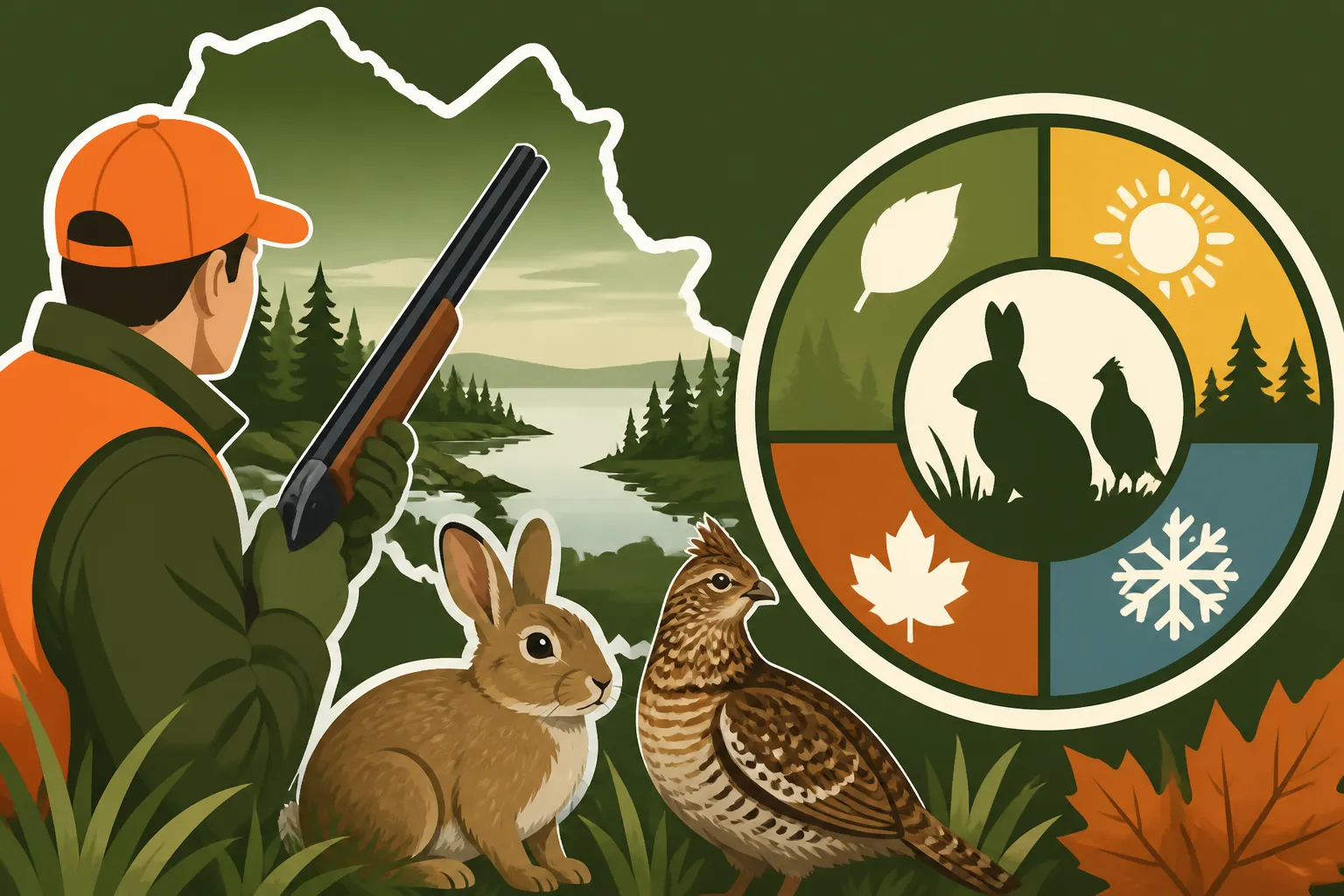
Cottontail rabbits are abundant in Southern Ontario, favouring brushy field edges, fencerows, and small woodlots. Their season typically opens in late September or early October and can run right through to the end of February or even March, depending on the WMU. This long season offers ample time to get out, and with a daily bag limit often set at six and a possession limit of 12, there’s plenty of opportunity. Many hunters enjoy running beagles to flush these elusive creatures, making for a truly classic experience.
Snowshoe hares, on the other hand, are the rabbit-family member of the north. They prefer denser coniferous cover and are known for their striking seasonal colour change from brown to white, which helps them blend into snowy landscapes. Their seasons also open in the fall, often mid-September, and run even later than cottontails in some northern WMUs, often into April. The daily bag and possession limits are usually much more generous, often set at 20 daily and 40 in possession, reflecting their more numerous populations and shorter lifespans. If you're going to be Rabbit and Hare Hunting in Ontario, especially in the north, be prepared for thick cover and potentially deep snow later in the season. These hunts are an invigorating challenge and a great way to stay active during the colder months.
Hunting Squirrels: Red and Grey Squirrels
Squirrel hunting might seem like child's play to some, but it’s a challenging and rewarding pursuit that hones your stalking and shooting skills. Both Red and Grey Squirrels offer opportunities across Ontario, though their populations and preferred habitats differ. Red squirrels, smaller and more feisty, are found throughout much of the province, often in coniferous and mixed forests. Their seasons typically open in mid-September and run until late December, with bag and possession limits often set at six and 12, respectively. They are particularly active during the early morning and late afternoon, making for excellent bowhunting opportunities or target practice with a rimfire rifle.
Grey squirrels, including their black phase, are primarily found in the deciduous and mixed forests of Southern and Central Ontario. They thrive in mature woodlands with plenty of mast-producing trees like oak, hickory, and beech. Their season dates generally mirror those of red squirrels, opening in mid-September and closing in late December. Hunting a Hardwood Ridge for Whitetails might yield an opportunity for a grey squirrel before the main event. Both species offer a fun, fast-paced hunt, and when prepared properly, provide delicious meat. Always check the specific regulations for the WMU you intend to hunt, as some areas might have slight variations based on local population dynamics.
Predators and Furbearers: Coyotes and Wolves
While not always categorized strictly as "small game," coyotes and wolves are often pursued by hunters alongside, or in similar methods to, small game, especially when other seasons are closed. They present a different kind of challenge, requiring stealth, patience, and often specialized calling techniques. Hunting these predators also plays a role in managing their populations, particularly in areas where they impact deer or livestock.
Coyote and Wolf Hunting Regulations
Coyote hunting in Ontario offers a unique challenge and a long season. For residents, coyotes can generally be hunted year-round across much of the province, with no bag limit, making them an excellent option for year-round predator control or simply an exciting hunt when other seasons are closed. However, there are exceptions, particularly within certain WMUs, where specific restrictions might apply, or where hunting is prohibited. For example, some areas might have firearms restrictions or specific bylaws governing discharge. It's crucial to consult the regulations for your specific WMU and any local municipal bylaws. Calling Coyotes in Ontario Farm Country can be a highly effective method, especially in winter when their tracks are easily visible and their pelts are prime.
Wolves are a different story, with more stringent regulations reflecting their conservation status and distribution. Wolf hunting seasons are much shorter and confined to specific northern and central WMUs, typically opening in mid-September and closing in mid-December. Bag limits are usually very conservative, often one wolf per hunter per year, and a wolf tag is required in many areas where hunting is permitted. It's imperative to distinguish between coyotes and wolves, as mistaking a wolf for a coyote can have severe consequences, particularly in regions where wolf hunting is restricted or illegal, or where specific protected species like the Algonquin wolf exist. Always confirm the local regulations, especially for larger predators, which can change due to population management initiatives.
Trapping: A Separate Set of Rules
While closely related to furbearer management, trapping operates under an entirely different set of licences and regulations than hunting. Many small game hunters might also be interested in trapping, especially for species like fox, beaver, or muskrat, which are managed as furbearers. However, to legally trap in Ontario, you need a specific trapping licence and must adhere to a detailed provincial trapping manual. This includes regulations on trap types, set locations, checking periods, and mandatory reporting.
The season dates for trapping furbearers can vary significantly by species and by trapline area. They are generally much longer than hunting seasons for the same species, often extending throughout the fall and winter months. For instance, beaver trapping might open in late October and run into May in some areas, offering a substantial window of opportunity. This distinction is critical: possessing a hunting licence does not grant you the right to trap, and vice-versa. If you're considering Trapping Ontario Furbearers Through Winter, make sure you acquire the correct licensing and educate yourself on all the specific legal requirements.
Migratory Game Birds: Ducks, Geese, Woodcock, and Snipe
Though often separated from "small game" due to federal regulations, migratory game birds like ducks, geese, woodcock, and snipe are a massive part of Ontario's hunting culture and offer some of the most exciting, fast-paced action. These birds migrate through the province along major flyways, making Ontario a prime destination for waterfowl hunters.
Federal Migratory Bird Permits and Regulations
One of the most crucial distinctions for migratory game birds is that, in addition to your provincial hunting licence and Outdoors Card, you must possess a valid federal Migratory Game Bird Hunting Permit and a Canadian Wildlife Habitat Conservation Stamp. Without these, any hunting of ducks, geese, or other migratory birds is illegal. The federal regulations govern season dates, bag limits, and shooting hours, which often align closely with provincial waterfowl zones but can have their own nuances. You can pick up these permits at any Canada Post office or online. It’s a small extra step that ensures you’re legal and contributing to habitat conservation efforts.
The seasons for ducks and geese vary not just by species but also by broad geographic zones within Ontario. These zones are designed to manage populations based on migration patterns and local breeding activity. For instance, the Hudson Bay Zone will have significantly different dates than the Southern Ontario Zone. Daily bag limits are also species-specific – you might be allowed six mallards, but only one pintail. Knowing your ducks and geese by species is absolutely critical for compliance. For specific details on Ontario Duck Season Dates by District or Ontario Goose Season Dates by District, you'll need to consult both the provincial summary and the federal migratory bird regulations.
Key Waterfowl Zones and Species Seasons
Ontario is divided into several major waterfowl hunting zones: the Hudson Bay Zone, Northern Ontario Zone, Central Ontario Zone, and Southern Ontario Zone. Each zone has distinct opening and closing dates for various species of ducks (like mallards, wood ducks, divers) and geese (Canada geese, snow geese). For example, Canada goose seasons might open earlier in the north to capitalize on local breeding birds before they migrate south, while the southern zones open later to catch the bulk of migrating birds. Duck seasons generally follow a similar pattern, with early teal and resident bird seasons often kicking off in early September in many areas.
Woodcock and snipe are also migratory game birds, but they offer a very different hunting experience from waterfowl. Woodcock seasons generally run from mid-September through October, with a daily bag limit of eight and a possession limit of 24. They prefer moist, young hardwood thickets, often near alder bottoms or creek beds. Snipe, on the other hand, favour open, marshy areas and wet meadows. Their seasons often mirror those of woodcock, with the same generous bag and possession limits. Both require swift reflexes and tight shooting, making them a favourite of bird dog enthusiasts. Understanding When Woodcock Move Through Ontario can significantly boost your success.
Essential Licensing and General Hunting Rules
Before you even think about stepping into the field for small game, you need to ensure all your paperwork is in order. Ontario has a clear system for licensing and permits, designed to ensure safety, conservation, and ethical hunting practices. Don’t let the bureaucratic side of things deter you; once you understand the basics, it’s quite straightforward.
Ontario Small Game Licence Requirements
The foundation of legal hunting in Ontario is your Outdoors Card. This card is essentially your hunter identification number and is required for all hunting and fishing licences. Once you have your Outdoors Card, you'll need to purchase a specific small game hunting licence. For Ontario residents, this is usually a general Small Game Licence, which typically covers most upland birds (grouse, pheasant, partridge), rabbits, hares, and squirrels, as well as species like coyotes and foxes. The cost is quite reasonable, and it covers you for the entire licence year. Remember, you'll also need to have successfully completed the Ontario Hunter Education Course to obtain your Outdoors Card and purchase your first licence.
It's vital to remember that while the small game licence covers many species, it doesn't cover everything. As mentioned, migratory birds require federal permits. For species like wolves, specific tags may be required in certain WMUs. Always ensure you have the correct licence and any necessary tags for the species you intend to pursue. Carrying your licence, either physically or digitally on your phone, is also a legal requirement whenever you are hunting. This simple step prevents a lot of headaches if you happen to encounter a Conservation Officer.
Safe Practices and Blaze Orange
Beyond the paperwork, adherence to safe hunting practices is non-negotiable. This isn't just about following rules; it's about respecting the land, the wildlife, and your fellow hunters. One of the most important safety requirements in Ontario is the use of blaze orange. During any open gun season for deer, moose, or bear, hunters (and often non-hunters too, if they’re in a hunting area) are required to wear blaze orange. This includes a minimum of 400 square inches of solid blaze orange above the waist, visible from all sides. Even if you're only targeting small game, if you're in an area with an open big game gun season, you must wear blaze orange. This rule is designed to significantly reduce hunting accidents.
Other critical safety measures include proper firearm handling, knowing your target and what’s beyond it, and never shooting across a public road. Hunting responsibly also means respecting private property, always securing permission before you enter someone’s land, and understanding Ontario Trespass Law for Hunters. Using mapping tools like GoHunt, which often have property lines, can help you avoid accidental trespass. Hunters should also carry a reliable means of communication, a first-aid kit, and know basic wilderness survival skills, especially when hunting in remote areas.
Ontario Small Game Season Overview Table
To help you get a handle on some of the most popular small game species, here's a general overview. Always remember that WMU-specific regulations supersede these general dates and limits, so confirm for your exact hunting area!
| Species | General Season Dates (Approx.) | Daily Bag Limit (Approx.) | Possession Limit (Approx.) | Primary Habitat | Notes |
|---|---|---|---|---|---|
| Ruffed Grouse | Sept 15 – Dec 15 | 5 | 15 | Mixed Forest | Longer seasons in some northern WMUs. |
| Spruce Grouse | Sept 15 – Dec 15 | 5 | 15 | Coniferous Forest | Found in Northern Ontario. |
| Cottontail Rabbit | Late Sept/Oct – Feb/Mar | 6 | 12 | Field Edges | Primarily Southern Ontario. |
| Snowshoe Hare | Sept 15 – Mar/Apr | 20 | 40 | Coniferous Bush | Longer seasons and higher limits in the North. |
| Red Squirrel | Sept 15 – Dec 31 | 6 | 12 | Coniferous/Mixed | Great for rimfire practice. |
| Grey Squirrel (incl. Black) | Sept 15 – Dec 31 | 6 | 12 | Deciduous/Mixed | Primarily Southern/Central Ontario. |
| Coyote | Year-round (residents) | No Limit | No Limit | Province-wide | Check WMU and local bylaws; no tag required for residents. |
| Canada Goose | Sept – Dec (Zone-dependent) | 5-10 (Zone/time-dep.) | 15-30 (Zone/time-dep.) | Fields/Marshes | Requires Federal Migratory Bird Permit & Stamp. |
| Ducks (e.g., Mallard) | Sept – Jan (Zone-dependent) | 6 (Species-dependent) | 18 (Species-dependent) | Wetlands/Rivers | Requires Federal Migratory Bird Permit & Stamp. |
| Woodcock | Sept 15 – Oct 31 | 8 | 24 | Wet Thickets | Requires Federal Migratory Bird Permit & Stamp. |
Disclaimer
The information provided in this article is for general guidance only and is subject to change. It is not a substitute for the official Ontario Hunting Regulations Summary, which is published annually by the Ontario Ministry of Natural Resources and Forestry (MNRF) and the federal Migratory Game Bird Hunting Regulations. All hunters are responsible for reviewing and understanding the current regulations for their specific Wildlife Management Unit (WMU) and species before engaging in any hunting activities. Always prioritize safety and ethical hunting practices.