Where Tundra Swans Stop in Ontario
For many of us who cherish Ontario's wild spaces, there's a unique spectacle that unfolds twice a year, often overlooked in the flurry of other outdoor pursuits: the migration of the Tundra Swans. Trying to figure out exactly where these magnificent birds decide to rest and refuel on their incredible journey can feel like searching for a needle in a haystack, especially when you're hoping to witness their massive gatherings. This guide is dedicated to helping you unravel the mysteries of their travels, pinpointing those crucial Ontario stopover points so you can experience this awe-inspiring natural event firsthand.
The Phenomenon of Tundra Swan Migration Through Ontario
The Tundra Swan's annual journey is nothing short of epic. These are not your everyday park swans; these are wild, majestic birds that navigate vast distances, connecting their breeding grounds in the high Arctic to their wintering territories far south in the United States. For a few precious weeks each spring and fall, Ontario becomes a vital waypoint, a temporary home offering essential sustenance and rest before they continue their arduous flight.
Understanding Their Annual Journey
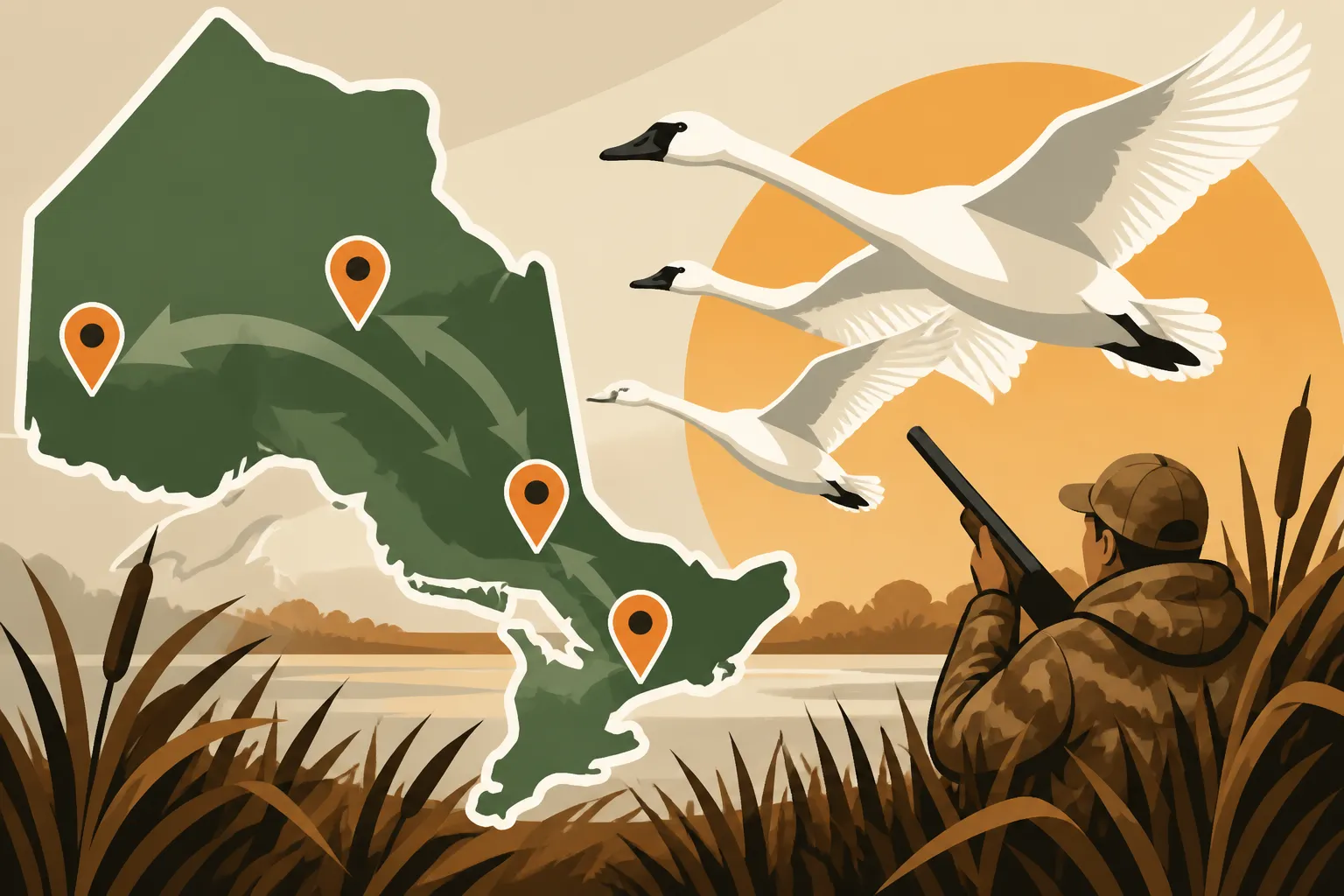
Imagine a bird hatched on the desolate tundra near the Arctic Circle, driven by instinct to fly thousands of kilometres south to spend winter in places like the Chesapeake Bay or the Carolina coast. Then, as spring awakens, that same bird undertakes the reverse journey, returning to its ancestral breeding grounds. This incredible round trip is one of nature's marvels, and it’s a testament to their resilience. Ontario sits strategically within both the Mississippi and Atlantic Flyways, natural aerial highways that guide millions of migratory birds. As a result, our province becomes a bustling intersection, a crucial refuelling station where weary wings can finally find respite. Knowing the sheer scale of their journey helps us appreciate the importance of these brief stopovers.
Their travels are often dictated by weather patterns. A strong tailwind can push them through quickly, while a sudden cold snap or persistent headwind can force them to land and wait it out. This makes predicting their exact arrival or departure dates a bit of a moving target, adding to the challenge and excitement of trying to catch them. They're not just flying; they're making a strategic journey that relies on specific environmental cues and conditions.
Why Ontario is a Critical Stopover
Ontario's diverse landscape offers exactly what Tundra Swans need for these crucial stopovers: expansive, shallow bodies of water for security, and abundant food sources to replenish their energy reserves. These birds are primarily herbivores, feasting on submerged aquatic vegetation, roots, tubers, and increasingly, waste grain left in agricultural fields after harvest. Think of them as giant, feathered vacuum cleaners, efficiently gleaning what’s left behind.
The sheer numbers that can congregate at these staging areas are breathtaking. We're talking about thousands, sometimes tens of thousands, of birds descending upon a single location. This congregating behaviour isn't just social; it's a survival strategy, offering safety in numbers against predators and allowing them to share information about the best feeding grounds. These stopovers are not just pauses; they are essential survival mechanisms that fuel the next leg of their journey. Without these critical Ontario habitats, the success of their entire migration would be in jeopardy.
Timing is Everything: Peak Migration Periods
Pinpointing the exact timing of the Tundra Swan migration is key to witnessing it. Generally, you can expect to see them moving through Ontario in two distinct windows. The fall migration typically begins in late October and can extend well into November, with peak numbers often observed around mid-November. They're trying to beat the deep freeze that locks up their northern food sources and pushes them south.
For the spring migration, the window usually opens in early to mid-March, as soon as ice begins to recede from large bodies of water and agricultural fields start to thaw. Peak activity often occurs in late March and early April. This timing is highly dependent on the ice conditions on the Great Lakes and the arrival of warmer air currents that signal spring's return. A mild winter might see them arrive earlier, while a prolonged cold spell can delay their passage. It's a dance with the seasons, and staying tuned to local weather forecasts and birding reports is your best bet for catching the show.
Prime Tundra Swan Staging Areas in Ontario
While Tundra Swans can theoretically pop up in any suitable wetland across the province during migration, certain areas consistently attract larger concentrations due to their ideal combination of open water and abundant food. These are the places where your chances of witnessing the truly spectacular mass gatherings are highest.
The Great Lakes Basin: A Vital Corridor
The Great Lakes, particularly the shallow, nutrient-rich western basin of Lake Erie and the expansive marshes of Lake St. Clair, are absolute magnets for Tundra Swans. These enormous freshwater systems provide vast expanses of safe, open water where thousands of swans can raft up, resting and feeding without much disturbance. Think of the shorelines of southwestern Ontario as a major rest stop on their continental highway.
You’ll often hear about major stopovers along the north shore of Lake Erie, especially around Long Point or Rondeau Bay. These areas, with their extensive marsh systems and proximity to agricultural land, offer a perfect mix. Swan Beach near Port Rowan, for instance, is famously named for the spectacle it often hosts. These areas are also significant for other waterfowl, so if you're out Marsh Hunting Ducks on the Great Lakes, keep an eye out for their larger, white cousins. The sheer volume of aquatic vegetation in these areas means a plentiful larder for hungry swans.
Lake St. Clair is another incredibly important area, often lauded for its waterfowl populations. Why Lake St. Clair Draws So Many Ducks also applies to Tundra Swans; its shallow depths and fertile bottom make it a prime feeding ground. You might not see them right from the road, but a good pair of binoculars and patience can reveal massive flocks against the horizon. Exploring these areas, even without a specific swan sighting, can lead to incredible wildlife experiences. Using tools like GoHunt can help you visualize the wetland boundaries and potential access points to these prime viewing locations.
Agricultural Heartland: Fields of Plenty
While large water bodies offer safety, the fields of Ontario's agricultural belt provide crucial calories. As fall progresses and crops like corn and soybeans are harvested, a significant amount of waste grain remains. Tundra Swans, being opportunists, quickly learn to exploit this abundant food source. They'll leave the safety of the water at dawn or dusk to fly into these fields, literally grazing on the leftover bounty.
This behaviour means that many fields throughout southwestern Ontario, particularly in counties like Kent, Essex, Lambton, and Norfolk, become temporary feeding grounds. It’s not uncommon to see fields absolutely blanketed in white, a sight that never fails to impress. If you're planning on Hunting a Field of Standing Corn or Hunting a Soybean Field at Dusk for other game, you might just get a bonus show from these majestic birds. The key is to look for large, flat fields that have recently been harvested and are relatively undisturbed. Knowing the local farming cycles can give you an edge in predicting where these feeding congregations might form.
Smaller Wetlands and Inland Lakes
Don't overlook the smaller, seemingly less significant wetlands and larger inland lakes scattered across central and even some parts of eastern Ontario. While they might not host the monumental numbers seen in the Great Lakes basin, they can still be crucial temporary staging areas, especially for smaller groups or during periods of adverse weather. A large, shallow pond or a flooded agricultural field that offers open water and some sense of security can be just enough for a weary flock to touch down.
These smaller locations are often less crowded with observers, offering a more intimate viewing experience. They might not be listed on major birding hotlines, but a good topo map or even satellite imagery (which GoHunt excels at providing) can reveal potential spots. Look for areas with a mix of open water and surrounding agricultural or natural forage. Sometimes, the unexpected discovery of a few hundred swans in a quiet inland bay can be just as rewarding as seeing thousands on the Great Lakes. Remember, these birds are looking for undisturbed areas to rest and feed, so even a secluded flooded pasture could be a temporary haven.
Scouting and Observing Tundra Swans Successfully
Finding Tundra Swans isn't just about knowing where they generally stop; it's about being prepared, using the right tools, and approaching your observation ethically. These birds are wild and can be sensitive to disturbance, so a mindful approach is always best.
Utilizing Technology for Real-Time Intel
In today's world, technology is your best friend when tracking migratory birds. Online birding communities, local conservation authority websites, and even social media groups dedicated to Ontario birding are invaluable resources. People often post real-time sightings, giving you an immediate heads-up on where the swans are currently concentrated. Websites like eBird are fantastic for this, allowing you to search for recent observations in specific areas.
Beyond birding-specific sites, general mapping tools can aid your scouting. Programs like GoHunt, which offer detailed satellite imagery and property boundaries, can help you identify potential open water bodies, flooded fields, or large agricultural tracts that might appeal to the swans. You can pre-scout from your armchair, looking for those tell-tale white patches in fields or large rafts on water. Always cross-reference this with local knowledge or recent reports. Being aware of current weather patterns is also crucial; sustained cold fronts or rapid thaws will influence their movements significantly. Don't forget to check the overall Ontario's Wildlife Management Units map to get a sense of the larger landscape you're interested in.
On-the-Ground Scouting Strategies
Once you have a general idea of a promising area, it's time for boots-on-the-ground (or wheels-on-the-road) scouting. This often involves driving slowly along rural roads near known or suspected stopover points, keeping your eyes peeled for large white birds in fields or on distant water. A good pair of binoculars is essential, and a spotting scope can be a game-changer for identifying birds at long distances without disturbing them.
Focus your efforts around dawn and dusk, as these are often the times when swans are most active, flying to and from feeding grounds. Look for signs of disturbance or other birdwatchers, which can sometimes indicate a known gathering spot. Remember, these are big birds, and even from a distance, a field full of Tundra Swans looks like moving patches of snow. Patience is absolutely key; sometimes you have to sit and wait, observing patterns of flight or listening for their distinctive "hoo-hooo" call. Don't be afraid to pull over safely and scan with your optics. For any hunter, this kind of scouting is familiar territory, much like when you're Scouting Fields for Ontario Waterfowl.
Respecting Their Space and Local Regulations
Observing Tundra Swans, or any wildlife, comes with a responsibility to minimize your impact. These birds are on a demanding journey, and unnecessary disturbance can cost them precious energy. Always keep a respectful distance, using your optics to get a closer view rather than approaching too closely. If you notice birds becoming agitated, flying off, or changing their behaviour, you've likely encroached too far.
If you are observing swans on private land, ensure you have explicit Getting Private Land Permission in Ontario. Never trespass, and always leave gates as you found them. Many prime stopover areas are managed by conservation authorities or are designated wildlife areas, which may have specific rules regarding access, viewing blinds, or even vehicle use. It's always a good idea to check local regulations before you go. Remember the importance of What the Habitat Conservation Stamp Requirement for supporting these vital conservation efforts; these stamps often contribute to the protection of habitats that these swans rely on. Ethical observation ensures that these magnificent birds can continue their journey unhindered and that future generations can also enjoy the spectacle.
Conservation and Future of Tundra Swans in Ontario
The continued presence of Tundra Swans in Ontario during their migrations is a testament to ongoing conservation efforts and the resilience of these birds. However, like many migratory species, they face various challenges that require continuous vigilance and proactive management. Understanding these aspects helps appreciate the bigger picture of their journey.
Threats and Challenges to Migration
One of the most persistent threats to Tundra Swans, and indeed many waterfowl, has historically been habitat loss. As wetlands are drained for agriculture or urban development, crucial stopover points diminish. While significant efforts are being made to conserve and restore wetlands, the pressure on these vital areas remains. Another concern for waterfowl has been lead poisoning, particularly from spent lead shot in wetlands where birds feed. While non-toxic shot is now mandated for waterfowl hunting across North America, legacy lead still exists in some environments. Hunters who follow Non-Toxic Shot Requirements for Waterfowl play a key role in preventing new contamination.
Climate change also poses an evolving threat. Changes in ice formation and thaw patterns can disrupt the delicate timing of migration, potentially leading to mismatches with food availability or increased energy expenditure if they encounter unexpected cold snaps or storms. Severe weather events can also take a toll on weary migrants. Monitoring these environmental shifts is crucial for understanding how best to support their long-term survival.
The Role of Conservation Efforts
Fortunately, numerous organizations, government agencies, and dedicated individuals are working tirelessly to protect Tundra Swans and their habitats. Conservation authorities in Ontario play a vital role in managing and preserving key wetland areas along the Great Lakes and other important flyways. These protected areas provide safe havens where swans can rest, feed, and prepare for the next leg of their journey without constant disturbance.
Partnerships between conservation groups, landowners, and government bodies are also instrumental in restoring degraded habitats and ensuring sustainable agricultural practices that leave enough waste grain for migratory birds. The success of the Tundra Swan migration through Ontario relies heavily on these collaborative efforts, ensuring that these iconic birds will continue to grace our skies and waters for generations to come. Your support, whether through purchasing conservation stamps or simply respecting wildlife, contributes to these broader conservation goals.
Disclaimer
This article is for general informational purposes only and does not constitute professional advice. Laws, prices and regulations vary by location and change over time. Consult a qualified professional for guidance on your specific situation.