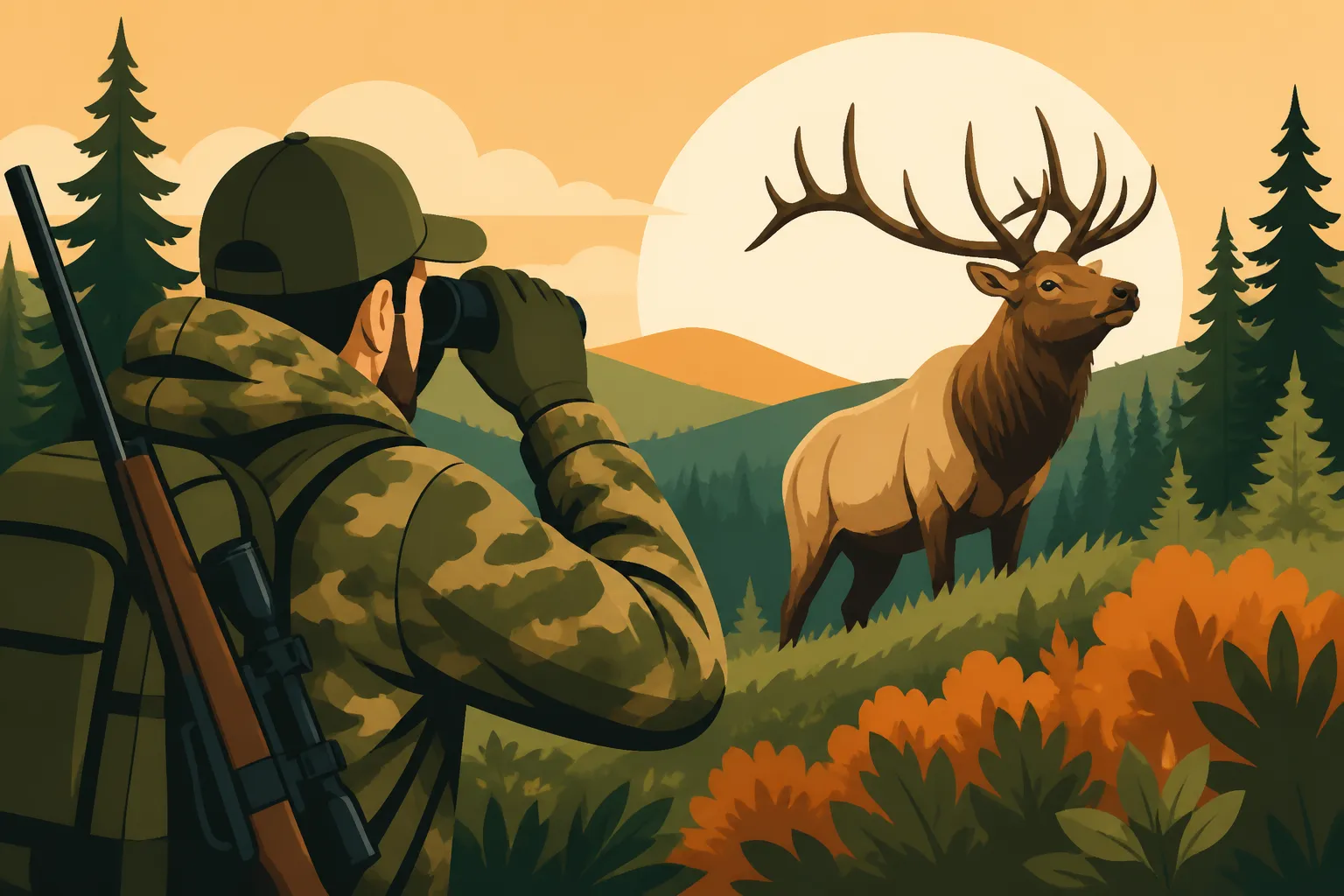
Hunting Elk Around Bancroft
Drawing an Ontario elk tag, especially for the Bancroft area, is a truly special opportunity, but it also comes with its own set of challenges. This isn't your open-country elk hunt; these animals are masters of the dense, mixed forests of Central Ontario, often leading to frustratingly elusive encounters. This guide will walk you through understanding the unique Bancroft herd, honing your scouting skills, and employing effective hunting strategies to maximize your chances of success in this truly rewarding pursuit.
Understanding Ontario's Bancroft Elk Herd
The idea of hunting elk in Ontario might surprise some, but the province has a fascinating and successful elk restoration story. The Bancroft herd, in particular, represents a unique hunting experience that differs significantly from hunting moose in the vast northern wilderness or whitetails in southern agricultural zones.
The History and Spread of the Herd
Ontario's original elk population was unfortunately extirpated by the late 1800s due to unregulated hunting and habitat loss. But thanks to dedicated conservation efforts, primarily starting in the late 1990s and early 2000s, elk were reintroduced to various parts of the province. The Bancroft area was one of the key locations for these reintroductions, with elk brought in from Alberta. These animals adapted remarkably well to the rugged terrain and mixed forest of the region.
Today, Ontario's Restored Elk Herd continues to thrive, albeit in specific, managed pockets. The Bancroft herd, concentrated largely within Wildlife Management Units (WMUs) 53A, 53B, and parts of 54, represents a testament to successful wildlife management. Unlike their western cousins, these elk often occupy smaller, more fragmented ranges, adapting their behaviour to the patchwork of private land, Crown Land, and mixed forest cover. This unique environment shapes their movement patterns and makes them incredibly wary, demanding a different approach from hunters. If you've ever wondered How Many Elk Ontario Holds Now, you'll find the numbers for the Bancroft herd, while smaller than Western populations, are stable and growing within their specific ranges.
Elk Behaviour in Central Ontario's Landscape
Bancroft elk are not the same as the elk found in the Rocky Mountains. They've learned to live in close proximity to human activity, yet remain remarkably hidden. You won't often see large herds grazing in open fields; instead, they tend to stick to the dense cover, utilizing thick conifer stands for bedding and thermal protection, especially during the colder months. During the rut, typically in late September to mid-October, bulls become more vocal and less cautious, offering the most exciting hunting opportunities. However, outside of the rut, they are notoriously reclusive.
They are often found in areas where mature hardwoods meet thick cedar swamps or mixed conifer stands, providing both food and security. Understanding What an Ontario Bull Elk Weighs will tell you these are substantial animals, requiring significant cover to feel secure. Their diet shifts seasonally, from lush grasses and forbs in spring and summer to browsing on woody vegetation like aspen, maple, and balsam fir shoots in the fall and winter. Knowing these feeding patterns is crucial for successful scouting.
Key Habitat Features in the Bancroft Area
The Bancroft region is characterized by a mosaic of hardwood ridges, mixed forests, cedar swamps, and agricultural clearings, all intersected by old logging roads and ATV trails. Elk will utilize all these habitats. Hardwood ridges, particularly those with a good mast crop (acorns, beech nuts), can be prime feeding areas in early fall. Thick cedar swamps and conifer plantations offer essential bedding cover, especially when they need to escape hunting pressure or harsh weather.
Water sources are also critical. Beaver ponds, small creeks, and wetland edges provide both water and tender forage. Identifying these convergence points – where different habitat types meet, often near a water source – is paramount. Look for areas with a good mix of dense cover for bedding, open hardwoods for feeding, and natural travel corridors in between. These are the kinds of spots that GoHunt mapping tools can help you identify from your couch, highlighting topography, historical satellite imagery, and public land boundaries.
Scouting Strategies for Bancroft Elk
Scouting for elk in the Bancroft area is half the battle. These animals are masters of stealth, and simply walking through the bush hoping to stumble upon them is a recipe for disappointment. A methodical, multi-pronged approach is essential.
Pre-Season E-Scouting and Map Work
Before you even step foot in the woods, spend significant time studying maps and satellite imagery. Tools like GoHunt are invaluable for this, allowing you to identify potential elk habitat from afar. Look for:
- Topographic features: Steep ridges, saddles, and creek bottoms that might act as travel corridors or bedding areas. Elk, like whitetails, often prefer to travel along contours.
- Vegetation changes: Delineate between hardwood stands, dense conifer thickets, clearcuts, and open fields. Focus on the edges where these habitat types converge, as these are often high-activity zones.
- Water sources: Mark all beaver ponds, streams, and swamps. Elk need water daily.
- Access points: Identify old logging roads, ATV trails, and lesser-used paths. While these can be easy access for you, they're also common travel routes for elk, and sometimes they'll use the thicker cover adjacent to them.
- Public vs. Private land: Clearly distinguish Crown Land from private property. Most of the elk hunting around Bancroft occurs on Crown Land or through specific landowner permissions. Use your GoHunt layers to ensure you're always aware of boundaries.
By "e-scouting" effectively, you can narrow down vast areas into manageable sections for boots-on-the-ground reconnaissance, saving you precious time and effort. This is particularly important for Hunting a Drawn Ontario Elk Tag as your time is often limited once you have that coveted tag.
Boots-on-the-Ground Reconnaissance
Once you have your e-scouting done, it's time to hit the bush. This is where you confirm your theories and find fresh sign. Focus your efforts on the areas you identified as promising.
- Look for fresh sign: This includes tracks (larger and more rounded than deer, with a distinct dew claw imprint in soft ground), droppings (piles of pellets, similar to deer but larger), rubs (bulls rubbing antlers on trees, especially during the pre-rut and rut), and wallows (muddy depressions where elk roll, leaving behind hair and a strong musky scent). Look for these signs along travel corridors, near water sources, and on the edges of bedding areas.
- Listen: The distinct bugle of a bull elk is unmistakable. If you're scouting during the rut (late September into October), listen intensely, especially at dawn and dusk. Even outside the rut, listening for snapping branches or distant calls can indicate presence.
- Use trail cameras: Place cameras in high-traffic areas, on active trails, or near wallows. This can confirm elk presence, identify specific animals (bulls vs. cows), and give you an idea of their movement patterns and peak activity times. Just be sure to adhere to all provincial regulations regarding trail camera use on Crown Land.
- Be stealthy: When scouting, move slowly and quietly, as if you were hunting. You might just bump into the animals you're looking for, giving you invaluable real-time information. Pay attention to wind direction and thermals, which are critical for not spooking game. If you're Scouting a Wildlife Management Unit you haven't been in before, this ground reconnaissance is paramount to understanding the local flow of the land.
Interpreting Elk Sign in the Mixed Forest
Learning to differentiate between fresh and old sign is vital. Fresh tracks will have crisp edges; older tracks might be partially filled with leaves or eroded by rain. Fresh droppings will be moist and shiny; older ones will be dry and dull. Fresh rubs will show sap and fresh wood scarring, whereas old ones will be grey and weathered. Wallows that are actively being used will be muddy and smelly.
One often overlooked sign is browse. Look for browsed saplings and shrubs. Elk are significant browsers, and their browsing patterns differ from deer. They'll typically break off branches rather than nip them cleanly, and often browse higher up than deer can reach. Knowing What Moose Eat Through the Year can sometimes help here too, as moose and elk have some overlapping food preferences, though elk tend to prefer more open areas than the densest moose swamps.
A good way to understand sign is to think like an elk. Where would you feed? Where would you feel safe to bed down? What's the easiest way to get from food to bed, especially under the cover of darkness or in difficult terrain? That mental mapping, combined with physical evidence, will build your elk picture.
| Type of Elk Sign | Description | Best Place to Find | Seasonality |
|---|---|---|---|
| Tracks | Large, rounded hoof prints; dew claws often show | Soft ground, creek beds, muddy trails, near water | Year-round, clearest after rain or in snow |
| Droppings | Oval pellets, larger than deer; often in piles | Feeding areas, bedding areas, travel routes | Year-round, freshness indicates recent activity |
| Rubs | Bark scraped off trees by antlers; usually larger | Near bedding, along travel corridors, in thickets | Primarily August-October (pre-rut & rut) |
| Wallows | Muddy depressions where elk roll; musky scent | Near water sources, seeps, moist depressions | Mostly late summer and fall (pre-rut & rut), but present year-round |
| Trails | Well-worn paths, often wider than deer trails | Between feeding & bedding, along terrain features | Year-round |
| Beds | Flattened areas in dense cover, often with hair | Thick conifer stands, dense brush, sheltered spots | Year-round, especially in cold weather |
Effective Hunting Techniques for Bancroft's Terrain
Hunting elk in Bancroft is a demanding pursuit that often requires patience, stealth, and adaptability. Forget the wide-open spaces of the Rockies; here, the elk are ghosts in the timber.
Calling Strategies in Thick Cover
Elk calling is undoubtedly one of the most thrilling aspects of elk hunting, but it needs to be adapted for the dense cover of Central Ontario. While loud, aggressive bugles might work in open country, in Bancroft's mixed forest, a more nuanced approach is often required.
- Locate First, Then Call: Don't just walk into the woods and start bugling. Try to locate elk first through scouting or by listening for subtle sounds. Once you're reasonably sure elk are in the vicinity, then consider calling.
- Soft Calls are Key: Often, soft cow calls or satellite bull chuckles are more effective than booming bugles. These sounds convey a sense of a relaxed herd or a less dominant bull, which might entice a dominant bull to investigate without feeling threatened or exposing himself. Think about what a lone cow or calf might sound like in the deep woods.
- Bugle Sparingly and Realistically: If you do bugle, make it sound realistic. A drawn-out, challenging bugle might get a response, but be ready. If you get a response, try to gauge the bull's location and direction. Don't overcall; let the elk come to you or reveal their position. Sometimes, a subtle grunt after a cow call is all it takes to pique a bull's interest. This can be a bit different than Calling Moose in Ontario's Boreal Forest, as elk are typically more vocal.
- Be Patient and Set Up: Once you initiate a calling sequence, find a good ambush point with shooting lanes, ideally with the wind in your favour. Elk might approach silently, so be prepared for a quick shot. Have a partner set up 50-75 yards behind you, watching your back and flanks, as an inquisitive bull might try to circle downwind. This requires keen awareness of the wind.
Still-Hunting and Ambush Tactics
For much of the season, especially outside the peak rut, still-hunting and setting up ambushes near known travel routes or feeding areas can be highly productive.
- Still-Hunting: This involves moving incredibly slowly and deliberately through the woods, pausing frequently (for 2-5 minutes at a time) to scan for movement, listen for subtle sounds, and use binoculars to pick apart dense cover. Focus on areas you've scouted that show fresh sign, particularly near bedding areas or between feeding and bedding. Pay close attention to the wind, as elk have an incredible sense of smell. This method is excellent when Hunting an Ontario Bush Edge or a hardwood ridge.
- Ambush Points: Set up an ambush stand or blind overlooking a food source (like a recent clearcut or a hardwood ridge with acorns), a well-used trail, a wallow, or a pinch point between two types of cover. Be there well before dawn or stay until well after dusk, as elk are often most active during these low-light periods. Patience is paramount. Sometimes this involves Sitting All Day in an Ontario Blind to catch those mid-day movements.
- Scent Control: Given their keen sense of smell, meticulous scent control is essential. Use scent-eliminating sprays, wash your hunting clothes in scent-free detergent, and store them in airtight bags. Play the wind religiously; if the wind isn't right for your chosen spot, move.
Considerations for Different Weapon Types
Whether you're hunting with a rifle, shotgun, or bow, each comes with its own considerations for Bancroft's specific terrain.
- Rifle Hunting: The mixed forest often means shots will be relatively close, typically under 150 yards, though some clearings might offer longer opportunities. Choose a calibre that can handle a large animal like an elk, offering good bullet expansion and penetration. Common choices include .30-06, .300 Win Mag, .308, and 7mm Rem Mag. Practice shooting from various positions, including off-hand, to be ready for quick, ethical shots in dense cover. For Rifle Hunting Ontario's Deer Season, these same principles apply, just with a slightly smaller target.
- Bowhunting: Bowhunting for elk in dense cover is arguably the most challenging. Shots will be close, likely under 40 yards. Accuracy, silence, and stealth are paramount. Broadhead selection is critical; use a sharp, durable broadhead that will provide maximum penetration. Practice extensively from treestands or ground blinds, aiming for the vitals. Your windows for a shot might be very small, so be ready to draw and shoot quickly when the opportunity arises. Remember the thrill of Bowhunting Ontario's Long Archery Season for deer is amplified when it comes to elk.
- Shotgun/Muzzleloader Hunting: In areas where rifles might be restricted or during specific muzzleloader seasons, these can be effective. Ensure your shotgun is sighted in with slugs, and your muzzleloader is reliable and accurate out to its effective range. Again, shots will generally be closer, so practice those ethical distances. When Hunting Ontario's December Muzzleloader Days for deer, the challenge is similar, requiring precision at shorter ranges.
Regardless of your weapon, ethical shot placement is non-negotiable. Aim for the vitals (heart/lungs) to ensure a quick, clean kill.
Permits, Regulations, and Ethical Hunting
Hunting elk in Ontario, particularly around Bancroft, isn't something you can just decide to do on a whim. It requires careful planning, understanding of regulations, and adherence to ethical practices.
The Ontario Elk Draw Process
Ontario's elk hunt is managed through a highly selective draw system. Unlike deer or moose, elk tags are extremely limited, reflecting the still-growing and geographically specific nature of the herd. To even be considered, you'll need an Ontario's Outdoors Card Explained and to have applied through the province's online licensing portal during the application period. This is an Ontario's Resident-Only Elk Draw, meaning non-residents are not eligible.
The draw system is point-based, similar to the moose draw, where unsuccessful applicants accumulate points that increase their odds in subsequent years. What to Do After Drawing an Ontario Elk Tag is a critical next step, involving understanding your specific tag, the WMU it's valid for, and any associated restrictions (e.g., bull only, antlerless only). Given the scarcity of tags, drawing one is often a once-in-a-lifetime opportunity for many hunters.
WMUs and Specific Local Rules
The Bancroft elk herd primarily occupies WMUs 53A, 53B, and parts of 54. When you draw a tag, it will be specific to one of these WMUs. It is absolutely crucial to intimately understand the boundaries of your assigned WMU. GoHunt's mapping services can overlay WMU boundaries, which is incredibly helpful when you're navigating the mixed public and private lands in the Bancroft area.
Beyond the WMU, familiarize yourself with any local municipal bylaws or specific land restrictions that might exist. Some areas, even within Crown Land, might have specific access rules or restrictions on firearm discharge near certain properties. Always consult the current Ontario Hunting Regulations Summary, as rules can change annually. Pay close attention to things like legal shooting hours and blaze orange requirements.
Ethical Hunting Practices and Meat Care
Ethical hunting goes beyond simply following the law. It's about respecting the animal, the land, and other users.
- Responsible Shot Placement: Always strive for a clean, ethical kill. If you have any doubt about making a good shot, do not take it. A wounded elk can travel a long way in thick cover, leading to unnecessary suffering and potentially lost meat.
- Tracking and Recovery: If you do shoot an elk, prioritize tracking and recovery. Give the animal time if it's not a clear heart/lung shot. Mark the last spot you saw it, note its direction of travel, and proceed slowly and methodically. A good tracking dog, if legal and available, can be invaluable.
- Meat Care: Elk are large animals, and proper meat care, especially in early to mid-fall, is critical to prevent spoilage. Get the animal field dressed as quickly as possible. Skinning and quartering may be necessary on site to cool the meat down rapidly and make it manageable for transport. For more details on this, you might find our guide on Field Dressing in Warm Ontario Weather helpful, as early season elk hunts can sometimes coincide with milder temperatures.
- Respect for the Resource: Remember that this is a finite resource. Hunt ethically, take only legal game, and report your harvest as required by the Ministry of Natural Resources and Forestry (MNRF). Each successful hunt contributes valuable data that helps manage the herd for future generations.
Hunting elk around Bancroft is not just a hunt; it's an immersive experience in Ontario's wilderness, connecting you to a remarkable conservation success story. With thorough preparation, diligent scouting, and ethical practice, you'll be well-positioned for an unforgettable adventure.
Disclaimer
Please note that hunting regulations and seasons can change. Always consult the most current Ontario Hunting Regulations Summary published by the Ontario Ministry of Natural Resources and Forestry (MNRF) before planning and undertaking any hunting activity. This guide is for informational purposes only and does not supersede official government regulations.