Calling Coyotes at First Light
There’s nothing quite as frustrating as heading out before dawn, full of hope, only to have your early morning coyote calling efforts fall flat. You've braved the cold, set up in the dark, and put in the effort, but those wily Ontario coyotes seem to give you the slip more often than not. This guide is all about helping you understand why that first sliver of light is such a critical window for calling these intelligent canids and equipping you with the tactics to make those early starts count, turning frustrating silence into successful encounters.
Why First Light is Prime Time for Coyotes in Ontario
That period just as night reluctantly gives way to day, often referred to as "first light" or "grey light," isn't just a beautiful time to be in the Ontario bush; it's a strategic goldmine for coyote hunters. It’s when the world transitions, and coyotes, being creatures of opportunity and routine, are often at their most active and vulnerable. Missing this window means missing out on some of your best chances.
Understanding the Coyote's Dawn Routine
Coyotes, much like many predators, are largely nocturnal or crepuscular, meaning they are most active during dawn and dusk. As the night wraps up, they're often finishing up their primary hunting forays. This might involve them moving back towards their bedding areas, checking on den sites if it’s spring, or simply taking one last opportunistic pass through a familiar territory before settling down for the day. This movement makes them far more likely to respond to a call.
Think about it: they’ve been working all night, their energy levels might be a bit lower, and they're looking for an easy meal before the world gets too busy with human activity. A well-placed distress call at this time can sound like a golden opportunity they can’t afford to ignore. Their guard might be slightly down, driven by hunger or territorial instincts, making them more susceptible to an enticing sound.
The Advantage of Low Light Conditions
The dim light of dawn offers a crucial advantage to the hunter: concealment. In the pre-dawn gloom, your silhouette is less defined, your movements are harder to detect, and you can blend into the landscape more effectively. This is particularly important when calling coyotes, as they possess incredibly keen eyesight and can spot unnatural shapes or movements from a surprising distance, even in low light.
This low-light period also plays into the coyote's sense of security. They feel less exposed than they would in broad daylight, making them potentially bolder in their approach to a call. For you, it means you can often get away with a slightly less perfect setup or a slower movement to adjust your firearm or bow, something that would send them scattering under the harsh midday sun. Plus, it gives you a precious window to set up your decoys and get comfortable without being seen.
Essential Calls and Techniques for Early Morning Success
Successfully calling coyotes at first light requires more than just making noise; it demands understanding what calls resonate most effectively during this specific window and how to execute them. It’s about painting a believable sonic picture that taps into their primal instincts.
Mastering Distress Sounds (Prey in Peril)
When that first light begins to paint the eastern sky, distress sounds are often your most potent weapon. These calls mimic an animal in trouble – a rabbit caught by a predator, a fawn bleating for its mother, or a bird struggling. The key here is to sound utterly convincing. Coyotes are hard-wired to investigate these sounds for an easy meal, especially after a long night of hunting.
Start with soft, pleading cries, gradually increasing in volume and intensity. A typical sequence might involve 30-60 seconds of calling, followed by 1-2 minutes of absolute silence, then repeating the sequence. Pay close attention to the wind, as it carries your sound and, more importantly, your scent. You want the sound to carry into the wind, drawing the coyote towards you, but ensure your scent is blowing away from their probable approach path. The GoHunt app, for example, offers excellent wind direction tools and detailed topographical maps that can help you plan your setup down to the foot, ensuring your distress calls are carried effectively without giving away your presence. Experiment with different calls – a cottontail rabbit distress is a classic, but don't shy away from a jackrabbit or even a bird distress call if you know those prey species are abundant in your area. For instance, in areas where you might find more open fields bordering dense bush, a fawn bleat can be incredibly effective, especially if you're Hunting a Bush Lot Beside a Farm.
Incorporating Howls and Barks (Coyote Vocals)
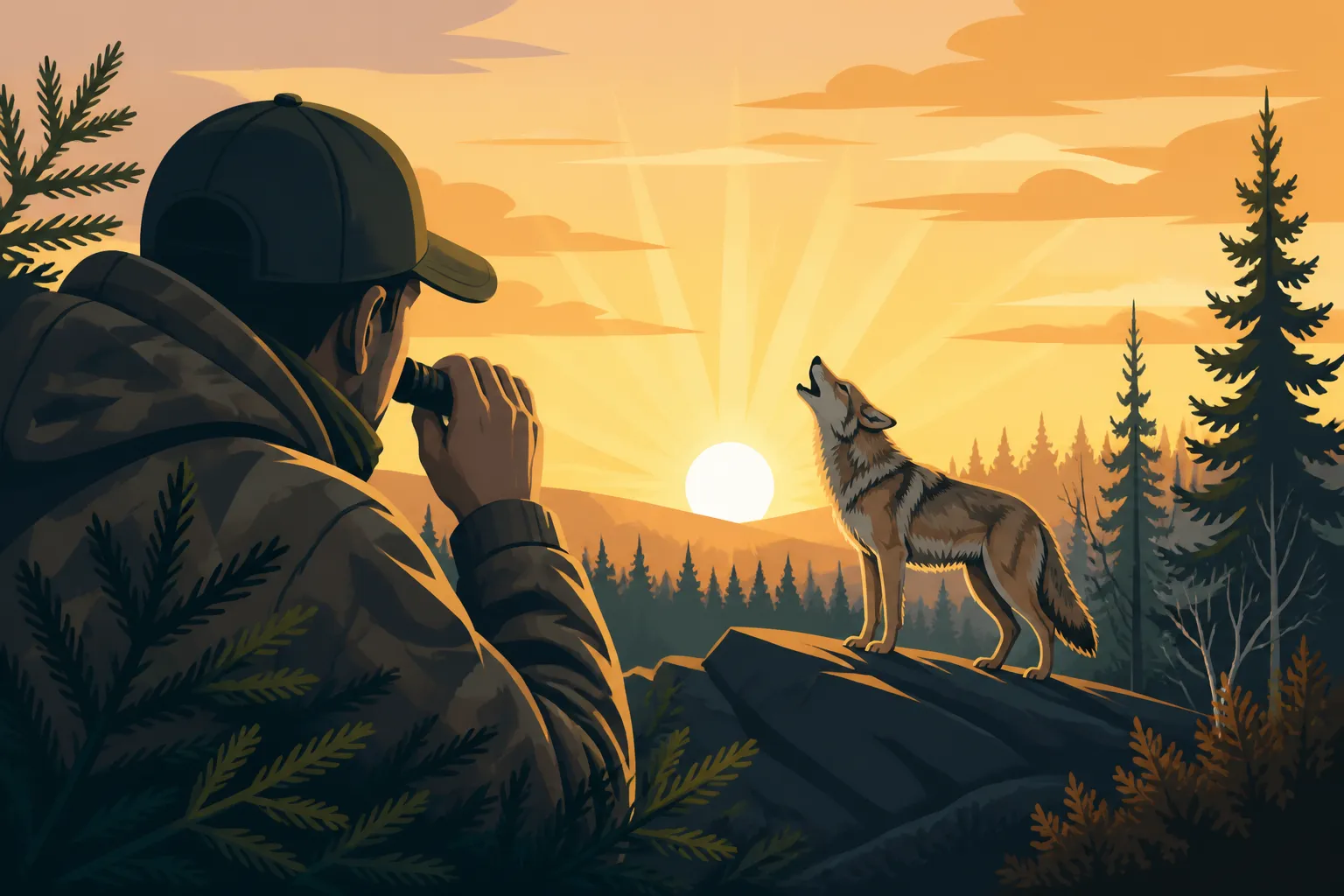
While distress calls are usually the bread and butter, coyote vocalizations, particularly howls and barks, can be incredibly effective at first light, especially as locator calls or to challenge a dominant coyote. A lonesome howl, just as the world awakens, can often get a response from a coyote letting you know exactly where it is. This is not necessarily about drawing them in to kill, but rather confirming their presence and location.
Once you’ve located a coyote with a howl, you can then switch to a distress call to pique their predatory interest, or if you suspect it's a dominant male, a challenge howl might draw them in for a confrontation. A few sharp barks can also indicate to an approaching coyote that there's another canid in the area, potentially drawing them in for investigation. The trick is to use these howls sparingly and authentically. Over-howling can make you sound like a threat, or worse, fake, and send wary coyotes packing. Remember, they are masters of communication, and any perceived dishonesty in your calls will be quickly detected. When you're Calling Coyotes in Ontario Farm Country, these vocalizations can be particularly useful for covering vast distances and getting a bead on their locations before committing to a setup.
Decoy Strategies at Dawn
Adding a visual element to your calling sequence, especially at first light, can dramatically increase your success rate. A motion decoy, like a simple spinning erratically fluttering flag, or even a static coyote decoy, can divert a coyote's attention from you, focusing their eyes on the "prey" or "intruder" rather than your concealed position. This is invaluable, giving you those precious extra seconds to shoulder your rifle or draw your bow without being detected.
Placement is crucial. Set your decoy far enough from your position (20-40 yards is often ideal) that an approaching coyote will be looking at it, not directly at you. Also, consider the backdrop – against a dark bush line or a rise, a decoy can stand out more, especially in the low light. The subtle movement of a decoy can be just enough to seal the deal when a coyote hangs up at a distance, trying to pinpoint the source of the sound. Remember that coyotes will circle downwind to get your scent, so ensure your decoy is visible from downwind of your position and you are adequately concealed and ready for their approach. Many hunters find that combining realistic calls with a convincing visual distraction from brands like GoHunt, which often feature durable and lifelike decoys, really boosts their early morning success.
Setting Up for Success: Location and Wind at First Light
You can have the best calls and decoys in the world, but without a strategic setup that respects the terrain and, critically, the wind, your efforts will be in vain. Coyotes are incredibly sensitive to their environment, and a poor setup will give you away every time.
Identifying Productive Coyote Terrain in Ontario
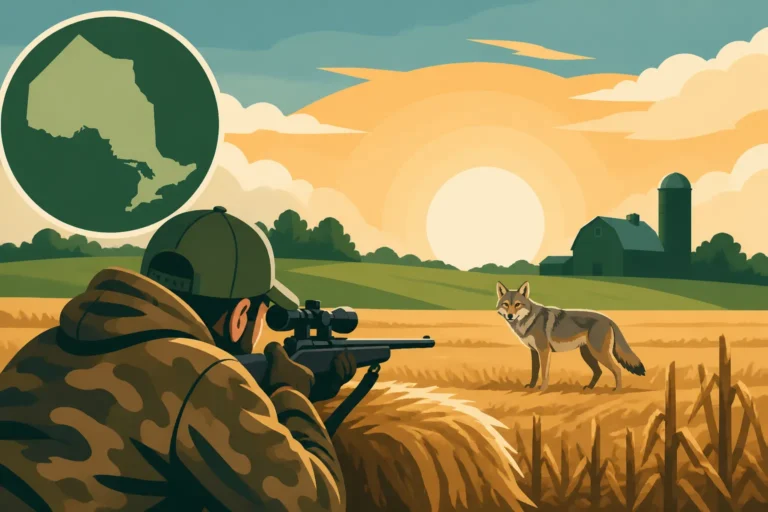
Ontario offers a diverse landscape, from vast farmlands to dense boreal forests, and coyotes have adapted to thrive in all of them. At first light, you want to focus on areas that offer them both cover and easy travel routes, often close to food sources. This includes the edges of standing corn fields, thick fencerows between two fields, creek bottoms, and where open agricultural land meets dense bush or woodlots. These are natural travel corridors and ambush points for coyotes.
When Hunting Coyotes on Ontario Farm Ground, look for small pockets of bush, overgrown fence lines, or drainages that connect larger cover areas. These are the highways coyotes use under the cover of darkness. In more forested areas, focus on old logging roads, clear-cuts that offer new growth for prey, or areas around beaver ponds. Before you even step foot in the field, take time to Scouting With Satellite Imagery in Ontario. This allows you to identify these pinch points, travel corridors, and potential setup locations from the comfort of your home. Understanding the local terrain, perhaps by reviewing an Ontario WMU Map Before You Go, is paramount.
The Unforgiving Ontario Wind: Your Stealthiest Ally or Worst Enemy
If there's one factor that can instantly make or break your coyote hunt at first light, it's the wind. Coyotes, like all canids, rely heavily on their sense of smell. They will almost always try to circle downwind of a call to get a whiff of whatever is making the noise before committing to an approach. This behavior is so ingrained that you absolutely must plan your setup with the wind in mind.
Ideally, you want the wind blowing from the direction you expect the coyote to approach, directly into your face, or quartering slightly. This allows your scent to blow behind you, keeping it out of the coyote's nose as it comes in. At first light, thermals can be tricky. As the ground warms, air currents can start to lift, potentially carrying your scent upwards. It's often best to set up on slightly elevated ground, allowing your scent to rise above a coyote's likely approach path, or to use natural barriers to your advantage. Always check the wind direction religiously, not just once, but continuously, as subtle shifts can occur. Tools like the GoHunt app often provide real-time wind conditions and forecasts, which can be invaluable for making last-minute adjustments to your setup or even deciding if a particular spot is viable for an early morning hunt.
Common Pitfalls and How to Avoid Them
Even seasoned coyote hunters make mistakes, especially when the pressure is on at first light. Understanding these common pitfalls and actively working to avoid them can significantly boost your success rate.
Over-Calling and Under-Calling
One of the biggest struggles for new and experienced callers alike is finding the right balance between calling too much and not enough. Over-calling can make you sound unnatural or too aggressive, potentially spooking a wary coyote. Imagine a distressed rabbit screaming for five minutes straight – it just doesn't sound right. Coyotes are smart; they'll quickly discern if something's off.
Conversely, under-calling means you might not be putting out enough sound to grab their attention, especially if they are ranging far or the wind is carrying your sound poorly. The key is to read the coyote's reactions. If you get a distant howl, soften your calls. If nothing is happening after a few sequences, try increasing the volume or changing the tone slightly. A general rule of thumb is to start soft, build intensity, and then incorporate periods of silence. Often, a coyote will come in during the silence, so remain absolutely motionless and vigilant. If you’re not seeing results after 15-20 minutes, consider moving to a new setup.
Managing Scent and Movement
These two factors are your arch-enemies when hunting coyotes. Coyotes have an incredible sense of smell, far superior to a deer's. Even a faint whiff of human odor can send them fleeing without you ever knowing they were there. At first light, especially when thermals are still settling or just starting to lift, your scent can swirl unpredictably. Use scent-eliminating sprays, wash your hunting clothes in scent-free detergent, and store them in airtight containers. Avoid strong-smelling foods or liquids before and during your hunt.
Movement is equally critical. Coyotes are constantly scanning their surroundings. Even a slight twitch of your head or an improperly camouflaged hand can catch their eye, particularly as the light improves. Once you're set up, become a statue. Practice slow, deliberate movements. If you need to turn, do it in extremely slow motion. Wear a full face mask and gloves to break up your human outline. Remember that even a slight shift in position can be enough to expose you. When you’re trying to draw a coyote out of a Hunting a Fencerow Between Two Fields or from the cover of a Hunting a Field of Standing Corn, your ability to remain unseen and unheard is paramount.
Patience is Your Best Weapon
We live in a fast-paced world, and it's easy to get impatient when nothing seems to be happening. But with coyotes, especially at first light, patience often pays off. A coyote might hear your call from a great distance and take a considerable amount of time to circle downwind, assess the situation, and finally commit to an approach. Many hunters pack up too early, only to have a coyote show up minutes after they leave.
Commit to at least 20-30 minutes, sometimes even longer, in each setup, especially if you're confident in the location and wind direction. The initial flurry of calls might draw their attention, but the subsequent silences are often when they make their move. Think of it like a chess game; you make your move (call), and then you wait for their response (approach). Don't rush it. They can appear from nowhere, so always be ready. Knowing What Coyotes Do to Fawn Survival can also underscore their relentless pursuit of opportunity, making patience even more vital as they assess a potential meal.
Coyote Calling at First Light: Call Strategy Quick Reference
| Call Type | Purpose | First-Light Application | Notes |
|---|---|---|---|
| Cottontail Distress | Mimics injured rabbit, triggers prey drive. | Start soft, build volume; 30-60 sec calling, 1-2 min silence. | Universal, highly effective. Use when you suspect coyotes are actively hunting. Good for bringing them into shooting range. |
| Fawn Distress | Mimics lost/injured fawn, triggers predator/opportunist. | Similar to rabbit distress, slightly longer pauses between sequences. | Excellent in areas with deer, especially early in the season. Can draw in larger, more dominant coyotes. |
| Bird Distress | Mimics struggling bird, often draws curiosity. | Short bursts of calling, followed by quiet. | Good for coyotes that might be "call shy" to common rabbit sounds. Can be used as an initial "attention-getter" before switching to another call. |
| Lonesome Howl | Locator call, establishes your presence. | One or two long, drawn-out howls at the very beginning of the stand. | Use to gauge if coyotes are in the area. Listen for return howls. Do not overdo this call. |
| Challenge Howl | Challenges dominant male, invokes territoriality. | After a lonesome howl or if you know a dominant male is present; short, aggressive howls. | Risky, but can be highly effective on territorial males. Use sparingly and with confidence. Be ready for a rapid approach. |
| Coyote Pup Distress | Mimics young coyotes in trouble, draws adults. | Intermittent, higher-pitched yips and whines. | Great for spring/early summer, when adults are protective. Can also work in fall to draw in family groups. |
Disclaimer
Hunting is a challenging and rewarding pursuit that requires skill, patience, and adherence to regulations. This guide offers general advice for hunting coyotes at first light in Ontario. Always consult the most current Ontario hunting regulations, available through the Ministry of Natural Resources and Forestry (MNRF), for specific rules, seasons, and licensing requirements. Ensure you have all necessary licenses, tags, and permits before heading into the field. Safety should always be your top priority.