What Coyotes Do to Fawn Survival
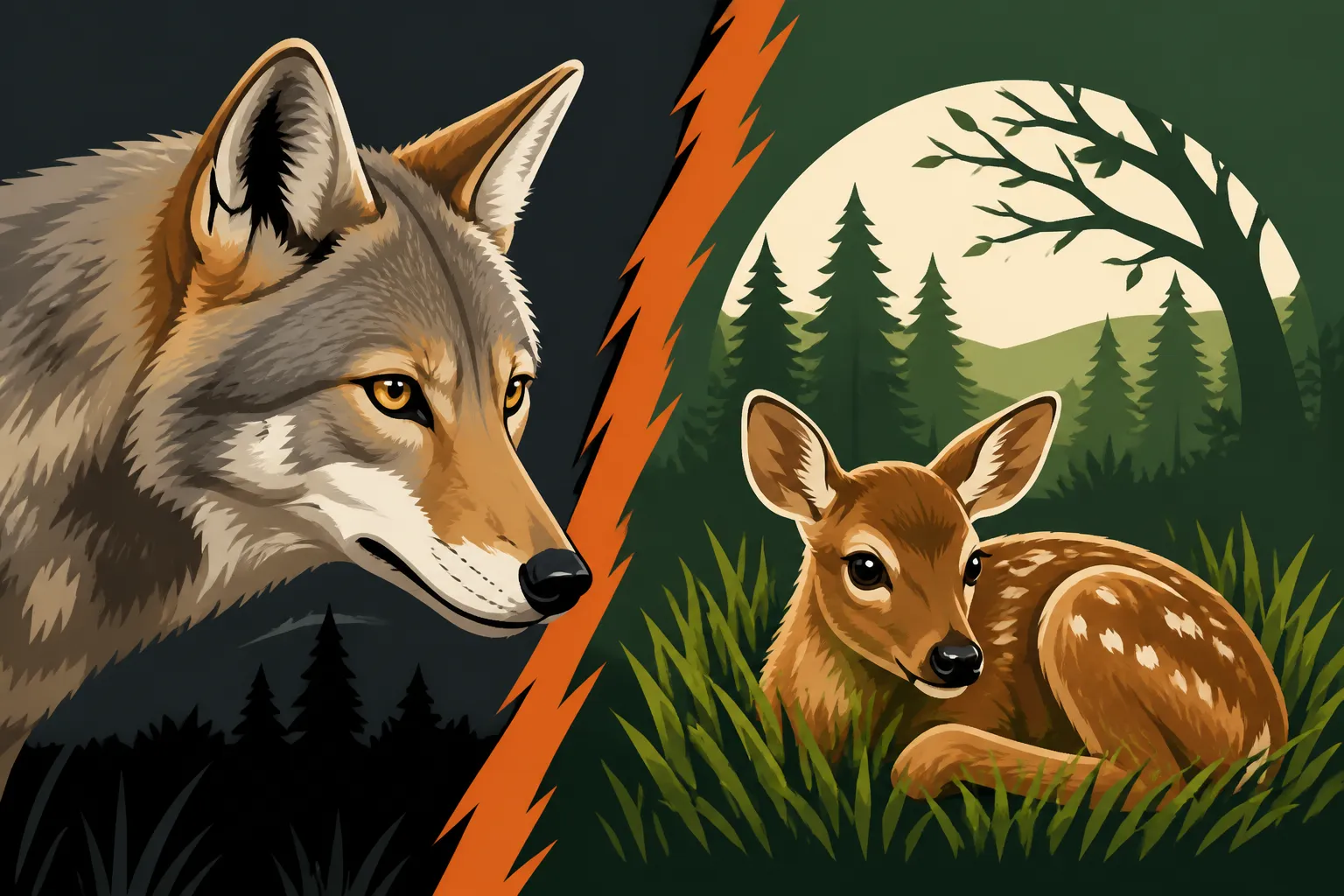
For many Ontario deer hunters, there’s a distinct frustration that comes with seeing healthy does in the fall, knowing they likely dropped fawns in the spring, only to find fewer deer on the landscape come hunting season. We often wonder what happened to those little ones, and a common culprit that comes to mind, with good reason, is the wily coyote. It’s a complex piece of the ecological puzzle, and understanding their role in fawn survival is crucial for appreciating the challenges our deer populations face. This guide will dive deep into how coyotes impact the future of our whitetail herds.
The Predatory Nature of Ontario Coyotes
Coyotes are incredibly adaptable predators, thriving in various environments across Ontario, from the deep bush of the north to the fragmented woodlots of southern farmland. Their opportunistic hunting style makes them highly effective at finding vulnerable prey, and young deer, particularly fawns, represent a significant food source during certain times of the year. It's not about malice; it's about survival for them, just as it is for the deer.
The Role of Opportunistic Predation
Coyotes aren't specialized fawn hunters in the same way a wolf might be a specialized moose hunter, but they certainly don't pass up an easy meal. During the spring fawning season, typically late May into June in much of Ontario, deer fawns are at their most vulnerable. They are born with very little mobility and rely heavily on camouflage and stillness to avoid detection. This strategy works well against predators that hunt by sight, but a coyote's keen sense of smell can often bypass this defense. They cover a lot of ground, constantly sniffing out opportunities, and a hidden fawn, no matter how still, can sometimes give off enough scent to be discovered.
We often think of coyotes as pack hunters, and while they do form family groups, individual coyotes or pairs are very efficient at finding fawns. They might be out searching for small game like rabbits or mice, or even scavenging, when they stumble upon a hiding fawn. This opportunistic nature means that even a healthy fawn in good cover isn't entirely safe if a coyote happens to be in the right place at the right time. It's a game of chance, and for many fawns, the odds are stacked against them in areas with high coyote densities.
Peak Vulnerability During Fawning Season
The period immediately following birth is the most perilous for fawns. For the first few weeks of their lives, fawns are largely immobile and rely on their mother's careful placement in dense cover and her ability to draw attention away from them. During this time, the doe typically visits her fawn only a few times a day to nurse, minimizing her scent around the fawn's hiding spot. However, a fawn's scent, while minimal to us, can still be picked up by a coyote.
Consider a spring day in a dense cedar swamp or a thick new growth cutover. A doe has just dropped her twin fawns in separate, well-chosen beds. She's browsing nearby, trying to regain strength. Meanwhile, a lone coyote is patrolling the edge of the swamp, perhaps drawn by the general scent of deer in the area. It zigzags through the cover, nose to the ground, searching. The fawn, programmed by instinct, remains utterly still, its spotted coat blending perfectly with the dappled sunlight and shadows. But then, a subtle shift in wind, a damp patch of ground holding scent longer, and the coyote zeroes in. This scenario plays out countless times each spring, and it's a stark reminder of the fragile balance of nature.
Factors Influencing Fawn Predation Rates
While coyotes certainly contribute to fawn mortality, it's rarely a simple one-to-one relationship. Many factors can amplify or mitigate the impact of coyote predation, making it a complex issue for deer managers and hunters alike. Understanding these variables helps us see the bigger picture of fawn survival in Ontario.
Habitat Quality and Cover Availability
The quality and availability of suitable fawning cover play a massive role in how many fawns survive. Think about a wide-open agricultural landscape with only small, isolated woodlots and fencerows. A doe trying to hide her fawn in such an environment has fewer secure options. The fawns are more exposed, and coyotes can more easily patrol the limited areas of cover, making detection much more likely. In these fragmented habitats, predation rates can climb simply because fawns have fewer places to effectively disappear.
Contrast this with a large, diverse tract of mixed forest, with dense cedar swamps, young regeneration from old cuts, and vast areas of thick underbrush. Here, does have an abundance of choices for fawning beds. They can spread their fawns out, making it harder for a single coyote or even a pair to systematically locate them all. Thicker cover means more obstacles for a coyote to navigate, more scent distractions, and simply more ground to cover, reducing their efficiency. Hunters utilizing mapping tools like GoHunt can actually scout these areas digitally, identifying promising fawning cover long before the season starts, which in turn helps them understand potential deer densities. Being able to visualize dense thickets and water sources can offer clues to where fawns might have the best chance.
Population Density of Deer and Coyotes
The interplay between deer density and coyote density is another critical factor. In areas where deer populations are exceptionally high, there might be so many fawns that coyotes simply can't eat them all, even if they are very successful predators. Conversely, if deer numbers are low, every fawn becomes even more critical to the future of the herd, and coyote predation can feel more impactful.
When coyote numbers are particularly high in a given area, perhaps due to abundant small game during other seasons, their impact on fawns can be magnified. More coyotes mean more patrolling, more chances for accidental encounters, and potentially a higher overall predation pressure. This isn't always linear, however; sometimes coyotes will switch to other prey if fawns are scarce, or if another food source becomes easier to obtain. What Coyotes Do to Fawn Survival is often dictated by this delicate balance.
Winter Severity and Doe Condition
A harsh Ontario winter can have a ripple effect that extends all the way to fawn survival the following spring. Does that enter winter in poor physical condition, perhaps due to a lean fall or severe cold and deep snow, will often emerge weaker in the spring. This directly impacts their ability to carry fawns to full term, give birth to healthy, robust fawns, and produce enough milk to sustain them. A stressed doe might also be less attentive to her fawns, or less able to defend them from predators.
Fawns born to does in poor condition are often smaller, weaker, and less vigorous. They might not have the initial burst of energy to quickly get to their feet, or their survival instincts, like freezing in place, might be compromised. These fawns are inherently more vulnerable to predation, not just from coyotes, but also from other opportunistic predators like foxes or even large raptors. A truly brutal winter can set the stage for higher fawn mortality even before a coyote enters the picture. Knowing What a Hard Ontario Winter Culls can help explain why fawn numbers might be down in a given year, making coyote predation seem more pronounced.
Hunter Perceptions and Management Considerations
For hunters, the sight of coyotes often sparks a strong desire to reduce their numbers, particularly when deer populations appear to be struggling. It's a natural reaction to want to protect what we value, and deer are certainly at the top of that list for many of us. However, the science behind predator management is often more complex than simply "shoot more coyotes equals more deer."
The "Shoot More Coyotes" Debate
The idea that increasing coyote harvest will automatically lead to a boom in deer numbers is a common belief, and it feels intuitively right. If coyotes eat fawns, then fewer coyotes should mean more fawns, right? In some very specific scenarios, targeted coyote removal can indeed have a localized, short-term positive impact on fawn survival. For instance, an aggressive predator control program immediately prior to and during the fawning season in a contained area might see a slight increase in fawn numbers that year.
However, coyotes are incredibly resilient. They have large litters, can disperse widely, and will quickly fill voids created by removals. It's often likened to trying to empty the ocean with a teacup. Sustained, widespread reduction in coyote numbers is incredibly difficult and expensive to achieve, and often not effective in the long term across large landscapes. Furthermore, removing coyotes can sometimes allow other predators, like foxes or even feral dogs, to increase their numbers and fill the niche, potentially preying on fawns themselves. It's a complex ecological web, and pulling one string can have unforeseen consequences elsewhere.
Understanding the Full Predator-Prey Picture
Coyotes are just one piece of the puzzle. Fawn mortality isn't solely due to predation. Other factors include:
- Disease: Certain diseases can weaken fawns or does, making them more susceptible.
- Starvation: In areas with poor habitat or after tough winters, fawns can simply starve.
- Accidents: Fawns can be hit by cars, caught in fences, or drown.
- Other Predators: While coyotes are a major player, bobcats, bears, and even large raptors can prey on fawns. Black Bear Hunting in Ontario and Elk Hunting Ontario's Bancroft Herd reminds us that multiple large mammals share the landscape, all vying for resources.
It’s about understanding the cumulative effect of all these pressures. If a deer herd is healthy, with ample food and cover, and the does are in good condition, they can often absorb some level of coyote predation and still maintain a robust population. The real concerns arise when multiple stressors combine: a bad winter, poor habitat, high coyote numbers, and perhaps increased disease pressure. This is where fawn recruitment can truly suffer, and you might notice Why Ontario Deer Numbers Swing more dramatically.
The Hunter's Role in Population Monitoring
As hunters, we are often the first to notice changes in deer numbers and fawn recruitment in our local areas. Our observations, combined with wildlife agency data, are invaluable. Using tools like GoHunt to mark coyote sightings, track deer movement, and identify areas with good fawn cover can contribute to a better understanding of local dynamics. Imagine mapping out areas where you consistently see does with fawns versus areas where you see lots of coyote sign but few young deer. This kind of ground-level intelligence is crucial.
Rather than solely focusing on predator removal, a more holistic approach often includes:
- Habitat Improvement: Working to improve fawning cover and overall deer habitat can give fawns a better chance. This might involve planting diverse native vegetation, creating brush piles, or promoting specific logging practices that create thick regeneration.
- Harvest Management: In some cases, adjusting deer harvest, particularly of antlerless deer, can ensure that the remaining does are in prime condition to raise healthy fawns.
- Education: Understanding the complex dynamics helps hunters advocate for science-based management strategies.
Practical Considerations for Hunters
For those of us who spend countless hours in the Ontario bush, understanding coyote behaviour and its impact on fawn survival isn't just academic; it informs our hunting strategies and helps us make sense of what we see, or don't see, in the deer woods. Recognizing coyote activity can even help you pinpoint areas where deer might be pressured or where fawns might be struggling.
Reading the Landscape for Coyote Activity
When you're out scouting, don't just look for deer sign. Keep an eye out for coyote tracks, scat, and travel corridors. Coyotes often use old logging roads, game trails, and natural funnels, much like deer do. If you notice a heavy concentration of coyote sign in an area with otherwise good deer habitat, it might indicate higher predation pressure on fawns in that specific location. Learning Reading Whitetail Sign in Ontario Hardwoods should also include reading coyote sign.
Think about areas like a Hunting a Cedar Swamp Edge or a freshly Hunting a Cutover Three Years On. These spots are prime for fawns to hide, but also attractive to coyotes looking for easy meals. If you're seeing a lot of coyote scat filled with hair, especially fine fawn hair during the early summer, it's a strong indicator of their diet at that time. Using mapping apps to mark these observations over time can reveal patterns of coyote activity relative to fawn-rearing areas.
Hunting Coyotes as Part of a Holistic Approach
While broad-scale coyote eradication is often ineffective for deer management, targeted coyote hunting can be a challenging and rewarding pursuit. For some hunters, pursuing coyotes is a way to directly engage with predator management on their own hunting grounds. It requires skill, patience, and a deep understanding of coyote behaviour. Calling Coyotes in Ontario Farm Country or Hunting Coyotes on Ontario Farm Ground can be particularly effective tactics.
However, it's important to approach coyote hunting with realistic expectations regarding its impact on the overall deer population. A single hunter removing a few coyotes from a vast landscape is unlikely to cause a dramatic shift in fawn survival rates on a regional scale. The benefit is often more localized and offers a personal contribution to wildlife management, alongside the thrill of the hunt itself.
The Long-Term View of Deer Health
Ultimately, the health and resilience of Ontario's whitetail herds depend on a multitude of factors, with coyote predation being one, albeit significant, component. Good habitat, healthy doe populations, and balanced management practices are key to ensuring strong fawn recruitment year after year. As hunters, our role extends beyond just harvesting deer; it involves observing, learning, and participating in the broader conservation effort.
Understanding what coyotes do to fawn survival helps us appreciate the intricate dance of life and death in the Ontario wilderness. It’s a reminder that nature is always balancing itself, and sometimes, that balance involves tough realities for the youngest members of the deer herd. By focusing on comprehensive habitat management and smart hunting practices, we can help ensure a vibrant future for both deer and the wild landscapes they call home.
Disclaimer
This article is for general informational purposes only and does not constitute professional advice. Laws, prices and regulations vary by location and change over time. Consult a qualified professional for guidance on your specific situation.