Where Sharp-Tailed Grouse Still Hold On
It's no secret that some of Ontario's most captivating game birds are also the most elusive. If you've ever dreamed of walking up a covey of sharp-tailed grouse, you know the frustration of searching vast landscapes only to come up empty-handed. These magnificent birds aren't found just anywhere; they thrive in very specific, often dwindling, habitats. This guide is here to cut through the guesswork, helping you understand precisely where these incredible birds still hold on in Ontario and how to find them.
Understanding the Sharp-Tailed Grouse Habitat in Ontario
Sharp-tailed grouse, often simply called "sharptails," are true gems of Ontario's upland bird hunting scene. But unlike their ruffed grouse cousins, who seem to pop up in nearly every woodlot, sharptails have a much narrower set of environmental demands. To find them, you first need to think like them and understand their preferred address.
The Preference for Open, Transitional Lands
When you think of sharp-tailed grouse, picture wide-open spaces mixed with just enough shrubby cover. They are creatures of transition, favouring areas where forest gives way to prairie, or where mature timber has been recently harvested or burned and is now regenerating. This isn't deep, dark woods, nor is it wide-open prairie completely devoid of trees. It's that sweet spot in between.
These birds absolutely rely on open areas for their famous "booming grounds," or leks, where males perform their elaborate courtship dances in the spring. You won't find them doing this in dense forest. At the same time, they need thicker shrubs and young forest growth for nesting, brood-rearing, and escaping predators. Imagine a patchwork quilt of low-lying brush, scattered clumps of aspen, willow thickets, and perhaps a few lingering mature pines or spruces for roosting cover. It's a very specific kind of landscape, and it's often transient, meaning it changes as forests mature or land use shifts.
Importance of Diverse Forage and Cover
A healthy sharp-tailed grouse population requires a smorgasbord of food options available throughout the year, alongside crucial cover. Their diet shifts with the seasons, from insects and tender greens in spring and summer to buds, catkins, and berries in fall and winter. Key forage plants include willow buds, aspen catkins, and various berry-producing shrubs like saskatoon, chokecherry, and pin cherry. These aren't just food sources; the shrubs also provide critical concealment.
For nesting and roosting, they seek out dense, low-growing vegetation. Think thickets of young aspen, willow, or regenerating conifer stands. This provides protection from aerial predators and ground-based threats. In winter, when deep snow blankets the landscape, sharptails often burrow into snowdrifts for warmth and protection from the elements, a behaviour known as "snow roosting." This highlights their need for consistent snow cover in winter, and areas where they can easily access it from nearby food sources. Understanding these needs is the first step in narrowing down your search for Ontario's Upland Birds and Where They Live.
Prime Regions for Sharp-Tailed Grouse in Ontario
Sharp-tailed grouse populations in Ontario are not widespread; they are localized and often found in specific geographical pockets where the habitat conditions are just right. If you're looking to chase these beautiful birds, you need to head north, where a combination of historical land use and natural processes has created their preferred environment.
Northwestern Ontario's Wilderness Pockets
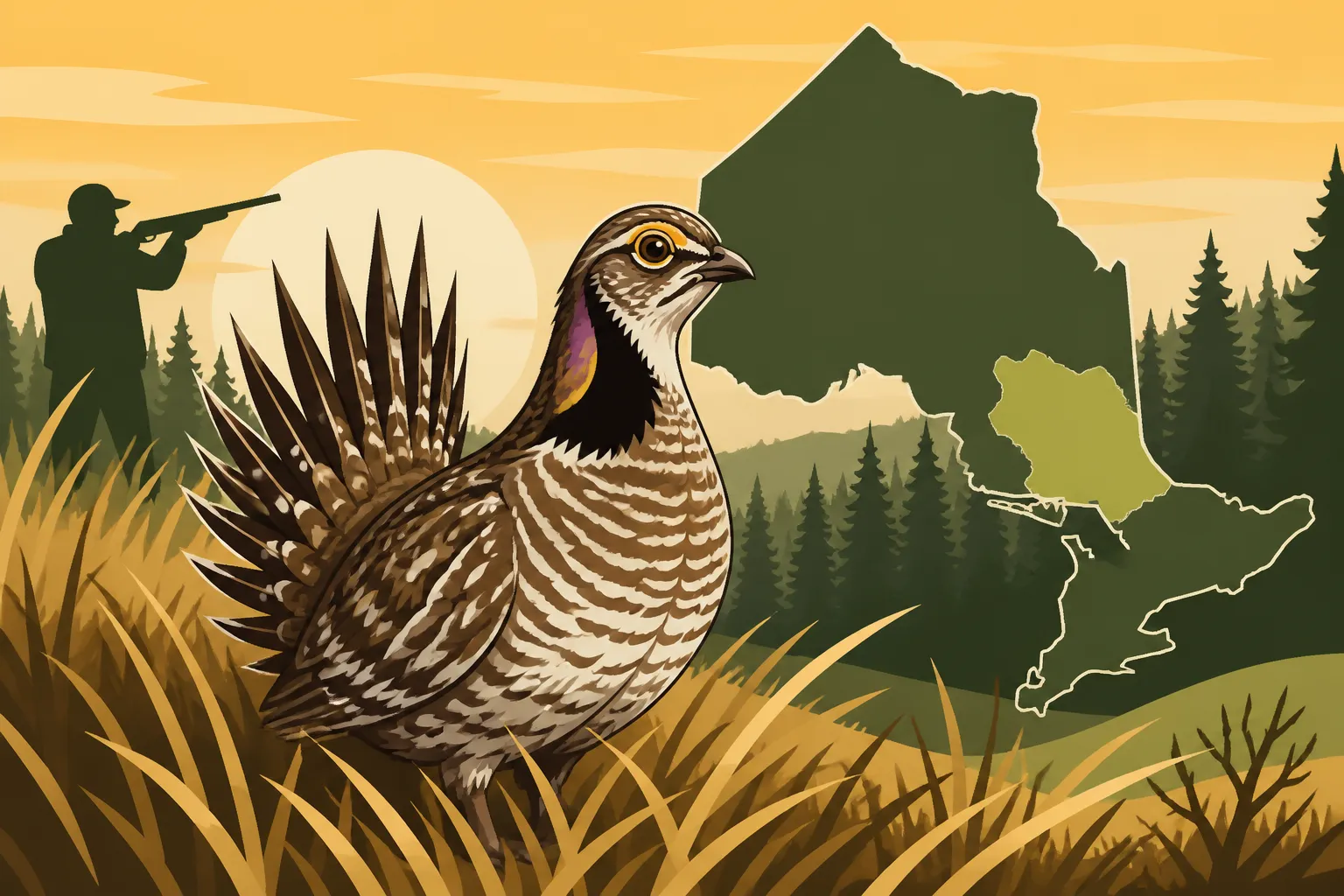
When we talk about the best places in Ontario for sharp-tailed grouse, Northwestern Ontario immediately springs to mind. Areas west of Lake Superior, particularly within the Kenora, Dryden, and Rainy River Districts, offer some of the most promising opportunities. This vast region, characterized by its mix of boreal forest, wetlands, and scattered agricultural clearings, has patches of ideal sharp-tail habitat.
Here, you'll find expanses of old farmlands that have reverted to bush, often dotted with aspen and willow thickets. Active forestry operations, while sometimes controversial, can also create temporary sharp-tail habitat through clear-cuts, which then regenerate into dense, shrubby cover over the next decade or two. Similarly, wildfire, a natural part of the boreal ecosystem, can open up large tracts of forest, leading to new growth that sharptails favour. These wild, untamed areas offer the seclusion and specific habitat mix that sharptails require. If you're thinking about a trip up this way, you'll want to read up on Hunting Northwestern Ontario's Big Bush.
The Clay Belt and Northern Agricultural Fringes
Another key region for sharp-tailed grouse is the "Clay Belt" in Northeastern Ontario, particularly around communities like Cochrane, Smooth Rock Falls, and Kapuskasing. This unique geological region, with its fertile clay soils, supported significant agricultural development in the past, even deep in the north. While much of that intensive farming has faded, the legacy of human activity has created prime sharp-tail habitat.
Here, you'll discover a fascinating mosaic of active forest, abandoned fields, and regenerating clearings. Old homesteads and forgotten agricultural lands have slowly been reclaimed by the bush, resulting in an abundance of edge habitat – the perfect blend of open ground and dense cover that sharptails crave. The mixture of mature forest, regenerating areas, and scattered human impact creates a dynamic landscape that, for now, continues to support these birds. It's a distinctly different hunting experience than the farmlands further south, as outlined in Hunting Northeastern Ontario's Clay Belt.
Other Isolated Pockets and Scouting Clues
While Northwestern Ontario and the Clay Belt are the primary strongholds, it's worth remembering that sharp-tailed grouse populations are incredibly localized and can be found in isolated pockets elsewhere in northern and central Ontario. These might be smaller, more fragmented areas, but they exist. The key to finding them, no matter the region, is relentless scouting for suitable habitat rather than just driving down main roads hoping to stumble upon them.
Identifying these "honey holes" often comes down to recognizing the specific habitat requirements we discussed earlier. Look for that blend of open land with regenerating shrubs and small trees. Utilizing modern mapping tools can be a game-changer here. Platforms like GoHunt allow you to pore over satellite imagery, identifying historical clear-cuts, power line corridors, or even subtly different vegetation patterns that might indicate old farm fields reverting to bush. By examining these digital maps, you can pinpoint potential areas before you ever put boots on the ground, making your scouting efforts much more efficient. Don't underestimate the power of Scouting With Satellite Imagery in Ontario to unlock these hidden gems.
| Region | Primary Habitat Types | Key Characteristics | Outlook for Sharptails |
|---|---|---|---|
| Northwestern Ontario | Old farmlands, clear-cuts, burn areas, aspen parklands | Vast wilderness, active forestry, natural disturbances (fire), remote access | Best potential, but requires significant effort and travel |
| Northeastern Clay Belt | Abandoned agriculture, regenerating bush, forest edges | Unique soil, historical farming, mix of forest and open areas, more accessible by road | Good potential, often in localized pockets |
| Other Northern Pockets | Power lines, pipeline corridors, very large clearings | Highly localized, often transient habitat, requires meticulous scouting and local knowledge | Less consistent, but rewarding for dedicated hunters |
Strategies for Locating Sharp-Tails
Finding sharp-tailed grouse isn't like hunting ruffed grouse, where you might simply walk old logging roads and expect to flush birds. Sharptails demand a more nuanced approach, often requiring hunters to cover significant ground and pay close attention to subtle habitat clues. It's an active, rewarding pursuit that starts long before you ever step foot in the bush.
Focusing on Habitat Edges and Openings
The sharp-tail's preference for transitional habitat means you need to focus your efforts on the edges where different cover types meet. Think about where a mature forest borders a regenerating clear-cut, or where a dense willow swamp gives way to a drier, grassy opening. Old logging roads, utility corridors like power lines or gas lines, and even abandoned railway beds can be excellent travel routes for these birds, and often provide the linear openings they favour.
These linear features often act as natural highways, connecting different pockets of ideal habitat. By walking these lines, you're essentially hunting the edges that sharptails utilize for travel, feeding, and roosting. Look for areas where the bush "opens up" significantly, allowing sunlight to penetrate and stimulate the growth of their preferred forage. This checkerboard effect, common in areas with industrial forestry, can be a sharp-tail hunter's best friend, but you need to identify the right stages of regrowth. Remember that general advice for Hunting Ruffed Grouse on an Ontario Bush Road also applies to searching for other upland birds.
Scouting for Signs and Booming Grounds
Unlike many game species, sharp-tailed grouse leave distinct signs, particularly their droppings, which are often cylindrical and larger than those of ruffed grouse. Look for these on bare ground, under roosting trees, or along trails. In snowy conditions, their tracks can be identifiable, leading you to feeding or roosting areas. Feather piles can also be a strong indicator of raptor kills or dusting sites.
A unique and highly effective scouting method, though often done in the spring, is to locate their booming grounds (leks). These are traditional open areas where male sharp-tails gather to perform their elaborate courtship displays. Leks are typically elevated, open patches of ground with minimal vegetation, often on a slight ridge or knoll. While you won't be hunting the leks directly, finding one can tell you that sharp-tails are in the area and give you a starting point for exploring the surrounding habitat during the hunting season. Talk to locals, especially farmers or forestry workers; they often have invaluable insights into where birds might be present.
Leveraging Mapping Technology (GoHunt mention)
In the modern age, effective sharp-tail hunting starts with smart use of technology. Relying solely on physical maps and vague directions is a recipe for frustration when pursuing such a habitat-specific bird. This is where advanced mapping applications truly shine.
Using a platform like GoHunt, you can unlock a whole new level of scouting. Its high-resolution satellite imagery allows you to virtually "walk" the terrain, identifying potential clear-cuts, pipeline rights-of-way, abandoned farm fields, and the subtle transitions between forest types that sharp-tails prefer. You can overlay different map layers, such as land ownership, topography, and even historical aerial photos to see how the landscape has changed over time. This lets you pinpoint likely habitat corridors and potential travel routes before you ever leave home. Having these detailed map layers at your fingertips for planning your route and understanding the terrain can dramatically increase your chances of finding these elusive birds. Before you head out, make sure you're comfortable with Reading an Ontario WMU Map Before You Go and understand its features.
The Future of Sharp-Tails and Conservation
The quest for sharp-tailed grouse in Ontario isn't just a pursuit of a magnificent game bird; it's also a journey into understanding the delicate balance of their specialized ecosystem. These birds, while resilient, face ongoing challenges that underscore the importance of conservation efforts and informed hunter involvement.
Habitat Loss and Fragmentation
Perhaps the biggest challenge facing sharp-tailed grouse in Ontario is the ongoing loss and fragmentation of their preferred habitat. As forests mature, the open, transitional areas they rely on for booming grounds and diverse forage naturally become denser and less suitable. Changes in agricultural practices, with less marginal land reverting to natural cover and more intensive cultivation, also impact their range.
The very specific nature of their habitat needs makes them particularly vulnerable. Unlike ruffed grouse, who can adapt to a wider variety of forest ages and types, sharp-tails are tied to that specific blend of open spaces and regenerating shrubland. When these distinct patches become too small, too isolated, or disappear entirely, so do the birds. This means that hunters looking for these birds are often chasing populations that are on the edge, making every successful hunt a testament to finding those rare, intact pieces of their world.
Conservation Efforts and Hunter Involvement
Despite the challenges, there are ongoing efforts and a collective responsibility to support sharp-tailed grouse populations. Sustainable forestry practices, for instance, can play a role by strategically creating and maintaining clear-cuts and burn areas that mimic natural disturbances, providing temporary habitat. Understanding and managing these cycles is crucial.
As hunters, our involvement is critical. License fees contribute directly to wildlife management and habitat conservation programs. More importantly, reporting sightings and harvest data can provide valuable information to wildlife biologists, helping them track populations and understand where efforts need to be focused. Educating ourselves and others about the specific needs of sharp-tailed grouse and advocating for responsible land management ensures that future generations will also have the opportunity to experience the thrill of finding these incredible birds. Understanding the broader dynamics of game bird populations, such as Why Ruffed Grouse Numbers Cycle, can offer insights into the long-term health of sharptail populations as well. Your passion for Small Game Hunting in Ontario can directly contribute to their future.
Disclaimer
This article is for general informational purposes only and does not constitute professional advice. Laws, prices and regulations vary by location and change over time. Consult a qualified professional for guidance on your specific situation.