Why Ruffed Grouse Numbers Cycle
There's nothing quite as frustrating as heading out into your favourite grouse cover, expecting to flush bird after bird, only to walk for hours through silent woods. Some years, it feels like the bush is absolutely teeming with ruffed grouse, their thundering flushes surprising you around every bend. Other years, they seem to vanish into thin air, leaving you wondering if you've suddenly forgotten how to hunt them. This guide will dive deep into the fascinating, complex reasons behind these frustrating — and completely natural — population swings, offering insights for every Ontario hunter.
The Ruffed Grouse Population Rollercoaster: What Does a Cycle Look Like?
For many hunters, the ups and downs of ruffed grouse populations feel like a mystery. One season, you’re filling your vest with ease, your dog locked on point seemingly every five minutes. The next, you’re lucky to see a handful of birds, and the drumming you once heard echoing through the spring woods is conspicuously absent. This isn't just bad luck; it's a predictable, albeit complex, ecological phenomenon known as the ruffed grouse cycle.
The Boom and Bust – A Natural Phenomenon
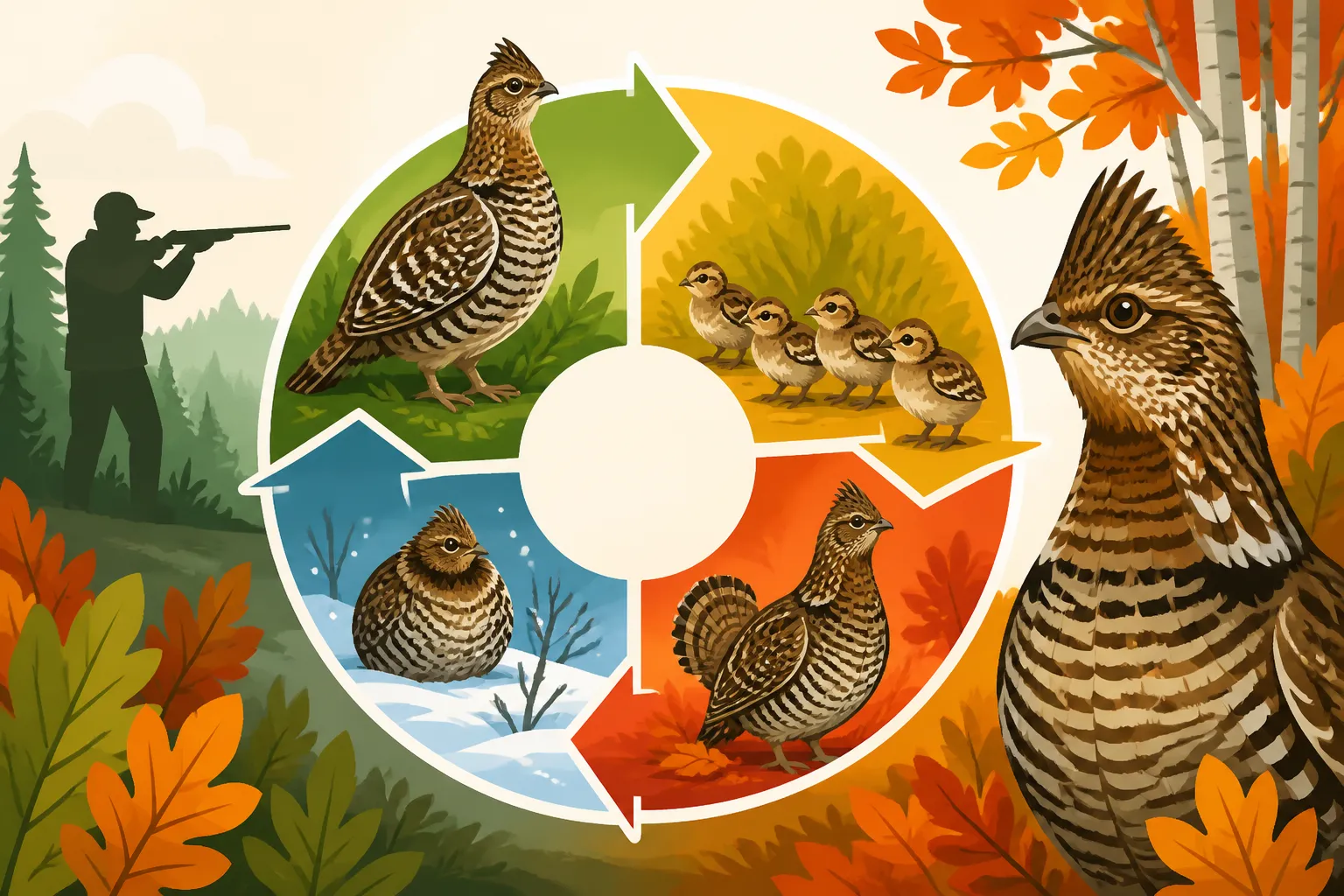
Ruffed grouse populations in many parts of North America, including much of Ontario, are famous for their cyclical nature. We're talking about roughly a 10-year cycle, moving from a low point, gradually building up to a peak, and then crashing back down again. Imagine a sine wave – that’s pretty close to what the population graph looks like. During the "boom" years, birds are abundant. You might see multiple flushes from a single family group, or find grouse holding in areas you wouldn't expect. They're resilient, reproducing well, and seemingly everywhere. These are the years that dreams are made of for grouse hunters and their pointing dogs. However, as the population peaks, things inevitably take a turn. Disease, increased predation pressure, and other factors start to catch up, leading to a sharp decline. This "bust" phase can be disheartening. You might hunt familiar covers for days without seeing a feather, leaving you wondering if the grouse have simply moved away. But rest assured, they haven't moved; their numbers have simply dropped to a natural low, setting the stage for the slow climb back up to the next peak. Understanding this rhythm is key to managing your expectations and adapting your hunting strategies.
Regional Variations and Local Hotspots
While the 10-year cycle is a recognized pattern across much of the ruffed grouse's range, it's crucial to understand that it's not a perfectly synchronized event across all of Ontario. You might hear reports from hunters up in the Rainy River country of bumper crops, while folks down in the Algonquin Fringe are lamenting a slow year. These regional variations are common. Local factors such as microclimates, specific habitat conditions, and localized predator populations can influence the timing and severity of the cycle in different areas. For instance, a particularly harsh winter or a prolonged wet spring in one Wildlife Management Unit (WMU) could hit chick survival hard, causing a localized dip in populations that doesn't align perfectly with the broader cycle. Similarly, an area with exceptionally good early successional habitat might experience a less dramatic bust, or recover more quickly. This means that while the general trend exists, relying solely on province-wide predictions isn't always enough. Hunters need to stay tuned into local conditions and reports, perhaps even using scouting tools like GoHunt to observe habitat changes over time in their specific hunting areas. A great way to keep your finger on the pulse of local populations is to talk to other hunters, camp owners, and even check in with local conservation officers, as they often have a good sense of what's happening on the ground.
Unpacking the Ecological Puzzle: Why Do Grouse Numbers Fluctuate?
The ruffed grouse cycle isn't caused by a single factor, but rather a complex interplay of ecological forces. Think of it like a carefully balanced ecosystem where a change in one element inevitably ripples through the rest. Understanding these key drivers is essential for appreciating the natural world and for becoming a more informed hunter.
Predator-Prey Dynamics – The Lynx and Hare Connection
One of the most significant and well-studied drivers of the ruffed grouse cycle is the classic predator-prey relationship, often linked to the snowshoe hare cycle. While grouse aren't directly tied to the hare in the same way a lynx is, the overall availability of prey animals, including hares and other small game, directly impacts predator populations. When snowshoe hare numbers are high – they also have a pronounced cycle – predators like lynx, bobcats, fox, coyotes, martens, owls, and hawks have an abundance of food. This allows their populations to thrive and expand. As hare numbers inevitably decline, these predators don't just disappear. They turn their attention to other available prey, and unfortunately for ruffed grouse, they are a readily available food source. This increased predatory pressure during the "down" swing of the hare cycle, which often aligns with the grouse cycle, can be a major factor in the sharp decline of grouse numbers. It's a cruel twist of nature for the grouse, as thriving predator populations, built on abundant small game, then become highly efficient at finding and consuming grouse when other food sources dwindle. This dynamic is a powerful force in shaping grouse populations in much of Ontario's boreal forest.
Habitat Succession and Food Availability
Beyond the hungry eyes of predators, the very landscape itself plays a monumental role in dictating grouse numbers. Ruffed grouse are creatures of early successional habitat – meaning young, regenerating forests. They absolutely thrive in areas that have been recently logged, burned, or otherwise disturbed, creating a patchwork of dense young growth. Think of a cutover block three to five years after logging, or a thick alder bottom near a beaver pond. These areas provide the dense cover grouse need to escape predators, roost safely, and raise their broods. They also offer a buffet of crucial food sources: aspen and birch buds (especially in winter), catkins, a variety of berries (like dogwood and wild rose hips), clover, and insects for growing chicks.
However, forests don't stay young forever. Over time, these ideal habitats mature, the canopy closes in, and the dense understory begins to thin out. This process, called forest succession, reduces the quality and quantity of suitable grouse habitat. As a forest ages, it provides less escape cover and fewer food options close to the ground, making life harder for grouse. This is why you'll often find birds on the edge of new cuts or along old logging roads. When large areas of a WMU mature simultaneously, it can contribute significantly to a regional decline in grouse numbers, compounding the effects of predation. Conversely, areas with ongoing, active forest management that continually creates new, young stands tend to hold grouse more consistently, even through the low points of the cycle. Planning your hunts using satellite imagery to identify these regenerating blocks can give you a real advantage. Scouting With Satellite Imagery in Ontario could be very helpful here.
Weather Extremes and Disease Impact
While predator-prey cycles and habitat succession are major long-term drivers, shorter-term factors like extreme weather and disease can also significantly influence grouse populations, especially during vulnerable times.
A mild winter, for example, might seem beneficial, but it can sometimes mean less snow cover for grouse to "snow-roost" in, exposing them more to predators. Conversely, an exceptionally harsh winter with deep, prolonged snow can make it difficult for birds to access food, weakening them and making them more susceptible to disease. The spring nesting and brooding season is particularly critical. Prolonged periods of cold, wet weather during the hatch can be absolutely devastating for chick survival. Young grouse chicks are very sensitive to chilling, and a rainy, chilly spring can lead to high mortality rates, drastically reducing the number of birds entering the fall population. This isn't just a "bad year" for hunting; it's a real biological bottleneck that can exacerbate a downswing in the cycle or delay a recovery.
Beyond weather, disease and parasites can also play a role, especially as populations reach their peak density. When birds are abundant and living in close proximity, the transmission of diseases and parasitic loads can increase. Think of things like avian pox or various internal parasites. While these rarely wipe out an entire population, they can weaken birds, reduce their reproductive success, and make them more vulnerable to predation or environmental stressors. A weakened bird is more likely to succumb to a cold snap or be caught by a hawk. As grouse numbers inevitably decline, these disease pressures often lessen, allowing the population to begin its slow, arduous recovery. This complex dance between environmental factors, predators, and disease is why the ruffed grouse cycle is such a persistent and fascinating aspect of Ontario's Upland Birds and Where They Live.
Adapting to the Cycles: Strategies for Ontario Grouse Hunters
Understanding the "why" behind grouse cycles is one thing; putting that knowledge into practice is another. As hunters, we can't control the natural ebb and flow of populations, but we can adapt our strategies to make the most of whatever the season brings, whether it's a boom or a bust.
Scouting Beyond the Seasons
Effective grouse hunting isn't just about showing up in October; it's a year-round endeavour, particularly when you're trying to stay ahead of the population cycle. Your off-season scouting efforts are invaluable for identifying prime habitat that will likely hold birds, regardless of whether the cycle is at a high or low. Focus on finding that critical early successional growth – young aspen stands, regenerating clear-cuts from 3-10 years ago, thick alder swales, or areas with dense multiflora rose or similar shrubs. These are the places that offer both food and crucial escape cover.
A tool like GoHunt can be incredibly useful here. You can use its satellite imagery and topographic maps to identify likely clearings, bush edges, and varying forest ages. Look for areas where different habitat types meet, such as the edge of a mature hardwood forest meeting a young poplar stand, or a conifer swamp bordering a regenerating cut. These "edges" are often grouse magnets. During the spring, listen for drumming male grouse – their tell-tale sound will pinpoint active territories. In the summer, look for dusting areas along old logging roads or trails, and keep an eye out for brood sign. By understanding what makes good grouse habitat and scouting year-round, you'll be well-prepared when hunting season arrives. Even in a low cycle, a small pocket of exceptional habitat might still hold a covey or two.
Understanding Habitat Preference in Different Cycle Phases
Grouse don't just live anywhere; they are highly particular about their habitat, and their specific preferences can shift slightly depending on where the population is in its cycle. During peak years, when grouse are abundant, you might find them in slightly less optimal habitat – they'll be so numerous that they spill over into areas that are merely "okay." This is when you might flush birds along more mature bush roads or in thinner cover than usual. They're everywhere, and competition for prime spots might push some birds into marginal areas.
However, during the low years of the cycle, grouse become incredibly selective. The remaining birds will concentrate in the absolute best, densest, most predator-proof habitat available. This means focusing your efforts on those thick, regenerating cuts, the impenetrable alder swamps, and the cedar thickets that offer maximum cover. These are the places where a predator is less likely to find them, and where they can feed with relative safety. You'll need to work harder, push through thicker cover, and accept fewer flushes. In these tough years, Hunting Ruffed Grouse on an Ontario Bush Road might be less productive unless that road cuts directly through very dense, ideal cover. Focus on the core areas, the sanctuaries where grouse are most likely to survive and reproduce. Tools like GoHunt can help you visualize these dense habitat pockets, allowing you to prioritize your efforts and increase your odds.
Leveraging Technology to Stay Informed
In today's hunting world, technology isn't just for navigation; it's a powerful tool for staying informed and making smarter hunting decisions, especially when dealing with cyclical game like ruffed grouse. Beyond satellite imagery for scouting, there are several ways to leverage technology to your advantage.
First, stay connected with online hunting forums, social media groups, and local conservation organizations that focus on small game or upland birds. Many hunters are eager to share observations (though maybe not their secret spots!), and these collective reports can give you a better real-time pulse on local grouse numbers than any provincial report can. For example, some regions might experience a delayed peak or a quicker recovery due to localized factors. Second, consider using hunting apps or online portals like GoHunt that might offer features for tracking harvest data, recording observations, or even showing historical patterns in specific areas (if available through crowd-sourced data). Some regions might even have publicly accessible small game harvest data, which can provide insights into trends over time.
Third, look for scientific reports or university studies on ruffed grouse populations. While these might not be updated annually, they often provide excellent background information on the health of the population in different parts of the province, identifying key habitat types and potential threats. By combining your own observations, local chatter, and available data, you can build a much more comprehensive picture of the current cycle phase and make more informed decisions about where and when to hunt. This proactive approach helps you adapt to the "bust" years and fully capitalize on the "boom" years.
Here's a quick overview of how population cycles can impact your hunting strategies:
| Cycle Phase | Grouse Abundance | Recommended Habitat Focus | Hunter Effort | Success Expectation |
|---|---|---|---|---|
| Peak | High | Widespread, including marginal | Moderate | High |
| Decline | Moderate to Low | Prime, dense cover | High | Moderate to Low |
| Low | Very Low | Absolute best, thickest cover | Very High | Low |
| Recovery | Low to Moderate | Prime, regenerating areas | High | Low to Moderate |
Looking Ahead: The Future of Ruffed Grouse Hunting in Ontario
The cyclical nature of ruffed grouse populations is a fundamental aspect of their ecology, but it also means that the future of hunting these spirited birds depends heavily on how we manage their habitat and how hunters engage with conservation. It's not just about waiting for the next boom; it's about fostering healthy ecosystems that can sustain these cycles.
Conservation Efforts and Habitat Management
While the ruffed grouse cycle is a natural phenomenon, human activities, particularly forestry practices, play a huge role in supporting or hindering their populations. Ruffed grouse, as we've discussed, are reliant on early successional forests. This means that timber harvesting, when done responsibly and with grouse habitat in mind, can actually be highly beneficial. Clear-cutting, followed by natural regeneration or replanting of deciduous species like aspen and birch, creates that vital young, dense cover that grouse need for survival and breeding.
The challenge lies in ensuring a continuous supply of this habitat. Large, unbroken tracts of mature forest are not ideal for grouse. Therefore, long-term forest management plans that incorporate diverse age classes and a mosaic of habitat types are critical. This involves cutting practices that create patches of young forest, interspersed with older growth for diversity. Conservation organizations often work with forestry companies and landowners to promote practices that benefit not only grouse but a wide array of wildlife dependent on similar habitat. As hunters, understanding these efforts, and perhaps even advocating for sustainable forestry, can contribute directly to healthier grouse populations in the long run. Hunting Ontario's mixed forest is a great way to experience these diverse habitats.
The Hunter's Role in Monitoring and Reporting
Every grouse hunter in Ontario has a role to play in the ongoing monitoring and conservation of this iconic game bird. We are, after all, some of the most consistent eyes and ears in the bush. Your observations and harvest reports, while sometimes feeling like a bureaucratic step, are incredibly valuable to wildlife biologists and managers.
When you purchase your licences through the provincial portal, and especially when you report your harvest, that data helps track trends, assess population health, and understand the impact of various factors, including the natural cycles. Reporting whether you had a "good" or "bad" year, even if you didn't fill your bag limit, provides anecdotal evidence that, when combined with thousands of other reports, paints a clearer picture of regional populations. Beyond official reporting, being an ethical and observant hunter means noticing changes in habitat, unusual disease signs, or shifts in bird distribution. Sharing these observations with local conservation groups or even on platforms like GoHunt can contribute to a collective understanding. By actively participating in this data collection, you're not just hunting; you're contributing to the scientific understanding and future management of ruffed grouse, ensuring that future generations will also get to experience the thrill of a thundering flush. Remember, sound data is the foundation of sound conservation decisions.
Disclaimer
This article is for general informational purposes only and does not constitute professional advice. Laws, prices and regulations vary by location and change over time. Consult a qualified professional for guidance on your specific situation.