White-Tailed Deer Across Ontario
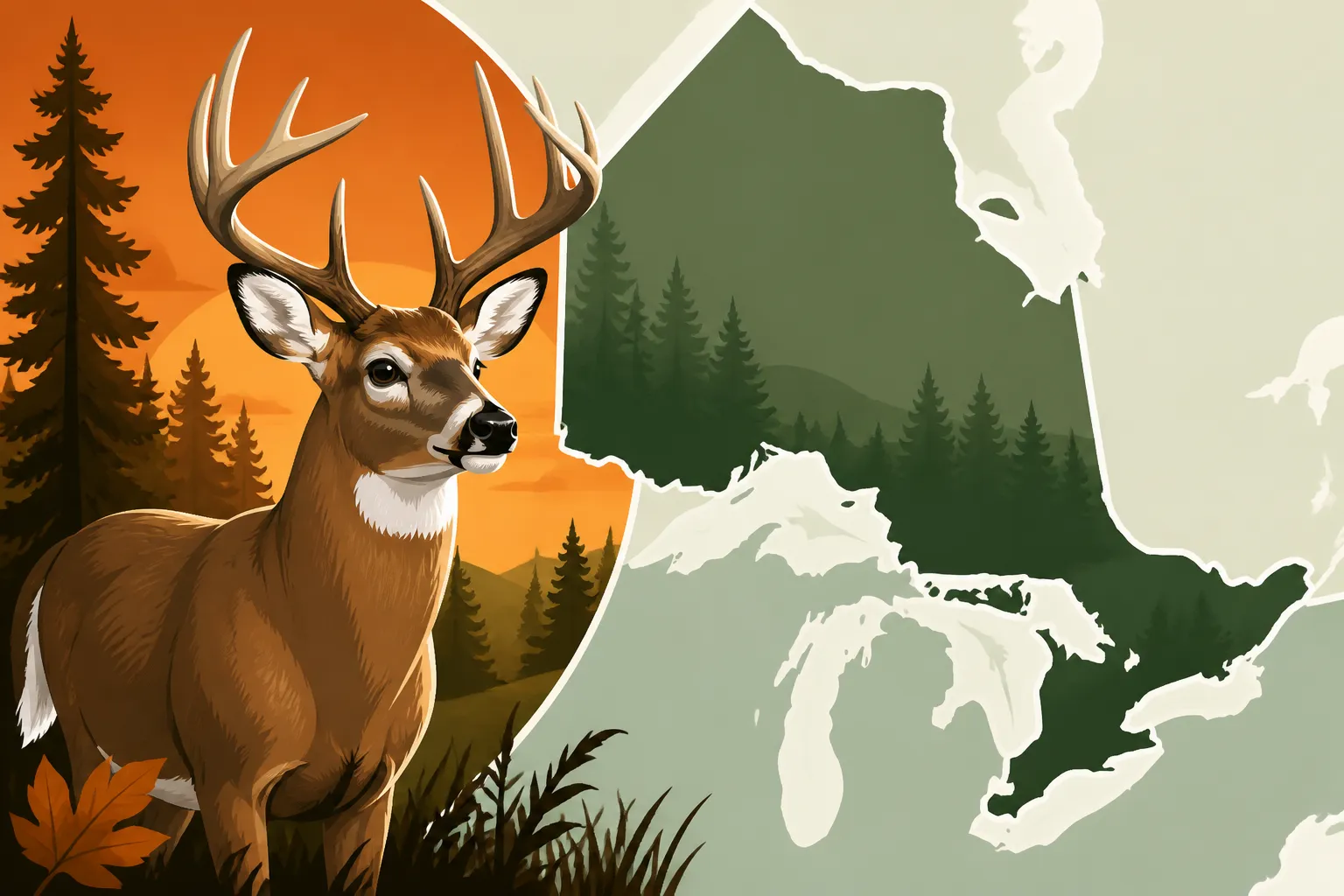
You can drive from Windsor to Kenora and pass through whitetail country the whole way, yet the deer at each end live almost completely different lives. A hunter who learned in Norfolk County soybean fields can struggle in a Shield cedar swamp, and the reverse is just as true. This guide explains how white-tailed deer live across Ontario, region by region and season by season, so you can hunt them wherever you find them.
How Whitetails Fit Into Ontario’s Landscape
White-tailed deer are Ontario’s most widespread and most hunted big game animal. They are found across the south and much of central Ontario, and they reach into parts of the north wherever winters, habitat and food allow. The province’s deer herd rises and falls with winter severity, habitat change and harvest, which is why numbers can feel very different from one decade to the next. For more on that, see How Many Whitetails the Province Holds.
The Southern Core
Southern Ontario, from the Windsor area through London, Kitchener, the Niagara Peninsula, Grey and Bruce, and east toward Kingston and the Ottawa Valley, offers some of the most productive deer habitat in the province. Rich farmland provides corn, soybeans, alfalfa and winter wheat, and woodlots, river valleys, hedgerows and swamps provide cover. Winters are milder and snow is lighter than in the north.
That combination of food, cover and mild weather lets deer thrive. Fawn survival is generally good, and bucks can reach impressive sizes in a relatively short time when they get enough age. The challenge for hunters in the south is access. Most land is private, so knocking on doors and building relationships matters more than knowing where Crown land sits.
Central Ontario’s Mixed Forest
Moving north into central Ontario, through areas like the Kawarthas, Haliburton, Muskoka, Parry Sound, Bancroft and the land around Algonquin, the landscape shifts to mixed hardwood and conifer forest on the Canadian Shield. Farmland becomes patchier. Lakes, rock ridges, beaver meadows and cedar swamps dominate.
Deer densities here are generally lower than in the farm belt, and they are more sensitive to winter severity. Deer often migrate to traditional wintering areas, called yards, when deep snow arrives. Hunting here often means still-hunting hardwood ridges, sitting near swamp edges, and running deer drives in hunt camps that have been around for generations. Our guide on Hunting Deer in Ontario’s Mixed Forest covers those tactics in detail.
The Northern Fringe
Whitetails also live in parts of northern Ontario, especially along the southern edge of the boreal forest and in agricultural pockets. Areas like Rainy River, Dryden, Kenora, Sudbury, the Temiskaming area and the Clay Belt can hold deer, sometimes in good numbers, but populations are vulnerable to harsh winters. A string of mild winters can grow a northern herd quickly, and a single brutal winter can knock it back.
Northern deer often carry more body mass than southern deer, which helps them survive the cold. That is part of the reason some of Ontario’s heaviest bucks come from the north. Our piece on Why Northern Bucks Carry More Body Mass explains the biology.
Ontario Deer Regions Compared
The table below compares the main deer regions in the province in broad terms.
| Region | Typical Habitat | Deer Density | Winter Severity | Hunting Access | Common Tactics |
|---|---|---|---|---|---|
| Southwestern and south-central farm belt | Farmland, woodlots, river valleys | High | Mild | Mostly private | Field edges, stands on travel corridors |
| Eastern Ontario and Ottawa Valley | Farmland mixed with forest | Moderate to high | Moderate | Mix of private and some public | Stand hunting, drives |
| Central Shield country | Mixed forest, lakes, swamps | Low to moderate | Moderate to severe | Crown land and private | Still-hunting, drives, swamp edges |
| Northwestern fringe | Boreal edges, farmland pockets | Variable | Severe | Crown land and private | Stand hunting near farms, cutovers |
| Northeastern Clay Belt | Farmland edges, boreal forest | Variable | Severe | Crown land and private | Field edges, river valleys |
| Islands such as Manitoulin and Pelee | Mixed farmland and forest | Moderate to high | Moderate | Mostly private, some controlled hunts | Stand hunting, drives |
Islands and Special Areas
Manitoulin Island has a long reputation for good deer hunting, with a mix of farmland, forest and limestone alvar. Our guide on Hunting the Manitoulin Island Units looks at that region. Pelee Island and some provincial parks have periodically offered controlled hunts to manage deer impacts on sensitive habitat. These hunts usually involve applications or special rules, so check the details before planning.
Planning Across Regions
Hunters who travel across regions should treat each one as a different hunt. A tactic that works in farm country may fail in big woods, and vice versa. Tools like GoHunt can help organize scouting notes and maps, though Ontario hunters should confirm what local data GoHunt provides. Pair any app with the provincial unit maps and the hunting regulations summary.
The Whitetail Year in Ontario
Deer behaviour changes dramatically through the year. Understanding that cycle helps you scout and hunt at the right times.
Spring and Summer
In spring, deer leave winter yards and spread back onto summer ranges. Does give birth in late spring and early summer, usually to one or two fawns. Bucks begin growing new antlers, which are covered in velvet through the summer. Food is abundant, and deer gain weight and condition.
Summer is a good time to scout. Bucks in velvet often feed in fields in the evening, and trail cameras can show you what bucks are using an area. In farm country, soybean and alfalfa fields can be excellent places to glass at dusk.
In the big woods, summer scouting looks different. Deer spread out across a much larger area, and there are few fields to glass. Beaver meadows, clover along logging roads, regrowing cutovers and the edges of lakes and wetlands are the places to look. Fawns are vulnerable during their first weeks, and predators like coyotes, wolves and black bears take a share of them in many areas, which is one reason fawn survival varies so much from region to region.
Fall and the Rut
In late summer, bucks shed their velvet and begin to show more territorial behaviour. Rubs and scrapes start to appear in early fall. The rut, when bucks actively seek out does, usually peaks in early to mid November in much of Ontario. That is when bucks move most during daylight, making it a prime time to hunt. For more on timing, read When Ontario’s Whitetail Rut Peaks.
During the rut, bucks may travel far outside their usual home range. Hunters who sit on travel corridors, funnels between bedding areas and doe groups often see the most action. Calling and rattling can be effective in some situations.
Winter Survival
Winter is the toughest season for Ontario deer. In the south, deer may stay in their home ranges, feeding on waste grain and browse. In central and northern Ontario, deep snow forces deer into conifer-dominated wintering areas where snow is shallower and cover reduces wind chill. Our guide on Where Deer Yard Up in Deep Snow covers those yards.
Severe winters can lead to significant deer mortality, especially among fawns and older bucks that went into winter depleted after the rut. That is why deer numbers swing so much in central and northern Ontario. Read Ontario’s Winter Kill and Deer Numbers for more.
Deer Biology Every Ontario Hunter Should Know
Body Size and Antlers
Ontario whitetails can grow large, especially in the north and in rich farm country. Body weight varies widely with age, region and season. A mature buck in good condition can be considerably heavier than a yearling, and northern bucks often outweigh southern bucks of similar age.
Antler size depends on age, genetics and nutrition. Bucks typically need several years to reach their antler potential. Farm-country bucks often grow faster due to better nutrition, while northern bucks may grow big bodies but sometimes smaller antlers for their age. For more on where big bucks come from, see Where Ontario Grows the Biggest Bucks.
Diet Through the Seasons
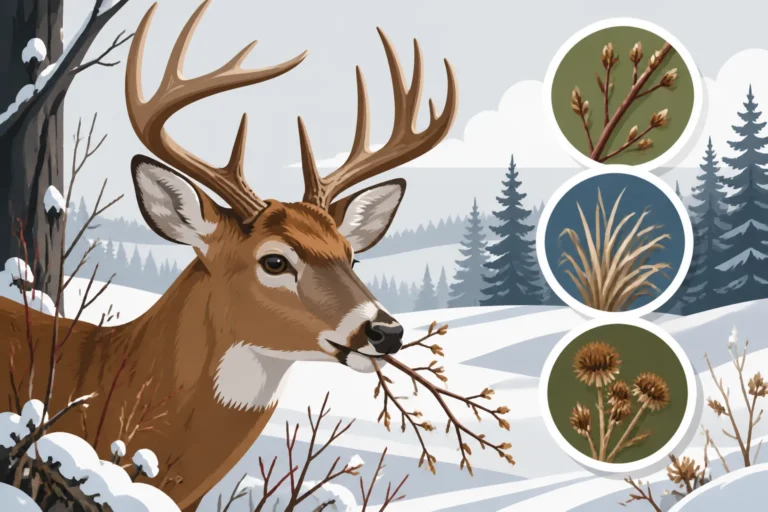
Whitetails are browsers and grazers. In spring and summer, they eat green leaves, forbs, grasses and agricultural crops. In fall, acorns, beechnuts, apples and waste grain become important. In winter, they rely heavily on woody browse such as cedar, maple, dogwood and other shrubs.
Understanding what deer eat at each time of year helps you find them. A good acorn crop on a hardwood ridge may pull deer away from fields in October. A heavy snowfall may push them into cedar swamps.
Mast crops deserve special attention because they swing so much from year to year. Red and white oaks, beech and wild apple trees can produce heavily one fall and barely at all the next. In a bumper acorn year, deer may abandon field edges and spend most of October under oaks, making stands near crops less productive. In a poor mast year, deer lean harder on agricultural crops and browse. Checking a few oak ridges in September tells you which kind of fall you are likely to hunt.
Disease and Health
Chronic wasting disease is one of the biggest concerns for deer managers across North America. Ontario runs a surveillance program to watch for it and has rules on importing carcasses and using natural deer urine scents. Read What CWD Means for Ontario Deer for an overview of the issue and how hunters can help.
Ticks, parasites and other diseases also affect deer. Most are not a major threat to hunters, but practising good hygiene when field dressing and handling meat is always wise.
Scouting and Reading Whitetail Sign
Every successful deer season in Ontario starts well before opening day. The province is too big and too varied to show up blind and expect deer to walk past.
Reading Rubs, Scrapes and Trails
Rubs are the marks bucks leave by rubbing their antlers on saplings and small trees. Early rubs appear soon after bucks shed velvet in late summer, and they multiply as the rut approaches. A line of rubs along a ridge or field edge often marks a travel route, and big rubs on larger trees are a decent sign that a mature buck uses the area, though young bucks will happily rub big trees too.
Scrapes are patches of pawed bare ground under an overhanging branch, usually with the branch above chewed and broken. Bucks urinate in them and work the branch with their forehead and antlers. Scrapes tend to appear along field edges, logging roads and trails. A cluster of fresh scrapes in late October tells you bucks are moving through and checking for does.
Trails show you where deer actually walk. In farm country, look for well-worn trails that cross fences, enter fields at corners or follow creek bottoms. In the big woods, trails often follow ridge edges, swamp margins and the low saddles between hills. The best stand sites often sit where several of these signs come together.
Using Trail Cameras Wisely
Trail cameras have changed deer scouting in Ontario. A handful of cameras on trails, field corners, scrapes and creek crossings can reveal which bucks live in an area, when they move and how they respond to pressure. In summer, cameras near food sources show velvet bucks. In fall, cameras over scrapes catch bucks cruising during the pre-rut.
The trick is not to overcheck them. Every visit leaves scent and disturbance. Many hunters check cameras midday, on a rainy day or only every couple of weeks to keep pressure low. Cellular cameras reduce visits but work only where there is signal, which rules them out in much of the north.
Always follow the rules that apply where you place a camera. On private land you need the landowner’s consent. On public land, there may be rules about labelling, placement and removal.
Building a Scouting Calendar
A simple seasonal routine keeps scouting focused.
- Late winter: walk your area after the snow settles to find yards, beds and travel routes while sign is easy to read.
- Spring: look for sheds and old rubs, and note trails that survived the winter.
- Summer: glass fields at dusk and run cameras near food to see what bucks survived.
- Early fall: hang stands and blinds, trim shooting lanes and scout for fresh rubs.
- Late October: watch scrapes and rub lines to time the pre-rut.
- During the season: scout lightly and adjust based on what you see and on hunting pressure.
GoHunt and similar apps can be handy for logging these observations alongside maps, as long as the data is checked against provincial maps and on-the-ground conditions.
Hunting Whitetails Across Ontario
Seasons and Tags
Ontario deer seasons vary by wildlife management unit. Many units offer an archery season, a gun season and in some cases a muzzleloader season. Antlerless deer often require a separate validation tag, which may be offered through a draw. Our guides on Ontario Deer Season Dates by WMU and Ontario Antlerless Deer Draws cover the details.
Read the hunting regulations summary each year, since seasons and tag rules can change.
The way tags work also shapes how you hunt. A basic deer licence usually comes with a tag for an antlered deer, while antlerless deer often need a separate validation tag. In some units, those antlerless validations are easy to obtain; in others they are limited and drawn. Some hunt camps pool their efforts so that members who draw antlerless validations fill them on behalf of the group where the rules allow it, but group hunting rules for deer are specific, so check exactly what the summary permits before you rely on anyone else’s tag.
Consider a hunter who moves from a southern unit with generous antlerless validations to a central unit where those tags are scarce. Habits from home, like taking the first legal doe on opening morning, may no longer fit. Reading the unit tables carefully before the trip prevents an expensive mistake.
Farm Country Tactics
In southern farm country, deer often bed in woodlots, swamps or brushy fencerows and feed in fields. Stand hunting along travel routes between bedding and feeding areas is the most common approach. Ground blinds near field edges are popular too. During the rut, funnels and pinch points become key spots. Our guide on Hunting Deer in Southern Ontario Farmland covers farm country tactics in depth.
Permission is the main challenge. Ask early, be respectful, and offer to help with chores or to share meat. Good relationships with landowners are the foundation of farm country hunting.
Big Woods Tactics
In central and northern forest, deer are spread out and harder to pattern. Still-hunting, slowly moving through the woods while looking and listening, is a traditional approach. Many hunt camps use deer drives, with some hunters walking through cover to push deer toward others posted on likely escape routes. Stand hunting near swamp edges, beaver meadows and old logging roads also works.
Fresh snow is a gift in big woods country. It lets you read tracks and figure out where deer are moving. Many experienced hunters wait for a good tracking snow to target mature bucks.
Adjusting to Hunting Pressure
Whitetails across Ontario react quickly to pressure. On opening weekend of the gun season, deer that wandered field edges in daylight a week earlier may vanish into the thickest cover they can find. In farm country, that often means cattail sloughs, overgrown fencerows, wet bush lots and the middle of standing corn. In the big woods, it means cedar swamps, spruce bogs and steep, brushy hillsides that few hunters bother to walk into.
You can turn that behaviour into an advantage. Instead of sitting where you saw deer in October, set up on the escape routes between open ground and thick refuges. On busy public land, think about where other hunters will walk in at dawn and where deer will go to avoid them. A stand two hundred metres deeper in the swamp, reached quietly in the dark, can see deer pushed past by hunters who stayed near the road.
Midweek days, bad weather and the last hour of light are also your friends. Pressure drops when most hunters go back to work, and deer settle back toward their normal patterns. Many big Ontario bucks are taken on a cold Tuesday afternoon by a hunter who simply stayed out when the crowds left.
Calling and Rattling Ontario Whitetails
Calling deer is not a magic trick, but it can tip the odds. Grunt calls imitate the short, guttural sounds bucks and does make while moving and socializing. A few soft grunts can turn a buck that is passing out of range. Doe bleats can draw curious deer, especially during the rut. Rattling, which imitates two bucks fighting, can pull in bucks looking for a fight or a doe.
Rattling tends to work best in areas with a balanced buck-to-doe ratio and older bucks, and during the pre-rut and early rut when bucks are most competitive. In thick bush, keep the volume lower so you do not sound like a fight in the next township. In open farm country, louder sequences may carry farther. Always be ready, since bucks often come in quickly and silently.
Late Season and Muzzleloader Hunting
Late season hunting in Ontario can be cold, quiet and productive. After the rut, bucks are tired and hungry, and they focus on food. In farm country, standing corn, cut corn and soybean stubble can draw deer in the late afternoon. In the big woods, deer often move toward wintering areas.
Some units offer muzzleloader seasons in December, which give hunters another chance after the main gun season. Cold weather makes meat care easier, but it also means more clothing, shorter days and colder sits. Plan accordingly, with warm layers and a comfortable setup.
From Field to Freezer
A whitetail is a gift, and how you handle it after the shot matters. Ontario’s weather can swing from warm to freezing within the same season, and meat quality depends on getting the animal cooled quickly.
Tagging and Field Dressing
Before you move the deer, follow the tagging rules in the hunting regulations summary. Validate and attach the tag as required, and make sure you leave any required evidence of sex attached. Then field dress the deer as soon as possible to start cooling the carcass.
Field dressing is simpler with a sharp knife, gloves and a bit of practice. Open the body cavity carefully, remove the organs without puncturing the stomach or intestines, and let the cavity drain. In warm weather, prop the cavity open with a stick to help air flow.
Getting the Deer Out
Dragging a deer through farm country is usually short work. In the big woods or swamps, it can be a real job. A drag harness, a sled in snow, or a game cart on trails makes the job easier. In camp settings, many groups share the work and take turns dragging. If you hunt alone far from a road, think about how you will get a deer out before you take the shot.
Hanging, Butchering and Sharing
Early season deer taken in October may need to go to a cooler or butcher quickly, since daytime temperatures can be too warm for safe hanging. In November and December, hanging a deer in a cool, shaded spot for a few days can improve tenderness, as long as temperatures stay cold but not freezing solid.
Many hunters butcher their own deer, while others use local butchers. If you use a butcher, call ahead during the season, since many get busy in November. Sharing meat with landowners, neighbours and friends is a great way to build goodwill and keep hunting traditions alive.
Managing and Conserving Ontario’s Deer
How the Province Manages Deer
The province manages deer by setting seasons, issuing tags and monitoring populations and harvest. Antlerless tag numbers are adjusted to grow, stabilize or reduce deer populations in different units. Mandatory reporting and harvest surveys help biologists understand trends.
Winter severity monitoring is another tool, especially in central and northern Ontario. Snow depth and how deep a deer’s legs sink into the snow give managers a sense of how hard a winter has been. After a severe winter, antlerless opportunities may be reduced to let the herd recover. After a run of mild winters, they may be increased to keep populations in balance with habitat and with the needs of farmers and drivers.
The Role of Hunters
Hunters play a key role in deer management. Harvesting antlerless deer in areas with high populations helps reduce crop damage and vehicle collisions. Reporting harvests accurately helps biologists set better seasons. Participating in disease surveillance helps protect the herd.
Hunters also influence the age structure of the herd. In areas where most bucks are shot as yearlings, few reach the age when antlers peak. Some hunt camps and landowners choose to pass young bucks so they can mature, and others focus on antlerless harvest to balance the herd. Neither approach is required by law in most units, but both reflect a growing interest in managing deer quality as well as numbers.
Ethics round out that role. Practising at realistic ranges, knowing your firearm or bow, waiting for a clean shot, following up every hit carefully and respecting other hunters and landowners all protect the reputation of hunting in a province where most people do not hunt.
Deer, Roads and Towns
Whitetails do not stop at the edge of the bush. In southern Ontario especially, deer live close to towns, highways and even city green spaces. Deer-vehicle collisions are a real cost in many areas, peaking in fall during the rut when bucks travel widely and in spring when yearlings disperse. Ravine systems, river valleys and hydro corridors let deer move into suburban areas where hunting is restricted or impossible.
That is one reason the province uses antlerless tags and, in some places, special hunts to manage deer numbers. Hunters who harvest deer in areas with high collision rates and crop damage are providing a real service to the community. Respecting municipal bylaws, discharge restrictions and landowner wishes is part of doing that well.
Habitat and the Future
Habitat change is one of the biggest long-term influences on deer. Logging creates young forest that benefits deer. Agricultural changes can increase or reduce food and cover. Urban sprawl removes habitat but also creates suburban deer problems. Climate change may bring milder winters that help northern deer expand, but also new challenges like disease and ticks.
Planning tools like GoHunt and the province’s own maps will help you keep up with where deer live, but the fundamentals do not change: food, cover, water and winter shelter determine where whitetails thrive.
Disclaimer
This article is for general informational purposes only and does not constitute professional advice. Laws, prices and regulations vary by location and change over time. Consult a qualified professional for guidance on your specific situation.