Ontario’s Winter Kill and Deer Numbers
For anyone who hunts whitetail deer in Ontario, especially in our northern reaches or during particularly severe seasons, the phrase "winter kill" hangs heavy in the air. It’s a somber reality that our deer populations face, a natural but often brutal culling mechanism that can dramatically alter herd numbers and hunting prospects from one year to the next. Understanding Ontario's Winter Kill and Deer Numbers isn't just an academic exercise; it's crucial for every hunter to grasp how these harsh winters impact the deer we pursue, how the Ministry monitors these effects, and what it might mean for future hunting opportunities.
What is "Winter Kill" and Why Does it Matter?
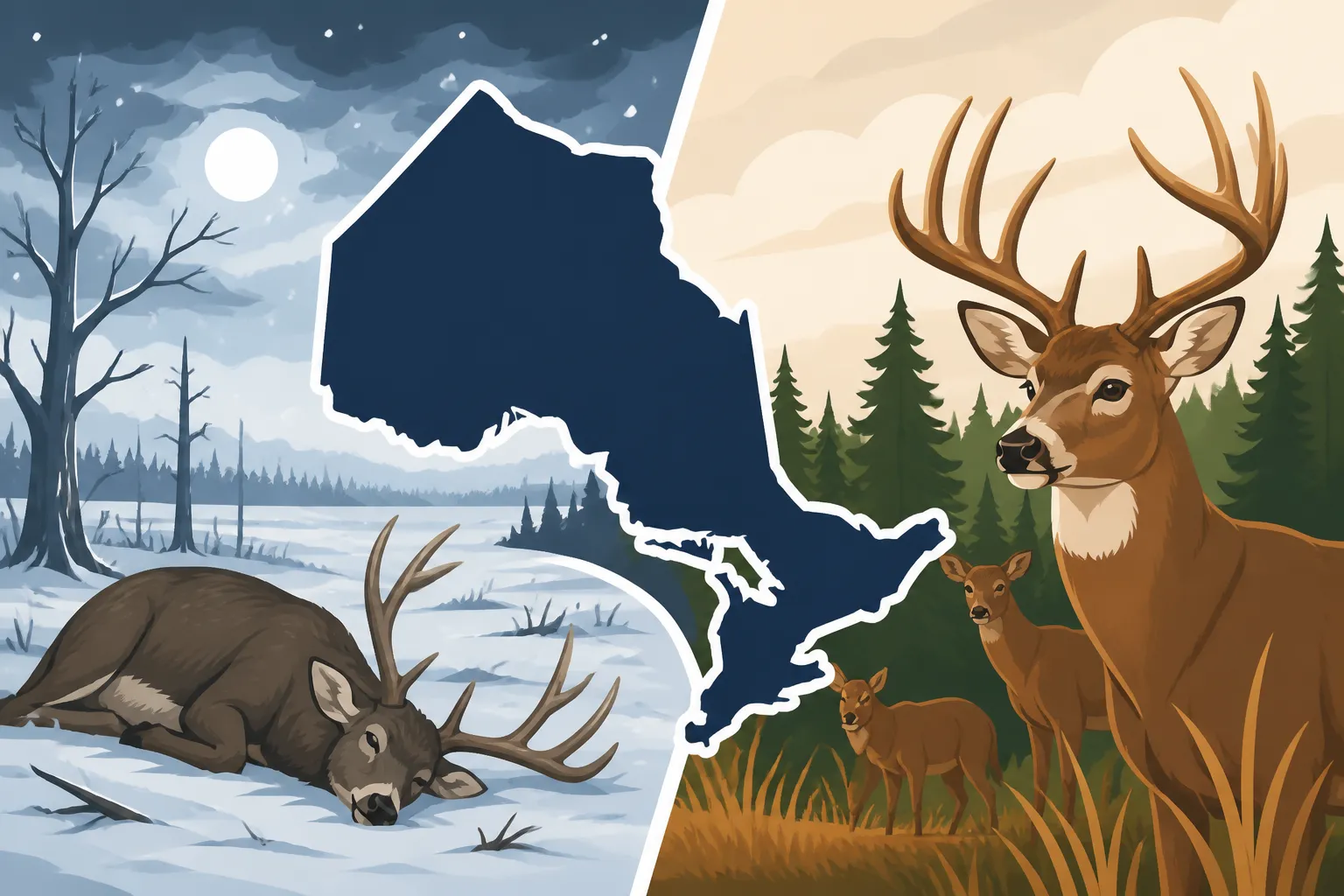
Winter kill refers to the natural mortality of deer and other wildlife during periods of extreme winter conditions. While some level of natural attrition is always present, a "hard" winter can push mortality rates far beyond the norm, leading to significant drops in local deer populations. This isn't just about a few weak animals succumbing; it's about the very survival of the herd being tested to its limits.
The Direct Toll of Harsh Winters
The most obvious impact of winter kill is the direct loss of life. Deer, particularly fawns, older animals, or those in poor condition going into winter, simply don't have the energy reserves to survive prolonged periods of deep snow and frigid temperatures. They might starve, freeze, or become too weak to escape predators. We’ve all heard stories, or perhaps even seen firsthand, the tragic sight of deer carcasses in the spring, silent witnesses to the struggles of the previous winter. This direct mortality can decimate local pockets of deer, leaving hunters wondering where all the animals went come fall.
Beyond the immediate visible losses, the direct toll can also affect the overall health of the surviving animals. Those that make it through a severe winter often emerge in a weakened state, their bodies depleted, making them more susceptible to disease or less able to reproduce effectively in the coming spring. This creates a challenging cycle where a harsh winter can have repercussions for several years down the line, affecting fawn recruitment and antler development.
Beyond Direct Mortality: The Lingering Effects
Winter kill isn't just about deer dropping dead in February. It's a complex ecological event with far-reaching consequences that ripple through the ecosystem. Surviving does might reabsorb fawns or give birth to smaller, weaker fawns that have a lower chance of survival, impacting the crucial "recruitment" of new deer into the population. For bucks, a tough winter can mean stunted antler growth in the following season as their bodies prioritize basic survival over growing impressive racks.
Furthermore, a severe winter can force deer into smaller, more confined areas, concentrating them and increasing the risk of disease transmission once they are stressed. It also puts immense pressure on available food sources, which might already be limited. The lingering effects can change deer movement patterns, their preferred bedding areas, and even the social dynamics of the herd for months, making them harder to pattern for hunters eager to hit the woods.
Factors Influencing Winter Kill Severity
Understanding what makes one winter "hard" and another "mild" is key to grasping the dynamics of deer populations. It's rarely just one factor; rather, it's a combination of relentless conditions that stack up against our whitetails.
The Relentless Snowpack
Deep snow is arguably the biggest contributor to winter kill in Ontario. When snow depths consistently exceed 50-60 centimeters (about two feet), it becomes incredibly difficult for deer to move, especially fawns with their shorter legs. Their energy expenditure just to walk a few yards skyrockets. Imagine trying to trudge through waist-deep snow all day, every day – that's the reality for a whitetail. This exhausting struggle is well-documented in studies looking at How Deep Snow Shapes Ontario Game.
Prolonged periods of deep snow also bury food sources, making it nearly impossible for deer to access the browse they need to survive. They become confined to smaller areas, often cedar swamps or dense coniferous stands that offer some thermal cover and slightly shallower snow, known as deer yards. While these yards offer a temporary refuge, they can also become traps if the winter drags on, leading to over-browsing and eventual starvation within these limited spaces. For hunters trying to understand deer movement, recognizing Where Ontario Whitetails Yard in Deep Snow is vital.
The Bite of Extreme Cold
While snow is a physical barrier, extreme cold is a metabolic drain. When temperatures plummet, especially for extended periods without a break, deer must burn an immense amount of energy just to maintain their core body temperature. This becomes a critical problem when their food intake is already compromised by deep snow. The colder it gets, the more calories they need, and the harder it is to find those calories.
Wind chill exacerbates this issue, stripping away vital body heat even faster. A deer that might survive a moderate cold snap could succumb rapidly when biting winds are added to the equation. This combination of cold and wind forces deer to huddle together, conserving energy, but also putting pressure on those crucial winter cover areas.
Nutritional Stress and Exhaustion
Deer enter winter relying on fat reserves built up during the fall. A healthy deer with good fat stores has a much better chance of surviving a tough winter. However, if fall conditions were poor—say, a drought reduced forage quality, or a poor acorn crop meant less caloric intake—deer go into winter already at a disadvantage. This leads to what we call nutritional stress.
Once winter sets in, the struggle for food intensifies. What Whitetails Eat Through a Hard Winter is often limited to woody browse like cedar, dogwood, and maple twigs. These foods are far less nutritious than their summer and fall diets, providing fewer calories at a time when they need the most. The constant effort of moving through snow and fighting the cold, combined with a nutrient-poor diet, leads to exhaustion and ultimately starvation for many animals.
Predator Presence and Opportunity
While not a direct cause of winter kill in the same way snow or cold is, predator pressure becomes significantly more impactful during severe winters. Coyotes, wolves, and even domestic dogs find weakened, struggling deer to be much easier prey. A deer that is already exhausted from fighting deep snow and on the brink of starvation has little defense against a determined predator.
This dynamic is especially pronounced in areas where deer are concentrated in yards. Predators learn these patterns and can patrol the edges, picking off the weakest animals. While predators play a natural role in thinning out the less fit, a severe winter can amplify their impact, turning an already challenging situation into a death sentence for a higher percentage of the herd. Using tools like GoHunt can help you understand game concentrations and how prey-predator dynamics might play out in different areas.
How Winter Kill Impacts Deer Numbers
The consequences of winter kill extend far beyond the immediate season, shaping the trajectory of deer populations for years and influencing management strategies. It's a powerful natural regulator, though often a harsh one for both deer and hunters.
Short-Term Population Dips and Localized Impacts
The most immediate and noticeable impact of a severe winter is a tangible reduction in deer numbers. Hunters who were seeing plenty of deer in the fall might find the woods eerily quiet the following season. This isn't just anecdotal; wildlife biologists conducting surveys often confirm significant drops. These reductions are often localized, meaning one Wildlife Management Unit (WMU) might experience a severe drop, while an adjacent one with milder conditions might not. This can lead to frustration for hunters, as their long-standing honey holes might suddenly be empty.
For instance, a particularly brutal winter in the Lake Huron basin could devastate local herds in those WMUs, even as deer populations along the more sheltered Lake Erie shoreline remain relatively robust. This localized impact makes province-wide generalizations difficult and underscores the importance of regional data when making hunting plans. It also highlights Why Ontario Deer Numbers Swing is such a complex question, often tied to specific weather patterns in different areas.
Long-Term Herd Health and Recruitment Challenges
Beyond the initial dip, winter kill has longer-term implications for herd health and the crucial process of recruitment – the number of fawns that survive to join the adult population. Does that survive a harsh winter often enter the breeding season in poor physical condition. This can lead to lower conception rates, fewer fawns born, or fawns that are weaker and less likely to survive their first few months. A single severe winter can set back fawn recruitment for two or three years.
For bucks, depleted energy reserves mean that their bodies prioritize survival and recovery over growing large antlers. Many hunters observe smaller racks across the board in the years following a hard winter. It takes time, good forage, and milder conditions for the herd to regain its optimal health and for bucks to express their full antler potential. This isn't just about trophy potential; it's an indicator of overall herd vitality.
The Ripple Effect on Ontario's Wildlife Management Units
Ontario's extensive system of Ontario's Wildlife Management Units is designed to manage game populations at a regional level, accounting for variations in habitat, climate, and deer density. A widespread winter kill event can trigger a significant ripple effect across multiple WMUs, forcing wildlife managers to re-evaluate their strategies. If a large number of fawns and adult does perish, the sustainable harvest quotas for the following years might need to be adjusted downwards to allow the herd to recover.
This often means reduced Ontario Antlerless Deer Draws or even shortened seasons in affected WMUs. While this can be disheartening for hunters who eagerly anticipate their annual hunts, these measures are vital for ensuring the long-term health and stability of the deer population. It's a delicate balancing act, trying to provide hunting opportunities while also safeguarding the future of the resource, a challenge that is made more difficult by the unpredictable nature of winter kill.
Monitoring and Managing Deer Populations in Ontario
Effective deer management in Ontario relies on a combination of scientific monitoring and adaptive strategies that consider natural events like winter kill. It's a complex task involving biologists, conservation officers, and engaged hunters.
Ontario's Approach to Deer Population Surveys
The Ministry of Natural Resources and Forestry (MNRF) employs various methods to monitor deer populations across the province. These aren't always easy, especially in vast, rugged areas. Aerial surveys are a common tool, where biologists fly over specific WMUs, often in late winter or early spring when snow cover makes deer more visible, to count animals and assess their distribution. These surveys provide crucial data points, giving a snapshot of herd numbers and allowing managers to estimate winter survival rates. Understanding How the Province Counts Its Game gives insight into the data behind management decisions.
Beyond aerial surveys, trail camera studies, hunter harvest reports, and even "citizen science" initiatives contribute to the overall picture. These diverse data sources help paint a more accurate, albeit never perfect, picture of deer health and abundance within each Ontario's Wildlife Management Units. The challenge is always balancing the need for precise data with the sheer scale of Ontario's deer range.
Adjusting Tag Allocations and Season Structures
When data indicates a significant impact from winter kill, the Ministry often needs to make adjustments to hunting regulations to aid in herd recovery. This is where hunters truly feel the effects of a severe winter. These adjustments might include reducing the number of antlerless deer tags available, tightening up Ontario Deer Season Dates and Tags, or even implementing more restrictive bag limits in certain WMUs.
The goal is to reduce the pressure on the breeding female segment of the population, allowing more does to survive and reproduce, thereby accelerating the herd's recovery. For instance, if a northern WMU experiences heavy winter kill for two consecutive years, managers might drastically cut antlerless tags, or even move to a "bucks-only" general season for a year or two to allow the doe population to rebuild. While this can be a tough pill to swallow for hunters, it’s a necessary step to ensure healthy deer populations for generations to come. Online platforms like GoHunt can provide updated information on these season and tag changes.
The Role of Habitat Management and Winter Cover
Beyond controlling harvest, a critical aspect of managing deer populations, especially in the face of winter kill, is habitat improvement. Creating and maintaining quality habitat that provides both abundant forage and crucial winter cover can significantly mitigate the impacts of severe winters. This includes promoting forestry practices that leave enough dense coniferous cover for deer yards, or regenerating young forests that provide nutritious browse.
Protecting and enhancing traditional deer yarding areas, like Hunting a Cedar Swamp Edge, is paramount. These areas offer thermal protection and a degree of shelter from deep snow, becoming life rafts for deer when conditions turn brutal. Collaborative efforts between government agencies, private landowners, and conservation groups are essential in identifying and implementing these habitat enhancements, giving deer a better chance to weather the storm.
| Factor | Mild Winter Impact on Deer | Severe Winter Impact on Deer |
|---|---|---|
| Snow Depth | Minimal or moderate snow, easily navigable; food remains accessible. | Deep, persistent snow (>50cm), highly restrictive movement; buries food sources. |
| Temperature | Moderate cold, with frequent thaws; less energy required for thermoregulation. | Extreme, prolonged cold, significant wind chill; massive energy drain for survival. |
| Nutritional Load | Deer maintain good fat reserves; consistent access to adequate forage. | Depleted fat reserves; limited, low-quality browse; leads to starvation. |
| Predator Impact | Normal predator-prey dynamics; weakened animals still exist but are less prevalent. | Increased vulnerability to predators due to weakness and confinement; amplified predation rates. |
| Fawn Survival | High survival rates; fawns grow well and enter spring healthy. | Low survival rates; many fawns perish; survivors are weakened. |
| Herd Health | Robust, healthy herd; good reproductive success; strong antler growth. | Significant reduction in numbers; poor reproductive output; stunted antler growth; increased disease risk. |
| Hunting Outlook | Strong population; good hunting opportunities for both antlered and antlerless deer. | Reduced opportunities; fewer deer seen; potential tag reductions for recovery. |
The Hunter's Role in a Changing Winter Landscape
Hunters are often the first to notice changes in deer populations, and their observations, commitment, and ethical practices are invaluable in helping manage the resource, especially during and after challenging winters.
Reading the Signs and Adapting Your Hunt Strategy
Being an astute observer is part of being a good hunter. When you are out Hunting Ontario Late When Snow Piles Up, you might notice fewer deer tracks than usual, or signs of deer concentrating in specific areas like dense conifer stands. Seeing evidence of winter stress, such as deer looking gaunt or moving slowly, should give you pause. These observations are your first clue that a tough winter has impacted the herd.
Adapting your hunt strategy means more than just changing locations. It might involve exercising restraint if deer numbers appear significantly down in your area, or focusing on ethical shot placement to minimize stress on a potentially struggling animal. Tools like GoHunt maps can also help you identify critical wintering areas, guiding your scouting efforts and helping you understand where deer might be concentrated during periods of deep snow. By Reading Sign After a Fresh Snow, you can gather vital intelligence about herd activity and health.
Supporting Deer Management Efforts and Data Collection
Hunters are a crucial source of data for wildlife managers. Your harvest reports, though sometimes seen as a bureaucratic chore, provide invaluable information on deer health, age, sex ratios, and harvest success rates. This data directly feeds into the Ministry's understanding of how deer populations are responding to environmental factors like winter kill and helps inform future management decisions.
Participating in voluntary surveys, reporting observations of winter-killed deer, or even submitting teeth for aging helps biologists build a more complete picture. The more information they have, the better they can manage the resource, ensuring that adjustments to Ontario Antlerless Deer Draws or season lengths are based on the best available science, rather than guesswork. Your active engagement makes a real difference.
Ethical Considerations for Hunting in Tough Winters
A severe winter is, in essence, a natural culling event that already stresses deer populations. When hunting after such an event, especially in the following season, ethical considerations become even more important. It might mean passing on a marginal shot or choosing not to pursue an animal that appears particularly weak or struggling. The concept of What a Hard Ontario Winter Culls can be difficult, but recognizing that nature has already taken its toll can inform responsible hunting practices.
Furthermore, if your local WMU has seen a significant drop in deer numbers due to winter kill, consider how your actions might contribute to the herd's recovery. This could involve focusing more on buck harvest and being highly selective about taking does, especially if antlerless tags are still available but the herd appears vulnerable. Ultimately, responsible hunting in the wake of winter kill means prioritizing the long-term health of the deer population over immediate personal harvest goals, acting as a true conservationist.
Disclaimer
This article is for general informational purposes only and does not constitute professional advice. Laws, prices and regulations vary by location and change over time. Consult a qualified professional for guidance on your specific situation.