When Ontario’s Whitetail Rut Peaks
It's a question that keeps every deer hunter up at night: When is the peak of the whitetail rut in Ontario? Many of us spend countless hours scouting, hanging stands, and pouring over maps, only to feel like we're just a few days off the magic window. Missing that narrow period when bucks throw caution to the wind can be incredibly frustrating, leaving you feeling like you've wasted your valuable time in the woods. This guide aims to demystify the whitetail rut in Ontario, helping you understand its true timing, the factors that influence it, and how you can best position yourself for success when those big boys are on the move.
Understanding the Whitetail Rut Cycle in Ontario
The whitetail rut is one of nature's most dramatic events, a high-stakes period of breeding activity that captures the imagination of every deer hunter. It's often talked about as a single, fleeting moment, but in reality, it's a dynamic, multi-stage process that unfolds over several weeks. For hunters in Ontario, understanding these stages is crucial for anticipating when the truly hot action will kick off.
The Phases of the Rut: From Pre-Rut to Post-Rut
Think of the rut not as a light switch, but as a dimmer switch, gradually increasing in intensity, peaking, and then fading. It typically begins with the pre-rut, where bucks start to become more active, making scrapes and rubs, and establishing dominance hierarchies. They're feeling the urge, but the does aren't quite ready, leading to a lot of chasing and searching behaviour. This is a time when a buck might respond well to rattling or calling.
Then comes the "chasing phase," where bucks are actively pursuing does, often with little regard for their surroundings. This can be a chaotic time, and while exciting, it's not always the peak of actual breeding. Soon after, the peak breeding phase arrives – the true rut. This is when the majority of does come into estrus, and bucks are focused on breeding, often "locking down" with a receptive doe for 24-48 hours. Finally, the post-rut sets in, with some secondary breeding activity from does that weren't bred during the peak or fawns coming into estrus later, but overall, the intensity dwindles as deer shift their focus back to food and recovering from the energy drain of the rut.
The Role of Photoperiod: Why November is Key
The single most important factor determining the timing of the whitetail rut, year in and year out, is photoperiod – the amount of daylight in a 24-hour cycle. As the days grow shorter in the fall, a deer's brain triggers hormonal changes that initiate the breeding cycle. This is why, despite variations in weather or deer numbers, the peak of the rut tends to fall within a fairly consistent window each year.
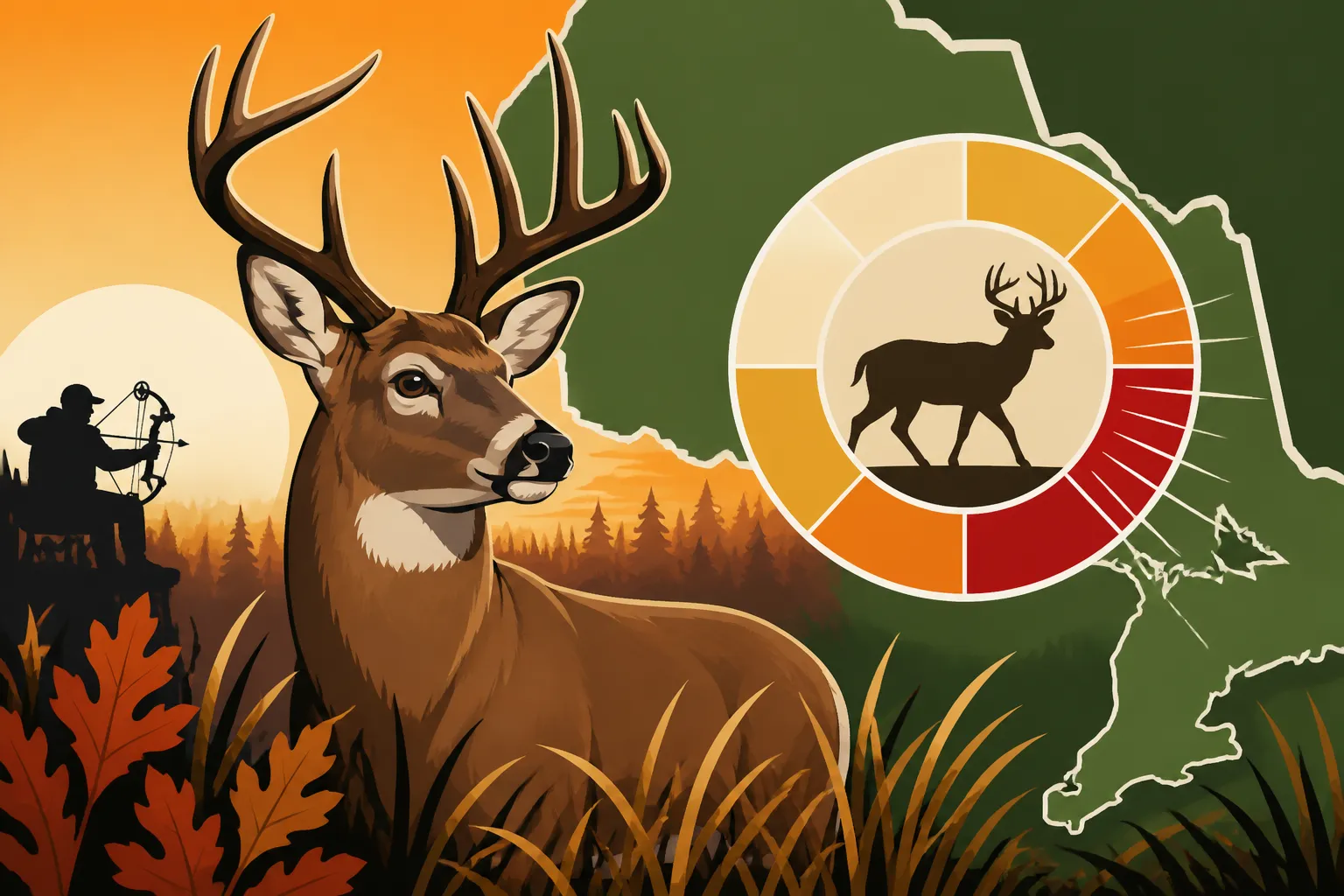
In most of Ontario, this means the primary breeding window, or the true "peak" of the rut when most does are receptive, generally occurs from the first week of November through to the third week of November. This consistent timing, dictated by the changing light, ensures fawns are born at the optimal time in the spring, when forage is abundant and conditions are mild. While secondary factors can certainly influence when you see the most visible deer activity, the actual breeding cycle is largely locked in by the calendar and the sun. This is why knowing When Ontario's Bow Season Runs and Ontario Gun Season Opening Day are so crucial for planning your hunts.
Factors Influencing the Rut's Peak
While photoperiod sets the stage, other elements can influence how visible the rut activity is, and how concentrated deer behaviour appears to hunters. These aren't changing the biological peak, but they can make it feel earlier or later from our perspective in the stand.
Weather Conditions and Their Impact on Activity
Weather plays a significant role in when and how deer move during the rut. Cold, crisp days with stable barometric pressure often lead to increased daytime activity. A sudden cold snap can sometimes kick things into high gear, seemingly overnight. Conversely, unseasonably warm temperatures can depress daytime movement, pushing activity into the cooler hours of darkness, making it feel like the rut isn't "on" even if breeding is occurring. Rainy or windy days can also suppress movement, though determined bucks will still be searching.
Snow cover can also be a game-changer. Fresh snow makes tracking easier and can make deer stand out more against the white backdrop, giving the impression of heightened activity. It also makes reading sign after a fresh snow much clearer, offering valuable clues to deer movement patterns. Hunters often observe a surge in activity just before or after a major weather front, as deer sense changes and adjust their behaviour.
Doe Density and Buck-to-Doe Ratio
The number of does in a given area, and the ratio of bucks to does, can also influence how the rut plays out from a hunter's perspective. In areas with a high doe density and a balanced buck-to-doe ratio (meaning plenty of mature bucks for the available does), the rut can be more intense and concentrated. Bucks don't have to travel as far to find receptive does, leading to more frequent encounters.
However, in areas with an unbalanced ratio, perhaps too many does or too few mature bucks, the rut might feel more drawn out. Bucks have to cover more ground to find does, and does might come into estrus and be bred over a longer period, resulting in less concentrated, explosive action. This is why understanding Why Southern Ontario Grows Heavy Bucks is not just about antler size, but also often about habitat and herd dynamics. The availability of Ontario Antlerless Deer Draws in some WMUs also helps manage herd balance.
Hunter Pressure and Its Effect on Deer Movement
Let's be realistic: intense hunter pressure can absolutely impact when and where you see the rut happening. In heavily hunted areas, deer, especially mature bucks, become more nocturnal. While they are still breeding during the peak rut, they might be doing much of their moving under the cover of darkness. This can make it feel like the rut is delayed or less intense, even when the biological clock is ticking right on schedule.
To counter this, many seasoned hunters focus on less pressured areas, or hunt smart by sitting all day in an Ontario blind in locations where deer feel secure. They might target transition zones, thick cover, or areas just off the beaten path where other hunters don't venture. Hunting these spots during the prime morning and evening hours, and even through midday, can be incredibly productive during the peak rut, as bucks are often pushed into these sanctuaries by pressure.
Identifying Peak Rut Behaviour and Sign
Knowing when the rut should be peaking is one thing, but confirming it with direct evidence from the woods is another. There are tell-tale signs and behaviours that signal the rut is truly on, and recognizing them can significantly boost your hunting success.
Scrapes and Rubs: Reading the Deer's Diary
Scrapes and rubs are the breadcrumbs of the rut, left behind by bucks as they assert dominance and communicate with does.
- Rubs are created when bucks rub their antlers on trees, usually small saplings or larger trees with rough bark. They serve as visual and olfactory markers, letting other deer know a buck is in the area. Early in the pre-rut, rubs are often found on smaller trees, but as the rut intensifies, bucks may tear up larger trees, indicating increased aggression and breeding readiness.
- Scrapes are patches of bare earth, typically under an overhanging branch, where a buck has pawed away the leaves. He'll usually chew on the overhanging branch and then urinate into the scrape, creating a "signpost" that communicates his presence and readiness to breed. Active scrapes, especially freshly pawed ones with wet earth, are hotbeds of activity. Look for clusters of scrapes, or "scrape lines," along travel corridors. Renewed activity on scrapes, particularly during daylight hours, is a strong indicator that the peak rut is close. These signs are often visible when Reading Whitetail Sign in Ontario Hardwoods.
Chasing and Cruising: High Energy in the Woods
Perhaps the most exciting and undeniable sign that the rut is on is direct observation of chasing behaviour. When bucks are actively pursuing does, sometimes for extended periods, you know the game is afoot. This can range from a subtle tailing to a full-blown, high-speed chase through the bush. Seeing this kind of intense interaction during legal shooting hours is a clear signal to be in your stand.
Beyond direct chases, you'll also notice bucks "cruising" – steadily moving through the woods, often with their nose to the ground, scent-checking for receptive does. They might follow old trails, fencerows, or the edges of cover, meticulously searching. This cruising behaviour is often seen during the peak rut as bucks cover a lot of ground in their quest to find a receptive mate. It’s also a time when you might hear bucks grunting or rattling and calling Ontario whitetails as they attempt to locate and attract does.
Does in Estrus: The Ultimate Indicator
The ultimate, undeniable indicator that the rut is peaking is when does are visibly in estrus. A doe in estrus will often exhibit specific behaviours that make her stand out. She might hold her tail high, flag it constantly, and may even appear to be "calling" to bucks with soft bleats. When a buck finally "locks down" with a receptive doe, he'll often stay with her for a day or two, sometimes pushing her, nudging her, and keeping other bucks away.
Observing a buck tending a doe is a rare but clear sign you are right in the thick of the breeding. If you see multiple bucks actively trailing or chasing a single doe, it means she's nearing estrus, or just entered it. This is the period when bucks are least cautious, most driven, and often willing to expose themselves during daylight hours. Pay close attention to doe behaviour; they hold the key to pinpointing the hottest action.
Strategies for Hunting Ontario's Peak Rut
When the peak rut hits, traditional hunting wisdom often goes out the window. Bucks are single-minded, driven by instinct, and often abandon their usual patterns. Adapting your strategy to this chaotic yet thrilling period is key to success.
All-Day Sits and Stand Placement
During the peak rut, bucks can move at any time of day, as they relentlessly search for does. This is where the old adage "you can't shoot a deer from the couch" really rings true. All-day sits become incredibly effective. A buck that was with a doe at dawn might be on the move by midday, looking for another, or responding to pressure. Sitting All Day in an Ontario Blind drastically increases your odds of encountering one of these wandering bucks.
When it comes to stand placement, focus on areas that naturally funnel deer or where does tend to congregate. This might include pinch points between thick cover, bottlenecks created by terrain features, or the edges of doe bedding areas. Areas where multiple habitat types converge, like a transition from hardwoods to a cedar swamp edge, can be particularly productive. Setting up on a hardwood ridge for whitetails that overlooks a low area or creek bottom can also provide a great vantage point for cruising bucks.
Calling and Decoying Tactics
The rut is prime time for aggressive calling and decoying tactics. Bucks are looking for fights and mates, and they're often willing to investigate.
- Grinding and rattling can mimic two bucks fighting, drawing in curious or territorial bucks looking to get in on the action or assert dominance. Vary your intensity based on the cover and time of day; Rattling Volume in Thick Bush might be different than in more open areas.
- Grunt calls can imitate a buck trailing a doe or a searching buck. These can be particularly effective during the cruising phase and even when does are locked down. Don't be afraid to use Grunt Calls Late in Ontario's Rut, as secondary ruts can happen.
- Doe bleats can attract bucks looking for a receptive female. Combine these with a decoy for a visual element.
Using a deer decoy, especially a buck decoy, can be incredibly effective when combined with calling. Place the decoy facing away from your position, perhaps slightly angled, to appear like a challenger or a rival. This encourages an approaching buck to present a broadside shot as he circles to confront the "intruder." Make sure your setup allows for a clear shot if a buck approaches. Companies like GoHunt offer a variety of optics and gear that can help hunters effectively scout and execute these tactics.
Understanding Deer Movement in Different Habitats
Ontario offers a vast array of habitats, and whitetail movement during the rut will vary slightly depending on where you're hunting.
- In southern Ontario farmland, bucks might be cruising fencerows, woodlots, and the edges of standing corn or soybean fields. They often use these linear features for travel and concealment. Understanding Hunting Deer in Southern Ontario Farmland means anticipating their use of cover between open areas.
- In mixed forest, bucks might be found on ridges, near cedar swamps, or along transition lines where different tree types meet. These areas often provide both cover and food sources for does, making them hot spots for cruising bucks. When Hunting Deer in Ontario's Mixed Forest, focus on bottlenecks and natural funnels where deer movement is concentrated.
- On Crown land, especially in more remote areas, bucks might travel vast distances, using old logging roads, beaver pond crossings, or hydro lines as travel corridors. Scouting with mapping tools, like those offered by GoHunt, can help identify these key travel routes and pinch points, even in vast wilderness. It's also vital to be aware of Hunting Whitetails on Ontario Crown Land rules.
No matter the habitat, the key is to be in the woods when the bucks are on the move. The peak rut is a physically demanding time for whitetails, and they are constantly seeking out opportunities.
Planning Your Rut Hunt: A Timetable for Success
While the precise day of the "peak" can feel elusive, historical data and consistent biological cycles give us a very good window to plan around. Don't wait until you hear reports of bucks chasing; be there when the primary window opens.
Ontario's General Rut Peak Window
Across much of Ontario, the peak breeding activity for whitetails consistently falls between November 5th and November 20th. This two-week window is when the majority of does come into estrus, and bucks are at their most active and least cautious. Of course, pre-rut activity, with bucks establishing rubs and scrapes, can begin in mid-October, and the "chasing phase" might be observed more frequently during the last week of October and the first few days of November. However, for the serious hunter looking for the highest odds of encountering a prime breeding buck, those middle two weeks of November are the time to commit.
This timing aligns well with the province's gun seasons in many WMUs, offering a fantastic opportunity for hunters. Be sure to check the specific Ontario Deer Season Dates and Tags for your chosen Wildlife Management Unit (WMU), as they can vary.
Regional Variations and What to Expect
While the general window holds true for most of the province, there can be subtle regional variations.
- Southern Ontario: In the agricultural zones of Southern Ontario, with milder winters and richer food sources, deer might show slightly earlier or later signs of rut, but the core breeding window remains consistent. The abundance of food here often contributes to What Makes Southern Ontario So Productive for deer.
- Central and Eastern Ontario: In the mixed forests and more rugged terrain of central and eastern Ontario, the rut typically follows the established mid-November peak.
- Northern Ontario: Further north, where winters are harsher, some hunters report a slightly earlier, or conversely, a slightly later, peak. However, the photoperiod driver ensures it won't stray too far from the established window. Deer in these northern areas also face unique challenges, such as Where Ontario Whitetails Yard in Deep Snow when winter truly sets in.
Regardless of the precise region, the most important advice is to be in the woods consistently throughout the prime window. A reliable hunting app, such as GoHunt, can provide historical weather data and help you track your observations year after year, building your own localized understanding of the rut.
Table: Ontario Whitetail Rut Phases & Hunter Strategy
| Rut Phase | Approximate Timing (Ontario) | Deer Behavior | Hunter Strategy | Key Sign |
|---|---|---|---|---|
| Pre-Rut | Mid-October to Early November | Increased rubbing, scraping, sparring, hierarchy establishment, searching | Aggressive calling/rattling, scouting for fresh sign, hunting food sources near cover | Fresh rubs & scrapes, camera photos of bucks sparring/cruising |
| Chasing Phase | Late October to Early November | Bucks actively pursuing does, often with high energy; does not yet receptive | Hunt travel corridors, pinch points, cover edges; light calling/grunting | Bucks chasing does, agitated doe behavior, increased daytime movement |
| Peak Breeding | Nov 5 – Nov 20 | Bucks locked down with does, intense breeding, constant cruising/searching for receptive does | All-day sits, hunt doe bedding areas, aggressive calling, decoying; focus on cover and funnels | Bucks tending does, increased scrapes/rubs, heavy deer movement |
| Post-Rut | Late November to Early December | Bucks recovering, some secondary breeding (fawn does), focus on food sources to regain weight | Hunt food sources near bedding, less aggressive calling, focus on recovery spots for bucks | Fewer scrapes/rubs, deer focused on feeding, less visible buck activity |
Final Thoughts on Timing the Rut
The whitetail rut in Ontario is an incredible time to be in the woods, a period of heightened activity and opportunity that every hunter dreams of. While the peak breeding window is reliably centered around the middle two weeks of November, understanding the nuances of how weather, deer density, and hunter pressure can influence visible activity will make you a more adaptable and successful hunter. Commit to being in your stand during that critical window, pay close attention to the signs on the ground, and be ready for anything. Good luck out there!
Disclaimer
This article is for general informational purposes only and does not constitute professional advice. Laws, prices and regulations vary by location and change over time. Consult a qualified professional for guidance on your specific situation.