Why Wetland Loss Hurts Ontario Ducks
It’s a tough reality many of us face as waterfowlers in Ontario: the once-bustling marshes and flooded timber we remember from our youth seem to be shrinking, and with them, the consistent flights of ducks. This guide will delve into the critical issue of wetland loss in our province, explaining exactly why this habitat destruction is so devastating for Ontario's duck populations and what it ultimately means for the future of our hunting heritage.
The Unsung Heroes: Why Wetlands Are Non-Negotiable for Ontario's Ducks
When we talk about wetlands, it's easy to just picture a muddy field or a cattail-choked pond. But for ducks, these watery landscapes are everything. They're not just a place to stop; they are the very engine of their survival and reproduction. Without healthy, interconnected wetland systems, our duck populations simply cannot thrive, and certainly cannot support the kind of hunting opportunities we cherish.
The Nursery and Nesting Grounds
Imagine trying to raise a family in a bustling city park with nowhere to hide and no food readily available. That's essentially what happens to ducks when their nesting habitat vanishes. Wetlands, especially those with dense emergent vegetation like cattails, sedges, and bulrushes, provide essential cover from predators. Female ducks rely on these spots to create well-hidden nests, often just above the waterline, where their eggs are relatively safe from foxes, raccoons, and raptors.
Once the ducklings hatch, the shallow, productive waters of wetlands become their nursery. These areas are teeming with invertebrate life – insect larvae, small crustaceans, and snails – which are crucial protein sources for rapidly growing ducklings. Think of a mallard hen leading her brood through a maze of reeds, the ducklings snatching up tiny insects from the water's surface or just beneath it. This abundance of food is vital for their development and allows them to quickly grow strong enough to fledge and survive. Different species have different preferences too; pintails might nest in drier uplands near water, while wood ducks prefer tree cavities overlooking a slough. Each needs the wetland close by for immediate access to food and safety for their young.
The All-You-Can-Eat Buffet: Foraging and Fueling Up
Beyond being nurseries, wetlands are nature's supermarkets for ducks. They offer a diverse menu of food sources that change with the seasons, supporting ducks through every stage of their life cycle. In spring, as ducks arrive on their breeding grounds, they need to quickly build up energy reserves for nesting. This often means gorging on aquatic invertebrates and early spring vegetation. Throughout the summer, while raising broods, the variety of seeds from wetland plants, tubers, and continued insect availability keeps them fueled.
Come fall, before the long migration south, ducks enter a critical phase of hyperphagia – they eat almost constantly to build up fat reserves. This is where wetlands really shine, providing abundant starchy seeds from smartweed, wild rice, and sedges, as well as protein-rich invertebrates. A well-managed wetland is a banquet hall, offering thousands of calories per day that ducks need to survive the arduous journey. A lack of these crucial feeding grounds means ducks arrive at their wintering areas in poor condition, or worse, don't make it at all.
Crucial Pit Stops: Migration and Staging Areas
Ontario sits right along a major migratory pathway, the Mississippi Flyway, which means our wetlands are not just for breeding ducks; they're critical pit stops for millions of birds traveling from the boreal forests further north down to their wintering grounds in the southern U.S. and Mexico. Imagine driving cross-country and finding no gas stations or rest stops – that's what happens when migratory ducks encounter a landscape devoid of wetlands.
These staging areas provide safe havens where ducks can rest, replenish their energy stores, and regroup before continuing their journey. They offer protection from predators, access to fresh water, and critical food resources that allow them to recover from long flights and prepare for the next leg. When these crucial stopovers disappear, ducks are forced to fly longer distances, expend more energy, and concentrate in fewer, smaller areas, increasing competition for food and making them more vulnerable to disease and predation. Think of how important a place like Lake St. Clair is, drawing in incredible numbers of ducks during migration; if those vital marshes were gone, those birds would have nowhere to go. Ontario's Ducks and Geese by Flyway highlights just how vast these movements are, and how many birds rely on our local habitats.
The Disappearing Act: How Ontario's Wetlands Are Vanishing
It’s not just a feeling; Ontario's wetlands truly are shrinking. The relentless march of development, combined with historical land-use practices, has steadily eroded these vital ecosystems. The losses are most pronounced in some of our most productive agricultural and populated regions, creating a ripple effect across the entire province and beyond.
The Silent Drain: Agricultural Conversion
For centuries, much of southern Ontario was a vast mosaic of wetlands, perfect for water-loving wildlife. However, these same rich, organic soils, once drained, proved incredibly fertile for agriculture. Farmers, driven by the need for productive land, have systematically drained countless acres of wetlands to expand their fields, grow crops, and graze livestock. This often involves installing tile drainage systems or digging ditches, effectively removing the standing water that defines a wetland.
While agricultural land is undoubtedly important for food production, the cumulative effect of this widespread conversion has been catastrophic for waterfowl. A small slough here, a wet meadow there – each individual loss might seem minor, but when you look at the big picture across an entire watershed, you realize that prime nesting and foraging habitat has simply disappeared. In some areas, over 80-90% of historical wetlands have been lost to the plow, fundamentally altering the landscape and leaving very little room for ducks.
Paving Paradise: Urban and Industrial Sprawl
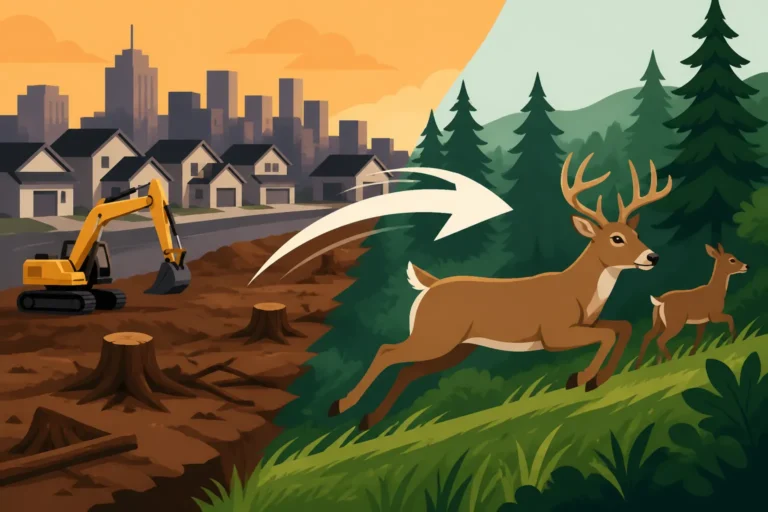
As Ontario's population grows, so does the footprint of its cities, towns, and industrial areas. This expansion often happens at the expense of natural landscapes, and wetlands are frequently in the crosshairs. It's often easier and cheaper to build on flat, seemingly unproductive "wasteland" rather than navigate complex terrain or develop existing urban areas. Wetlands are filled in to make way for housing developments, shopping malls, roads, and factories.
Beyond direct destruction, urban sprawl also degrades nearby wetlands. Runoff from impervious surfaces carries pollutants like oil, grease, salt, and chemicals into remaining wetlands, impacting water quality and the health of the aquatic organisms that ducks depend on. The noise and disturbance from human activity also push sensitive species away, fragmenting habitats and making it harder for ducks to find the quiet, undisturbed areas they need for breeding and resting.
The Ripple Effect: Pollution and Degradation
Even wetlands that haven't been physically drained or paved over aren't necessarily safe. Pollution and degradation can render them functionally useless for ducks. Agricultural runoff, laden with fertilizers and pesticides, can lead to algal blooms that deplete oxygen in the water, killing off aquatic plants and invertebrates. Sedimentation from soil erosion can fill in shallow areas, reducing water depth and smothering critical plant life.
Furthermore, the introduction of invasive species, often unintentional, can drastically alter wetland ecosystems. Common carp, for instance, can stir up bottom sediments, making water turbid and uprooting submerged vegetation. Phragmites, an aggressive invasive reed, can form dense monocultures that outcompete native plants, reduce biodiversity, and make areas impenetrable for ducks and their broods. So, while a wetland might still "exist" on a map, its ecological health can be so compromised that it no longer offers the necessary resources for ducks to thrive.
The Harsh Reality: Impacts on Duck Populations and Hunting
The loss and degradation of wetlands aren't abstract ecological problems; they have very real, tangible consequences for the ducks themselves and for every hunter who cherishes the experience of a frosty morning in the blind. These impacts cascade through the entire waterfowl ecosystem, leading to fewer birds, increased vulnerability, and diminished hunting opportunities.
Breeding Busts and Population Declines
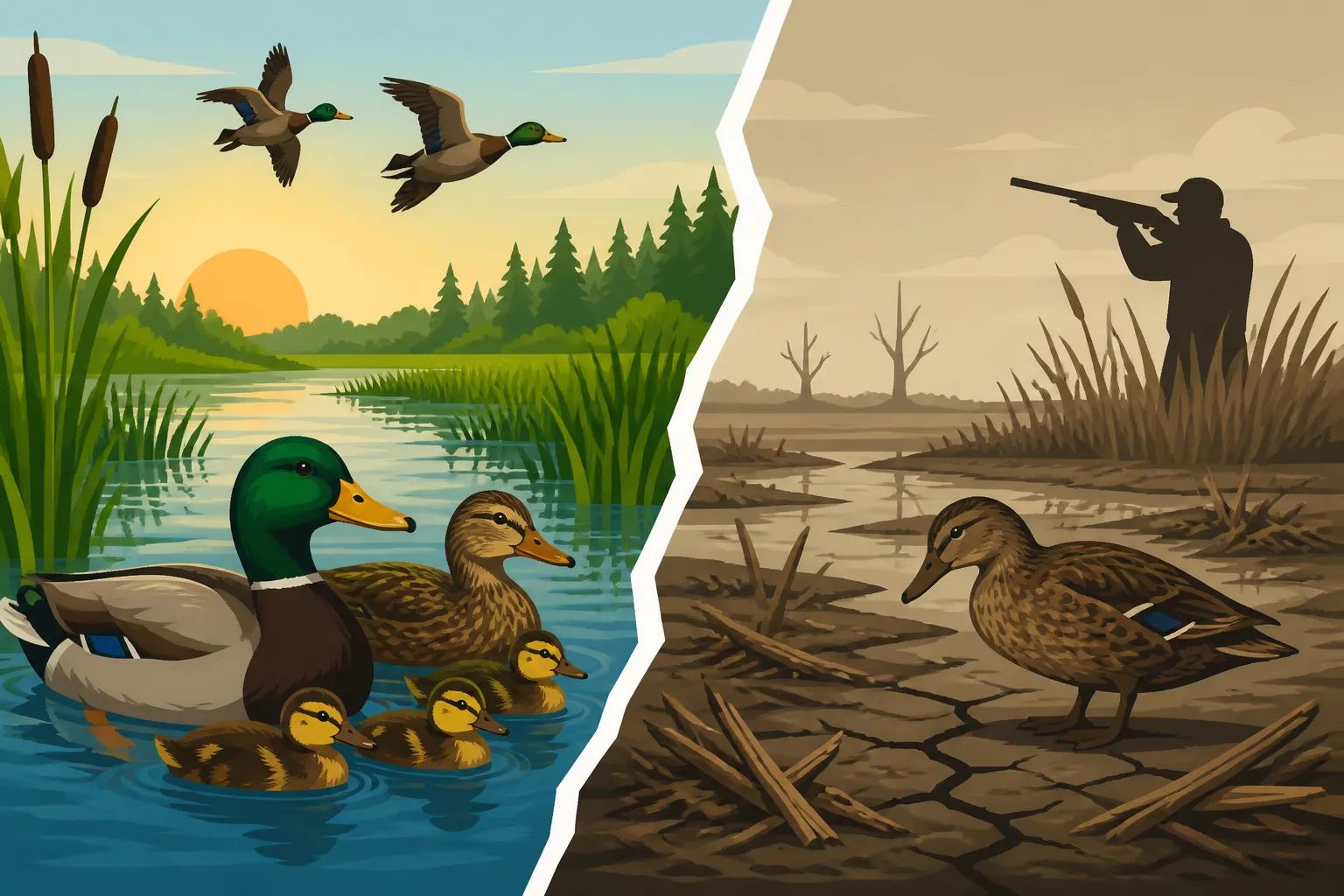
Fewer wetlands directly translate to fewer places for ducks to nest successfully. When suitable breeding habitat becomes scarce, hens are forced to nest in less ideal locations, often in smaller, isolated patches of cover that offer less protection. This leads to higher rates of nest predation by foxes, raccoons, and skunks, which find it easier to locate nests in fragmented landscapes. Even if nests survive, the lack of quality brood-rearing habitat means ducklings face higher mortality rates from exposure, disease, and starvation.
The long-term consequence of these "breeding busts" is a decline in overall duck populations. If more ducks are dying than are being successfully reproduced, the numbers will inevitably drop. This impact is particularly felt by species that rely heavily on specific wetland types for breeding, such as mallards, wood ducks, and green-winged teal, all familiar sights in Ontario's wetlands. We see it reflected in smaller fall flights and fewer birds using traditional staging areas. Ontario's Duck Species and Where They Nest provides context on how particular ducks rely on these diminishing habitats.
Increased Disease and Stress
One of the more insidious consequences of wetland loss is the increased vulnerability of duck populations to disease and stress. When habitat becomes scarce, ducks are forced to concentrate in the remaining viable wetlands. This overcrowding creates ideal conditions for the rapid spread of diseases like avian botulism, avian cholera, and duck plague. A single outbreak in a crowded wetland can decimate local populations and even spread to other areas.
Furthermore, concentrated populations face increased competition for food and space, leading to higher stress levels. Stressed birds are often more susceptible to disease and less able to withstand the rigours of migration. During drought years, when water levels are low and remaining wetlands shrink further, these problems are exacerbated, turning vital stopovers into disease hotbeds. This creates a difficult cycle where habitat loss directly contributes to outbreaks that further reduce duck numbers, making recovery even harder.
Fewer Fields, Fewer Flights: Hunter Access and Opportunity
For hunters, the impact of wetland loss hits home on a very personal level. Fewer ducks mean fewer birds in the air and fewer opportunities to harvest game. Beyond just the numbers, however, the loss of wetlands also severely limits hunting access. When private wetlands are drained or developed, those spots are permanently off-limits. Public access points, often on remaining Crown Land or Conservation Areas, become increasingly pressured as more hunters converge on fewer viable locations.
Finding good hunting spots requires more effort, more scouting, and often more competition. Instead of spreading out across a diverse landscape, hunters are funneled into limited areas, which can degrade the quality of the hunting experience and even raise safety concerns. Imagine trying to find a good spot for Marsh Hunting Ducks on the Great Lakes when half the marsh has been developed or degraded. The challenge isn't just about finding ducks anymore; it's about finding any suitable wetland to even try. Hunting a small farm pond might still offer some shooting, but the larger, more consistent flights come from robust wetland complexes. Hunting an Ontario Farm Pond at Dusk can be productive, but it's no substitute for expansive marshes.
Turning the Tide: What Hunters Can Do for Wetland Conservation
It's easy to feel disheartened by the scale of wetland loss, but as hunters, we have a unique and powerful role to play in conservation. Our passion for waterfowl is inherently tied to the health of their habitats. By supporting the right initiatives and taking personal action, we can make a real difference in stemming the tide and even restoring some of what has been lost.
Supporting the Guardians of the Wetlands
One of the most effective ways to contribute is by supporting organizations dedicated to wetland conservation. Groups like Ducks Unlimited Canada (DUC) have been at the forefront of wetland preservation and restoration for decades. Your membership dollars, donations, and participation in fundraising events directly fund critical projects: land acquisition, wetland restoration, creation of new ponds, and research into waterfowl habitat needs.
Beyond DUC, many local conservation authorities and land trusts also work to protect and manage wetlands within specific regions. These organizations often rely on community support and volunteer efforts. As hunters, we are already invested in these outcomes, and our financial contributions and volunteer hours translate directly into acres of restored habitat, cleaner water, and ultimately, more ducks. Remember that vital The Habitat Conservation Stamp Requirement you buy with your federal migratory bird permit? That money goes directly to these conservation efforts.
Advocating for Policy and Smart Land Use
Our voices matter. Hunters are often among the most informed and passionate advocates for wildlife and habitat. We need to be vocal in our communities and with our elected officials about the importance of wetlands and the need for stronger policies to protect them. This can mean attending local planning meetings, writing letters to politicians, or supporting legislation that prioritizes wetland protection and responsible land use.
We can also promote smart land-use practices among landowners, sharing information about the benefits of retaining wetlands, even small ones, for water quality, flood control, and wildlife. Encouraging the planting of native buffer strips along waterways or providing incentives for wetland restoration on private lands can make a significant cumulative impact. Many farmers, for instance, might not realize the ecological value of a small, unworked slough on their property.
Being a Savvy Scout and Responsible Hunter
Knowledge is power, especially when it comes to hunting and conservation. Understanding the landscape, recognizing healthy wetland indicators, and using modern tools can help us be more effective hunters and better stewards of the land. Tools like GoHunt can be invaluable here. While often associated with big game, its mapping capabilities allow you to overlay land ownership, satellite imagery, and even topographical maps to identify potential wetland areas, assess their condition, and understand surrounding land use. This helps you find areas that might still hold ducks and avoid those that are degraded or over-pressured.
By using such tools, you can identify Crown Land with good wetland features, scout potential new areas, and see how different Ontario's Wildlife Management Units are impacted by land development. Understanding what makes a healthy wetland—diverse vegetation, clear water, signs of invertebrate life—allows you to focus your hunting efforts on productive areas and perhaps even identify areas needing conservation attention. As hunters, we should also always adhere to regulations, including Non-Toxic Shot Requirements for Waterfowl, to ensure we are doing our part to keep our wetlands healthy and productive. Responsible hunting practices ensure that our impact is minimal and sustainable, contributing to the overall health of the ecosystem.
| Wetland Type | Primary Benefits for Ducks | Key Species Attracted |
|---|---|---|
| Shallow Marsh | Nesting, brood rearing, abundant invertebrates, submerged plants | Mallards, Wood Ducks, Teal, Pintails, Gadwall |
| Beaver Ponds | Stable water levels, diverse vegetation, insects, tree cavities | Wood Ducks, Hooded Mergansers, Ring-necked Ducks, Black Ducks |
| Floodplain Forests | Acorns and hard mast (seasonal), shallow water cover, sheltered rest | Wood Ducks, Mallards, Black Ducks (especially in fall) |
| Fallow Fields/Potholes | Seasonal water, seeds, waste grain, insect hatches | Mallards, Pintails, Teal, Wigeon (especially during migration) |
| Open Water/Great Lakes | Deep water diving ducks, abundant aquatic invertebrates, mussels | Canvasbacks, Redheads, Scaup, Oldsquaws, Scoters |
Disclaimer
This article is for general informational purposes only and does not constitute professional advice. Laws, prices and regulations vary by location and change over time. Consult a qualified professional for guidance on your specific situation.