How Urban Sprawl Pushed Deer Around
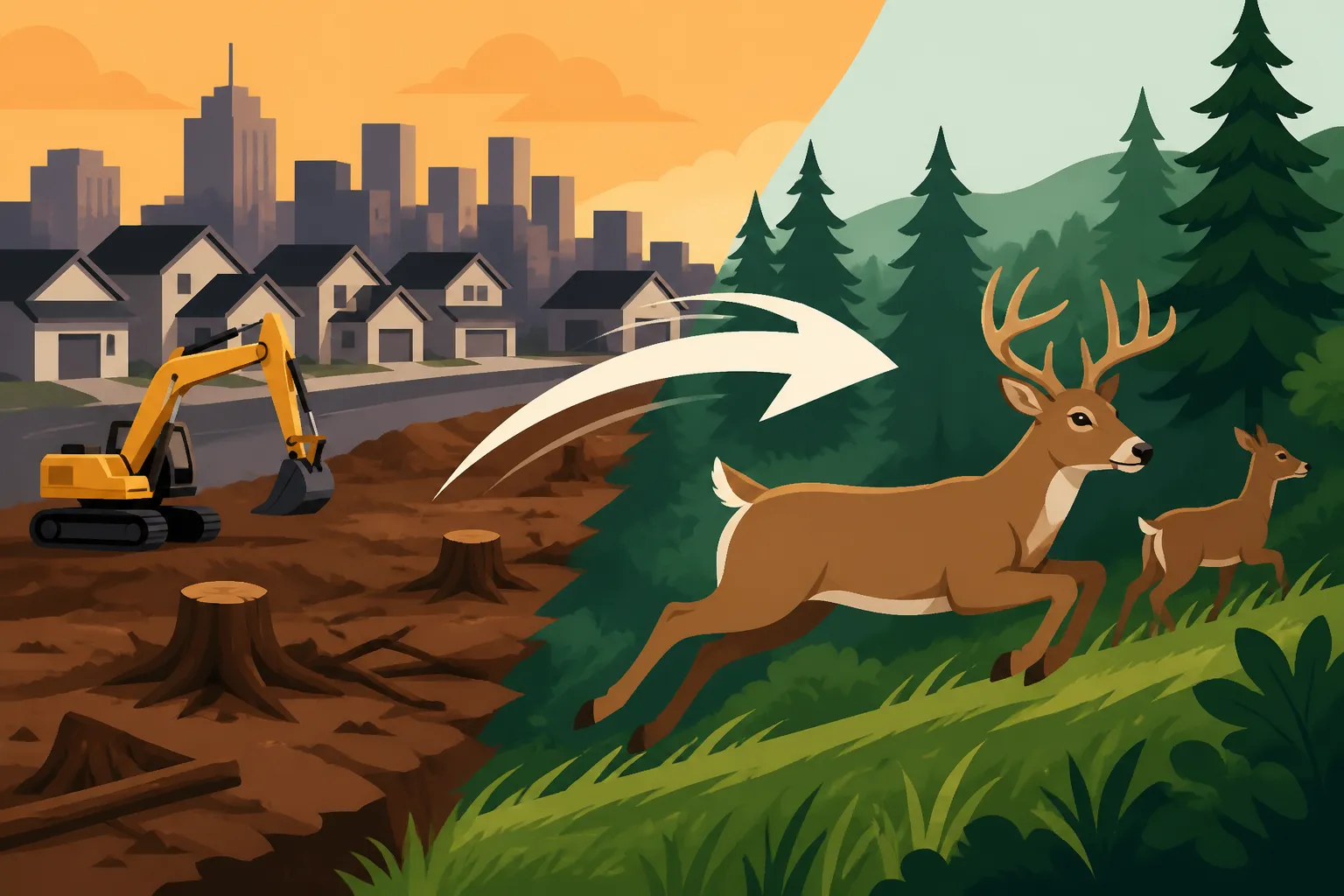
It's a familiar, frustrating story for many of us who've spent years hunting Ontario's wild places: you scout a promising bush lot, only to return a season later and find it carved up for new homes or industrial parks. Urban sprawl isn't just changing our landscapes; it's fundamentally altering how and where deer live, forcing hunters to adapt or risk losing out entirely. This guide will walk you through the realities of how development pushes deer around and what strategies you can employ to stay successful in a shifting environment.
The Inevitable March of Development and Deer Habitat Loss
The relentless expansion of human settlements into once-wild areas is perhaps the most significant challenge facing deer populations and hunters in many parts of Ontario. It's not just about losing a specific patch of woods; it's about a fundamental transformation of the landscape.
Pavement and Concrete: A Shrinking Wilderness
Think about it: that old farmer's field you used to see deer cross at dusk, or the quiet woodlot nestled behind a small town, often become the next target for development. When construction crews move in, trees are cleared, wetlands are filled, and vast tracts of natural cover are replaced with houses, shopping centers, and sprawling industrial complexes. This isn't just an eyesore; it's a direct, irreversible loss of critical deer habitat. Deer need cover for bedding, browse for food, and escape routes from predators, and when these essentials are paved over, the deer are simply forced to move. What was once a mosaic of fields and bush, providing everything a deer needed, turns into a concrete jungle with isolated green spaces that offer little in the way of sustained survival. This pressure is particularly evident in regions like Southern Ontario, where prime agricultural land and pockets of bush are constantly under threat. The once-predictable patterns of deer movement are thrown into disarray as their traditional stomping grounds vanish.
Fragmented Landscapes and Isolation
Even if some green spaces survive the initial onslaught of development, they often become isolated islands in a sea of human activity. Imagine a small woodlot surrounded by new subdivisions, or a creek valley bisected by a busy highway. These remaining pockets, while providing some temporary refuge, are no longer connected to larger habitat networks. This fragmentation severely limits deer movement, preventing them from accessing different food sources, breeding partners, or more secure cover during hunting season. Highways, fences, and the sheer volume of human noise and activity act as insurmountable barriers. A prime example is how a highway expansion can cut off a herd from its wintering yard or summer feeding grounds, leading to increased roadkill and a decline in herd health. Deer become trapped in these smaller, disconnected areas, unable to disperse naturally or follow their instinctual migrations. This makes them more vulnerable to localized pressure, whether from predators or, eventually, from human interaction as they seek sustenance in residential areas.
How Deer Adapt (or Fail To) in a Sprawling World
Deer are incredibly resilient and adaptable creatures, but even they have their limits. When faced with encroaching human development, they often respond with significant changes in their behaviour and movement patterns.
The Suburban Deer Phenomenon
One of the most noticeable adaptations is the rise of the "suburban deer." These deer learn to live surprisingly close to humans, utilizing parks, golf courses, greenbelts, and even backyard gardens as their new habitat. They become accustomed to human presence, often feeding on ornamental shrubs, garden vegetables, and discarded fruit from orchards. You might see them casually grazing on a neighbour's lawn at dawn or bedding down in a dense patch of bush right next to a busy road. While this showcases their adaptability, it also creates new challenges. Car collisions become more frequent, garden damage leads to frustration for homeowners, and sometimes, desperate deer can even cause public safety concerns. For hunters, this phenomenon can be a double-edged sword. While deer are present, hunting opportunities in these zones are often highly restricted or non-existent due to safety concerns and local bylaws. It's a stark reminder that simply seeing deer doesn't always translate to hunting access.
Shifts in Behavior and Movement Patterns
In areas affected by urban sprawl, deer aren't just changing where they live; they're changing how they live. Many become more nocturnal, moving primarily under the cover of darkness to avoid human disturbance. Their preferred travel corridors might shift from open fields to dense fencerows, utility corridors, or even drainage ditches that offer some concealment. Their home ranges can shrink dramatically, forcing them to find all their needs within a much smaller, often more pressured area. You might find deer concentrating in surprisingly small, overlooked patches of bush, like a five-acre woodlot squeezed between a subdivision and a factory. Hunters who rely on traditional scouting methods or historical knowledge might find their usual spots barren, while deer are simply moving differently. This requires us to really sharpen our observation skills and rethink what "prime habitat" looks like. It's no longer just about vast wilderness, but about understanding how deer exploit every available bit of cover and food in a modified landscape. Reading Whitetail Sign in Ontario Hardwoods becomes even more critical when these signs are subtle and concentrated in small areas.
Hunting Implications in a Changing Landscape
For hunters, these changes brought on by urban sprawl translate into tangible shifts in where and how we pursue deer. The days of simply wandering into any large bush lot and expecting to find deer are fading in many areas.
Public Land Pressure and Shifting Access
As private land gets developed, fewer landowners are willing to grant hunting access, either due to safety concerns for new neighbours or simply because their property is no longer suitable for hunting. This funnels more hunters onto the remaining public lands, whether they are Crown land parcels or managed forest tracts. The result is increased hunting pressure on these accessible areas, making deer warier and harder to pattern. What was once a quiet hunting experience can become a crowded affair, with more hunters vying for the same limited spots. This can be incredibly frustrating, especially for those who cherish the solitude of the hunt. Suddenly, finding an unpressured area feels like a major accomplishment. It means you have to work harder, scout smarter, and be prepared to go deeper or seek out less obvious access points to find deer that haven't been constantly harassed. This is where a tool like GoHunt can be particularly useful, helping you identify and map out public access points and visualize potential travel corridors within these pressured zones.
The Importance of Scouting and Adaptability
The reality of urban sprawl means that hunters absolutely must adapt their strategies. Relying on old maps or past successes without current knowledge is a recipe for disappointment. Now, more than ever, scouting isn't just about finding deer sign; it's about understanding the landscape itself – how it's changed, where deer are being pushed, and what new pathways they might be using. This means spending more time on foot, looking for those forgotten corners, overgrown fencerows, or small patches of thick cover that might be overlooked by others. Applications like GoHunt can be invaluable for this, allowing you to use satellite imagery and topographical maps to identify potential cover, food sources, and travel routes, even in areas you've never stepped foot in. You can virtually scout for pinch points created by new roads or housing developments, or identify small islands of bush that might be holding deer. Adapting also means being willing to hunt smaller properties, using different entry and exit strategies, and focusing on short, intense hunts during peak movement times. The hunt becomes less about covering vast distances and more about precise, strategic placement. Scouting With Satellite Imagery in Ontario can literally reveal hidden pockets of habitat that ground scouting alone might miss.
Here's a quick comparison of traditional vs. urban-affected hunting scenarios:
| Feature | Traditional Rural Hunt | Urban-Affected Hunt |
|---|---|---|
| Habitat Type | Large, contiguous blocks of forest, vast agricultural fields, extensive wetlands | Fragmented woodlots, suburban greenbelts, small creek bottoms, overgrown industrial areas |
| Deer Density | Can vary, but often spread out over large areas | Can be very high in isolated pockets, or very low in developed zones |
| Deer Behavior | More natural patterns, daylight movement, longer travel routes | More nocturnal, wary of human scent/sound, shorter, stealthier movements |
| Hunting Pressure | Generally lower on private land, higher on popular public spots | Higher on accessible public land, restrictive or nil on private |
| Access | Easier to obtain permission on large farms, ample Crown land | More challenging, requires strong landowner relations, limited Crown land |
| Scouting Focus | Identifying large food plots, bedding areas, travel corridors | Pinpointing small, overlooked cover, fencerows, utility lines, edges |
| Tools & Tactics | Longer walks, larger drives, widespread stand placement | Shorter, precise sits, careful approach/exit, understanding micro-habitat |
Mitigating the Impact: What Hunters Can Do
While urban sprawl is a powerful force, hunters are not powerless. By being proactive and adaptable, we can continue to find success and even contribute to smarter wildlife management in these changing landscapes.
Landowner Relations and Private Land Access
In many areas, particularly in Southern Ontario where urban encroachment is most pronounced, private land often holds the key to successful deer hunting. The remaining huntable ground is frequently owned by farmers or private residents who might be hesitant to grant access. This is where strong landowner relations become absolutely vital. It means Knocking on Doors in Southern Ontario, building trust, respecting property lines, and proving yourself as a responsible and ethical hunter. Offer to help with chores, share some of your harvest, and always communicate your intentions clearly. A positive relationship can mean the difference between having a place to hunt and being perpetually frustrated by "No Hunting" signs. Remember, many landowners deal with significant deer damage to crops or gardens and might welcome a responsible hunter as a solution. Understanding Ontario Trespass and Landowner Law is also crucial to ensure you are always acting within legal boundaries and maintaining good standing in the community.
Advocating for Wildlife Corridors and Green Spaces
Beyond personal hunting strategies, we as hunters have a role to play in advocating for wildlife. Support local conservation authorities, land trusts, and environmental organizations that are working to preserve green spaces and create wildlife corridors, even within developed areas. These corridors, which can be as simple as an intact Hunting a Fencerow Between Two Fields or a strip of natural bush along a creek, are crucial for allowing deer and other wildlife to move safely between fragmented habitats. They provide connectivity that can mitigate some of the isolation effects of sprawl. By participating in public consultations, joining conservation groups, or simply spreading awareness about the importance of these natural links, hunters can help ensure that deer have a future in a more urbanized Ontario. After all, the health of our deer herds depends on the health of their habitat, and that habitat increasingly means considering the pockets of nature left within human development. Using mapping tools like those from GoHunt can even help you visualize and identify potential corridors or critical natural areas that need protecting in your region.
Disclaimer
This article is for general informational purposes only and does not constitute professional advice. Laws, prices and regulations vary by location and change over time. Consult a qualified professional for guidance on your specific situation.