Colour Phases in Ontario Black Bears
There’s a common image that pops into most folks' heads when you mention a black bear in Ontario: a big, dark, almost glossy animal disappearing into the deep green of the bush. And for good reason! Most of the black bears we encounter here are, indeed, black. But if you’ve spent enough time out in the wilds, or perhaps seen some photos from other hunters, you might have caught a glimpse of something different – a bear that’s not quite black, perhaps a warm cinnamon, a rich chocolate brown, or even a striking blonde. It can be a real head-scratcher, even for seasoned hunters, leading to questions about what exactly you're seeing. This guide is here to unravel the mystery of colour phases in Ontario black bears, helping you understand why these variations occur and what it means for your time in the bush.
Beyond Black: Understanding Black Bear Genetics
It’s easy to assume "black bear" means only black bears, but the name refers to the species, Ursus americanus, not exclusively its coat colour. Just like humans have different hair colours, black bears can express a surprising array of shades, all thanks to their genetics. These variations aren't a sign of a different species, nor do they suggest a hybrid; they're simply a beautiful display of natural diversity within the black bear family.
The Dominant Gene and Recessive Traits
At its heart, bear fur colour is a game of genetics, much like eye colour in people. The gene responsible for producing black pigment is dominant in black bears. This means if a bear inherits even one copy of the "black" gene from either parent, it will likely have a black coat. However, recessive genes for other colours exist within the population. If a bear inherits two copies of a recessive gene – one from each parent – then a different colour phase can express itself. This is why, even if you’ve only ever seen black bears, these other colours persist; the genes are always there, just waiting for the right combination to show through.
Think of it like this: two black-coated parents might carry the recessive gene for a cinnamon or brown coat. If both pass that recessive gene to a cub, that cub could be born cinnamon, even though its parents are black. It’s a fascinating aspect of wildlife genetics that adds another layer of intrigue to every bear sighting. This genetic lottery explains why you might see a litter of cubs with varying colours, even from the same sow. It’s a testament to the hidden diversity within the species, always making a bear encounter a little more unpredictable and exciting.
Geographic Influences on Colour Phases
While genetics are the primary driver, geography can play a fascinating role in how prevalent certain colour phases are within a region. In Ontario, the vast majority of our black bears are indeed black. However, as you head west, especially into Manitoba, Saskatchewan, and further into the Rocky Mountains, the proportion of brown, cinnamon, and blonde colour phases tends to increase significantly. This isn't a hard and fast rule, but rather a general trend observed by wildlife biologists.
Why does this happen? It’s thought to be due to several factors. For one, historically, different populations of bears might have been isolated, leading to certain recessive genes becoming more concentrated in specific areas. If a few bears carrying the "cinnamon" gene thrived in a particular valley or region for generations without much intermingling with other populations, that trait would become more common there. Additionally, environmental factors like diet or habitat might subtly favour the survival or breeding success of bears with certain colour phases, though this is less understood than the direct genetic inheritance. So, while you're most likely to see a black bear whether you're out Hunting Northwestern Ontario's Big Bush or in the southern regions, don't be surprised if a unique shade steps out, especially if you're closer to the western stretches of the province. It's a rare and special sight, making that specific area feel a bit more unique.
Common Colour Phases Found in Ontario
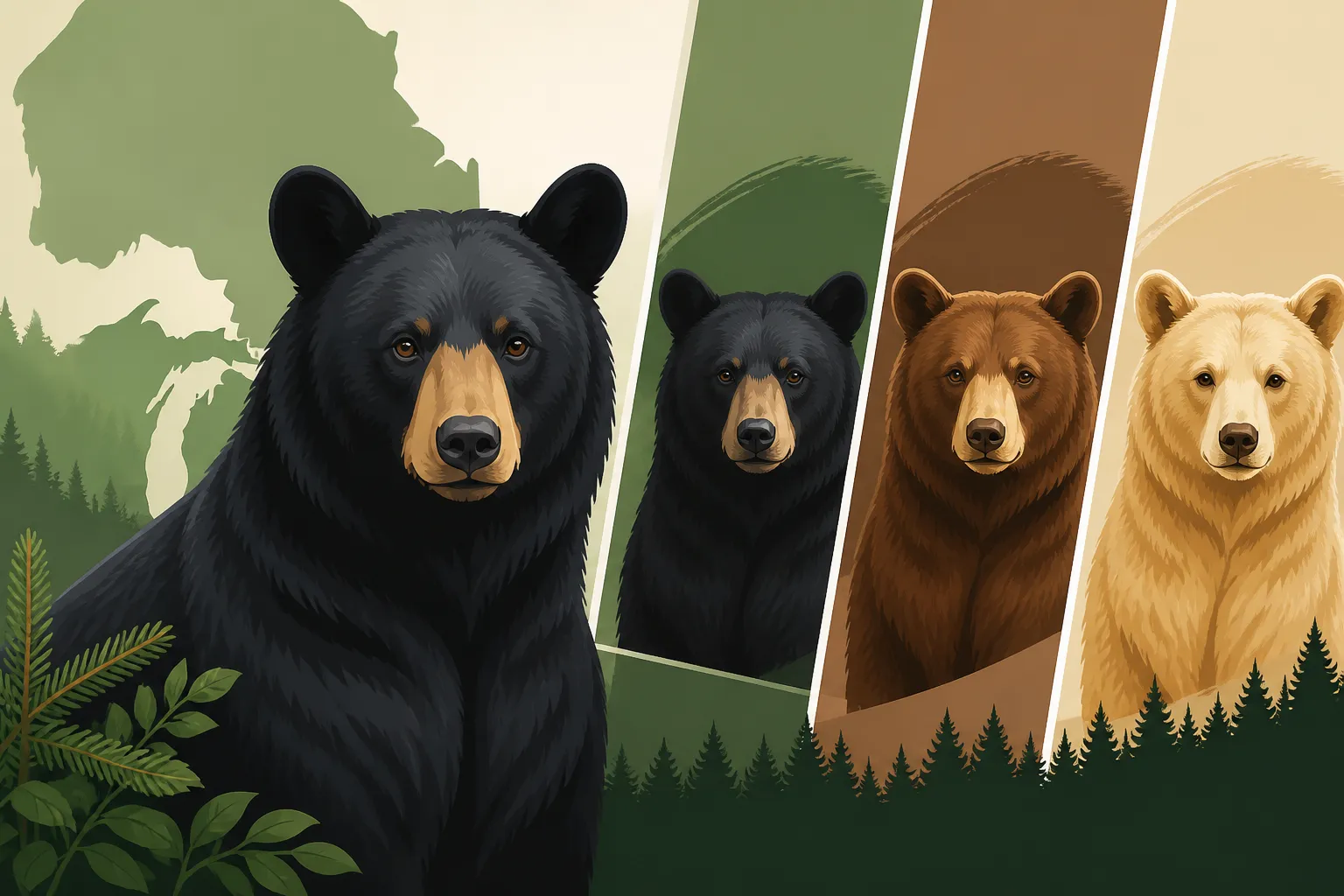
When we talk about "colour phases" in Ontario black bears, we're not just splitting hairs over subtle differences in shade; we're referring to distinct genetic expressions that result in visibly different coat colours. While black is undeniably dominant, the other phases are not unheard of, and encountering one in the wild is truly a memorable experience. Knowing what to look for can enhance your appreciation for these incredible animals and help you better understand the diversity present in our provincial bear population.
The Classic Black Bear
This is the bear most of us picture. A deep, uniform black coat that seems to absorb all light, often with a brownish muzzle that offers a slight contrast. The fur can appear sleek and shiny in healthy, well-fed animals, especially after they've shed their winter coat and grown in a fresh summer one. When the sun hits them just right, you might even catch a subtle blue or purple sheen, giving their dark fur an almost iridescent quality.
It’s important to note that even within the "black" phase, there can be subtle variations. Some bears might have a slightly rustier tinge, particularly on their flanks or shoulders, especially as their fur ages or bleaches in the sun. Many black bears, regardless of their overall colour, can also sport a white patch or blaze on their chest. This patch can vary greatly in size and shape, from a small, irregular blotch to a prominent, V-shaped marking. These chest patches are quite common and are perfectly normal genetic traits, not indicative of any specific colour phase beyond the dominant black. If you're out Hunting a Fall Bear Bait in September, you'll mostly be seeing these dark-coated animals, but keeping an eye out for these subtle differences adds another layer to your observation skills.
Cinnamon and Brown Bears
Now, this is where things get really interesting! The cinnamon phase is perhaps the most striking and frequently encountered non-black colour variant in Ontario. These bears possess a beautiful reddish-brown coat, often described as the colour of cinnamon spice. The intensity can vary, from a light, reddish-tan to a deep, rich reddish-brown. This colour is usually quite uniform across their body, though their muzzle might still be a lighter tan.
Beyond cinnamon, you also have "brown" bears. These aren't grizzlies, to be clear (we’ll get to that important distinction shortly!). Instead, they are black bears with a coat that ranges from a medium chocolate brown to a lighter, more yellowish-brown. Sometimes, the terms "cinnamon" and "brown" are used somewhat interchangeably, but generally, cinnamon implies a distinct reddish hue, while brown refers to a more earthy, less red shade. Seeing a cinnamon or brown bear emerge from the dense Ontario bush is a truly magnificent sight, often catching hunters off guard due to their striking appearance. It's a reminder of the wild beauty and genetic diversity hidden within our forests, making any Black Bear Hunting in Ontario experience even more unique.
Blonde and Light Brown Bears
At the extreme end of the lighter spectrum, you'll find blonde and very light brown bears. These are considerably rarer in Ontario than cinnamon or brown phases but do occur. A blonde bear can have fur that ranges from a pale cream colour to a rich golden blonde. Imagine a sun-drenched field of wheat, and you’re pretty close to the shade some of these bears can sport. Their fur might even appear almost white in certain lighting conditions, though true "white" (polar bears aside) is exceedingly rare and usually indicative of albinism, which is a different genetic condition altogether.
Light brown bears, on the other hand, are a step darker than blonde but still significantly lighter than the typical brown or cinnamon phases. Their coats might be a sandy colour, a light tan, or a dusty light brown. These pale variations can be particularly challenging to spot in certain environments, for example, if they're moving through tall, dry grass or sun-dappled clearings. Their rarity makes an encounter with a blonde or light brown bear a truly special and unforgettable event for any hunter or outdoors enthusiast. It’s a stark contrast to what you might expect when you think of a black bear, and a testament to the surprising spectrum of colours that these incredible animals can exhibit.
Misconceptions and Identification Challenges
One of the biggest hurdles when encountering a bear that isn't jet black is resisting the urge to jump to conclusions. Our minds are often quick to categorize, and when faced with a brown bear in the woods, especially if you're not from a region where they are common, it's easy to think "grizzly!" or "hybrid!" However, understanding the reality of Ontario's bear populations is crucial for safe and responsible hunting.
Not All Bears in Ontario Are Black Bears
Let’s be absolutely clear on this point: The only species of bear found in Ontario is the black bear, Ursus americanus. There are no grizzly bears (Ursus arctos horribilis) or polar bears (Ursus maritimus) in any huntable populations in the parts of Ontario most hunters will access. Polar bears exist along Ontario's far northern coastlines bordering Hudson Bay and James Bay, but they are a protected species and their habitat is far removed from typical hunting grounds. Grizzly bears haven't roamed Ontario for a very, very long time.
So, if you see a bear that isn't black in Ontario, you are looking at a black bear in one of its various colour phases – cinnamon, brown, or blonde. This is a critical distinction, not just for identification, but for understanding the regulations and safety protocols that apply. The physical characteristics of black bears, regardless of colour, differ significantly from grizzlies. Black bears typically have a straight facial profile from forehead to nose, longer, more pointed ears, and no prominent shoulder hump. Their claws are shorter and more curved, adapted for climbing trees. Grizzlies, by contrast, have a dish-shaped face, shorter, rounder ears, and a very noticeable shoulder hump (a mass of muscle for digging). They also have long, straight claws, better for digging than climbing. Remembering these key differences can help you confirm that the brown bear you’re seeing in an Ontario bush lot is indeed a black bear, just wearing a different coat. This knowledge is fundamental to Ontario's Black Bear Rules and ethical hunting practices.
Judging Age and Sex by Colour
It's a common misconception, often heard around hunt camp fires, that a bear's colour can tell you something about its age or even its sex. Perhaps a dark bear is an old, dominant boar, or a lighter-coloured bear is a younger animal. Let's bust that myth right now: a black bear's colour phase has absolutely no correlation with its age or sex.
Colour is a purely genetic trait, determined by the genes inherited from its parents. You can have a young, blonde cub, a mature, black sow, or an old, cinnamon-coloured boar. The genes for colour are expressed independently of the genes that determine growth, maturity, or reproductive organs. What you can observe for age and sex, regardless of colour, are physical characteristics like overall body size and shape, head size relative to body, ear set, and behaviour. For example, a sow with cubs will typically be very protective, and obviously, those cubs will be trailing behind her. The difficulty in judging a boar from a sow with cubs means you need to be extra vigilant, regardless of the bear's hue. Observing these subtle cues, rather than relying on coat colour, is what makes a truly skilled bear hunter. Using an app like GoHunt to log your observations, including colour phase and behaviour, can also help you refine your bear identification skills over time, providing valuable data for your future hunts.
Hunting Considerations for Coloured Bears
Hunting black bears, regardless of their colour, is a challenging and rewarding pursuit. However, encountering a bear that stands out from the typical black can add another layer of excitement and even some subtle considerations to your hunting strategy. While the core principles of ethical hunting remain the same, thinking about how different colour phases interact with their environment can refine your approach.
Visibility and Camouflage
One might assume that a black bear is always harder to spot due to its dark colour blending into shadows. While often true, a solid black bear can also stand out against certain backgrounds, like bright green spring foliage or a sun-drenched, sandy clearing. Conversely, a lighter-coloured bear—say, a blonde or light brown—might blend remarkably well into dry grass, deadfall, or a sunlit hardwood forest floor. Imagine a blonde bear moving through an area of dried goldenrod or pale aspen leaves in the fall; it could be surprisingly camouflaged.
This isn't to say you should change your entire camouflage pattern based on the bear's expected colour, but it's worth considering how light and shadow play on different coat colours. When you're scouting or setting up a stand, think about the dominant colours of the environment during different seasons. For instance, in spring when bears leave the den in spring and the undergrowth is just popping, a cinnamon bear might be more visible than a black one, while in the deep shade of a pine stand, the black bear will disappear more readily. Being aware of this can inform your vigilance and observation, ensuring you spot that bear, no matter its hue, moving through the landscape. Your gear, like a good pair of binoculars, becomes even more crucial when trying to pick out a subtly coloured bear in varied cover.
Ethical Considerations and Respect
At the end of the day, whether you're looking at a jet-black bear, a rich cinnamon, or a rare blonde, it's still the same species: a black bear. All black bears deserve the same respect, and all hunts must adhere to the same stringent ethical standards and regulations. The thrill of encountering a unique colour phase should never overshadow the commitment to a responsible and humane hunt.
The fundamental rule that you cannot shoot a sow with cubs applies universally, regardless of the sow's colour or the cubs' colours. Proper identification is paramount. Take your time, use your optics, and be absolutely certain of your target before you raise your firearm or draw your bow. This means understanding bear body language, observing for cubs, and ensuring you have a clear, ethical shot. The beauty of a rare colour phase might tempt you to rush, but a true hunter always prioritizes safety, ethics, and adherence to the law above all else. Remember, you're interacting with a magnificent wild animal, and your actions reflect on all hunters. Every harvest, regardless of the bear's colour, should be a testament to responsible wildlife management and conservation.
Conservation and Management of Black Bear Populations
Ontario's black bear population is healthy and robust, thanks in large part to sound management practices and the efforts of wildlife biologists. Understanding the genetic diversity, including colour phases, plays a subtle yet important role in this ongoing conservation work. It’s not just about counting bears; it’s about understanding the health and makeup of the population.
Monitoring Colour Phase Distribution
Wildlife biologists and researchers actively monitor bear populations across Ontario, not just for overall numbers but for genetic diversity. While formal studies specifically tracking the exact percentage of each colour phase across the entire province are complex and ongoing, data from harvest reports and research projects provides valuable insights. By noting the colour phase of harvested bears, researchers can get a general sense of how these traits are distributed geographically. For example, if there's an unexpected spike in cinnamon bears in a particular Wildlife Management Unit (WMU), it might prompt further investigation into that local population's genetics.
This kind of monitoring helps paint a more complete picture of the genetic health and viability of bear populations. A diverse gene pool, including the presence of various colour phases, is generally a sign of a healthy population capable of adapting to environmental changes. This information contributes to broader management strategies, ensuring that Ontario's black bear population remains stable and thriving for future generations of hunters and wildlife enthusiasts.
The Role of Hunters in Data Collection
As hunters, we are often on the front lines of wildlife observation, spending countless hours in the bush. This unique position makes us invaluable contributors to wildlife data collection. Every bear you see, every sign you encounter, and especially every bear you harvest, offers a piece of the puzzle for wildlife managers. When you report your harvest, including details like the bear's sex, estimated age, and even its coat colour, you're contributing to a larger dataset that informs conservation efforts.
Detailed reporting, perhaps even including photos, especially of rarer colour phases, can provide critical information that might otherwise be missed. If you’re utilizing modern tools like the GoHunt app for your trip planning and logging, you can meticulously record your observations, including the precise location and any distinguishing features of the bears you encounter. This citizen science aspect is powerful. It allows the Ministry of Natural Resources and Forestry (MNRF) to gather broader, more granular data than they could achieve through direct studies alone. Whether you're setting a bear bait site in Ontario or just observing while out for a hike, remembering to document what you see (and harvest) ensures that you're an active participant in the sustainable management of Ontario’s incredible black bear resource. Your engagement helps maintain the health and diversity of these magnificent animals for years to come.
Ontario Black Bear Colour Phases at a Glance
For a quick reference, here’s a breakdown of the common colour phases you might encounter in Ontario:
| Colour Phase | Primary Appearance | Rarity in Ontario | Notes |
|---|---|---|---|
| Black | Deep, uniform black; often glossy | Most Common | Can have brownish muzzle, sometimes a white chest blaze. What most hunters expect to see. |
| Cinnamon | Reddish-brown, varying from light tan to deep reddish | Uncommon | Often mistaken for grizzly bears by those unfamiliar with black bear colour variation. Distinct reddish hue. |
| Brown | Medium to dark chocolate brown, less red than cinnamon | Uncommon | Similar to cinnamon but with a more earthy, less reddish tone. Also sometimes confused with grizzlies. |
| Blonde | Pale cream, golden, or very light tan | Rare | The lightest phase; can blend exceptionally well with dry grasses or sun-drenched clearings. A truly unique and memorable sighting. |
| Other | True white (albino), patchy, etc. | Extremely Rare | Albinism is a distinct genetic condition. Other rare patterns are possible but typically anomalies within existing phases. |
Disclaimer
Please remember that hunting regulations, seasons, and licensing requirements can change. Always consult the most current Ontario Hunting Regulations Summary published by the Ontario Ministry of Natural Resources and Forestry (MNRF) before planning any hunting trip. This guide is for informational purposes only and should not be considered a substitute for official government regulations.