Whether CWD Meat Is Safe to Eat
The question of whether meat from a deer affected by Chronic Wasting Disease (CWD) is safe to eat is a deeply unsettling one for any hunter. It strikes at the heart of why many of us hunt: to provide healthy, natural food for our families. The fear of unknowingly bringing a dangerous disease to the dinner table is a genuine concern, and navigating the conflicting information and cautious advice can feel overwhelming. This guide aims to unpack the complexities of CWD and venison safety, offering practical advice for Ontario hunters on how to minimize risks and make informed decisions about their harvest.
Understanding Chronic Wasting Disease (CWD)
CWD is a complex and often misunderstood disease. It's not like a bacterial infection or a virus we're familiar with. This prion disease, affecting deer, elk, moose, and caribou, raises significant questions, especially when it comes to the table.
What CWD Is and How It Affects Deer
Chronic Wasting Disease belongs to a group of neurological disorders called transmissible spongiform encephalopathies (TSEs), similar to "mad cow disease" in cattle or scrapie in sheep. What makes CWD so unusual is that it's caused by abnormal proteins called prions. These misfolded proteins accumulate in the brain and spinal cord, slowly destroying nervous tissue. Imagine a microscopic wrecking crew systematically dismantling the brain; that's essentially what happens.
A deer infected with CWD might not show symptoms for a long time, often a year or more. This incubation period is part of what makes the disease so insidious. When symptoms do appear, they are heartbreaking to witness. The animal will typically become emaciated, hence the "wasting" in its name. You might see behavioural changes, such as a lack of fear of humans, a wide stance, excessive drooling, difficulty walking, and a general dullness or listlessness. Their coat might look rough, and they may drink and urinate more frequently. These symptoms inevitably worsen, leading to death. There is no known cure or vaccine for CWD, and it is always fatal for the infected animal. Understanding how deer behave and move in the landscape is a crucial part of hunting responsibly, and resources like Reading Whitetail Sign in Ontario Hardwoods can help you recognize normal versus abnormal animal behaviour.
How CWD Spreads and Its Presence in Ontario
CWD is highly contagious within deer populations. It spreads primarily through direct animal-to-animal contact, but also through contact with contaminated environments. This means bodily fluids like saliva, urine, and feces, and even decaying carcasses of infected animals, can all contain prions. These prions are incredibly resilient; they can persist in the soil and environment for years, even decades, making it extremely difficult to eradicate once established in an area.
For Ontario hunters, the good news has been that CWD has not been detected in our wild deer, elk, or moose populations. This is a testament to the proactive measures taken and the vigilance of our wildlife agencies and hunters. However, there have been instances of CWD detected in captive cervid facilities in other parts of Canada, and the threat of introduction remains a serious concern. The province maintains a robust Ontario's CWD Surveillance Program to detect any potential cases early. This involves testing hunter-harvested animals and road-killed deer in specific areas. It’s vital for all of us who spend time in the bush to understand how diseases like CWD can impact our beloved game animals and to stay informed on local updates. When Hunting Whitetails on Ontario Crown Land or any other public or private land, being aware of potential signs is part of our responsibility as ethical hunters.
The Science Behind CWD and Human Health
When a disease like CWD affects animals we harvest for food, the natural question is, "Can it affect me?" This is where the science gets a little murky, and the public health advice leans heavily on caution.
Is There a Direct Link to Human Disease?
This is the million-dollar question, and the current scientific consensus is that there is no direct, confirmed link between consuming CWD-infected venison and human disease. Studies have been ongoing for decades, primarily looking for evidence of CWD prions causing a human prion disease like Creutzfeldt-Jakob disease (CJD). To date, no direct causal link has been found, which is reassuring for many. However, it's crucial to understand that "no confirmed link" doesn't necessarily mean "no risk at all."
The prions that cause CWD are species-specific, meaning they typically affect cervids (deer, elk, moose). While laboratory studies have shown that CWD prions can infect other species under experimental conditions, there's a strong species barrier that seems to protect humans. But science is always evolving, and the nature of prion diseases means that even a very low, theoretical risk is enough for public health authorities to advise extreme caution. It's a bit like asking if it's safe to walk on thin ice – most of the time you might be fine, but the potential consequences of being wrong are severe.
Why Public Health Agencies Advise Caution
Given the lack of definitive answers and the severity of prion diseases, public health agencies universally recommend against consuming meat from CWD-positive animals. This cautionary approach is rooted in several factors:
- Long Incubation Periods: Prion diseases in humans, like CJD, can have incredibly long incubation periods, sometimes decades. This makes it challenging to conclusively link past exposure to a current diagnosis. Even if someone consumed CWD-infected meat 20 years ago, and developed CJD today, proving the link would be incredibly difficult without direct, irrefutable evidence.
- Difficulty in Detection: CWD prions are notoriously difficult to detect in early stages, especially in muscle tissue. While testing focuses on brain and lymph tissue, it's not a perfect system, and it's possible for prions to be present in other parts of the animal at very low levels.
- Severity of Disease: Human prion diseases are invariably fatal and currently untreatable. The stakes are simply too high to take even a minimal, theoretical risk.
- Scientific Uncertainty: While the species barrier appears robust, scientists continue to study the potential for adaptation or mutation of CWD prions over time. It’s an area of ongoing research, and until there is 100% certainty, caution will remain the guiding principle.
For these reasons, the advice is clear: if an animal tests positive for CWD, or if you suspect it might be infected, it's best to err on the side of extreme caution and not consume the meat. This isn't about fear-mongering; it's about making a responsible choice for your health and the health of those you feed. When considering Meat Care in Ontario's Warm Early Seasons, proper handling takes on even greater importance.
Safe Handling and Testing for Ontario Hunters
As hunters, we have a vital role to play in CWD surveillance and prevention. By adopting best practices for handling and processing, and by participating in testing programs, we can help keep Ontario's wild game healthy and ensure the safety of our venison.
Best Practices for Field Dressing and Processing
Even if CWD isn't known to be in your specific hunting area, practicing safe field dressing and processing techniques is just good sense. These steps minimize potential exposure to any pathogens, not just CWD, and are crucial for overall meat hygiene.
- Wear Gloves: Always wear disposable gloves when field dressing any animal. This protects both you and the meat from contamination.
- Minimize Contact with Nervous Tissue: When field dressing, avoid cutting into the brain, spinal cord, spleen, and lymph nodes. These are the tissues where CWD prions are most concentrated. If you're going to remove the head, use a dedicated knife or saw, and don't use it for the rest of the carcass.
- Bone Out the Meat: The safest approach, if you're concerned about CWD, is to bone out the meat. This means separating all muscle tissue from the bone and removing all nervous system tissue, lymph nodes, and fatty tissue. The prions are not found in muscle meat to the same degree as nervous tissue.
- Proper Disposal: Dispose of the brain, spinal cord, eyes, spleen, and lymph nodes (if removed) appropriately. In areas with CWD, specific disposal protocols are often in place, such as double-bagging and landfill disposal, or even incineration. Check with local wildlife authorities or your local municipal waste facility for guidelines. Never leave potentially infected parts where other scavengers or animals can access them.
- Clean Tools Thoroughly: Prions are tough. Standard sterilization like boiling or alcohol won't destroy them. For tools used on potentially infected tissue, consider using a bleach solution (50% bleach, 50% water) for at least one hour, followed by a thorough rinse. Better yet, have separate knives and saws dedicated to processing the head/spinal column. This goes for all your gear, especially after a hunt where you've been focused on Field Dressing in Warm Ontario Weather or any other season.
- Avoid Damaging the Spinal Column: When quartering or moving a deer, try to avoid actions that could sever or expose the spinal column, which could release infectious material.
Getting Your Harvest Tested
Participating in CWD surveillance is perhaps the most critical step hunters can take. Many jurisdictions, including Ontario, encourage or mandate testing of deer harvested in certain areas, especially in wildlife management units (WMUs) that are considered at higher risk or are part of active surveillance.
The process usually involves submitting specific tissues from your harvested animal, typically the head (brainstem and lymph nodes) or just the lymph nodes. You’ll usually receive a kit or instructions on how to collect these samples or where to drop off the head at designated collection sites. It’s a bit of extra work, but it’s invaluable for monitoring the health of the herd. Websites like GoHunt and provincial government resources often provide detailed maps of surveillance areas, instructions for sample submission, and updates on testing protocols. Keep an eye out for information specific to your Ontario WMU before you head out.
Testing is generally free for hunters in surveillance areas. You'll typically get results back within a few weeks. If an animal tests positive, you will be notified, and instructed on how to properly dispose of the carcass. This data is critical for understanding Ontario's CWD Surveillance Program and protecting the broader deer population.
| Step | Action | Why It Matters |
|---|---|---|
| Wear Gloves | Always use disposable gloves during field dressing. | Prevents contamination of meat and protects the hunter. |
| Bone Out Meat | Remove all muscle tissue from bone; discard brain, spinal cord, lymph nodes. | Prions are concentrated in nervous and lymphatic tissue. |
| Minimize Contact | Avoid cutting into brain, spinal cord, spleen, or lymph nodes. | Reduces spread of prions to edible meat. |
| Proper Disposal | Follow local guidelines for disposing of high-risk tissues. | Prevents environmental contamination and spread. |
| Clean Tools | Use bleach solution for tools that contacted nervous tissue, or use separate tools. | Prions are resistant to standard cleaning; specialized cleaning is needed. |
| Get Tested | Submit samples (head/lymph nodes) from harvested deer in surveillance areas. | Essential for CWD detection and herd health monitoring. |
Consult GoHunt |
Check GoHunt or provincial resources for current CWD zones and testing centers. |
Stay informed on local regulations and where to submit samples. |
Deciding Whether to Eat CWD-Positive Meat
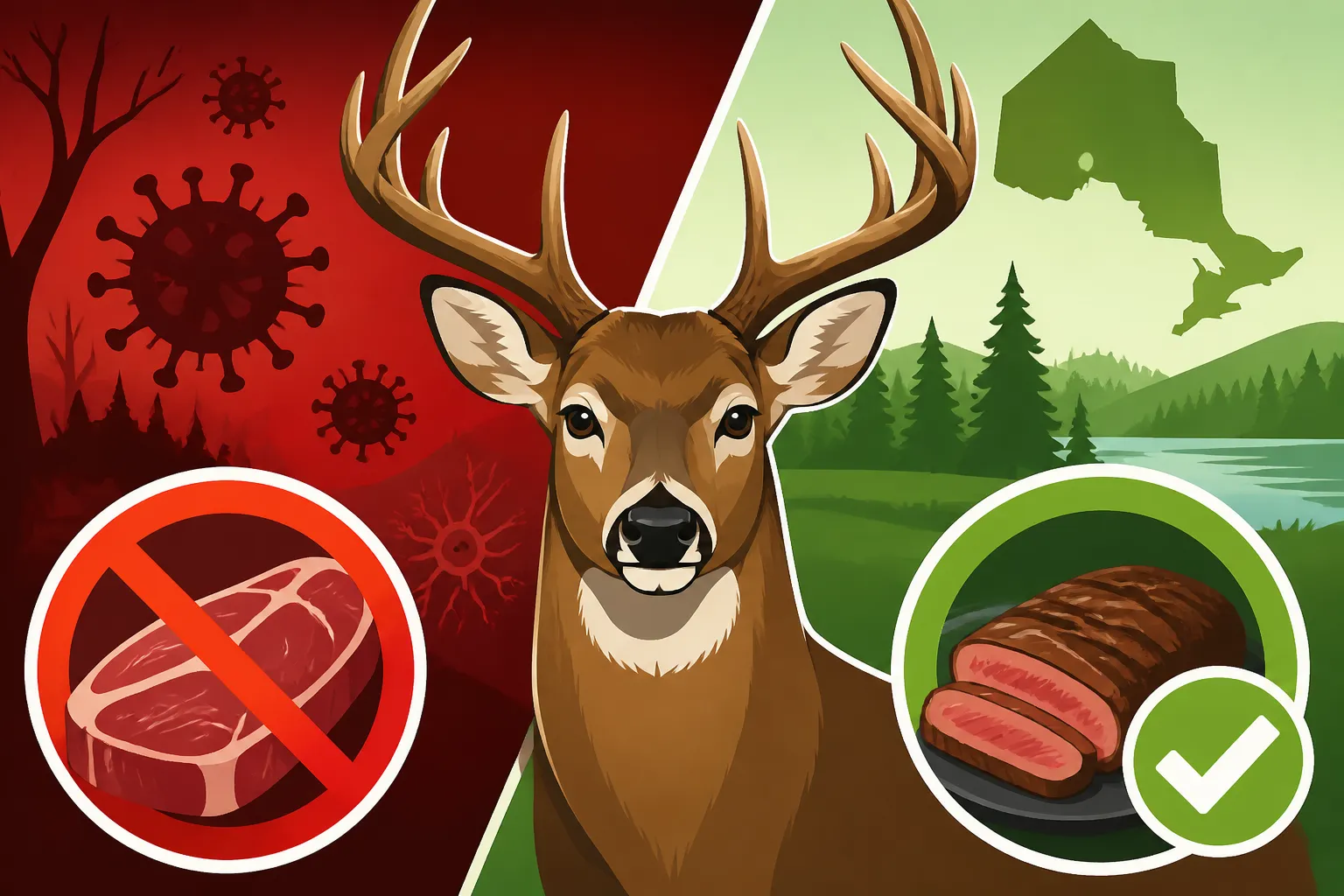
Ultimately, the decision of whether to eat venison from a CWD-positive animal, or even a deer harvested in a CWD-endemic area without a test, is a deeply personal one. Public health agencies advise against it. Given the severity of human prion diseases and the lack of a cure, this recommendation is made out of an abundance of caution.
If you are hunting in an area where CWD is present, the absolute best practice is to get your harvested deer tested before consuming any of the meat. If the test comes back positive, the recommendation is to properly dispose of the carcass and meat. It's a tough call to make after the effort of a successful hunt, but the potential health risks, even if unconfirmed, are simply too high for many. For hunters using resources like GoHunt to track their hunts, noting when and where you harvested an animal can be crucial if CWD status changes in your area.
For those who prioritize absolute safety, hunting in areas with no known CWD and diligently getting tests done where surveillance is active are the most responsible approaches. It’s about being an informed and ethical hunter, not just in the pursuit of game, but in the care and respect we show for the animals and the food they provide. The health of our wild herds, as discussed in What CWD Means for Ontario Deer, impacts every hunter.
Hunting in Ontario is a rich tradition, but it comes with responsibilities. Understanding CWD, staying informed through resources like GoHunt and government wildlife agencies, and taking all necessary precautions in the field and kitchen are crucial steps in ensuring both safe table fare and healthy wildlife populations for generations to come.
Disclaimer
This article is for general informational purposes only and does not constitute professional advice. Laws, prices and regulations vary by location and change over time. Consult a qualified professional for guidance on your specific situation.