Whether Any Bison Live in the Province
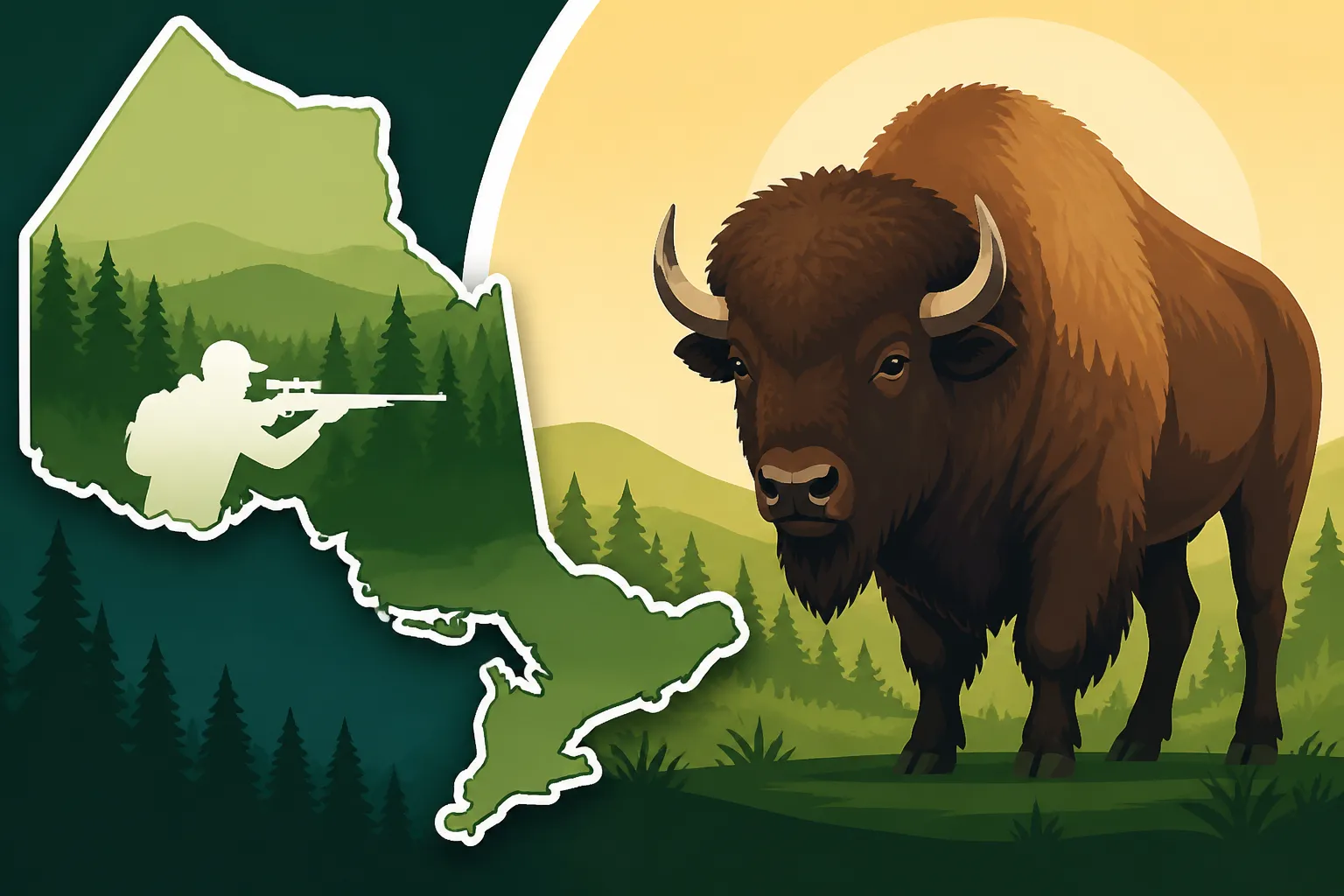
It's a common and understandable question for anyone spending time in Ontario's vast outdoors: could I actually run into a wild bison out here? The image of these magnificent animals roaming free conjures up a sense of untamed wilderness, and given the province's incredible array of wildlife, it's natural to wonder if they're part of the picture. This guide will clear up the facts about bison in Ontario, delving into their historical presence, their current status, and what you might actually be encountering if you think you've spotted one.
The Echoes of the Past: Bison's Historical Footprint in Ontario
For many, the idea of bison in Ontario sounds almost mythical, like a creature from another time or place. However, it's not entirely without historical basis. When we talk about bison, it's important to differentiate between the two main subspecies: the Plains Bison and the Wood Bison. While the Plains Bison were primarily found in the prairies to the west, some historical accounts and archaeological evidence suggest that their range, or at least the range of a now-extinct eastern variant, may have extended into parts of what is now Ontario, particularly in the southwestern regions.
Imagine Ontario thousands of years ago, after the glaciers retreated, and you might picture a different landscape, one where large grazing animals were a more common sight. These were not the massive herds of the American plains, but smaller, perhaps more scattered groups that ventured into the open savannas and clearings that existed alongside the dense forests. They would have followed migratory routes, drawn by forage and suitable habitat. However, these animals were among the first to disappear from the region as human populations grew and altered the landscape. Hunting pressure, habitat fragmentation, and the eventual arrival of European settlers rapidly pushed them out of their easternmost ranges.
The disappearance of bison from Ontario was a gradual process, but by the time organized settlement began in earnest, they were already long gone. This means that for centuries, Ontario's landscape has been without wild bison, and the collective memory of their presence has faded into prehistory. The idea that they once roamed here is a powerful reminder of how much our ecosystems have changed and how certain species have been lost from their native ranges due to human activity and environmental shifts.
Bison Today: No Wild Herds Roaming Ontario
Let's cut right to the chase: there are no wild, free-ranging herds of bison living in Ontario today. While the romantic notion of stumbling upon a shaggy bull in the northern bush is compelling, it's simply not the reality of the province's current wildlife landscape. Unlike provinces further west, or states to the south where reintroduction efforts have established wild populations, Ontario has not undertaken any wild bison reintroduction programs. This means if you see a bison in Ontario, it's almost certainly not a truly wild animal in the traditional sense.
Any bison you might encounter in Ontario would most likely be an escapee from a captive herd. There are private farms and ranches across the province that raise bison for meat or breeding purposes. These operations are often well-fenced, but as any farmer knows, animals can be incredibly resourceful when they decide to go for a walkabout. A determined bison could certainly break out, and if one did, it might roam for a considerable distance before being spotted. However, such an event would be highly unusual and would typically involve authorities being notified to retrieve the animal. They aren't meant to be out there on their own.
It's also worth noting that various conservation areas and zoos, like those that maintain a focus on native or historically present species, may have bison within their managed enclosures. These animals are part of captive breeding programs or educational displays and are not intended to roam freely. So, while you might see them, they are very much under human care and management, a far cry from a self-sustaining wild population. When planning any hunt or even just a scouting trip with tools like GoHunt, you can confirm the typical game species present in any given Ontario's Wildlife Management Units, and bison won't be on that list for wild, huntable populations.
Mistaken Identity: What You Might Be Seeing Instead of Bison
It's easy to get excited when you spot a large, dark animal in the distance, especially in dense bush or at dusk. Sometimes, our minds fill in the gaps with what we hope to see, or what we've seen in documentaries about other regions. This can lead to a case of mistaken identity when it comes to bison in Ontario. The truth is, there are several large mammals in the province that, from a distance or in poor lighting, could potentially be confused with a bison, especially if you're not intimately familiar with all their characteristics.
The most common culprit for a "bison sighting" in Ontario is likely a moose. Moose in Ontario's Boreal Forest are enormous animals, with dark, shaggy coats, and a distinctive shoulder hump that, in certain angles, could evoke the appearance of a bison's hump. A bull moose, especially one with a dark winter coat, can be truly massive. They can blend surprisingly well into the shadows of the forest, and if you only catch a glimpse, your brain might jump to conclusions. A key differentiator, of course, is the antlers of a bull moose versus the horns of a bison. However, cows and young moose lack antlers, making the distinction harder for the untrained eye. For more on these incredible animals, you can check out What a Big Bull Moose Weighs.
Another possibility, though less likely to be mistaken for a bison due to their more slender build, could be a large, dark domestic cow or even a beef bull from a nearby farm. Ontario is rich in agricultural land, even adjacent to extensive bush. A lone steer or bull that has wandered from its pasture could certainly be confused, particularly if it's a dark breed and seen far off. Remember, these are common livestock in agricultural zones, and a dark Angus bull can be a pretty imposing animal. Even a very large White-Tailed Deer Across Ontario buck could, in truly unique circumstances and very poor visibility, trick the eye if you're not expecting it. Understanding the actual size and features of these animals is crucial, and mapping tools like GoHunt can help you understand the landscape – whether it's predominantly agricultural or deep wilderness – which can influence what kind of large animals you might expect to see.
Key Distinctions Between Large Mammals
To help avoid confusion, here’s a quick comparison of bison with Ontario's actual large game species and common livestock you might encounter. Knowing these features can make all the difference when you're out in the field.
| Feature | Bison (American Bison) | Moose | Domestic Cattle (e.g., Angus Bull) |
|---|---|---|---|
| Size | Very large, bulky front end, smaller rear | Very large, tall, long legs, distinct shoulder hump | Large, robust, more evenly proportioned |
| Hump | Pronounced, muscular hump over the shoulders | Distinct, but less pronounced, shoulder hump (more like a rise) | Generally no hump, or very slight musculature |
| Head | Large, shaggy, relatively short snout, small ears | Long, distinctive "bell" under throat, elongated face, large ears | Varied, but typically longer face, larger ears |
| Coat | Thick, shaggy brown/black fur, especially on head and shoulders | Dark brown to black, generally uniform, short/medium length | Varied, but often solid black, brown, or spotted |
| Antlers/Horns | Permanent, curved, sharp black horns (both sexes) | Large, palmate (paddle-shaped) antlers (males only, shed annually) | Varied, some breeds have horns (both sexes), some are polled (no horns) |
| Tail | Short, tufted | Short | Longer, usually with a switch at the end |
| Habitat | Historically open grasslands and savannas, some woodlands | Dense boreal forests, wetlands, mixed woods | Pastures, agricultural land |
Understanding Why Ontario is Not Bison Country Anymore
The absence of wild bison in Ontario today isn't just a matter of "they're not here" – it's a reflection of historical ecological changes and the specific environmental requirements of bison. While parts of Ontario historically touched the eastern edge of bison range, particularly Hunting Deer in Southern Ontario Farmland, the vast majority of the province, especially the northern regions like those described in Hunting Northwestern Ontario's Big Bush, are heavily forested. Bison are primarily grazers, meaning they thrive on grasses and forbs found in open plains and savannas. While they can browse, their digestive system and feeding habits are optimized for grasslands.
Ontario's extensive Boreal Forest and Canadian Shield country, characterized by dense conifer and mixed wood forests, rocky outcrops, and wetlands, simply doesn't offer the vast, continuous grazing lands that wild bison herds require to truly flourish. Animals like moose and deer, on the other hand, are well-adapted to these environments, relying on browse, aquatic vegetation, and the understory of forests. Ontario's Northern and Boreal Species thrive in these conditions, but they are very different from what bison need.
Furthermore, human development, even far from major urban centers, has fragmented potential habitat. Roads, logging operations, and settled areas, while not always dense, break up the expansive, uninterrupted tracts of land that large, wide-ranging animals like bison need. The provincial land use planning and wildlife management priorities also focus on existing native species and their habitats. Reintroducing a species like the bison would be an enormous undertaking, requiring massive tracts of suitable, protected grassland habitat and significant long-term management – resources that are currently directed towards other conservation efforts. Even in the face of What Climate Shift Means for Ontario Game, the ecological fundamentals for bison haven't shifted back to favouring their reintroduction on a wild, free-ranging basis.
So, while the idea of bison roaming Ontario's wilderness remains a captivating thought, the reality is rooted in history, ecology, and current land use. For now, if you're looking for truly wild, massive ungulates in the Ontario bush, your best bet is definitely a moose, or perhaps even one of Black Bears Across Ontario's Bush Country!
Disclaimer
This article is for general informational purposes only and does not constitute professional advice. Laws, prices and regulations vary by location and change over time. Consult a qualified professional for guidance on your specific situation.