Ontario’s Top Typical Whitetails
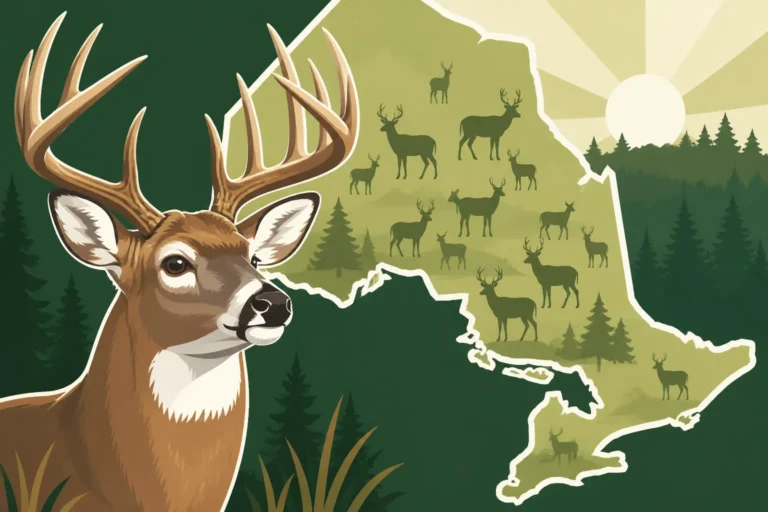
It's a dream for many Ontario deer hunters: that moment you lay eyes on a truly exceptional whitetail buck, a monarch of the forest with a perfectly symmetrical, wide set of antlers that make your heart pound. We all know Ontario has big deer, but finding out which areas consistently produce those top-end, Boone & Crockett caliber typical racks, the ones that make the record books, can feel like trying to find a needle in a haystack. This guide is here to pull back the curtain on what makes an Ontario typical whitetail truly stand out, where you might find them, and what it takes to pursue one.
Defining "Typical" Whitetail Racks in Ontario
When we talk about "typical" whitetail racks, we're not just throwing around a casual description. In the hunting world, especially when aiming for record books, "typical" refers to a specific scoring category, primarily recognized by organizations like Boone & Crockett and Pope & Young. It’s all about symmetry and the classic, non-divergent points that grow off the main beam. A truly world-class typical rack is a breathtaking display of natural perfection, a testament to a deer's age, health, and genetics.
The Nuance Between Typical and Non-Typical
The main difference lies in the antler structure itself. A typical rack is characterized by its clean, symmetrical growth. The tines (points) rise from the top of the main beam, and generally, if you drew a line down the middle, one side would mirror the other. There are usually eight points for a mature buck, sometimes ten or twelve, but they are all well-defined, growing upward or outward in a predictable pattern. Think of that classic, widely recognized image of a majestic whitetail rack.
A non-typical rack, on the other hand, boasts character in the form of abnormal points. These can be drop tines, kickers, stickers, or points growing from other points, all adding mass and unique features that deviate from the symmetrical ideal. While non-typicals can often score higher in raw antler inches due to these extra points, they are scored differently. For a typical rack to truly shine in the record books, it needs that remarkable balance and lack of "junk" points, which are often penalized in the scoring process for the typical category. It’s this pursuit of perfection that makes typical hunting such a specialized challenge.
Official Scoring for Record Books
To be considered a "top typical," a buck's antlers must meet specific criteria and measurements, usually adhering to the Boone & Crockett Club or Pope & Young Club standards. These organizations meticulously measure various aspects of the rack, including the length of the main beams, the length of each typical point, the inside spread, and four circumference measurements (mass) on each beam. Deductions are made for any lack of symmetry between corresponding points on opposite antlers. For instance, if the G3 on the left side is 8 inches long but the G3 on the right is only 6 inches, that 2-inch difference is deducted from the final score.
For a whitetail to even be considered for the Boone & Crockett all-time record book, a typical rack needs to score a minimum of 170 net inches. The Pope & Young Club, for archery kills, has a slightly lower threshold, but the principles of symmetry and lack of abnormal points remain paramount. This strict scoring system is why finding a high-scoring typical is so challenging; it’s not just about big antlers, but about perfect big antlers. Understanding this scoring system is the first step in appreciating what makes Ontario's Top Typical Whitetails so rare and coveted.
Here's a simplified look at the key measurements for a typical rack:
| Measurement Category | Description | Deductions Applied |
|---|---|---|
| Main Beam Length | Measured along the outside curve of each main beam from base to tip. | None (total length contributes to score) |
| Tine Length (G1, G2, etc.) | Measured from the nearest edge of the main beam to the tip of each typical point. | Differences in corresponding tine lengths between left and right antlers. |
| Inside Spread of Main Beams | Widest measurement between the main beams, taken at right angles to the centerline. | Only the difference from the longest main beam is added as "spread credit." |
| Circumference (H1, H2, etc.) | Four measurements taken at specific points along each main beam to determine mass. | Differences in corresponding circumference measurements. |
| Abnormal Points | Any points not growing from the main beam in a typical fashion (e.g., drop tines, kickers). | Entire length of abnormal points is deducted from the gross score. |
| Net Score | Gross Score (all positive measurements) minus total deductions for asymmetry and abnormal points. |
Ontario's Whitetail Hotbeds for Big Typicals
So, where in this vast province do you stand the best chance of encountering one of these magnificent, high-scoring typical whitetails? While a big buck can truly turn up anywhere, certain regions consistently produce larger deer with better antler quality due to a combination of habitat, nutrition, and hunting pressure. It's not just about quantity of deer, but quality.
Southern Ontario Farmland and Fringe Areas
When most seasoned hunters talk about big typical whitetails in Ontario, their minds often drift south. The agricultural belts of Southern Ontario, particularly those areas bordering pockets of bush and woodlots, are legendary for producing impressive bucks. This isn't a secret, and it's for good reason: these areas offer an unparalleled buffet of high-quality forage. Think vast fields of corn, soybeans, alfalfa, and winter wheat – an abundant, nutrient-rich diet that fuels incredible antler growth. The combination of dense calories and minerals leads directly to heavier body weights and, critically, larger, more robust antlers.
These agricultural regions, stretching from the southwestern parts of the province like Middlesex, Lambton, and Kent counties, eastward through regions like Bruce, Grey, and even parts of the eastern farm belt, provide everything a buck needs to reach its genetic potential. Bucks here don't have to work as hard for food as their northern cousins, which means more energy can be diverted to antler development. The challenge here often comes down to access, as most of this land is private. However, those who put in the effort to Knocking on Doors in Southern Ontario can find themselves on some truly exceptional ground. This bounty is a primary reason for Why Southern Ontario Grows Heavy Bucks.
The Pockets of the "Near North" and Transition Zones
Beyond the pure agriculture, there are transition zones and "near north" areas that deserve serious attention. These are the regions where farmland begins to give way to more mixed forest and Shield country, creating a diverse habitat that offers both nutrition and excellent cover. Think of areas like parts of the Kawartha Highlands, the Bancroft area, or even pockets within the Haliburton Highlands. While these areas might not have the sheer volume of agricultural crops as the deep south, they often provide more secure cover and less consistent hunting pressure, especially on larger, harder-to-access bush lots.
In these transition zones, deer still benefit from some agricultural influence, but they also have access to diverse natural browse, acorns, and other mast crops found in the hardwoods. The key here is to look for those interfaces – where a mature woodlot meets an old field, or where a river valley cuts through mixed terrain. Scouting these areas, perhaps with tools like GoHunt to analyze satellite imagery and topo maps, can reveal hidden gems. Hunters often find success here by focusing on habitat types like Hunting a Hardwood Ridge for Whitetails or Hunting an Ontario Bush Edge, where deer can find both food and sanctuary. These areas can sometimes surprise you with bucks that carry significant mass and typical frames.
The Formula for a Giant Typical: Age, Genetics, and Nutrition
It's a common misconception that just finding a big rub or scrape means a giant typical buck is nearby. While sign is crucial, truly understanding what makes a whitetail grow a massive, symmetrical rack involves a deeper dive into biological and environmental factors. It's a complex interplay of age, inherent genetic potential, and a consistent supply of quality nutrition. Miss one of these, and the dream of a top typical becomes significantly harder to realize.
The Critical Role of Age and Maturity
Without a doubt, the single most important factor in a buck growing a truly large, typical rack is age. Young bucks, while they might show promise, simply don't have the physiological maturity to produce record-book antlers. It takes years for a whitetail's body to fully develop, to reach its peak physical condition, and to divert maximum resources towards antler growth. Most top typicals are going to be at least 4.5, if not 5.5 years old or older. At these ages, a buck has often survived several hunting seasons, learned the landscape, and optimized its feeding and bedding patterns.
Hunting areas with lower pressure, or where hunters are disciplined about letting younger bucks walk, tend to produce more mature animals. This is why some private land holdings, where management practices focus on age structure, often yield impressive results. On public lands, targeting areas that are difficult to access, or require significant effort to reach, can increase your odds of encountering an older, wiser buck. Remember, a 2.5-year-old buck might be a nice deer, but it won't be a record-book typical. Patience and understanding that you're hunting a creature that has defied the odds for half a decade are paramount.
The Underlying Influence of Genetics
While age is king, genetics provide the blueprint. A buck can be 5.5 years old and have fantastic nutrition, but if its genetic lineage doesn't carry the genes for impressive antler growth, it won't develop a massive rack. This is a factor often beyond a hunter's control in wild populations, but it explains why certain regions, or even specific pockets within a region, seem to consistently produce bucks with particular antler characteristics. Some areas might inherently grow bucks with wider spreads, while others might favor taller tines or exceptional mass.
While we can't individually select for genetics in a wild herd, the overall health and diversity of the local deer population play a role. A healthy herd with a good buck-to-doe ratio and diverse gene pool is more likely to produce bucks with excellent genetic potential. Researchers study deer genetics to understand these patterns, and while a hunter typically cannot pinpoint the exact genetics of a specific buck, observing the antler characteristics of other deer in an area can give clues about the overall genetic potential of that local herd. If you consistently see bucks with narrow racks or poor mass in a specific area, it might indicate a less desirable genetic base for trophy typicals.
The Power of Superior Nutrition
Even with age and good genetics, a buck needs high-quality nutrition to express its full antler potential. Antlers are essentially bone, and bone requires significant amounts of protein, calcium, phosphorus, and other minerals. As mentioned earlier, agricultural areas are nutrition powerhouses. Fields of corn, soybeans, and alfalfa provide an abundant, highly digestible, and calorie-rich diet that allows bucks to grow quickly and channel vast amounts of energy into antler development. Without this dietary foundation, even an old buck with great genes won't grow a monster rack.
Beyond agriculture, natural food sources like acorns, beechnuts, and various forms of high-protein browse are critical. A good mast crop year can significantly boost antler growth in forest environments. Areas that have a diverse mix of food sources, perhaps a blend of hard mast, soft mast, and agricultural opportunities, will almost always out-produce areas with limited food. Hunters looking for top typicals should be scouting for these food sources. Observing What Acorn Crops Do to Ontario Deer can be an invaluable part of your pre-season strategy. This consistent, year-round access to premium nutrition is what enables bucks to put on those extra inches of beam and tine length, along with impressive mass, year after year.
Strategies for Pursuing a Record-Book Typical in Ontario
Hunting a record-book typical isn't just about luck; it's about dedicated strategy, relentless scouting, and immense patience. These deer are the exceptions, the survivors, and they often become masters of evasion. If you're serious about tagging one of Ontario's top typicals, you need to think differently and prepare thoroughly.
Comprehensive Scouting and Property Analysis
Your pursuit begins long before the season opens, and it never truly ends. Comprehensive scouting is absolutely non-negotiable. This means boots on the ground, exploring every inch of your hunting area, looking for core bedding areas, travel corridors, and primary food sources. You’ll want to identify pinch points, funnels, and natural barriers that can concentrate deer movement. Don't just look for any deer sign; look for mature buck sign: large tracks, big rubs, and significant scrapes, especially during the pre-rut and rut phases. Reading Whitetail Sign in Ontario Hardwoods is a skill that will serve you well.
Technology can be a huge asset here. Utilize mapping tools like GoHunt to analyze aerial photography, topographic maps, and property lines. These tools can help you identify remote pockets of cover, potential bedding areas on inaccessible parcels, or patterns in agricultural fields. Look for areas that offer both sanctuary and high-quality food. You can also use trail cameras year-round to monitor deer activity and identify specific bucks, especially during the summer months when antlers are still growing. This allows you to track individual deer, understand their movement patterns, and see if they're carrying the type of typical rack you're after.
Patience and Understanding Buck Behavior
Hunting an old, wise typical buck demands an almost Zen-like level of patience. These animals didn't get big by being reckless. They are incredibly wary, highly sensitive to pressure, and often move primarily during low-light hours. Sitting all day in your stand, especially during the peak of the rut, might be exactly what's needed to intercept a mature buck that finally decides to move during daylight. You might go many hunts without seeing the specific buck you're targeting, and that's okay. Persistence is key.
Understanding how a mature buck behaves throughout the season is also crucial. Early season might find them focused on summer food sources, while the pre-rut and rut will shift their focus to does. Learning about Hunting the Rut in Early to Mid November can be incredibly beneficial. They'll often cruise edges, check scrapes, and scent-check bedding areas. Post-rut, they'll be exhausted and focused on recovery, often seeking out the most calorie-dense food sources available. Adapting your strategy to these seasonal shifts, and accepting that long hours with little action are part of the game, will pay dividends.
Minimizing Pressure and Staying Undetected
One of the biggest mistakes hunters make when pursuing mature bucks is putting too much pressure on their hunting grounds. Old bucks are extremely sensitive to human intrusion. Every time you walk through a bedding area, leave scent on a trail, or get detected by a deer, you're educating the bucks and pushing them further into nocturnal patterns or off your property entirely. It's often better to make a very limited number of high-quality intrusions rather than many haphazard ones.
This means being meticulous about scent control, using entry and exit routes that minimize disturbance, and sometimes even holding off on hunting a spot if conditions aren't perfect (e.g., wind direction is wrong). Consider hanging a stand earlier in the season and then staying out of that area until the timing is right. If you identify a specific buck, keep your pressure to a minimum in its core area. Often, the best way to hunt a giant typical is to let them feel safe and secure, allowing them to follow their natural patterns. This applies whether you're Hunting Ontario's Crown Land or a small private parcel.
Disclaimer
This article is for general informational purposes only and does not constitute professional advice. Laws, prices and regulations vary by location and change over time. Consult a qualified professional for guidance on your specific situation.