Which WMUs Offer Antlerless Tags
It can be incredibly frustrating, year after year, when you’re trying to fill the freezer or manage a local deer population, only to find yourself wondering which, if any, of Ontario’s vast Wildlife Management Units (WMUs) actually offer antlerless deer tags. It feels like a moving target sometimes, doesn’t it? This guide is here to shed some light on the subject, walking you through how antlerless tags are allocated, where you’re most likely to find them, and how to best position yourself for success.
Understanding Antlerless Deer Hunting in Ontario
Let's be honest, for many hunters, especially those looking to put venison on the table, an antlerless deer tag is gold. It’s not always about the rack; sometimes, it’s about the meat and being an active participant in responsible wildlife management. But figuring out where those opportunities lie in Ontario's vast hunting landscape can feel like deciphering an ancient riddle.
Why Antlerless Tags Matter for Hunters and Deer Management
Antlerless tags are far more than just "extra" opportunities; they're a cornerstone of healthy deer population management. Think about it: without harvesting a certain number of does, a deer herd can quickly outgrow its habitat, leading to overbrowsing, increased disease transmission, and ultimately, a crash in deer numbers and health for everyone. For us hunters, it means more chances to get out into the bush, spend time with family and friends, and bring home some delicious, lean protein.
In many areas, particularly in agricultural regions, deer populations can soar, causing significant damage to crops. Farmers often face substantial losses, and antlerless tags become a crucial tool in mitigating this impact. For a hunter, filling an antlerless tag is a practical way to contribute to local ecological balance and support the farming community, all while enjoying the hunt. It’s a win-win, really, when managed correctly. The challenge, of course, is that these tags are often limited and highly sought after, adding a layer of complexity to our hunting plans each season.
The Draw System and How It Works
So, how do you actually get one of these coveted antlerless tags? In Ontario, it's primarily through a draw system. You can’t just walk into a licence issuer and buy an antlerless validation over the counter for most WMUs. Instead, you apply during a specific window, indicating your preferred WMU choices. It’s a lottery, plain and simple, and your odds depend heavily on how many tags are allocated for a given WMU and how many other hunters apply for those same tags.
The application window is usually open for a few weeks in the spring or early summer, and it's absolutely critical to apply within that timeframe. Missing the deadline means missing out entirely. When applying, you'll typically select your first, second, and sometimes third choice WMUs. The provincial system then conducts the draw, allocating tags based on a random selection process. The more popular WMUs, especially those known for higher deer densities, will naturally have far more applicants than available tags, making them much tougher to draw. It can be disheartening to get that "unsuccessful" notification, but it's a reality many of us face year after year. Understanding this competitive landscape is the first step in strategizing your approach to Ontario's deer season. For more general information on deer hunting in Ontario, you might want to check out our guide on Ontario Deer Season Dates and Tags.
Navigating Ontario's WMUs for Antlerless Opportunities
Ontario is a vast province, with incredibly diverse landscapes and, consequently, very different deer populations. This diversity is why the opportunities for antlerless tags vary so dramatically from one WMU to another. It's not a one-size-fits-all situation, and what works in the far north certainly won't apply to the southern agricultural belt.
The General Principle: Where Deer Populations are Strongest
When it comes to antlerless tags, the golden rule is simple: where the deer are, the tags will be. Generally speaking, WMUs with robust, healthy, and often burgeoning deer populations are the ones most likely to offer antlerless harvest opportunities. In Ontario, this largely points to the southern and central parts of the province, particularly those areas that feature a mix of agricultural land and mixed forest. The fertile soils, abundant food sources from crops, and diverse habitat in these regions allow deer herds to thrive and reproduce prolifically.
Contrast this with many northern WMUs, where deer densities are naturally lower due to harsher winters, less abundant food, and more expansive boreal forest environments. While deer certainly exist up north, their populations often fluctuate more dramatically with winter severity, and managers are typically more conservative with antlerless allocations to ensure herd stability. If your goal is specifically an antlerless tag, your gaze should usually be directed southward. Our comprehensive guide on White-Tailed Deer Across Ontario offers a deeper dive into deer distribution.
Specific WMU Groupings Known for Antlerless Tags
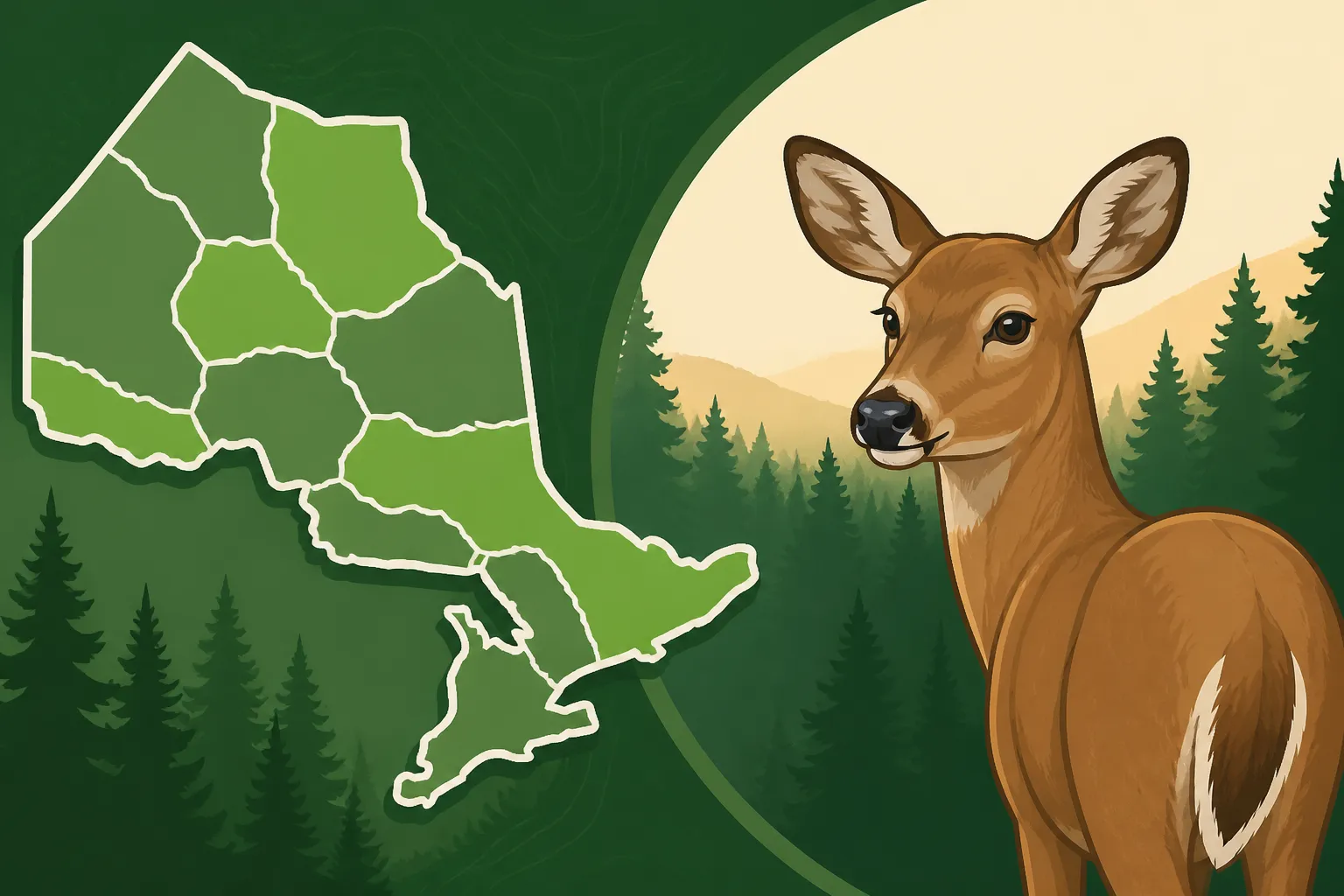
While the specific WMUs offering antlerless tags and the quantity of those tags can shift annually, certain regions consistently stand out as having the most opportunities. The prime real estate for antlerless tags in Ontario is undoubtedly the agricultural belt of Southern Ontario. We're talking about WMUs generally south of the Canadian Shield, often encompassing areas from Windsor to Kingston and north towards Lake Huron and Georgian Bay. These areas, rich with corn, soybean, and alfalfa fields, provide an almost endless buffet for deer, leading to high population densities. Within this region, you'll often find opportunities in WMU groups like 65, 70, 71, and 74-87. These are the areas where hunters often have the best chance of securing an antlerless validation, sometimes even through specific "controlled deer hunt" validations which can also include antlerless tags. If you're looking to gain an edge in these areas, our article on Hunting Deer in Southern Ontario Farmland can provide some excellent insights.
Beyond the deep south, certain WMUs within the Central Ontario mixed forest regions may also offer limited antlerless tags, especially where habitat improvements or milder winters have allowed localized populations to grow. However, these are generally fewer and harder to draw than in the agricultural zones. Platforms like GoHunt, while more geared towards Western North America, highlight the kind of detailed data analysis that savvy hunters wish they had for Ontario's complex draw systems, underscoring the need for reliable, up-to-date information sources.
The Importance of the Annual Hunting Regulations Summary
I cannot stress this enough: the only definitive and current source for which WMUs offer antlerless tags in any given year is the official Ontario Hunting Regulations Summary. This document is published annually by the Ministry of Natural Resources and Forestry (MNRF) and is absolutely essential reading for every hunter. It details all the season dates, bag limits, and, crucially, lists the specific WMUs that will have antlerless deer draws, along with the application dates and the number of tags allocated.
Don't rely on old summaries, word-of-mouth, or even last year's experience. Deer populations and management objectives can change, leading to adjustments in tag allocations. You can access the summary online through the provincial government website, or pick up a hard copy wherever hunting licenses are sold. Take the time to sit down with it, highlight the relevant sections for your WMUs of interest, and mark your calendar for application deadlines. It's tedious, I know, but it's the only way to ensure you're working with the most accurate information. When you're ready to dive into the details, you'll also want to look at our guide on Ontario's Wildlife Management Unit System for a broader context.
Strategies for Securing an Antlerless Tag
Drawing an antlerless tag in Ontario often feels like hitting the lottery, but there are definitely strategies you can employ to improve your odds and make the most of the opportunities that arise. It’s not just about luck; it’s about informed planning and persistence.
Applying Early and Strategically
First things first: apply early! The application period, while usually several weeks long, is not something you want to put off. Life gets busy, and missing the deadline because you forgot is a self-inflicted wound no hunter wants. Once the application window opens, get your choices in.
Now, about strategy. If your primary goal is simply to secure an antlerless tag, regardless of WMU, you might consider applying for WMUs that historically see less competition. These are often units with slightly lower deer densities, less accessible terrain, or those farther away from major population centers. While everyone wants that prime WMU known for big deer and high numbers, those are precisely the WMUs that are the hardest to draw for antlerless opportunities. Using historical draw data, if available, or even just observing general hunting pressure over the years, can inform these decisions. You might have to travel a bit further, but a filled tag makes it all worthwhile. Sometimes, a unit like those in Hunting Ontario's Crown Land might offer a lesser-pressured opportunity, though deer numbers there can be more challenging.
Considering Controlled Deer Hunts and Specific Validations
Beyond the general antlerless draw, Ontario also offers "Controlled Deer Hunts" in certain WMUs. These hunts are designed to manage deer populations in specific areas, often close to urban centers or in areas with high agricultural impact. Hunters must apply for these hunts separately, and if successful, they receive a validation that allows them to hunt during a specific period and often includes an antlerless component.
These controlled hunts can be a fantastic way to secure an antlerless tag, especially if you live near one of these WMUs. The rules and specific validations vary significantly by location, so again, the annual Hunting Regulations Summary is your bible here. Some of these hunts are quite popular, like those around the Great Lakes shorelines or near larger cities. While GoHunt might not have a dedicated Ontario section, you can often use its principles of analyzing data, drawing odds, and unit specifics to inform your choices in the Ontario system. For a deeper dive into this, check out our guide on Ontario Controlled Deer Hunt Validations. It's a different path to the same goal: an antlerless tag.
The Power of Information and Planning
Let's face it, hunting success isn't just about luck; it's about being informed and planning meticulously. Once you've secured that precious antlerless tag, whether through the general draw or a controlled hunt, your work isn't over. Now it's time to leverage every bit of information and scouting you can. Understanding the specific nuances of your chosen WMU, including deer patterns, preferred habitats, and movement corridors, will dramatically increase your chances of success.
Utilize online mapping tools, satellite imagery, and even local knowledge to pinpoint potential hotspots. Are there specific agriculture fields that deer frequent? Are there clear travel routes between bedding and feeding areas? Is there a Beaver Dam Crossing that funnels deer movement? Tools like GoHunt emphasize data-driven decisions, and while their focus is different, the underlying principle applies: the more you know about the specific parcel of land you're hunting, the better. Don't underestimate the value of pre-season scouting, even just driving rural roads to observe deer activity. This groundwork is what transforms a drawn tag into a successful hunt and ensures you're ready for Filling an Antlerless Tag in Ontario when the season opens.
| Region (General) | Likelihood of Antlerless Tag Opportunities | Typical Deer Density | Comments |
|---|---|---|---|
| Southern Ontario (Agricultural Belt) | High | Very High | Best bet for antlerless tags due to abundant food, mild winters, and often agricultural damage concerns. |
| Central Ontario (Mixed Forest/Shield Fringe) | Moderate to Low | Moderate | Some opportunities exist, but generally fewer tags and higher competition than the south. Variable by WMU. |
| Northern Ontario (Boreal Forest/Shield) | Very Low to None | Low | Antlerless tags are rare due to harsher winters, lower deer densities, and focus on herd rebuilding/stability. |
Disclaimer: This table provides a general overview. Specific WMU offerings and tag numbers vary annually. Always consult the current Ontario Hunting Regulations Summary for the most accurate and up-to-date information.
Disclaimer
The information provided in this guide is for general informational purposes only and is not a substitute for the official Ontario Hunting Regulations Summary. Hunting regulations, WMU boundaries, season dates, and tag allocations can change annually. It is the responsibility of every hunter to consult and comply with the most current regulations issued by the Ontario Ministry of Natural Resources and Forestry (MNRF) and all applicable federal, provincial, and local laws. Always prioritize safety and ethical hunting practices.