Flying Into Toronto or Thunder Bay
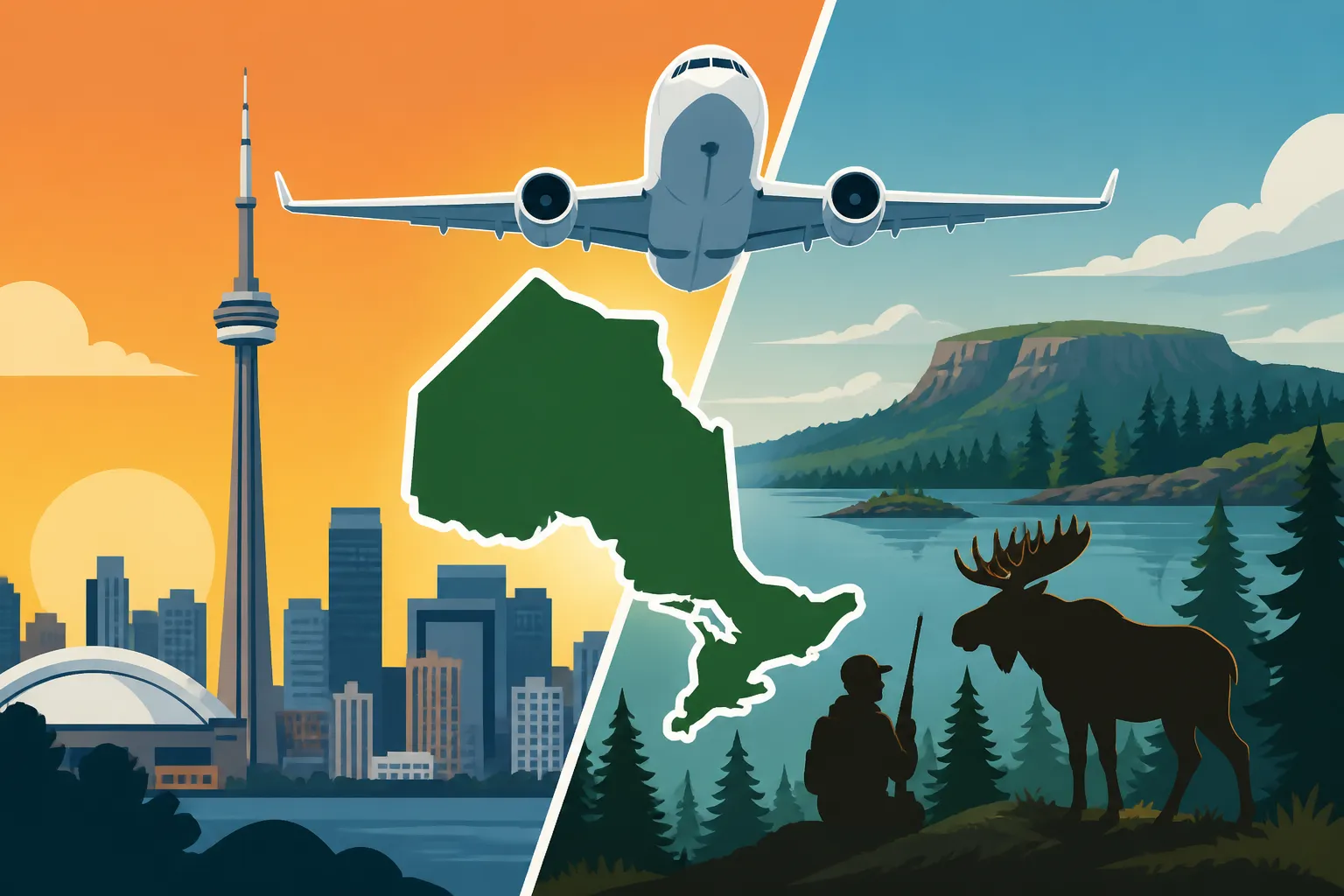
Deciding which Ontario airport to fly into for your hunting adventure can feel like a daunting task, especially when you're juggling firearms, gear, and the sheer vastness of the province. Many hunters, particularly those making the journey from outside Ontario, agonize over whether to land at the bustling Toronto Pearson or the more northerly Thunder Bay International, fearing they'll pick the wrong gateway and add unnecessary travel time or expense to their trip. This guide aims to clear up that confusion, offering a detailed look at both options so you can make an informed decision that best suits your hunting plans.
Toronto Pearson International Airport YYZ – The Southern Gateway
Toronto Pearson (YYZ) is Canada's largest and busiest airport, serving as a major hub for international and domestic travel. For many hunters heading to Ontario, especially those targeting species in the southern and central parts of the province or those seeking a wider range of flight options, YYZ is often the first consideration. It's a massive operation, and while that can mean more options, it also means a different kind of logistical challenge.
Advantages of Flying into Toronto
One of the most obvious benefits of flying into Toronto Pearson is the sheer volume of flights available. You'll likely find more direct routes from major cities around the world, often at more competitive prices due to increased competition. This means greater flexibility in your travel dates and times, which can be a huge plus when you're coordinating a hunt that often has a strict schedule. From YYZ, you also have access to a much larger selection of rental car companies, which can be crucial if you're planning a drive to your hunting destination. The variety of vehicles, from standard sedans to larger SUVs and trucks, is usually superior here, though you'll always want to book ahead, especially if you need something specific like a four-wheel drive for bush roads.
Beyond the immediate airport, Toronto itself offers a vast array of services and supplies you might need for your trip. Forget something vital for your gear? Need to pick up specialized clothing or last-minute provisions? The Greater Toronto Area has countless outdoor stores, sporting goods retailers, and grocery options. This can be a huge comfort if you're coming from far away and prefer to travel lighter, knowing you can acquire essentials upon arrival. For hunters venturing into Hunting Southern Ontario Farm Country or the mixed forests of Central Ontario, landing in Toronto often means a shorter overall drive to their final destination.
Navigating Firearms and Gear Through YYZ
Dealing with firearms and bulky hunting gear at a large airport like YYZ can feel a bit overwhelming, but with proper preparation, it's quite manageable. The key here is to arrive well in advance of your flight. Airlines have specific procedures for checked firearms, which generally involve declaring them at the check-in counter, ensuring they are unloaded, and placed in a locked, non-see-through hard-sided case. Ammunition must be in a separate, secure container, often within your checked luggage, but never loose. Remember, this isn't the place to rush. Be ready to explain your purpose and destination clearly to airport and airline staff.
Upon arrival, the process for retrieving your firearms can vary. Sometimes they'll come out on the regular baggage carousel, clearly marked with a "Firearm" tag (which can draw some curious glances!). Other times, they'll be held at a special oversized baggage area or even require you to report to the CBSA (Canada Border Services Agency) office for inspection, especially if you're an international traveler. This is where patience is truly a virtue. Make sure you have all your documentation, including your Non-Resident Firearm Declaration (form RCMP 5589) if you're bringing your own firearms, readily accessible. Knowing the rules for Declaring a Firearm at the Canadian Border and Ammunition Rules at the Border is absolutely critical before you even leave home.
Connecting to Other Regions from Toronto
While Toronto might be your initial point of entry, many of Ontario's prime hunting grounds are still a significant distance away. YYZ serves as an excellent jumping-off point for connecting domestic flights to smaller regional airports across the province. For example, if your moose hunt is deep in the boreal forest or your bear hunt is far north, you might fly into Toronto and then catch another flight to Thunder Bay, Sault Ste. Marie, Sudbury, or even smaller towns like Timmins or Dryden. These connecting flights are usually shorter and can drastically cut down on your ground travel time.
Alternatively, if your hunt is in Central or Eastern Ontario, a drive directly from YYZ might be more practical than another flight. For instance, a drive to the Haliburton Highlands or the Bancroft area for Elk Hunting Ontario's Bancroft Herd could be a few hours, allowing you to pick up supplies along the way. However, if your destination is further afield, like the Lake of the Woods region in Northwestern Ontario, you're looking at a multi-day drive, which is often not feasible for hunters on a tighter schedule. Considering the sheer size of Ontario, understanding the geography of your chosen Wildlife Management Unit (WMU) is paramount when planning your travel from YYZ.
Thunder Bay International Airport YQT – The Northern Hub
Thunder Bay International Airport (YQT) is a smaller, more focused airport compared to Toronto Pearson, but it serves as an indispensable gateway for hunters heading into Ontario's vast northern and northwestern regions. If your hunting adventure is taking you to the true Canadian wilderness, YQT is often the most logical and efficient choice.
Why Thunder Bay is Ideal for Northwestern Hunts
For anyone venturing into the immense wilderness of Hunting Northwestern Ontario's Big Bush or the vast territories north of Lake Superior, Thunder Bay is often the primary and most convenient point of entry. It's geographically positioned to serve a massive hunting region, significantly reducing your ground travel time compared to flying into Toronto and driving or connecting. Think about it: a drive from Thunder Bay to many prime hunting areas in the Northwest might be a few hours, whereas the same drive from Toronto could be over a day's journey. This difference in travel time can be the deciding factor between a smooth trip and an exhausting one.
Many outfitters operating in these northern regions will recommend flying directly into Thunder Bay. They are often set up to meet you right at the airport, facilitating easier transfer of gear and direct transport to their camps. This localized support system can be invaluable, especially for non-resident hunters who might be unfamiliar with the terrain or the logistics of the north. From YQT, you're also often closer to key communities that serve as float plane bases, allowing for seamless transitions from commercial flight to remote bush plane access. This makes it an ideal hub for those seeking truly wild and remote hunting experiences for species like moose or bear.
Streamlining Your Arrival with Firearms at YQT
While YQT still requires adherence to all federal and airline regulations for firearms, the experience can often feel more streamlined than at a colossal airport like YYZ. Due to its smaller size and the commonality of hunters passing through, the staff, including airline personnel and border agents, are generally very familiar with handling firearms and hunters. This often translates to quicker processing times and a more personalized experience, which can be a relief after a long flight.
You'll still need to follow all the rules for declaring your firearms upon check-in and ensuring they are properly secured. Upon arrival, however, rather than searching a vast terminal, you might find your firearms brought directly to the baggage office or handled with greater efficiency. It's still wise to have all your paperwork in order, including your Non-Resident Firearm Declaration, but the overall atmosphere tends to be less frenetic. Many hunters find the reduced complexity at YQT a significant advantage, particularly if they are traveling with multiple firearms or large amounts of gear. Always coordinate with your outfitter; they often have a wealth of local knowledge on the most efficient way to get through the airport and on to your hunt.
Accessing Remote Camps from Thunder Bay
The true magic of flying into Thunder Bay for a hunting trip lies in its unparalleled access to remote wilderness camps. For many serious northern hunts, particularly for Moose Hunting Ontario's Northern Bush or deep-woods bear adventures, a significant portion of your journey will involve traveling by float plane or traversing miles of remote logging roads. Thunder Bay is perfectly situated for this. You'll find numerous float plane operators based in and around the city, ready to whisk you and your gear into the remote interior.
If your hunt involves a fly-in camp, coordinating with your float plane charter from YQT is often very straightforward. These services are used to dealing with hunters and their specialized equipment. For drive-in camps, Thunder Bay provides a convenient hub to pick up your rental vehicle (though rental options might be more limited than YYZ, so book far in advance) and head directly into the vast network of forest roads. Whether it's a boat-in camp on a massive lake or a remote cabin accessed by a bush plane, YQT puts you right on the doorstep of the kind of wilderness that draws hunters to Northern Ontario. Sites like BookYourHunt or GoHunt often highlight outfitters in these remote regions, and a quick check will show you how many of them list Thunder Bay as the closest major airport.
Comparing Toronto YYZ and Thunder Bay YQT for Hunters
When planning your Ontario hunting trip, the choice between flying into Toronto Pearson (YYZ) or Thunder Bay International (YQT) is not just about where your plane lands. It's about optimizing your entire travel experience to ensure you arrive at your hunting grounds fresh, organized, and ready for adventure. Each airport presents a unique set of pros and cons that directly impact your logistics, costs, and overall journey.
Logistical Considerations: Time, Distance, and Connections
The biggest differentiator between YYZ and YQT often boils down to logistics, specifically how much time you're willing to spend traveling after you land. If your hunt is located in Southern or Central Ontario, closer to cities like Peterborough, Kingston, or even the Haliburton Highlands, Toronto is usually the clear winner. You'll likely face a shorter drive, or at least a less complicated one, with well-maintained highways leading directly from the city. However, if your target is a remote Moose in Ontario's Boreal Forest or a deep-woods black bear in the Northwest, starting at YYZ usually means adding another leg to your journey. This could be a several-hour drive, or more commonly, a connecting domestic flight to an airport further north.
Consider the total travel time from your home to your camp. While a direct international flight to YYZ might seem appealing, if it's followed by another flight and then a boat or float plane, it might actually take longer overall than a less direct flight to YQT with a more straightforward final leg. Always map out your entire route, including ground transfers and any bush plane or boat connections, before deciding. The objective is to minimize wasted time in transit and maximize your time in the field.
Cost Analysis: Flights, Rental Cars, and Other Expenses
The financial implications of your airport choice are significant. Generally, international flights into YYZ tend to be more frequent and potentially more competitive in price due to the higher volume of traffic. Flights into YQT, especially from international origins, often require a connection through YYZ or another major Canadian hub, potentially increasing the overall airfare. However, the cost savings on airfare to YYZ could quickly be negated by additional expenses if your hunting destination is far north.
For instance, a cheaper flight to Toronto might mean a significantly longer and more expensive rental car period, greater fuel costs, and even an overnight stay in a hotel along the way if the drive is too long for one day. Rental cars are often more expensive out of smaller airports, and availability can be limited, so booking well in advance is crucial, particularly for trucks or SUVs needed for bush roads. Furthermore, if you're taking a connecting flight from YYZ to YQT, you'll incur the cost of that second flight. Conversely, while YQT flights might initially seem pricier, they can save you money on ground transport and accommodation by putting you closer to your final destination from the outset. This is where services like GoHunt or BookYourHunt can be helpful in comparing outfitter packages that often specify the closest airport.
Here's a quick comparison to help visualize the differences:
| Feature | Toronto Pearson International (YYZ) | Thunder Bay International (YQT) |
|---|---|---|
| Flight Options | Abundant international & domestic flights, often competitive pricing | Fewer direct international flights, often requires connecting flight |
| Rental Cars | Large selection, wider variety of vehicles | More limited selection, book well in advance for specific needs |
| Firearm Handling | Can be slower due to high volume, specific retrieval procedures | Generally more streamlined and familiar with hunters |
| Regional Access | Ideal for Southern, Central, Eastern Ontario; hub for domestic connections | Ideal for Northwestern and Northern Ontario; direct access to remote areas |
| Outfitter Proximity | Often requires longer drives or connecting flights for northern hunts | Often shorter drives or direct float plane transfers to northern camps |
| Local Amenities | Vast array of stores, hotels, services in Greater Toronto Area | Sufficient amenities, but smaller scale than Toronto |
Regional Access: Matching Your Airport to Your Hunt Location
Ultimately, the best choice for your arrival airport is dictated by the location of your hunting adventure. Ontario is a massive province, spanning diverse landscapes from the agricultural plains of the south to the vast boreal forest of the north.
- Southern & Central Ontario Hunts: If you're planning to hunt white-tailed deer in Hunting Deer in Southern Ontario Farmland, spring turkey in Spring Turkey Hunting in Ontario, or small game in the more populated areas, YYZ is almost certainly your best bet. The shorter drives and extensive amenities make it the practical choice.
- Northern & Northwestern Ontario Hunts: For species like Moose in Ontario's Boreal Forest, Black Bear Hunting in Ontario, or upland birds in the remote bush, YQT is the undisputed champion. It drastically cuts down on travel time to these wilderness areas and provides crucial access to float plane services or remote logging roads. Before you finalize your flight, confirm with your outfitter or carefully consult a map of Ontario's Ontario's Wildlife Management Units to pinpoint the nearest major airport to your specific hunting grounds. This simple step can save you hours of driving and considerable expense.
Essential Preparation for Flying with Hunting Gear
Flying with hunting gear, especially firearms, requires meticulous planning and attention to detail. Skipping even a small step can lead to significant delays, frustration, or even the inability to travel with your essential equipment. Think of it as part of your pre-hunt scouting – understanding the rules is as important as understanding game movement.
Understanding Airline and Border Regulations for Firearms
The number one rule when flying with firearms is "know before you go." Every airline has its own specific policies regarding the transportation of firearms and ammunition, often outlined in detail on their website. These policies typically dictate the type of case required (hard-sided, lockable, non-see-through), how ammunition must be stored (separate from the firearm, in an approved container, usually in checked baggage, and often with weight limits), and the declaration process at check-in. Always confirm these details directly with your chosen airline, well in advance of your travel date.
For international travelers, Canada's specific regulations are equally critical. You must declare all firearms to the Canada Border Services Agency (CBSA) upon entry. The Non-Resident Firearm Declaration (form RCMP 5589) needs to be completed in triplicate, but do not sign it until you are in front of a CBSA officer. This form acts as your temporary firearm licence while in Canada. Failure to declare firearms can result in severe penalties, including seizure of your firearms, fines, and even a prohibition from entering Canada. Reviewing resources like Declaring a Firearm at the Canadian Border is a non-negotiable step for non-residents. Remember, ignorance of the law is not an excuse.
Packing Smart: Ammunition, Optics, and Specialized Clothing
Beyond firearms, consider all your other hunting gear. Ammunition has strict rules: it must be stored securely, often in its original packaging or a purpose-built container, and never loose in your luggage. There are typically limits on the amount of ammunition you can bring, so check both airline and border regulations. For waterfowl hunters, remember that Non-Toxic Shot for Ontario Waterfowl is a federal requirement, so plan accordingly and don't arrive with lead shot expecting to use it for ducks or geese.
Optics like scopes, binoculars, and rangefinders are fragile and expensive. Pack them securely in carry-on luggage if possible, or ensure they are heavily padded in checked bags. Specialized clothing for Ontario's varied weather is also key. The province can experience everything from mild, rainy fall days to bitter cold and deep snow, sometimes within the same week. Layering is your friend! Consider sturdy, waterproof boots, blaze orange requirements (refer to How Much Blaze Orange Ontario Requires), and appropriate insulation for sitting in a blind or stand. Think about the entire season, from Hunting Ontario's Late September Archery Opener to Hunting Ontario's November Gun Season, as each demands different gear.
Communicating with Your Outfitter or Host
This is perhaps the most overlooked, yet vital, step. Your outfitter or local host is an invaluable resource. They know the local conditions, the specific logistics of their camp, and often have firsthand experience with what works best for arrivals at YYZ or YQT. Share your detailed flight itinerary with them well in advance, including airline, flight numbers, and arrival times. Confirm who will be picking you up, where to meet, and any specific instructions for handling your gear or firearms once you land.
Discuss any special needs you might have, like dietary restrictions or mobility challenges. Ask them what items you absolutely must bring and what might be readily available or provided at camp. For instance, some camps provide sleeping bags or specific tools, reducing what you need to pack. Communication ensures a smooth transition from airport to hunting camp and allows your hosts to prepare for your arrival, making your experience much more enjoyable. Think of it as your final check before heading out on the adventure.
Navigating Ontario After Arrival
Once your plane touches down in Toronto or Thunder Bay, the next phase of your journey begins. Whether you're driving hours to a remote camp or catching another flight, understanding the landscape of travel in Ontario is key to a smooth start to your hunt.
Rental Cars and Driving in Ontario
If you're opting for a rental car, especially from YYZ, book it far in advance. During peak hunting seasons, certain vehicle types, particularly SUVs or trucks with four-wheel drive, can be in high demand. These vehicles are often essential if your hunting grounds involve traversing gravel roads, logging trails, or navigating late-season snow and ice. Always consider the terrain you'll be covering. A small sedan might be fine for a short drive to a southern farm hunt, but it's wholly inadequate for accessing most northern bush properties.
Familiarize yourself with Ontario's driving laws and road conditions. Speed limits are posted in kilometers per hour. In northern Ontario, long stretches of highway can be remote, with limited services, especially as you get further from major towns. Always fuel up when you have the chance. If traveling in late fall or winter, be prepared for changing weather conditions, including snow and ice. Consider packing an emergency kit in your vehicle, especially if heading into remote areas, with essentials like a first-aid kit, extra water, non-perishable food, and warm blankets.
Domestic Connections and Charter Services
For many northern hunts, your journey from YYZ will involve a connecting flight to a regional airport like Thunder Bay, Sault Ste. Marie, Sudbury, or North Bay. These smaller airports are well-equipped to handle general aviation and light commercial flights. From these hubs, you might then transition to even smaller chartered aircraft, often float planes, to reach truly remote fly-in camps. This is a common and exciting part of the northern Ontario hunting experience.
If your hunt requires a float plane, coordinating this with your outfitter and the charter company is crucial. Float Plane Charters to a Northern Camp often have strict weight limits for passengers and gear, so be prepared to pack efficiently and potentially consolidate some items. Always confirm the exact meeting point and time with the charter service, as weather can sometimes cause delays or adjustments to flight schedules. They will often guide you through the process of getting your gear loaded safely and efficiently.
Accommodation and Amenities Near Airports
Depending on your arrival time and connecting schedules, you might need to stay overnight near YYZ or YQT. Both airports have various hotel options, ranging from budget-friendly motels to full-service hotels, sometimes directly connected to the terminal. Booking these accommodations in advance, particularly during busy travel periods, is always recommended.
These airport-adjacent areas also offer opportunities for last-minute supplies. If you've arrived from out of province and need to purchase your Ontario Hunting Licences and What They Cost or specialized gear, larger towns will have more options. You can also grab groceries, fuel, and other essentials before heading out into more remote areas where choices might be limited. It’s always a good idea to arrive with a comprehensive list, consult What to Bring to an Ontario Bush Camp, and check off items as you go, ensuring you don't miss anything vital for your time in the bush.
Disclaimer
This article is for general informational purposes only and does not constitute professional advice. Laws, prices and regulations vary by location and change over time. Consult a qualified professional for guidance on your specific situation.